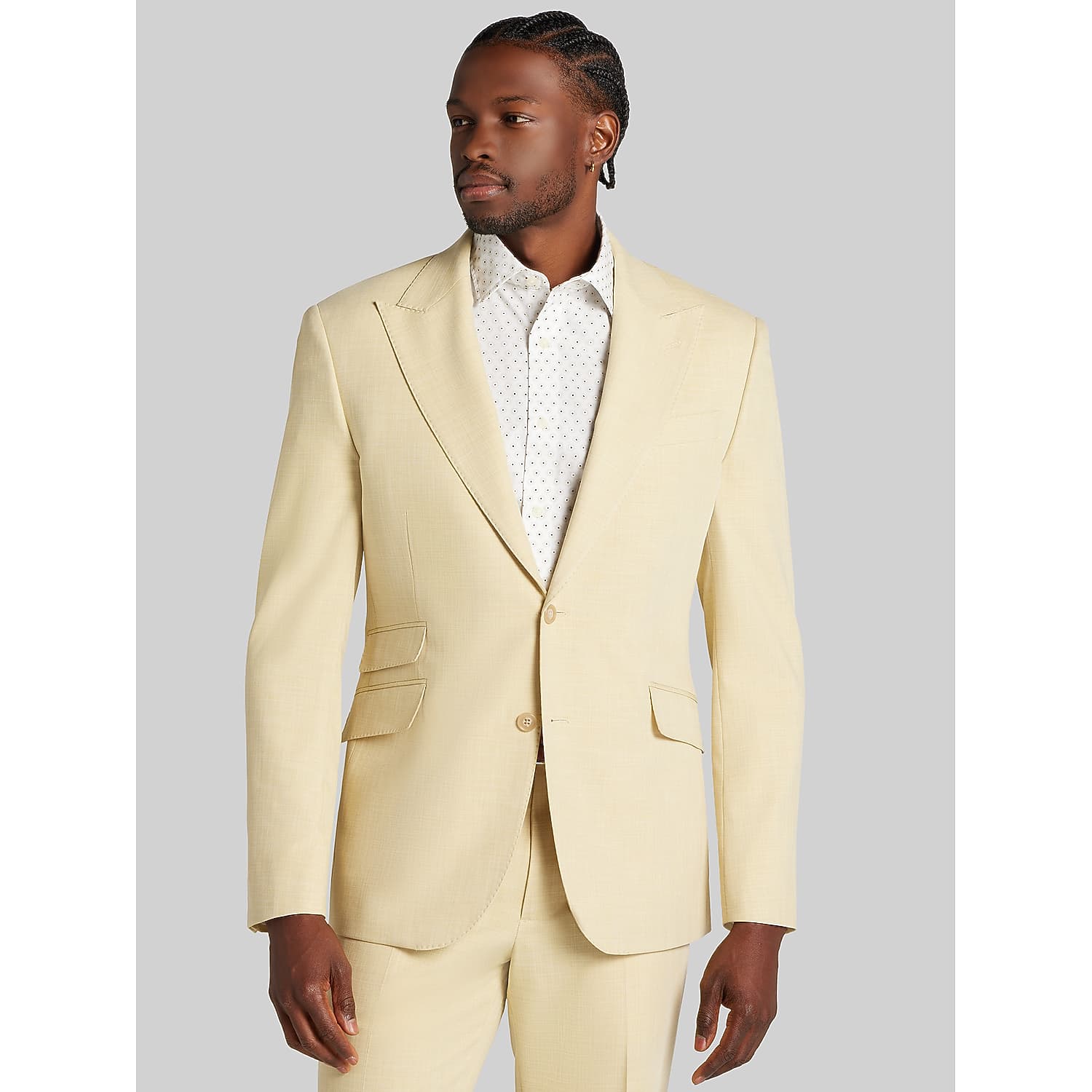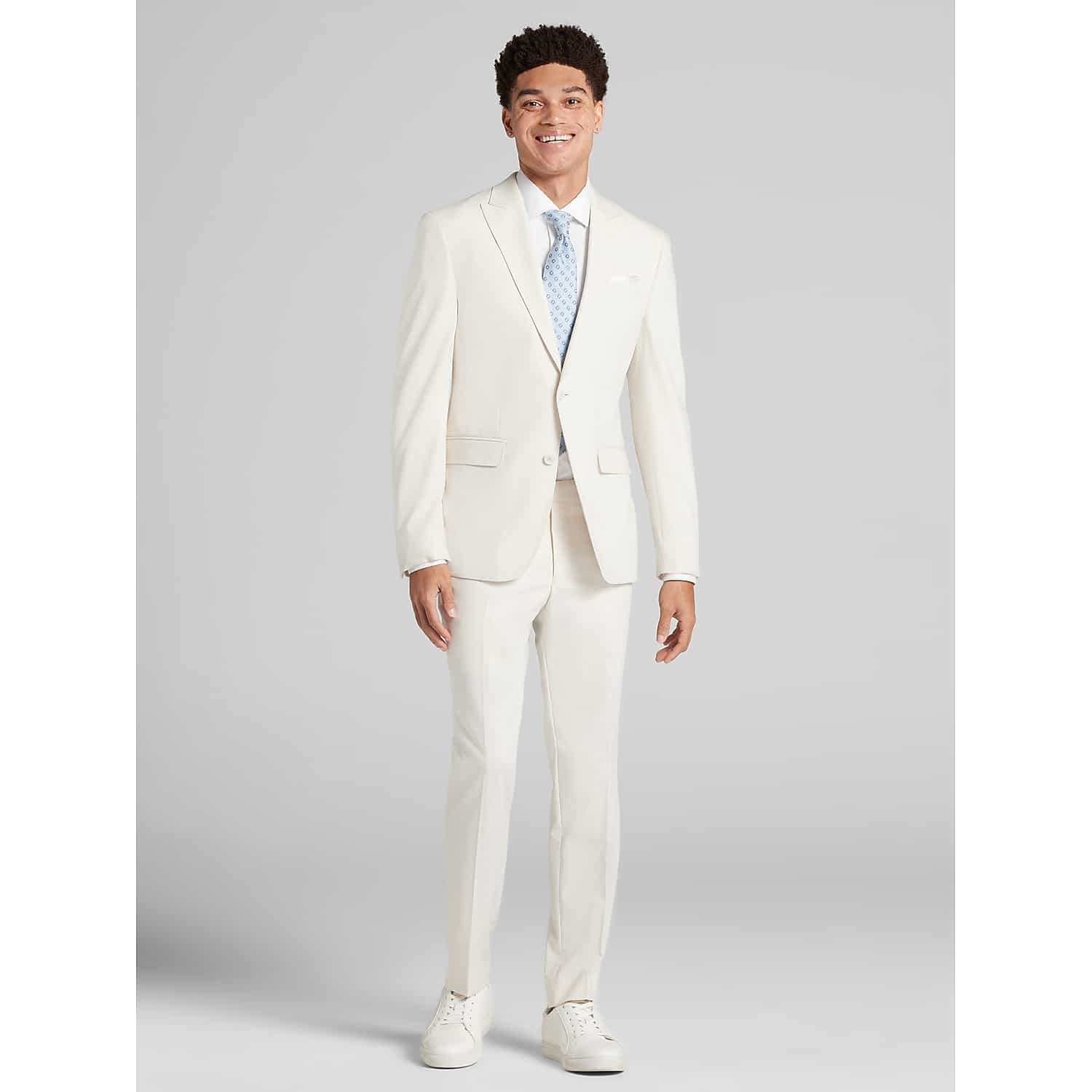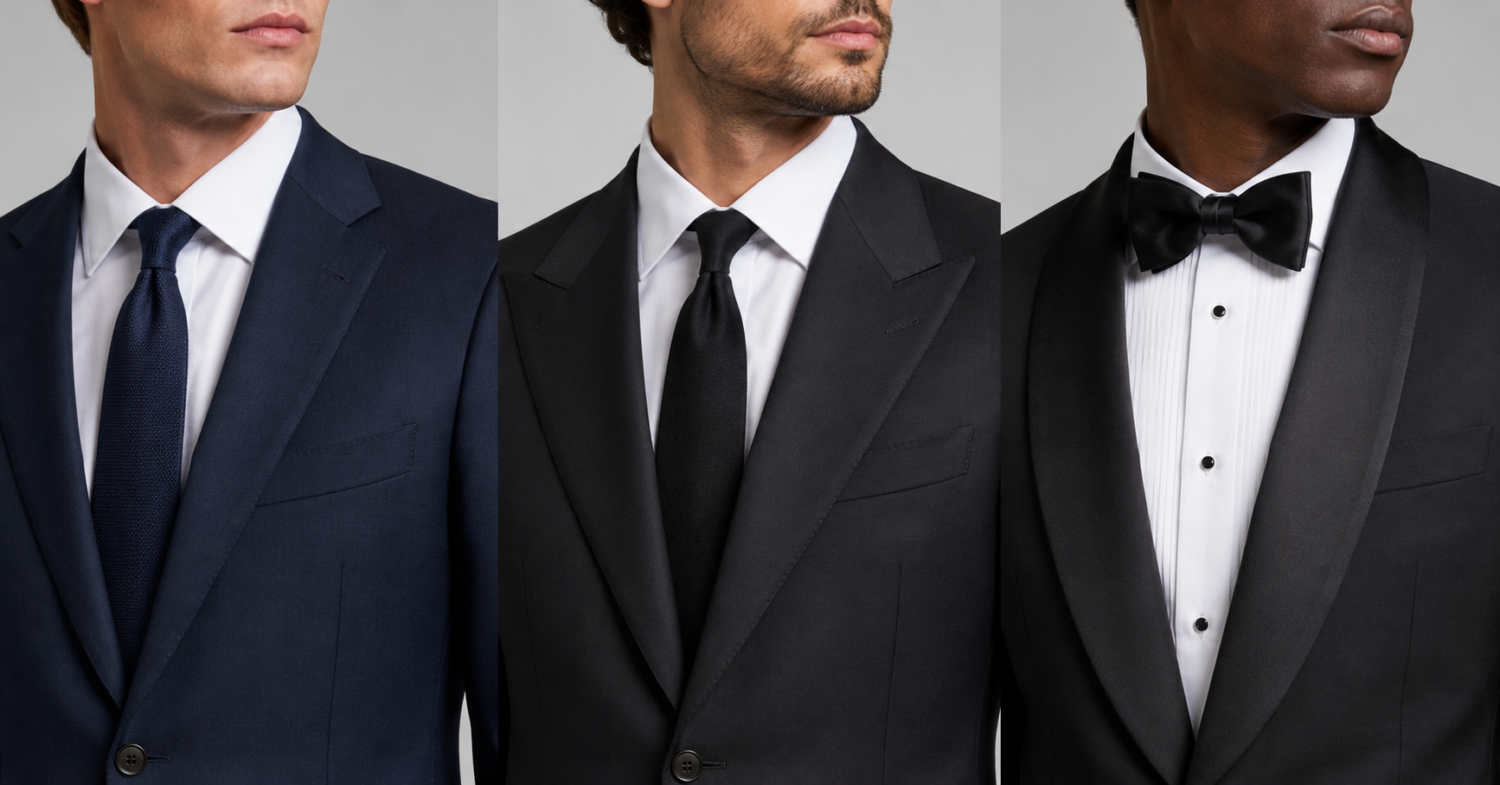

A lapel is the folded piece of fabric that runs from your jacket’s collar down to its top button, forming a V-shape on your chest. Every suit jacket has one, and it’s one of the first details people notice about your outfit.
But lapels do more than just fold over your chest for style points. They set the tone for your entire appearance, whether you want to look buttoned-up and boardroom-ready or dashing enough for a black-tie event. The lapel’s width, shape, angle work together to define how formal or casual your getup is.
Read on for a guide to the three main types of lapels. By the end, you’ll know exactly what style works best for your wardrobe and the occasion you’re dressing for.
Three Main Types of Suit Lapels
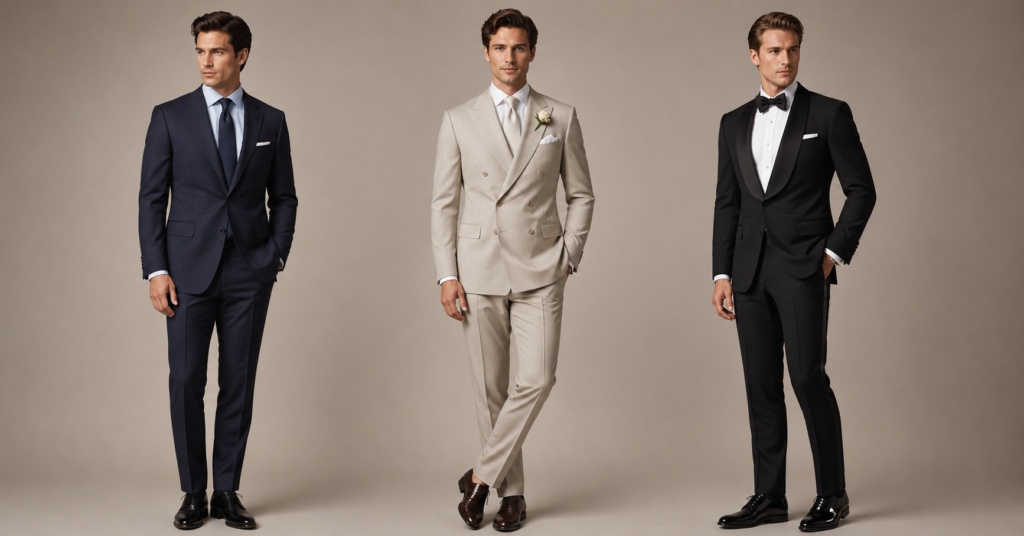
Every jacket lapel falls into one of three categories, and each type changes your suit jacket’s overall formality and elegance. Get familiar with your options to make shopping and dressing a whole lot easier.
Notch Lapels
You’ll see notch lapels most commonly on single-breasted suits, blazers, or sports coats. It gets its name from the small, v-shaped folded cutout where the collar meets the lapel. Because it’s so classic, this style works with just about any tie or buttonhole accessory you want to pair it with.
Style tip: A notch lapel plays well with most looks. Choose this style when you want a suit that moves easily between the office, casual dinners, and semi-formal get-togethers.
Peak Lapels
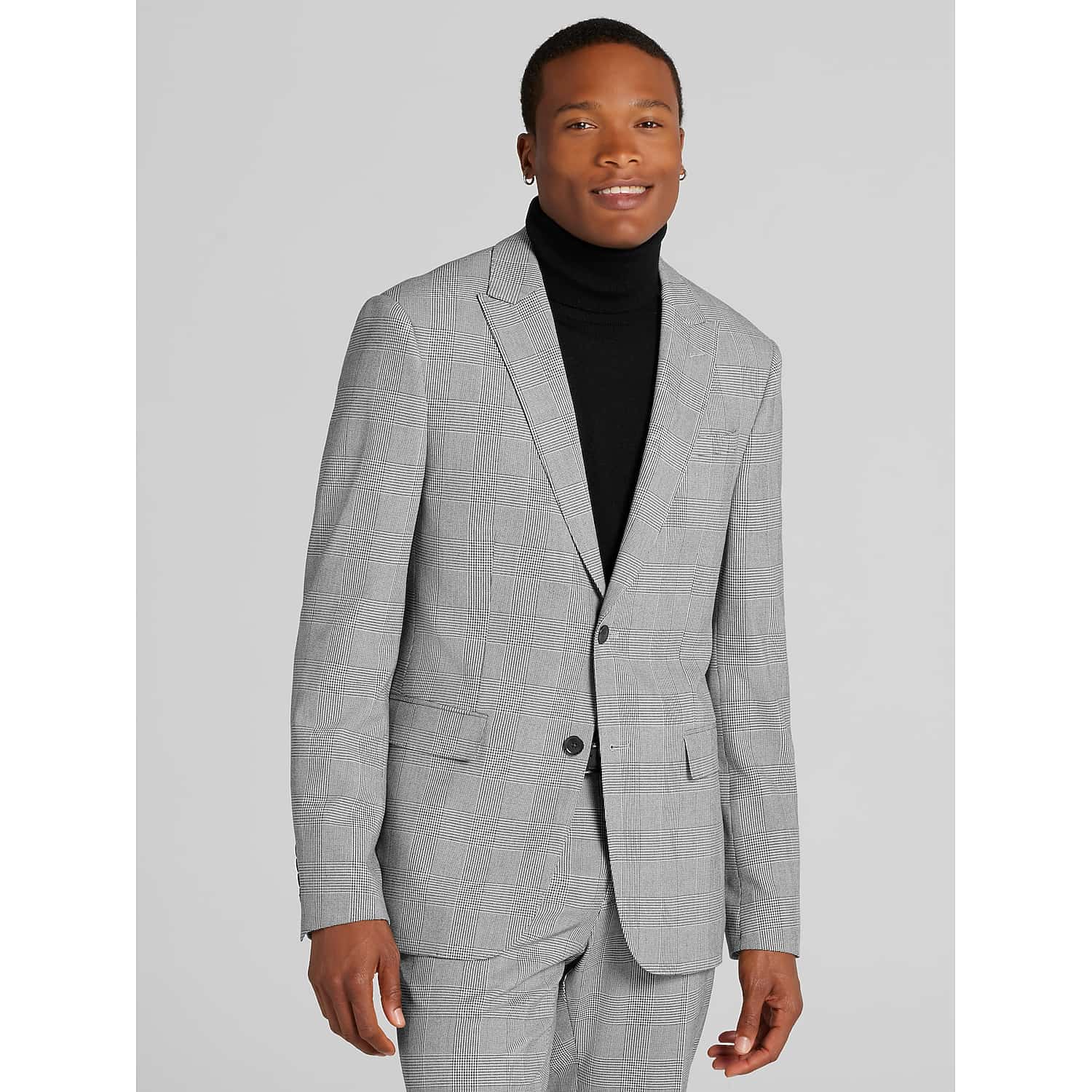
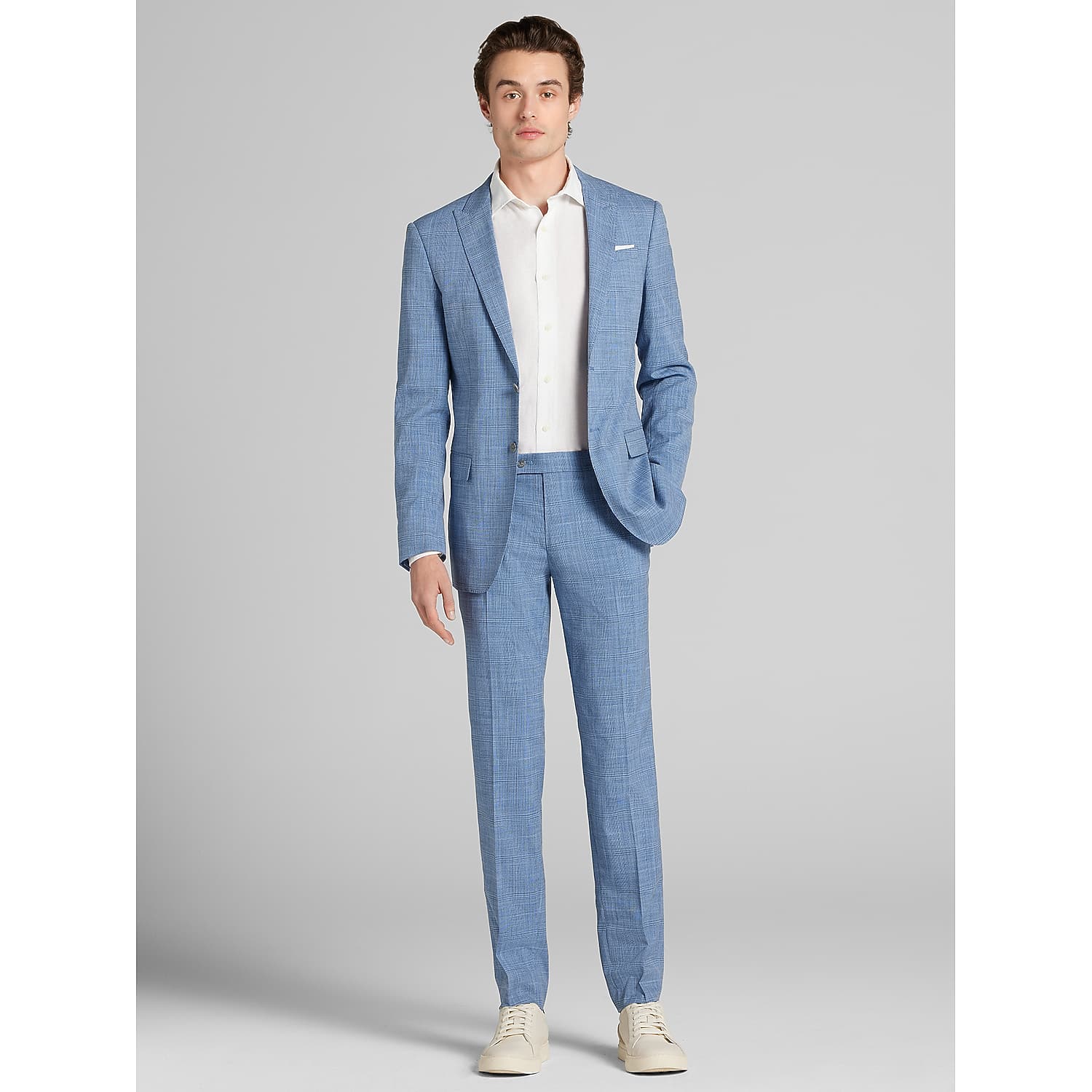
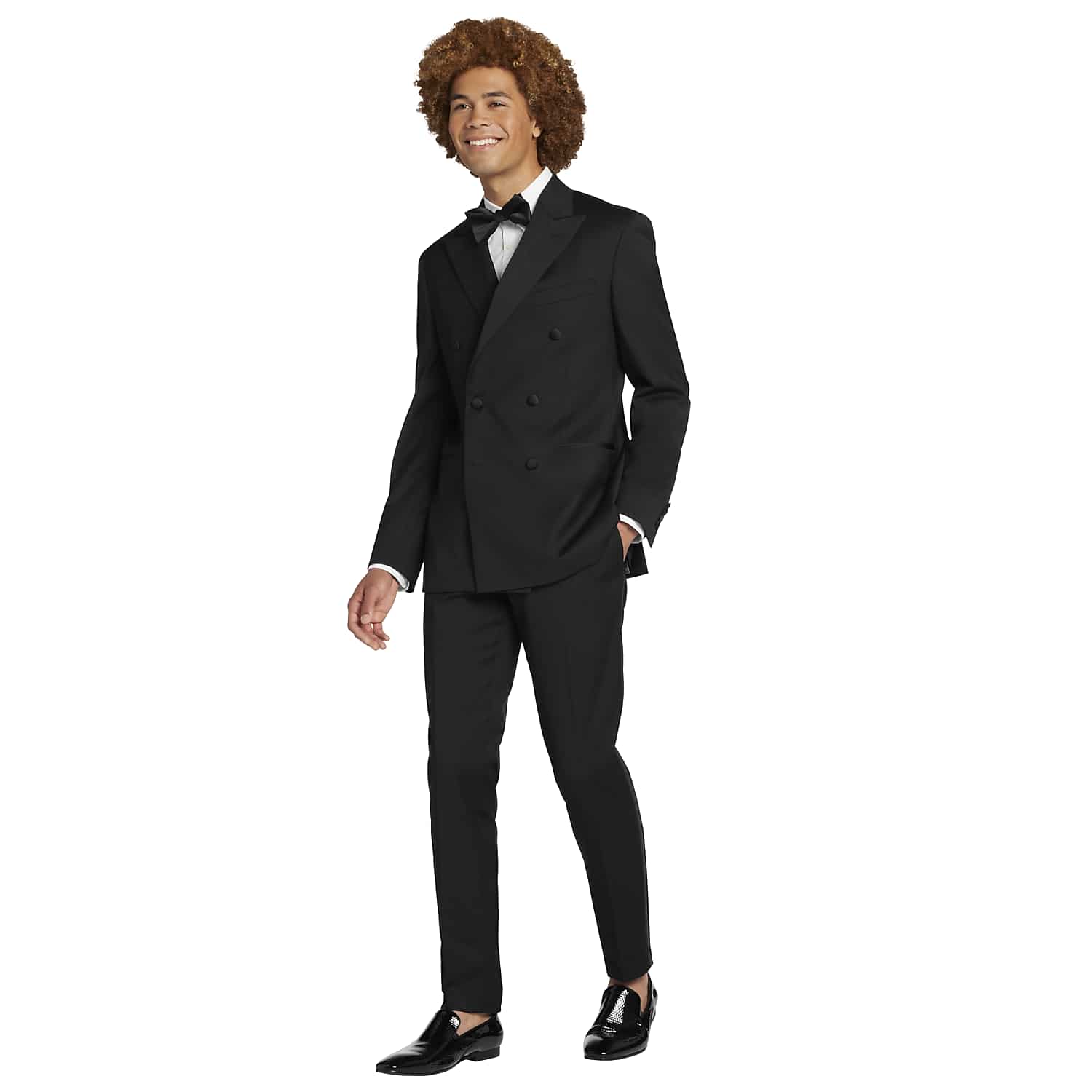
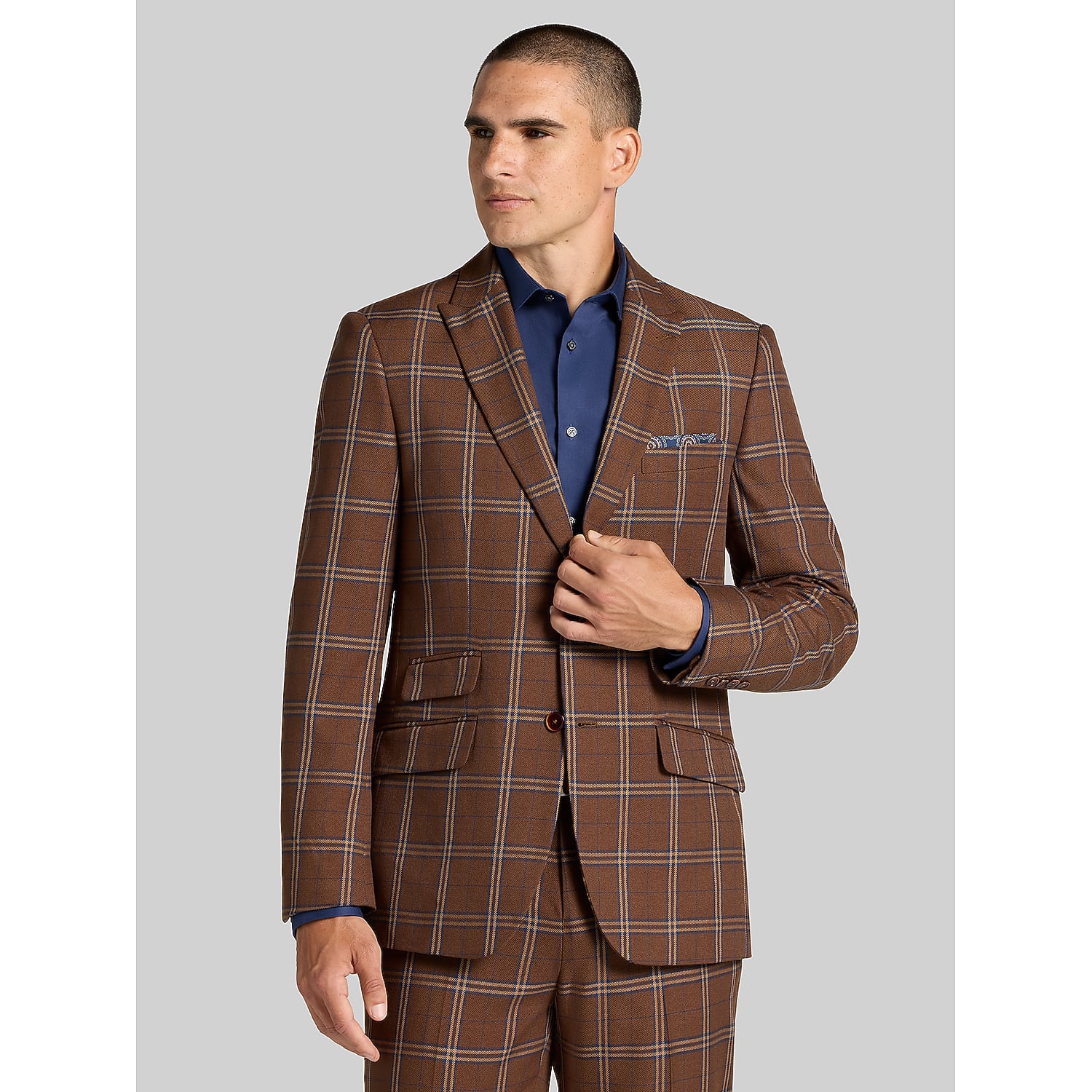
A peak lapel takes things up a notch. (Pun intended.) Its edges are sharply pointed, which makes an observer’s eye naturally point up toward your face. You can typically spot peak lapels on double-breasted suits and jackets, but they’re seen on single-breasted suits sometimes, too. These lapels run a little wider than notch lapels, which adds visual width across the chest and shoulders.
Style tip: Peak lapels are typically chosen for more formal occasions. Since this style already makes a statement, keep your tie and accessories simple.
Shawl Lapels
The shawl lapel is the most formal. You’ll find it on classic tuxedos and tailcoats. It’s ideal for black-tiie events and other occasions where you want to look polished.
Unlike the notch or the peak lapel, a shawl collar has no seams or points at all. It’s one continuous curved edge that runs from the back of the neck down to the button, which is why it looks so clean and refined. Tailors typically skip the buttonhole on this lapel style all together.
Style tip: A shawl lapel works beautifully with a bow tie. Try it for an upscale, elegant look.
How To Choose the Right Lapel for the Occasion
The best way to pick a lapel is to think about where you’re headed. Here’s a quick breakdown to help you match the look to the occasion.
- Daytime events or everyday wear: A notch lapel is the most adaptable of the three styles, so it works just as well for a client meeting as it does at a casual dinner with friends.
- Weddings and business functions: A peak lapel is your best bet for these occasions. A double-breasted jacket with a peak lapel is a powerful, classic look for men.
- Black-tie and formal evenings: Save a shawl lapel suit for your most formal nights out. Nothing pairs better with a tuxedo, and the curved, clean line practically demands a bow tie and dress shoes.
Getting the Lapel Fit and Width Right
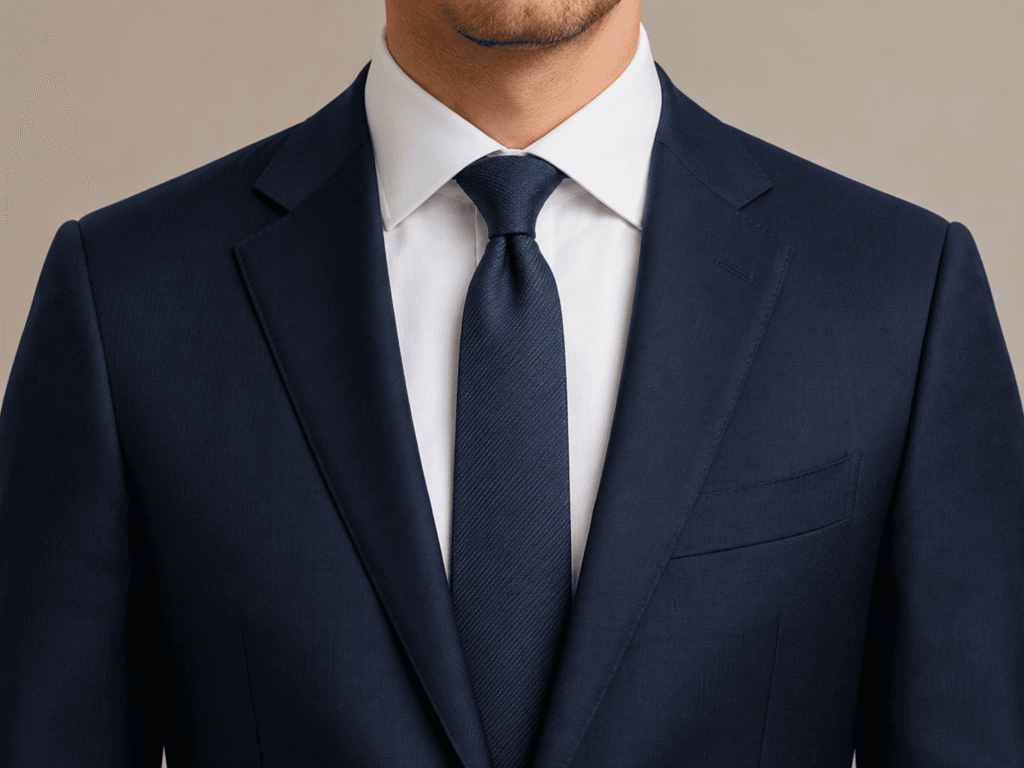
Your lapel’s width sets the tone for your whole outfit. Get it wrong, and even a well-fitted suit looks a little off.
First, consider body type. If you have broad shoulders and a full torso, chances are you can rock a wider lapel just fine. Leaner, shorter men tend to look sharper wearing a standard-width lapel, so it doesn’t overwhelm them.
Your jacket’s cut also matters. A slim or modern jacket looks best with a narrow lapel. A classic, roomier cut can handle some extra width without looking dated.
As a general guide, narrow lapels run about two and a half to three inches wide. Standard lapels sit between three and three and a half inches, and wide lapels start around three and three-quarter inches. Most men do well if they stick to the standard size range, which flatters a variety of builds.
Now let’s talk about your tie. The widest point should land close to the widest point of your lapel. If you pair a skinny tie with a wide lapel, it looks off. Similarly, a wide tie and a thin lapel can swallow your jacket whole.
Going wide or slim with your lapel comes down to what flatters your body type, not what’s trending this season. A classic, moderate width is always a solid choice.
If you’re not sure what works for you, head into Men’s Wearhouse. Our associates can walk you through the right fit in person, and our tailors can adjust your suit jacket until the proportions are exactly right.
5 Common Mistakes To Avoid
Even guys who know their way around a suit can still make mistakes with their lapel. Here are five don’ts to watch for.
- Wearing a Shawl Lapel To Work
A shawl lapel belongs at black-tie events, not your Monday morning meeting. Its smooth, rounded curve reads as formal evening wear, so it looks out of place next to your coworker’s business suits.
Save the shawl collar jacket for weddings, galas, and other black-tie events, and stick with a notch or peak lapel suit for the office.
- Mismatching Your Tie and Lapel Widths
A skinny tie looks thin and undersized next to a wide lapel, and vice versa. Keep the widest point of your tie within about half an inch of your lapel’s width, and the whole look falls into place.
- Adding Too Many Accessories To Peak Lapels
A peak lapel makes a bold statement, so avoid piling on extra accessories that compete with it. Skip the flashy pocket square and stacked lapel pins and let the sharp lines do the talking.
- Doing up the Bottom of a Two-Button Jacket
When you wear a two-button jacket, always button the top and leave the bottom open. Doing both of them up closes off the suit jacket’s natural drape and bunches the fabric up where the lapel meets your torso, throwing off the whole silhouette. It also restricts your movement and makes it more difficult to walk.
- Choosing a Notch Lapel for a Tuxedo
A notch lapel works great for business suits, but falls short on true black-tie tuxedos. If you’re investing in this type of suit for repeat wear at weddings and upscale events, skip the notch style. Traditional formalwear calls for a shawl lapel dinner jacket.
Find the Perfect Lapel at Men’s Wearhouse
Whether you need a jacket with a notch lapel for the office or a peak lapel suit for a wedding, Men’s Wearhouse has the style and expert guidance to get you there. Visit a store near you or shop online, and our team will help you find the perfect style for whatever occasion’s next on your calendar.
FAQ
Is a Lapel Necessary on a Suit?
Every traditional suit jacket has a lapel. It’s a core part of its construction that gives the collar somewhere to fold. It also shapes the front of the jacket, and determines how formal or casual the whole outfit looks.
What Is Pick Stitching on a Lapel?
Pick stitching, sometimes called AMF stitching, is a small, subtle line of stitching that runs along a lapel’s edge. Traditionally done by hand, it keeps the edge flat and less likely to curl over time. You’ll typically see it on higher-end suits and custom jackets.
Pick stitching can also be done by machines. It has a distinct, dotted appearance associated with superior craftsmanship.
Can You Wear a Peak Lapel on a Single-Breasted Suit?
While peak lapels are typically seen on double-breasted jackets and tuxedos, some single-breasted suits have them as well.
A single-breasted peak lapel suit gives you a bold, assertive look that’s great for weddings and similar events. Choose darker colors and materials like silk blends to do it the most justice.
Shop Related Products