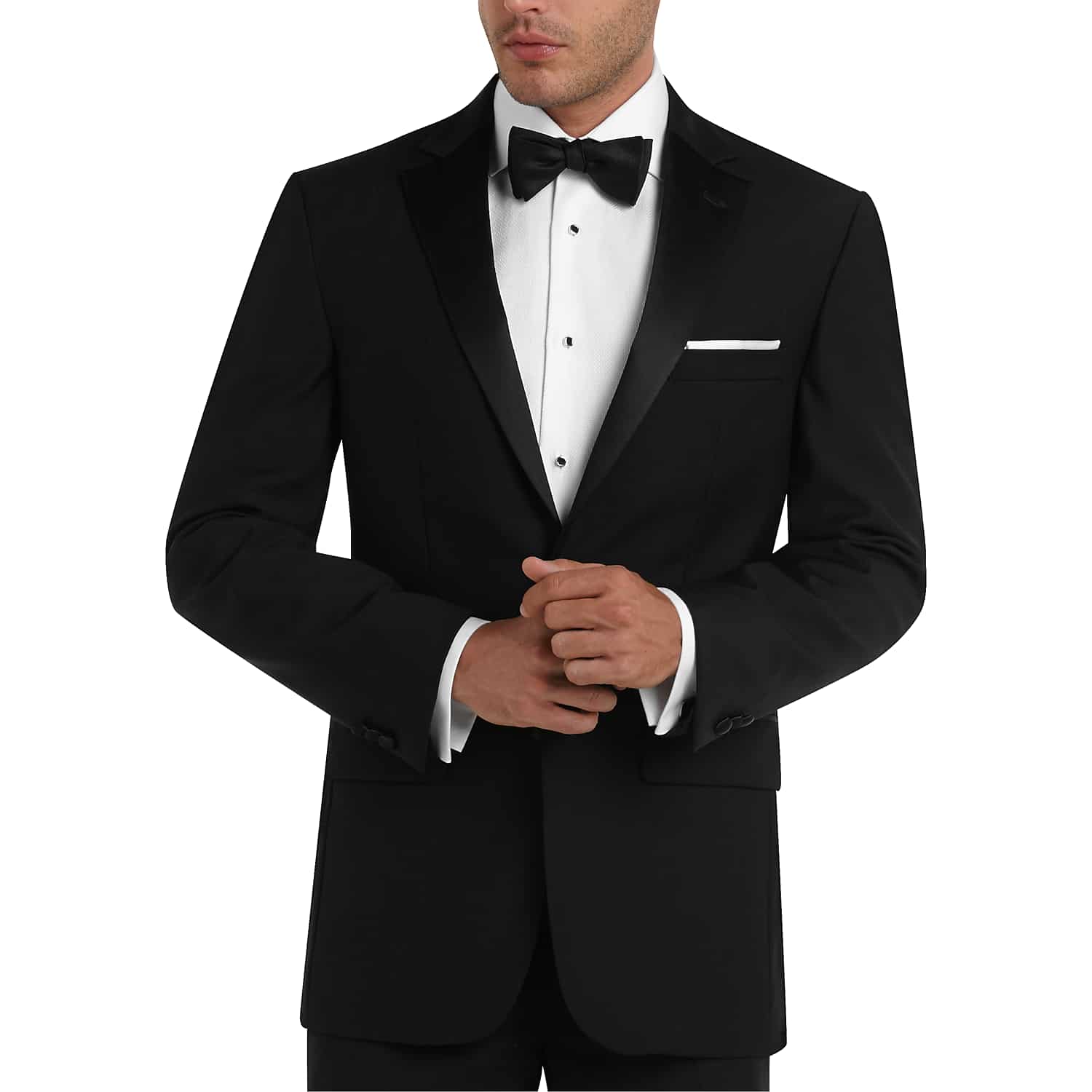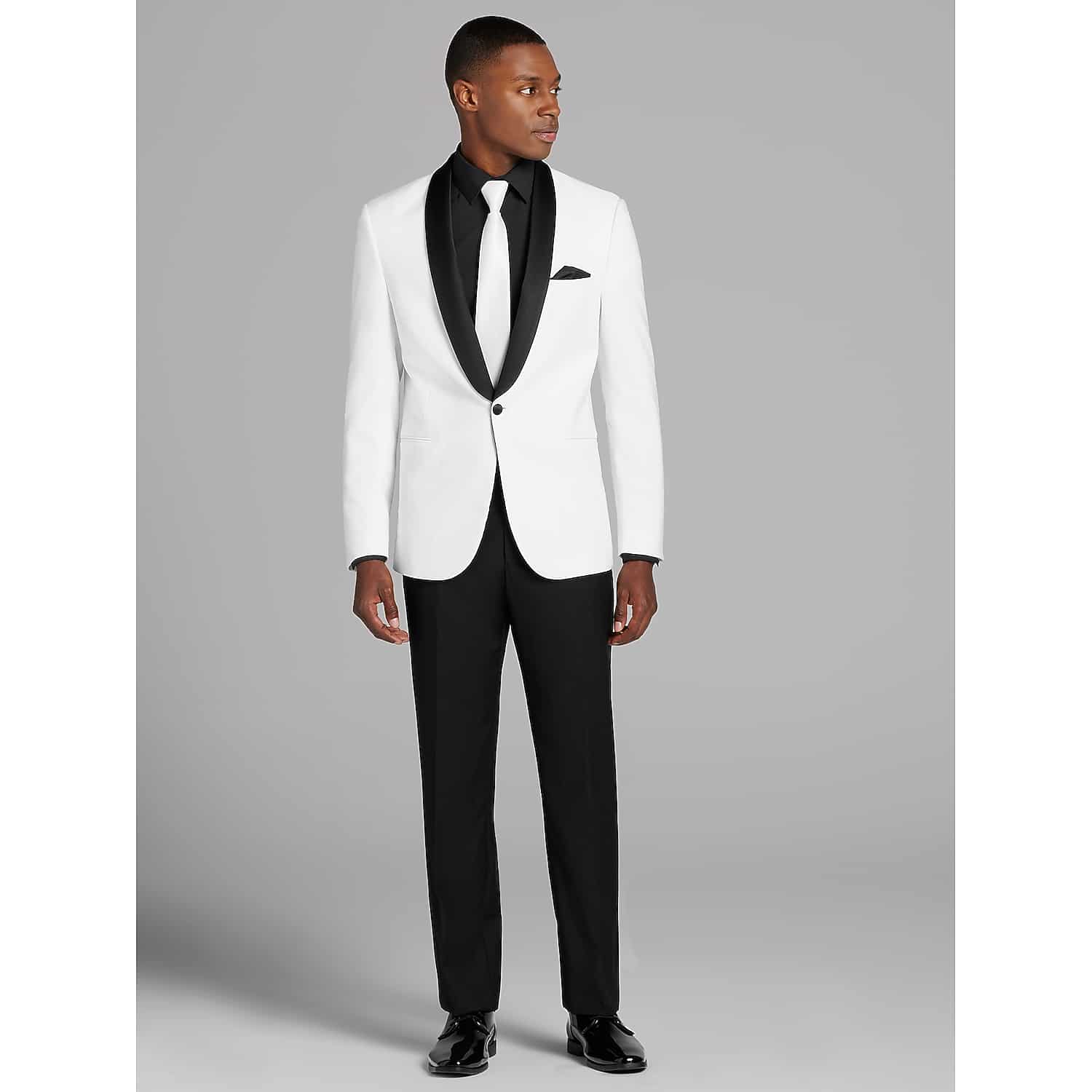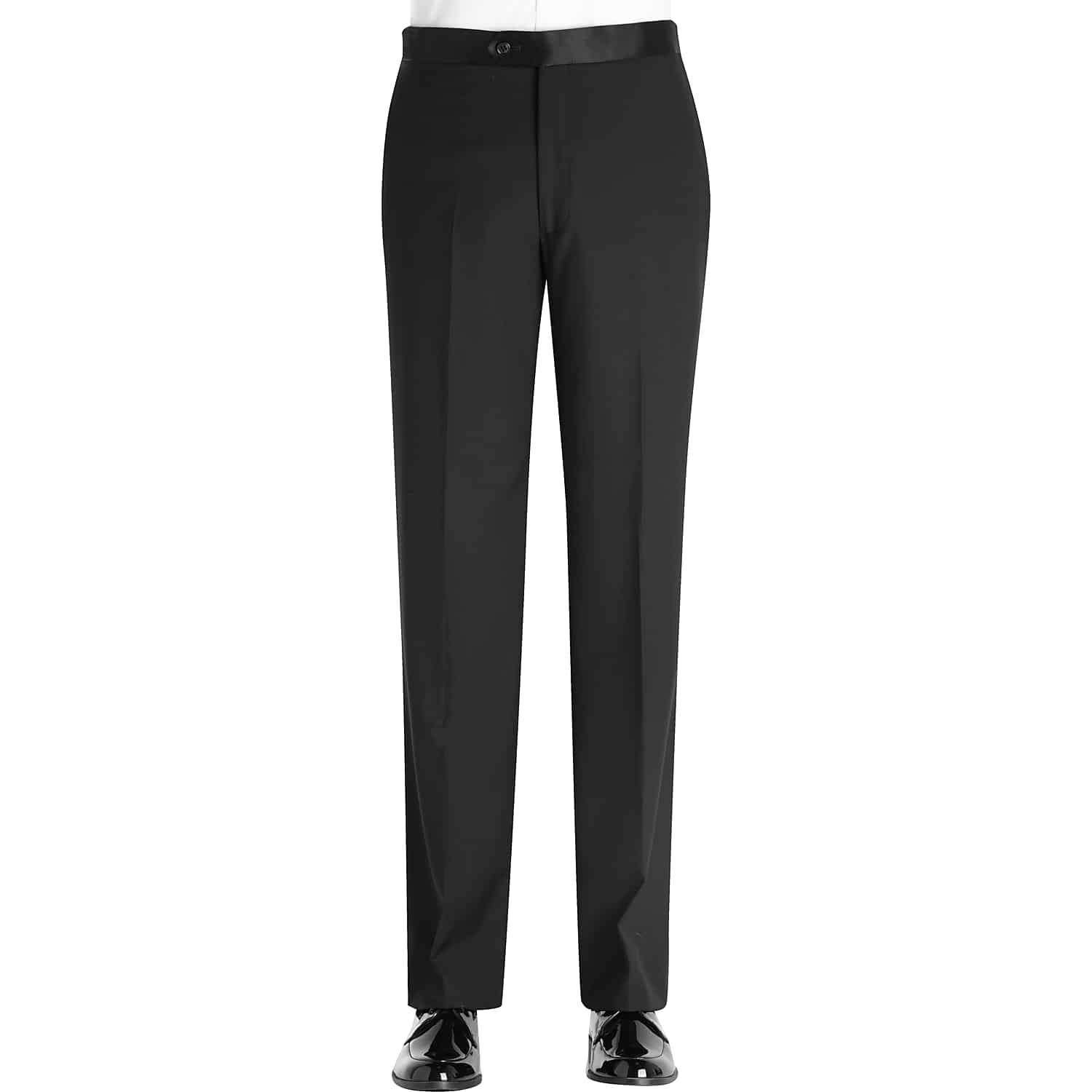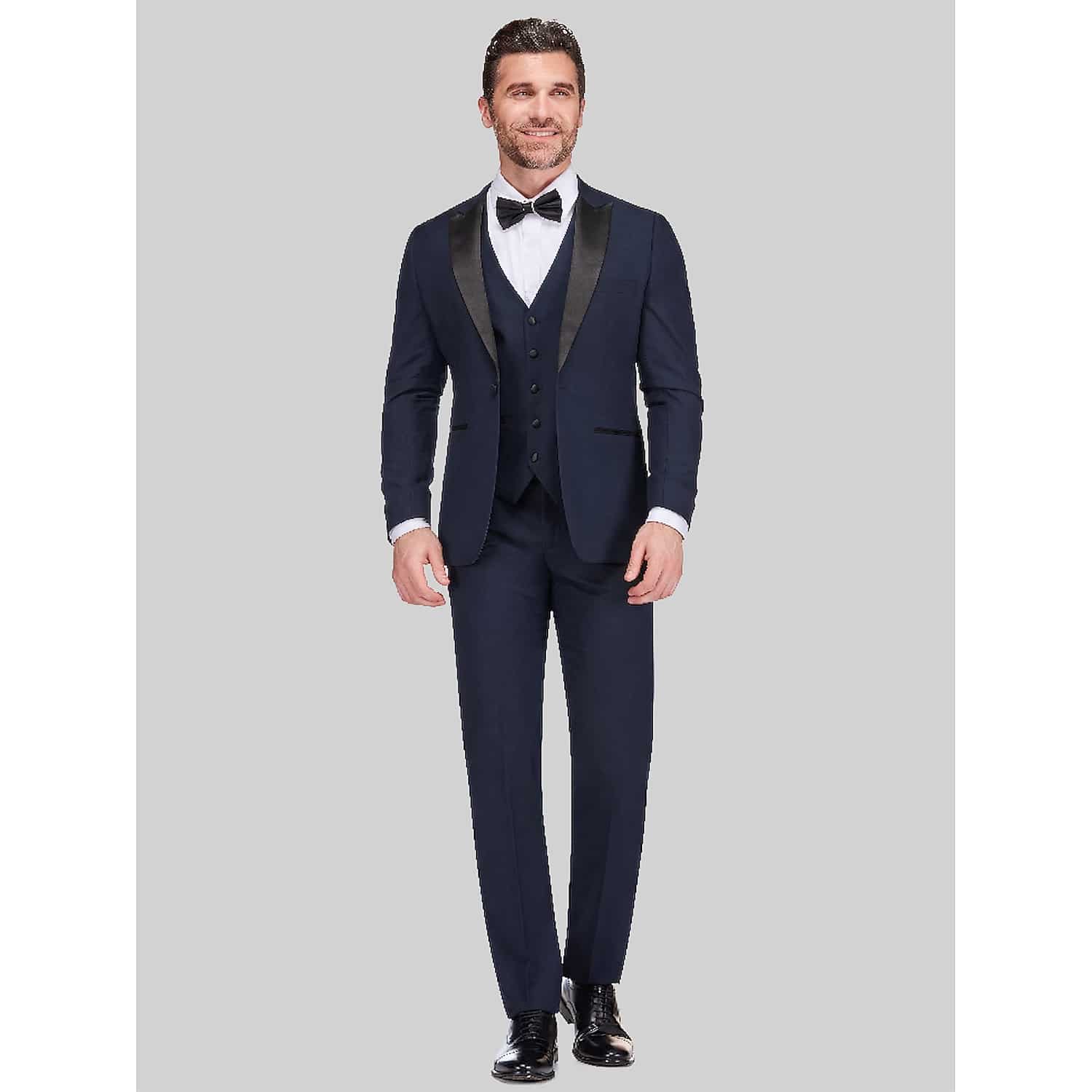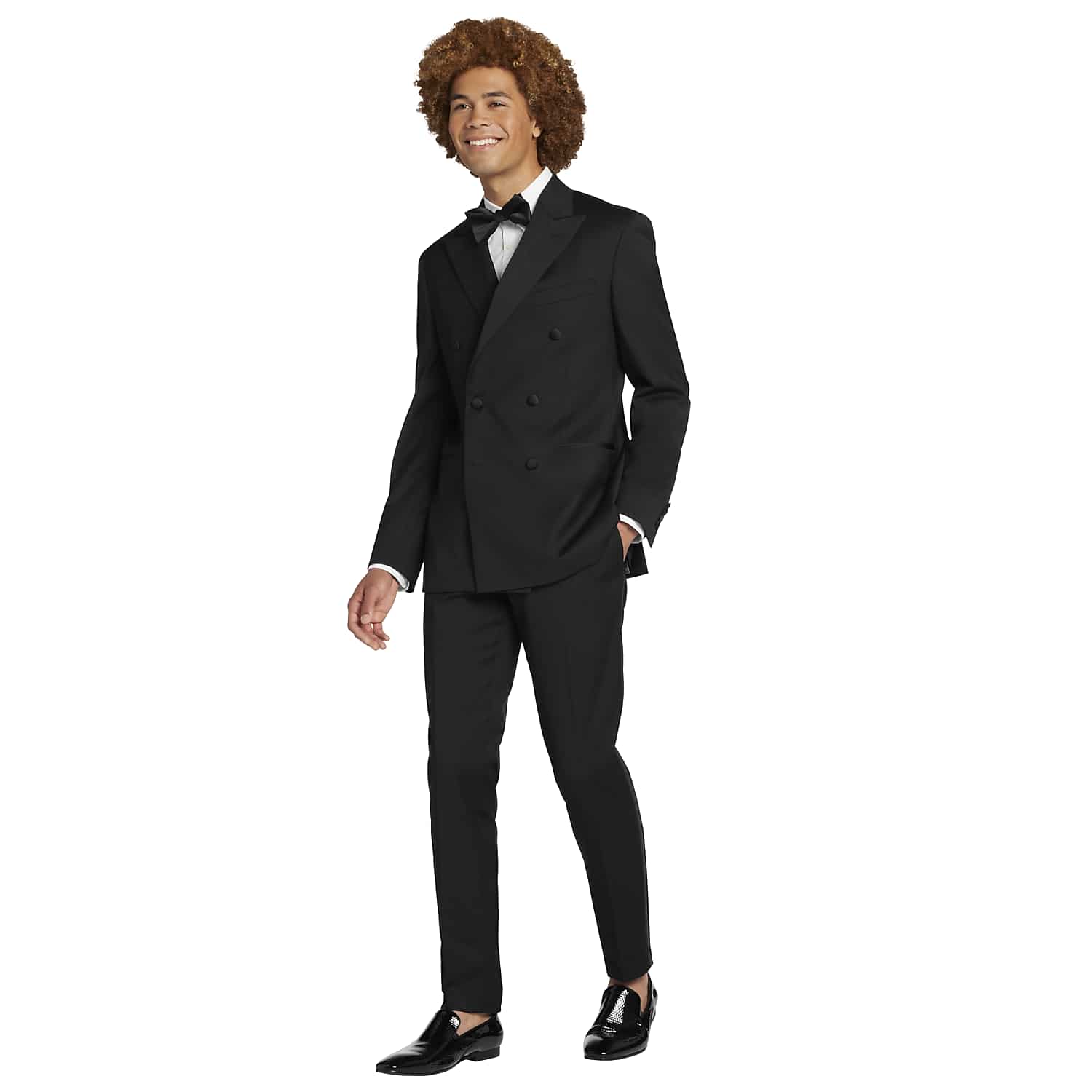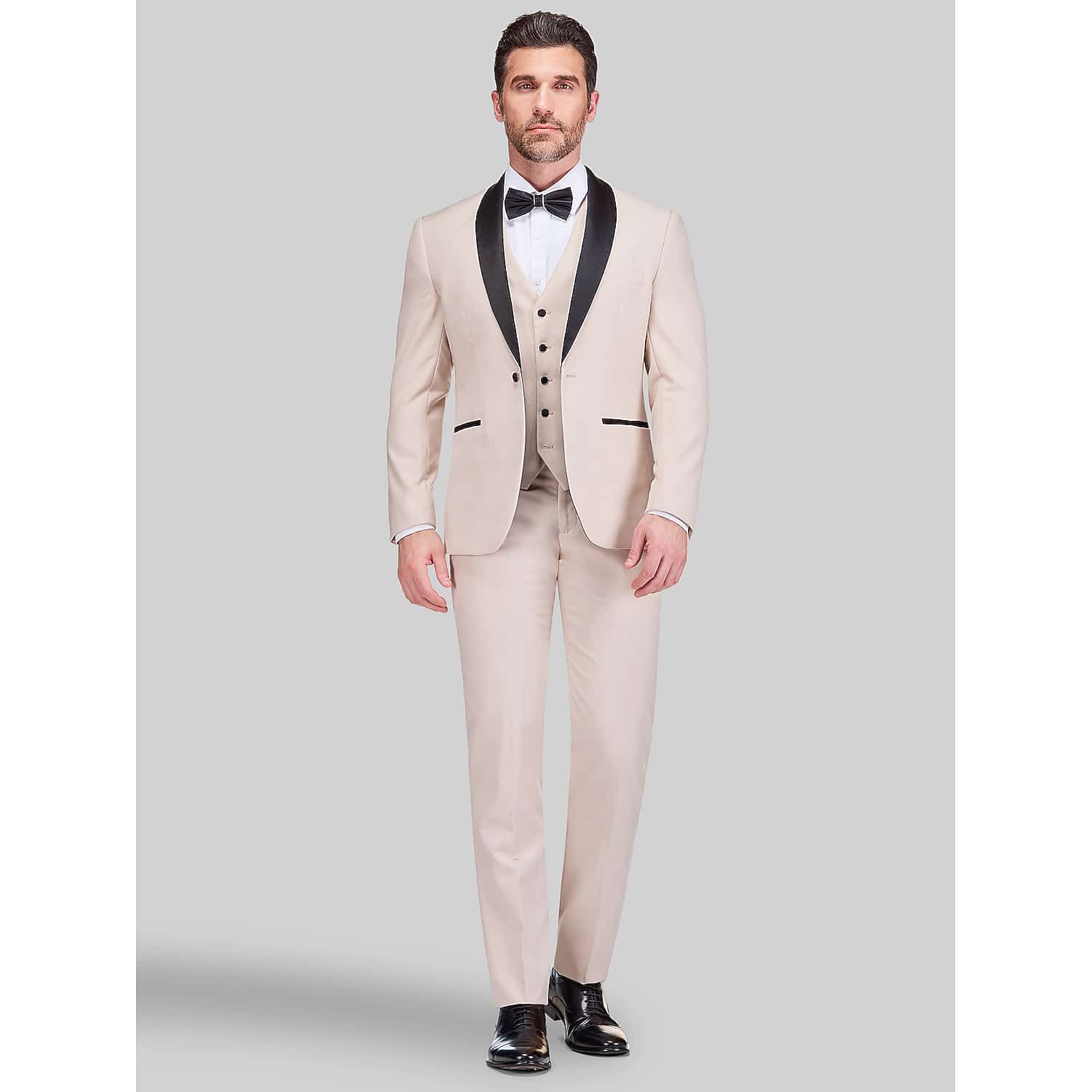

There’s no doubt a tuxedo works differently than your everyday outfit. It relies on structured wool and precise tailoring. Casual clothing is more forgiving. It uses flexible fabrics that hide small fit issues, but a tuxedo reveals them. When the tux doesn’t fit well, the jacket loses its clean lines and the trousers stop draping the way they should.
Fit matters even more during major life moments, like weddings and black-tie galas. Guests take plenty of photos at these events, so a sharp silhouette helps you look confident.
Knowing how to measure for a tux gives you a strong starting point, but the tuxedo’s construction and tailoring still shape the final result.
What You Need Before Measuring
Before you start, gather a few essentials to help you take accurate measurements for a tux:
- A soft measuring tape you can easily wrap around your body
- A mirror to check that the measuring tape stays level
- A dress shirt so your measurements match what you’ll wear with the tux
- A helper to take measurements and keep the tape steady (optional)
How To Measure for a Tuxedo
The following tuxedo measurement guide covers what to measure, how to measure it, and common mistakes to avoid.
Chest Measurement
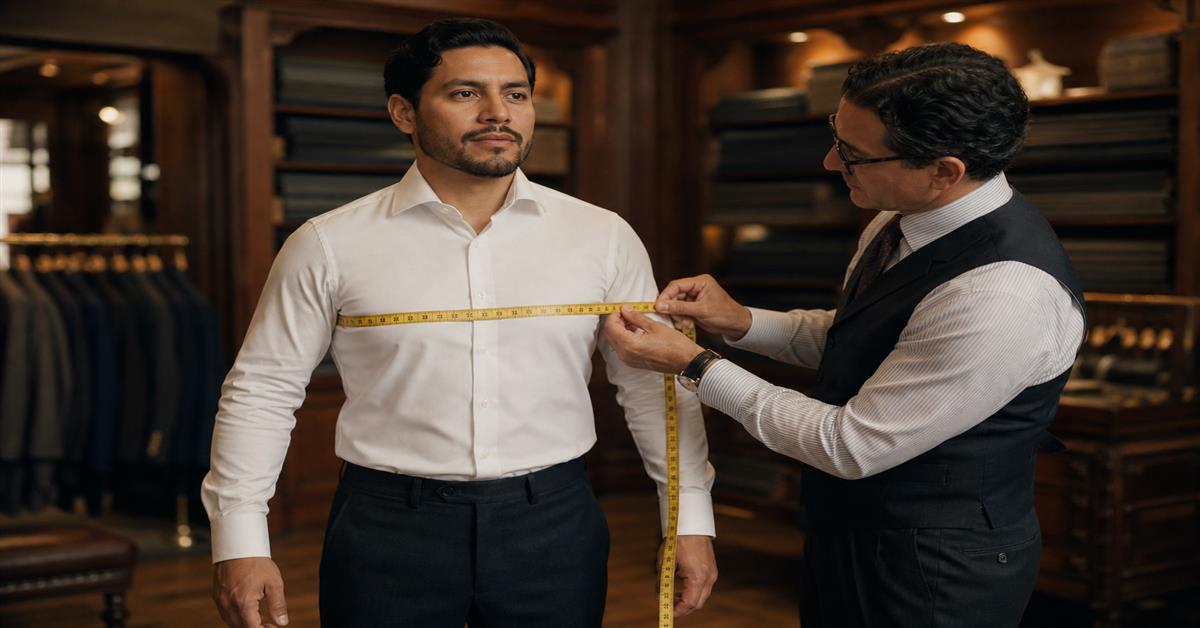
Wrap the measuring tape around the fullest part of your chest, running over the nipple line, under your armpits, and across your shoulder blades. This is the standard practice for how to measure for a tux jacket.
Keep the tape level all the way around your body, making sure it doesn’t sag in the back or pull too tightly at the front. The correct measurement helps your jacket button comfortably without gaps or stress on the fabric.
Neck Measurement
The neck measurement is for your dress shirt. It ensures the collar sits comfortably below the Adam’s apple without pinching or gaping.
Measure around the base of your neck where the collar sits, leaving a finger’s width (about ½ inch) between the measuring tape and your skin. Don’t pull the tape too tight, as this might restrict your breathing. When you measure carefully, you’ll get a close but comfortable fit and be able to button your collar easily under a bow tie or necktie.
Sleeve Length
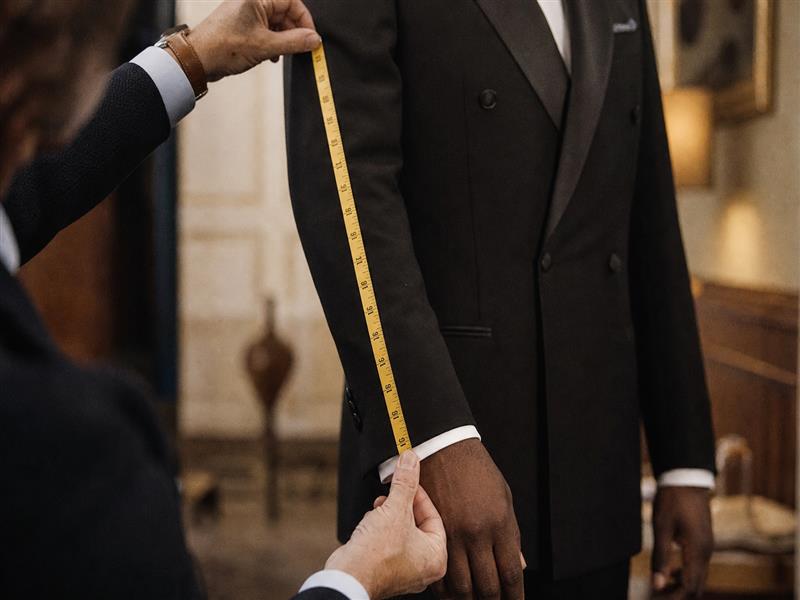
For the jacket sleeve length, measure from the edge of your shoulder down to your wrist bone, with your arm relaxed at your side. A bent arm forces the tape along a curved path and shortens the measurement. That causes the sleeves to ride up when you move.
You also want a bit of shirt cuff to peek past the jacket sleeve. Showing ¼ to ½ inch of shirt cuff creates a clear break between your jacket and dress shirt. This creates a crisp visual break between layers, a classic sartorial detail that keeps the tux looking sharp.
Waist Measurement
Place the measuring tape around your natural waist. This is the narrowest part of your torso, usually an inch or two above your navel. Stand with your stomach relaxed to ensure the measurement reflects your true size.
Formal trousers sit slightly higher than regular pants or jeans, which are often worn lower on the hips. Because of that difference in rise, your waist measurement may not match your casual pants size. But when you measure at the natural waist, your trousers will sit comfortably and stay in place without requiring a belt.
Inseam Measurement
The proper pant length creates clean lines and gives your tuxedo a truly sophisticated appearance. Measure from your inner thigh at the crotch seam, down the inside of your leg to the top of your shoe. Use the same dress shoes you plan to wear with your tuxedo, since shoe height affects the final pant length. For a classic tuxedo fit, aim for a slight break, where the fabric rests on the front of the shoe with a single small fold.
Height and Weight
Your height and weight influence tuxedo sizing, but they don’t replace your body measurements. Instead, they provide additional context to help confirm you have the right size.
Height mainly determines the length of your jacket and sleeves — that’s why tuxedos come in Short (S), Regular (R), Long (L), and Extra Long (XL) styles. Weight gives a better sense of your overall build and how much room you need through the chest, waist, and trousers.
To get the best fit, though, you need to take measurements. This is what separates a tuxedo that simply looks good from one that’s tailored to you.
How a Tuxedo Should Fit
Learning how to take tuxedo measurements is only half the process. It’s also important to understand how each piece should fit. Here are some guidelines for your jacket, trousers, and sleeves.
Jacket Fit
A well-fitting jacket starts with shoulders that sit flat and follow your natural shape. The front should button without pulling or gaping, even when you lift your arms to give a toast or get out on the dance floor. Through the waist, the jacket tapers a bit to flatter your frame while still letting you move freely.
Trouser Fit
Tuxedo trousers sit at your natural waist to help balance proportions and prevent your shirt from constantly untucking. The seat feels smooth, with no sagging or pulling across the back. At the hem, a slight break lets the fabric graze your shoe, avoiding messy folds that happen when pants are too long.
Sleeve Length
Sleeves end just above the wrist bone, allowing a small amount of shirt cuff to show — typically a quarter to half an inch. That subtle cuff creates a visual break between your tuxedo jacket and dress shirt for a well-proportioned look.
Renting vs. Buying a Tuxedo: Does Measuring Change?
The measuring process stays the same whether you rent or buy. What changes is how those measurements are used afterward:
- Rentals: Your measurements help you find a starting size for an off-the-rack tuxedo. Although alterations are limited for rentals, you can normally make small adjustments to the sleeve length or trouser hem. The core construction of the tux won’t change, so look for a rental that fits your measurements as closely as possible.
- Purchases: Your measurements open the door to custom tailoring. The tux can be fitted to your frame, from the jacket waist through the trouser break. Purchasing a tuxedo offers more long-term value if you think you’ll wear it more than once. Plus, you’re in control of every detail because it doesn’t need to be returned after the event.
At Men’s Wearhouse, both options are available. The fitting guidance starts the same, but the recommendation to rent or buy depends on your plans, budget, and how often you’ll wear the tuxedo.
Men’s Wearhouse Helps You Get the Right Tuxedo Fit
Men’s Wearhouse handles the details that matter most in formalwear. In-store associates take precise measurements of your chest, waist, and sleeve length. Tailoring support and formalwear expertise add the finishing touches to make sure everything fits perfectly from head to toe. Visit one of the 600+ Men’s Wearhouse locations to get professionally measured and walk out with a tux that’s ready for your biggest moments.
Shop Related Products