
Men’s suits aren’t just about cut and color. The fabric decides how the jacket moves when you walk, how the pants feel when you fit, and how warm you feel three hours into a wedding reception. Choose the right material, and the suit works with your body, not against it.
Your suit fabric deserves just as much thought as the fit. A well-tailored suit in the wrong material leaves you sweating and uncomfortable in the summer, or shivering in the winter cold.
The right fabric provides comfort and has the right drape and versatility to handle whatever the day throws at you. Before you start shopping for your next event, read on to learn more about the suit fabrics you’re actually choosing between.
How To Choose the Best Material for a Suit
Picking a suit fabric comes down to when you’ll wear the outfit, how formal the occasion is, and how you want the garment to feel. Here are a few things to consider when you choose the type of fabric for a suit.
Season
If hot weather’s in the forecast, lightweight fabrics like linen and cotton work best. They’re breathable and prevent you from breaking a sweat. A midweight wool strikes a nice middle ground and handles most of the year easily, while more heavyweight fabrics like flannel and tweed are better for cool weather because they trap warmth and give the suit a sturdier feel.
Formality
Fabric sets the tone — often before anyone notices the suit’s cut. A structured, worsted wool is sharp and formal, which is why I’ll see it in boardrooms and at black-tie events. Linen suits, on the other hand, are more casual. The fabric has a relaxed texture in a slightly looser drape, so it suits daytime events, garden parties, and anywhere a stiff jacket’s out of place. Neither option is better than the other, it just depends on what the situation calls for.
Comfort and Versatility
Your suit fabric needs to work with your day. Look for reduced wrinkling and breathability if you’re often on the move. A fabric that bounces back from creases looks sharp from day to night, and breathable materials keep you comfortable indoors and out.
You should also consider how the fabric moves. A suit should let you reach, sit, and walk without pulling at the seams, so test the wearability before you commit.
What Fabrics Are Suits Made Of?
Here’s a breakdown of the most common suit materials.
Standard Wool
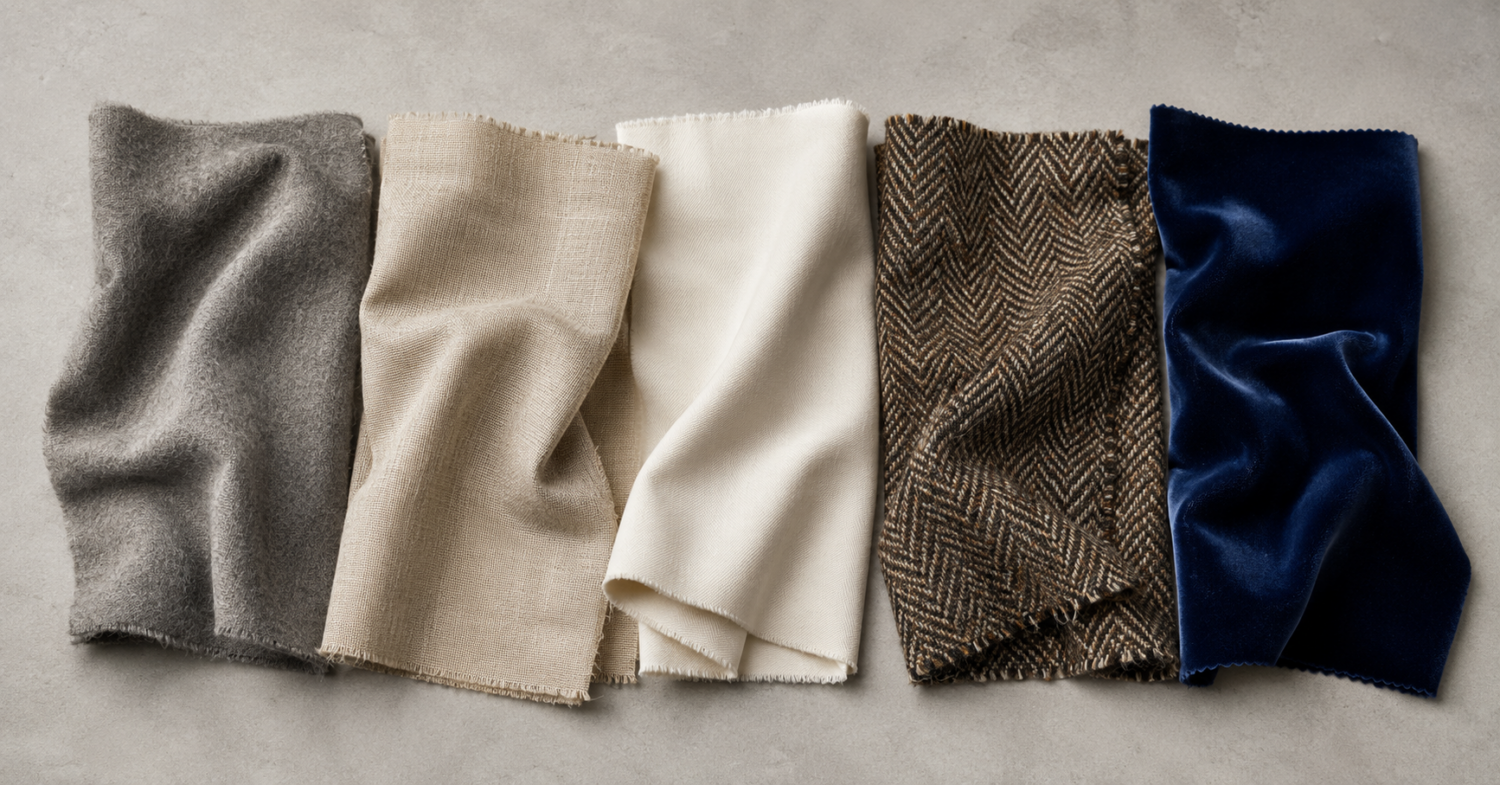
Standard wool is one of the most common fabrics available on suit racks. You can find this natural fiber woven in multiple ways, from tight twill to light plain weaves, and each one has a distinct feel and look.
Wool works in different seasons because it adjusts with the temperature. A midweight wool keeps you comfortable through spring and fall, and heavier weaves hold up in winter. They’re versatile in appearance, too — the fiber structure provides a timeless style and natural drape that complements countless looks.
When you’re shopping, ask about the yarn count and weave type. A finer, tighter weave tends to resist wrinkles better and hold its shape through long days, while yarn count contributes to a suit’s texture, drape, and durability.
Linen
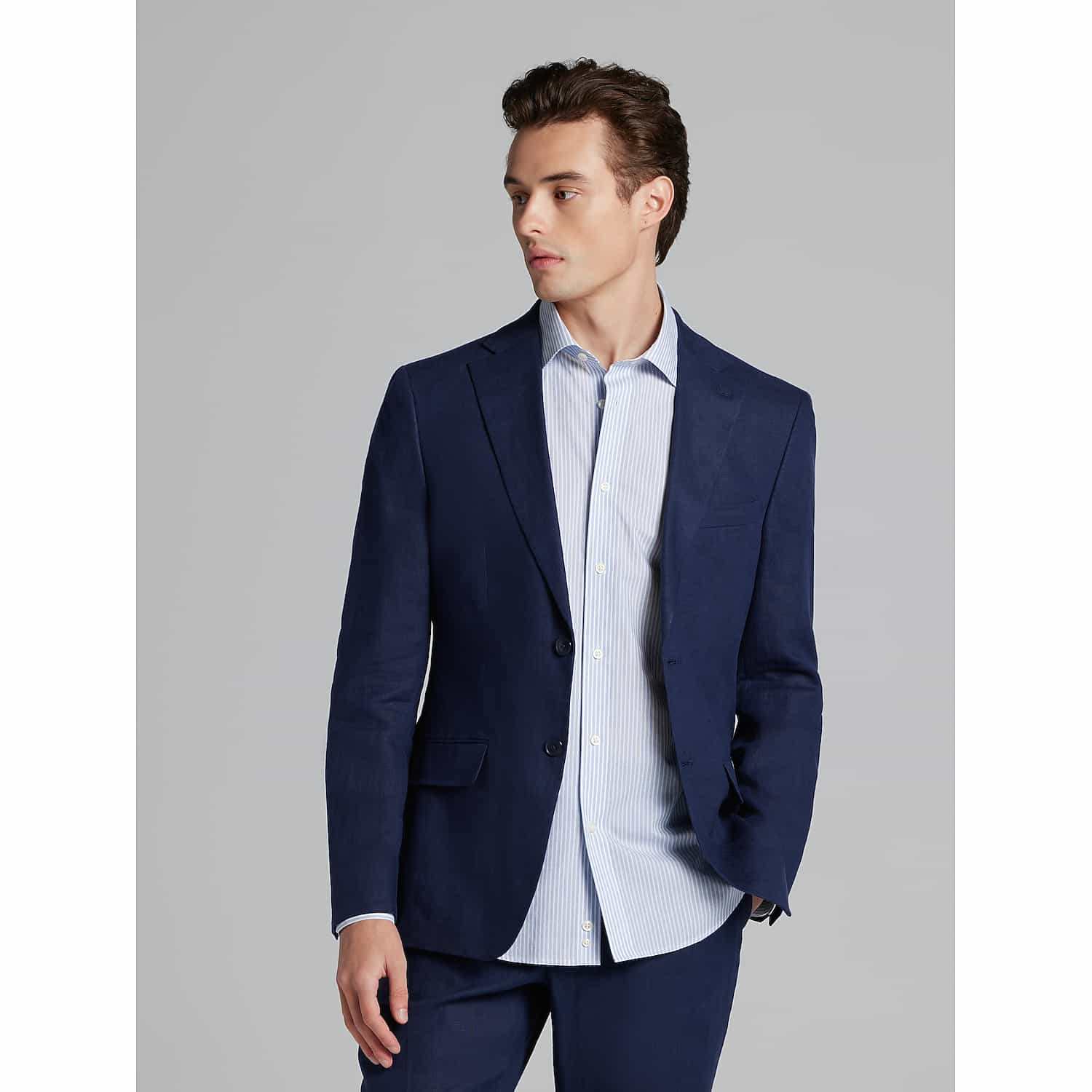
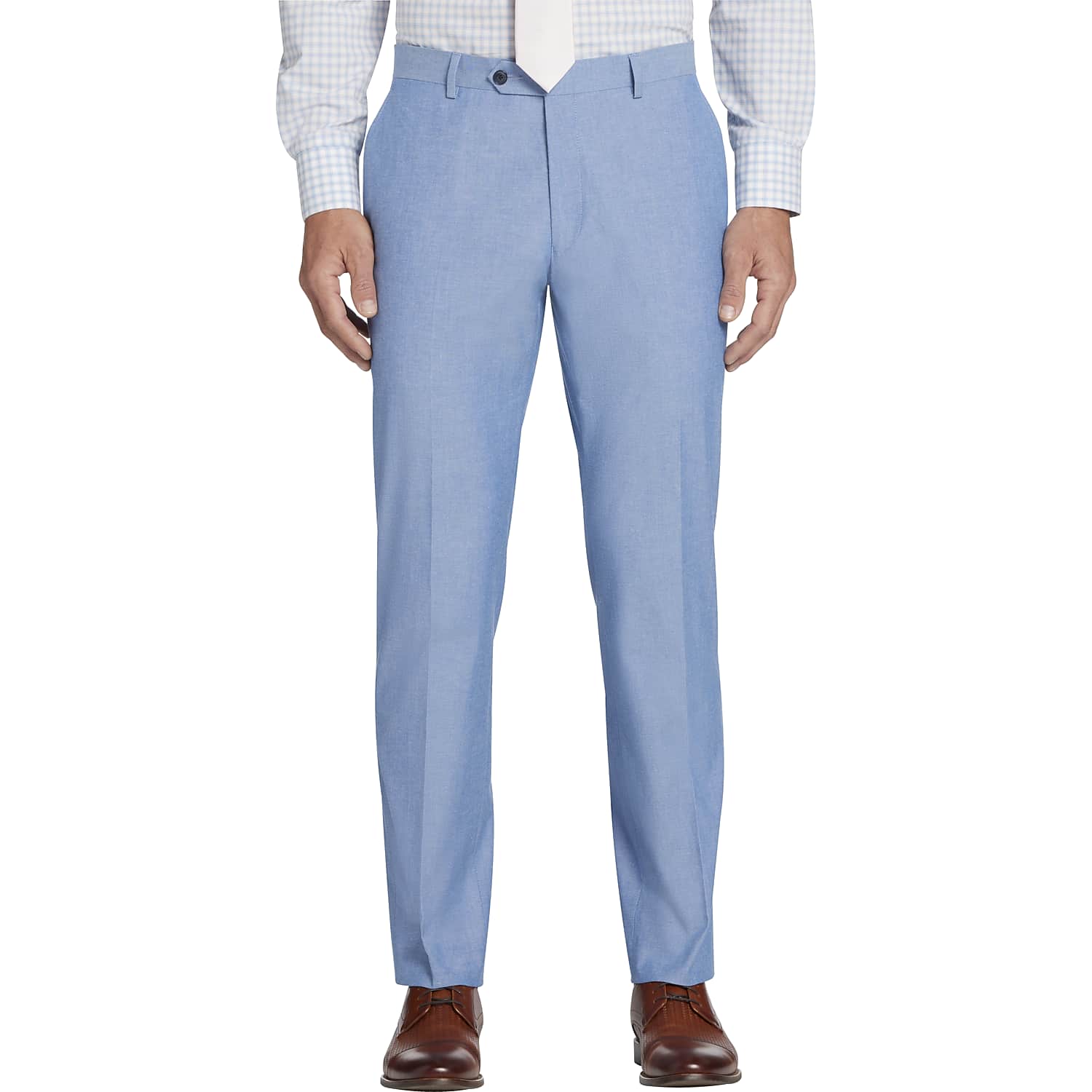
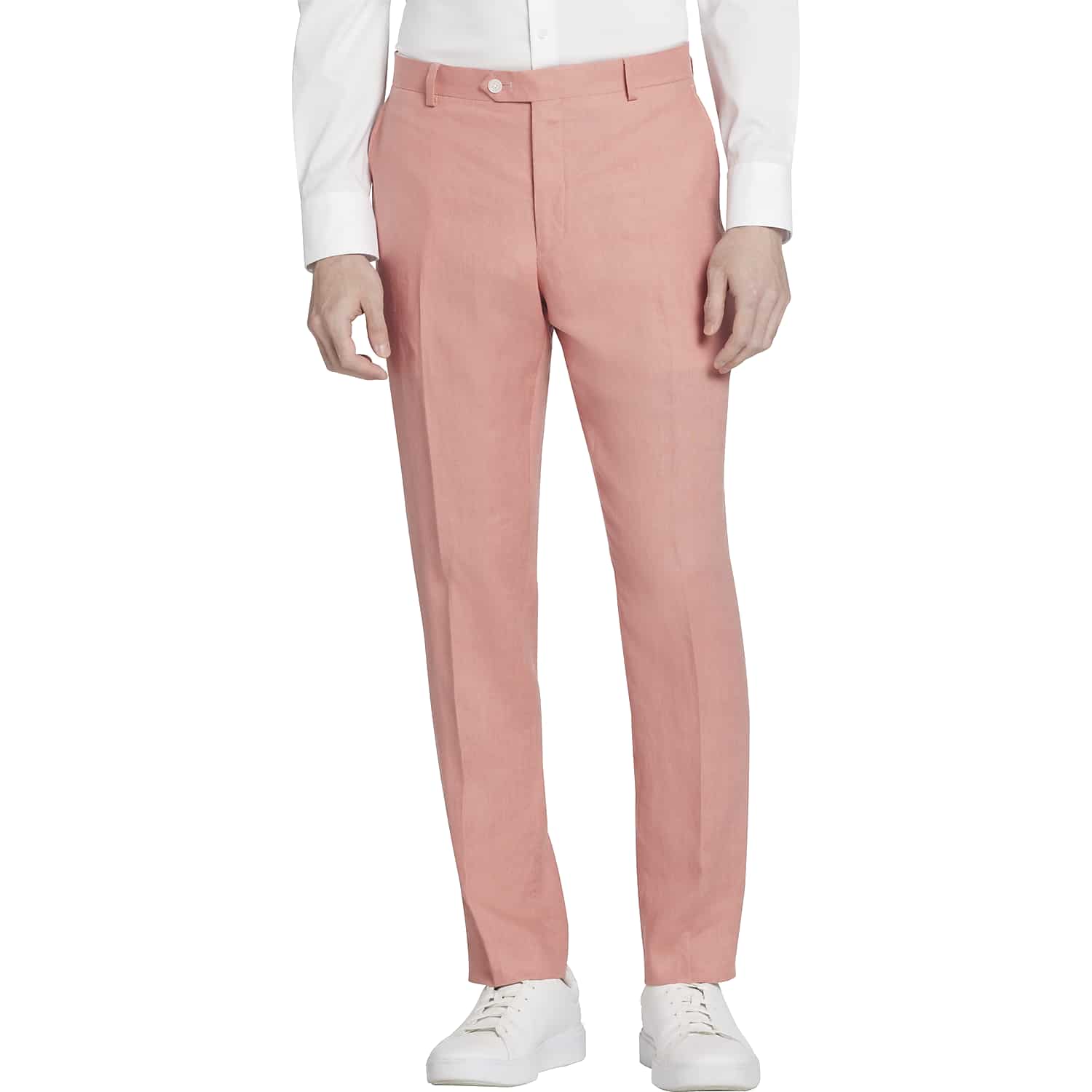
Reach for linen when the hot weather rolls in. Linen suits are lightweight and breathable. They let air pass right through, making them a go-to for summer and outdoor events.
The trade-off here is texture. Linen fabric is naturally relaxed and wrinkles more easily than wool. This might be a dealbreaker for some individuals or occasions, but for others it’s part of a linen look. A few creases in a linen jacket read as casual, not sloppy.
If you want breathability without the wrinkle factor, look for a suit in a woven linen blend. This will hold its shape a little better through the day.

Cotton
Cotton suits are an easy middle ground between dressy and casual. It works well anywhere a stiff, formal suit would be overkill, like business-casual settings and weekend events. The fabric softens with wear, and a cotton twill weave in particular gives a suit a matte finish and a bit more structure.
Because the weave allows for decent airflow, it handles warm weather better than wool. Keep in mind that cotton wrinkles fairly easily.
Tweed
Tweed is a type of wool with a denser texture and distinct personality. It’s woven with thicker, often multicolored yarn, giving the fabric visual depth and a noticeably heavier hand. Tweed clothes are built for cool weather, trapping warmth while adding a rugged, old-school vibe.
This material lends itself well to bold, textured designs, frequently sporting check and plaid patterns. It’s a strong pick for fall and winter events when you want a suit with character.
Velvet
Wear velvet when you want to make a statement. This luxury fabric has a soft pile that catches light and gives a suit a noticeable sheen. A velvet blazer brings a luxurious, high-end feel to any occasion where you want to stand out, like holiday parties and glamorous galas.
Performance Fabric Blends
Performance blends are great for guys who live out of a suitcase and want a look that keeps up with their packed schedule. These fabrics typically combine wool with semi-synthetic and synthetic fabrics like polyester or viscose to reduce wrinkling and add stretch. They might also have a touch of silk for extra softness.
Blend fabrics enhance comfort and wearability for travel and long work days. You get the classic look of a tailored suit without the careful handling through everyday wear.
Wool vs. Linen vs. Cotton Suits
Wool, linen, and cotton are the three fabrics most men choose between when they’re hunting for a suit. Here’s how they compare.
Wool
Wool’s main advantage is how it handles moisture. The fibers absorb a surprising amount of sweat without feeling damp on your skin, which is part of why these suits hold up well.
That same fiber structure gives wool its structured appearance. The fabric holds a clean line at the shoulder and lapel, so the suit looks pressed and pulled together.
Linen
Linen wins if breathability is your top priority. The weave is looser than wool’s, which lets more air move through the fabric. This keeps you noticeably cooler in hot weather and high humidity.
Wrinkling is a factor, but this is fine if you prefer a relaxed look. Some people may even choose linen to avoid a rigid appearance.
Cotton
Cotton lands right in the middle. This fabric is less formal than wool but sturdier than linen. It’s a solid pick when an event calls for something in between a formal suit and a casual aesthetic.
This fabric absorbs moisture reasonably well but doesn’t release it as efficiently as wool or linen. This means it can feel warmer in sticky, humid conditions. As far as wrinkling goes, it creases more than wool but less than linen.
Best Suit Materials for Different Occasions
When you’re dressing for an event, your suit’s fabric should match the vibe. Here’s how to pick the right look depending on what’s on your calendar.
Business
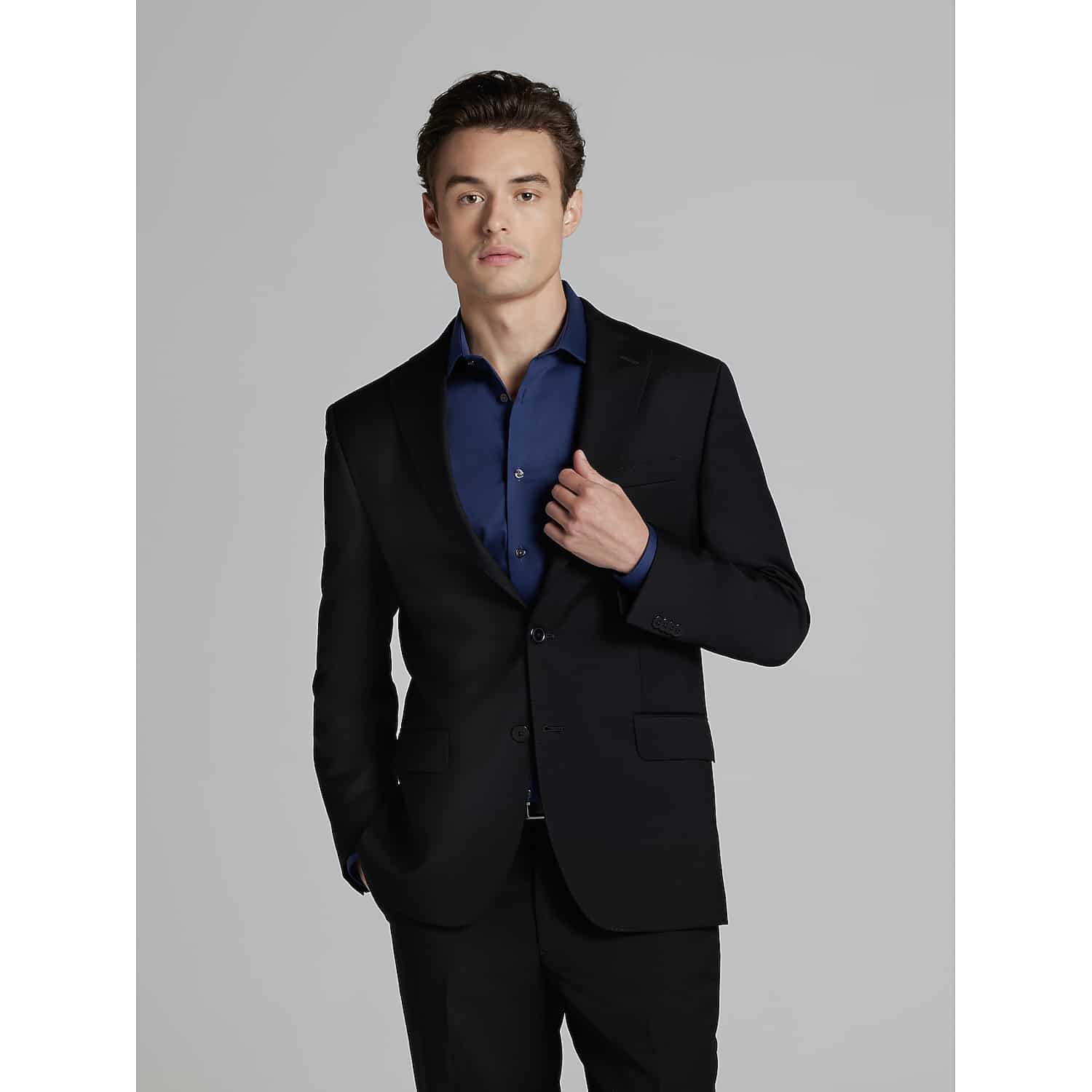
Wool is the smartest fabric for the office. Worsted wool in navy or charcoal holds its shape through meetings and looks just as sharp at 5:00 p.m. as it did that morning.
Summer Weddings
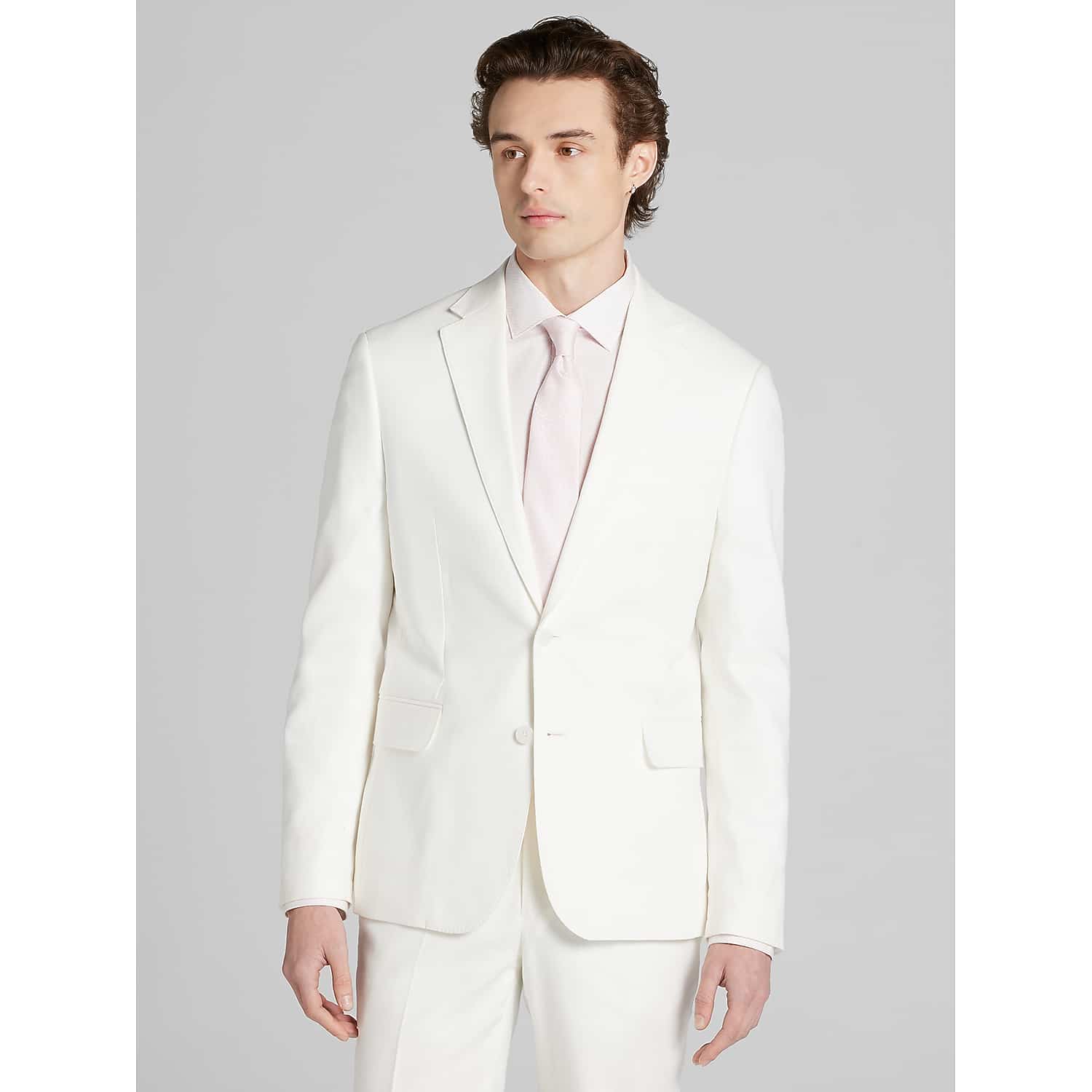
When the invitation says outdoor ceremony, reach for something lightweight. Linen suits keep you comfortable in hot weather, and they offer a comfortable appearance that doesn’t outshine the happy couple. If you want a touch more formality, try a lightweight wool.
Winter Events
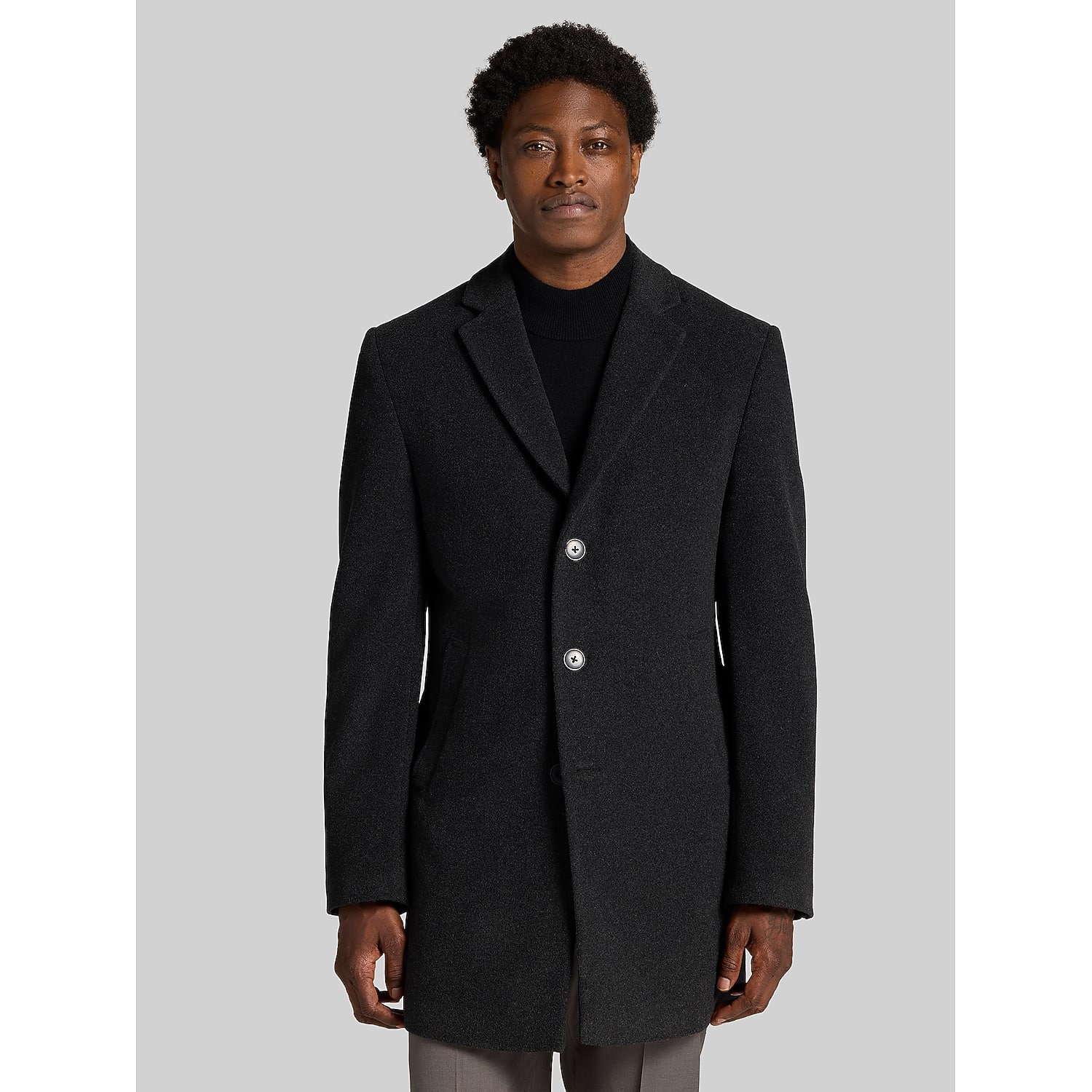
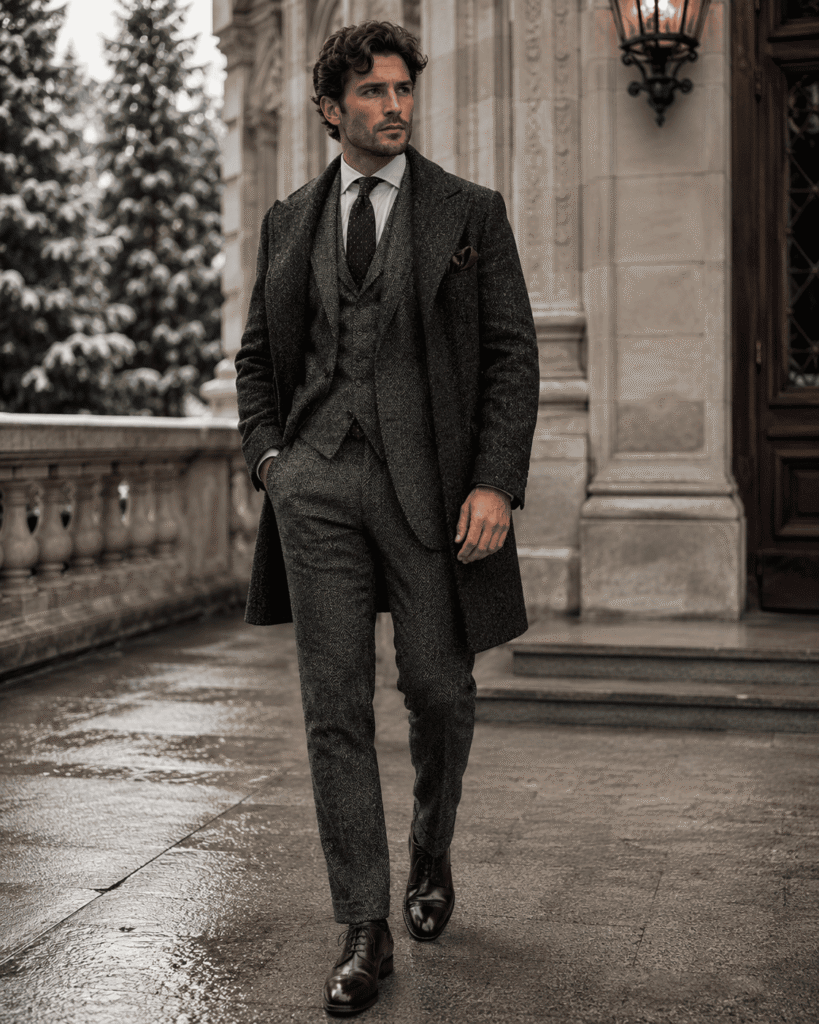
Cooler months call for a fabric with some heft. Tweed and heavier wool weaves are warm and give your suit more texture than a standard summer pick.
These fabrics also tend to have a cleaner drape, which helps when you’re layering a coat on top and still want the suit underneath to look smooth.
Formal Evening Event
For fancier events, try a wool tuxedo or black velvet jacket. They both have a luxurious look and feel, especially when you pair them with a silk tie and simple pocket square. Both outfits offer a high-end appeal that fits black-tie events perfectly.
Men’s Wearhouse Helps You Choose the Right Suit Fabric
Men’s Wearhouse carries suits for every occasion and season, including breathable picks for summer weddings and heavier weaves for cooler months. Our team can help you compare fabrics and find the best fit, whether you’re dressing for the office or standing up at a friend’s wedding.
Visit Men’s Wearhouse today to find suit fabrics that look sharp and give you confidence and comfort in every situation.
Shop Related Products