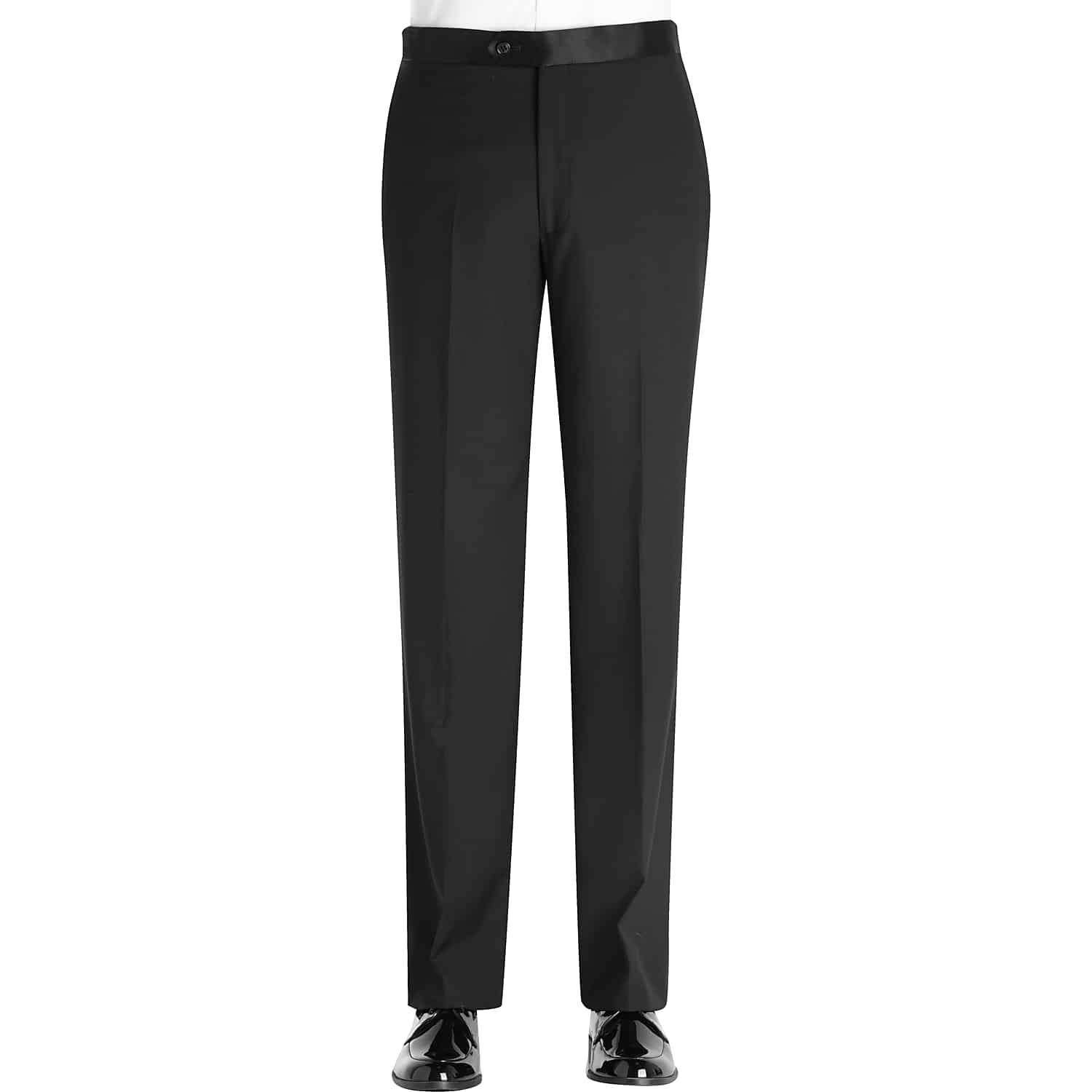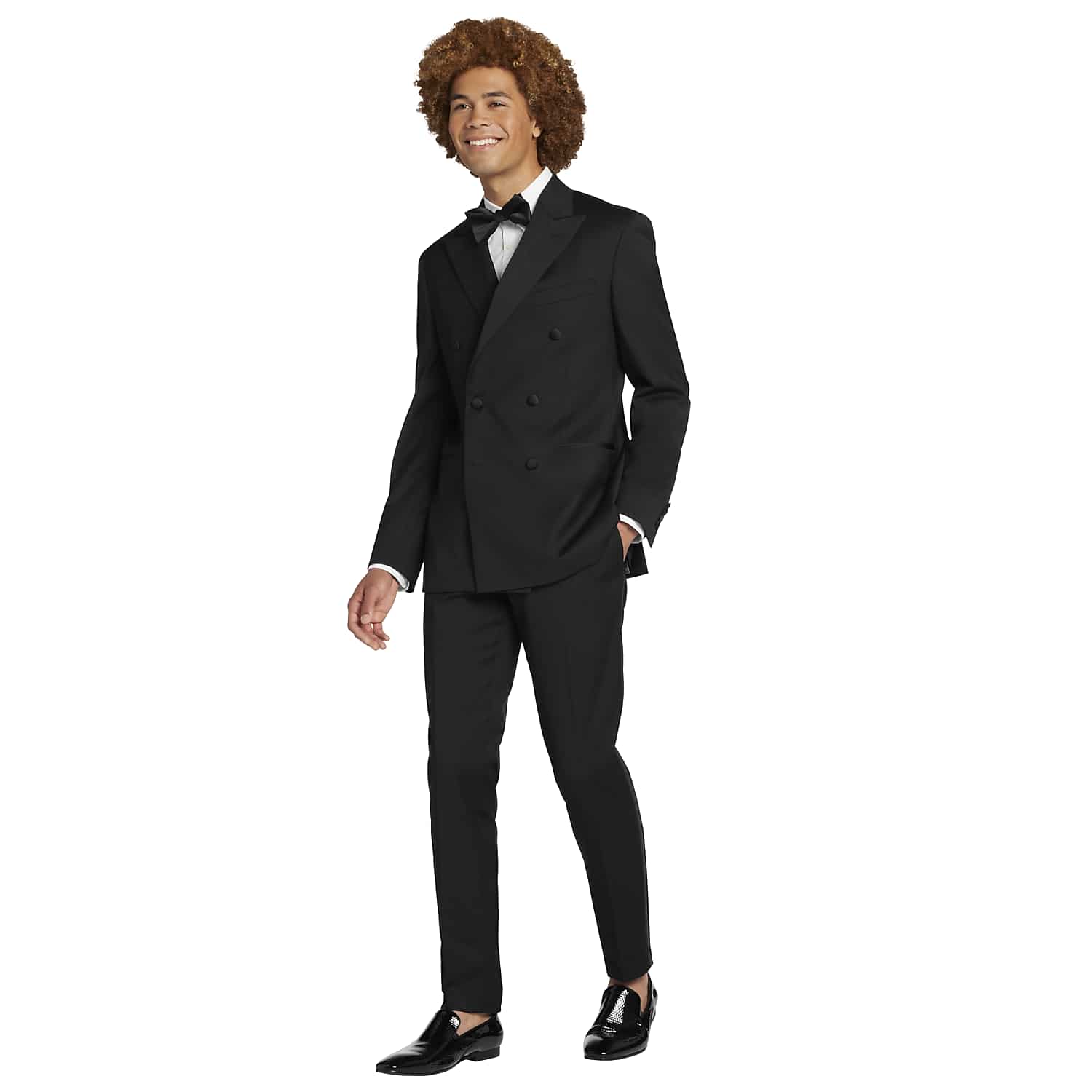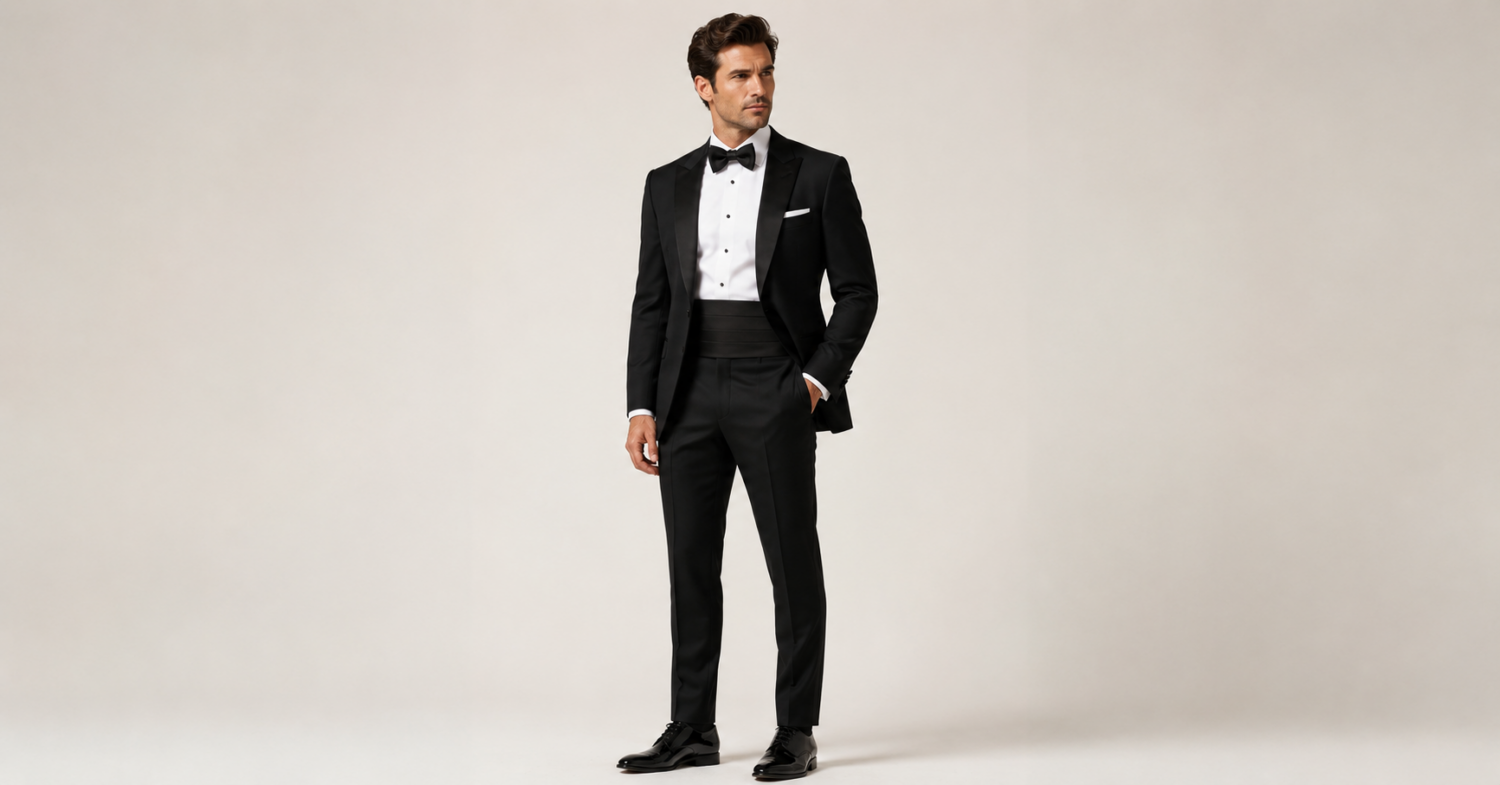

Belts are standard with many suits, but tuxedos follow a different set of formal wear rules. Their trousers are meant to sit neatly at the waist without creating a visible break between the shirt and jacket.
Adding a belt, especially one with a noticeable buckle, interrupts that clean waistline and makes the outfit look closer to business wear than black tie. The good news is that going beltless doesn’t mean sacrificing comfort or security. Tuxedo pants are designed to work with other support and finishing options, provided they fit correctly.
Read on to learn more about why belts don’t belong with tuxedos and what to wear instead.
Do You Wear a Belt With a Tuxedo?
In general, you should not wear a belt with a tuxedo.
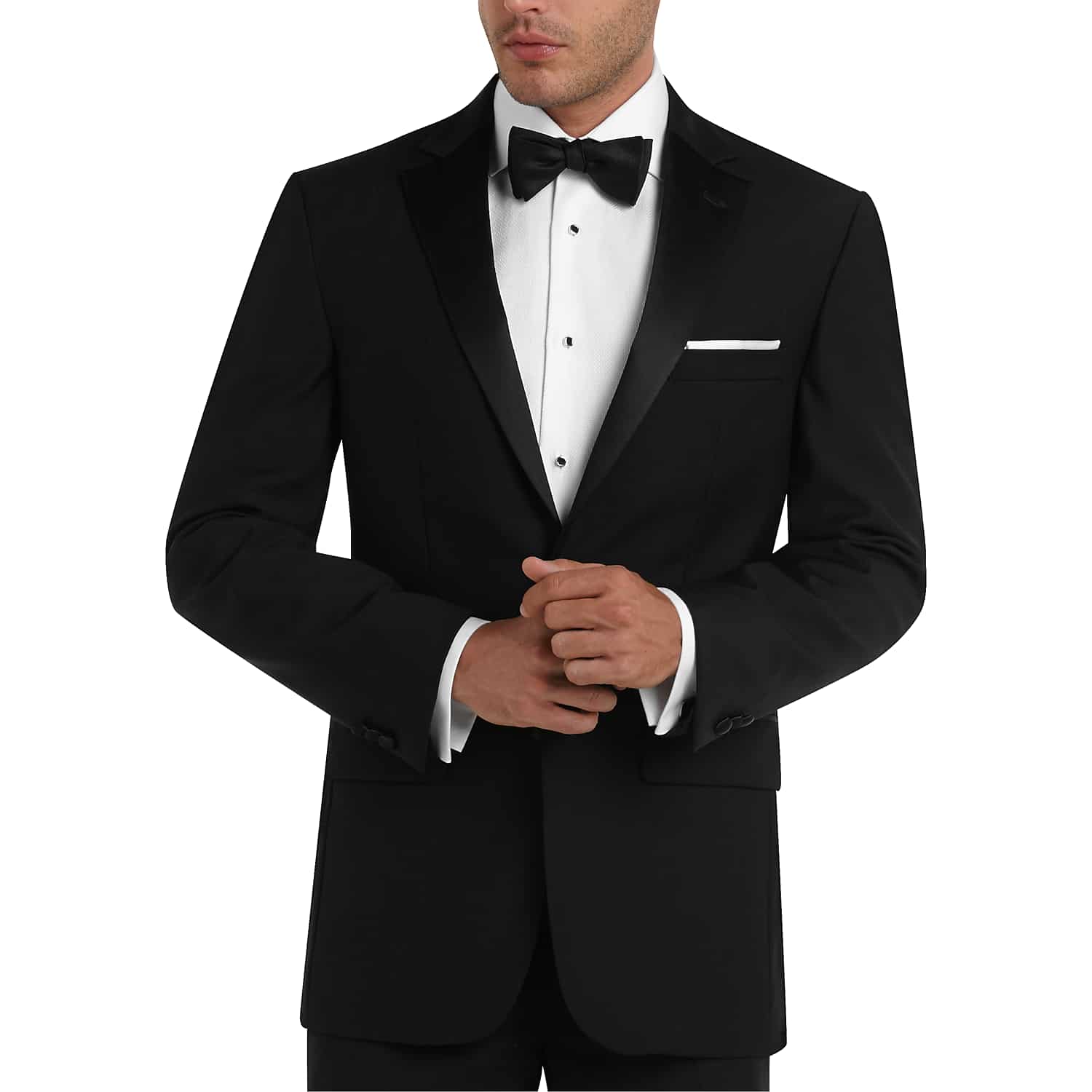
A tuxedo sits above a regular suit in the formality pyramid, so accessories that work for the office or a standard wedding suit don’t always suit black-tie events. Traditional tuxedo etiquette favors a seamless waistline, with no prominent buckle dividing the shirt from the trousers.
This rule dates back to 1865. The Prince of Wales — later King Edward VII — asked Savile Row tailor Henry Poole to create a shorter, tailless alternative to the formal evening tailcoat that was popular at the time. The dinner jacket was intended for private evening events rather than business or daytime wear. By the mid-1880s, the style had reached the United States, where it became associated with New York’s Tuxedo Park and its famous 1886 autumn ball.
Black tie remains a recognizable evening dress code. Its details work together and signal a clear sense of occasion. A visible belt introduces an everyday, practical element that belongs with a business suit, making it look less ceremonial.
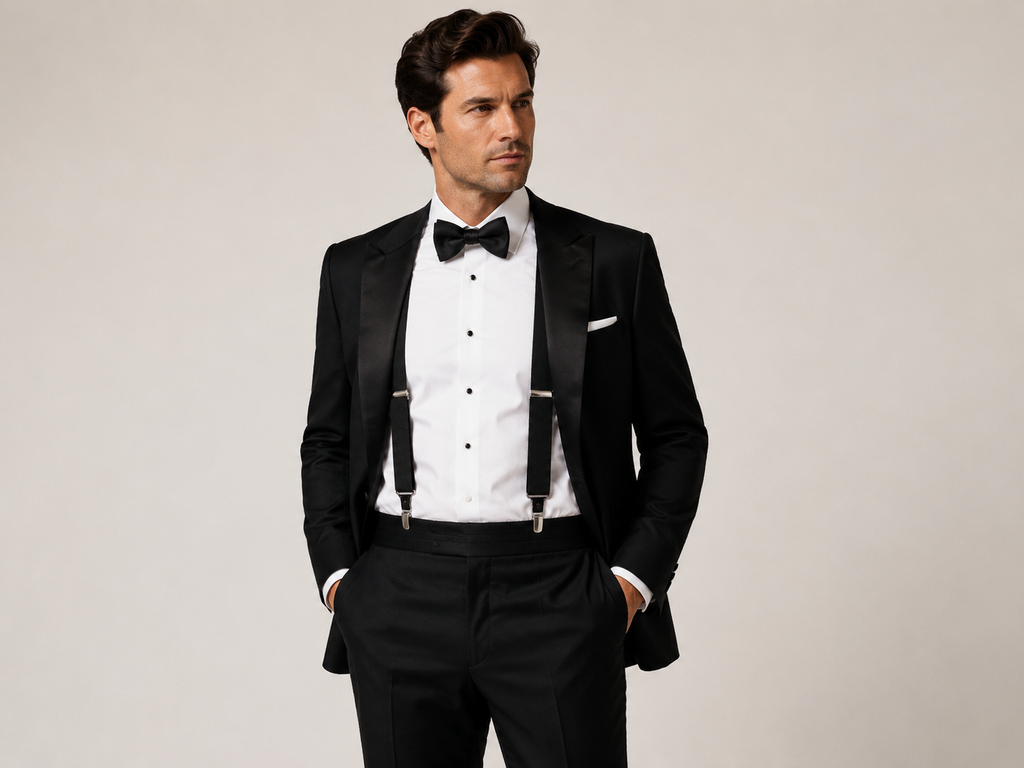
For over a century, tuxedo pants have been designed to stay up without a belt. Side adjusters or formal suspenders provide support. A cummerbund or waistcoat creates a smooth finish for a clean transition beneath the jacket.
Why Don’t Tuxedos Typically Have Belt Loops?
Traditional tuxedo pants usually skip belt loops because the waistband isn’t meant to stand out. The trousers are part of a complete black-tie outfit. Belt loops, however, would suggest that you’re meant to accessorize the waistband and make it visible, while black-tie tailoring has that area recede beneath the jacket.
The restraint allows the trousers’ satin stripe along the outer seam to remain the main visual detail. This stripe echoes the sheen on peak or shawl lapels on the jacket. A leather belt and metal buckle would introduce another texture and a strong horizontal line, which disrupts the clean, elongated look.
Instead, a cummerbund or waistcoat conceals the waistband and the point where the shirt meets the trousers. This prevents a patch of white dress shirt from showing beneath the jacket’s buttoning point when you move. The waistband should disappear rather than become a focal point of the outfit, so belt loops would add unnecessary bulk instead of serving the tuxedo’s intended design.
What Should You Wear With a Tuxedo Instead of a Belt?
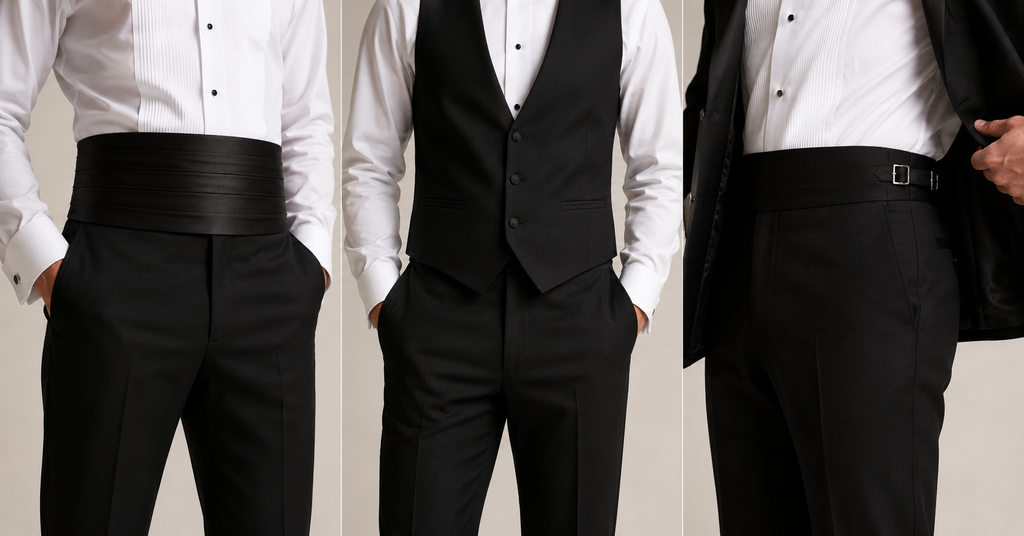
You need a way to keep your trousers securely in place. For a traditional black-tie event, you also need something to dress the waist. What you choose depends on the pants’ construction and whether you prefer a cummerbund or waistcoat.
Tuxedo pants should sit at your natural waist, usually a little higher than everyday trousers. The waistband should stay in place without pinching. Suspenders and adjusters help with support, but they can’t fix trousers that are too large.
Formal Suspenders
Formal suspenders are narrow fabric straps that fasten to buttons sewn inside the waistband, which keeps extra slack hidden. They support the trousers from above, which helps the pants hang cleanly through the hips and legs. That makes suspenders a great option during long events where you might be sitting and standing a lot. They should remain beneath your jacket, and you can even cover them at the waist with a cummerbund or waistcoat.
Cummerbund
A cummerbund is a wide, pleated sash worn around the waist, typically in black silk or satin to match the tuxedo’s lapels. To wear a cummerbund with a tuxedo, wrap it over the waistband with the pleats facing upward.
Unlike suspenders, a cummerbund doesn’t hold your pants up. It does, however, create a bridge between the shirt and trousers, which keeps the shirt’s lower edge from becoming visible when the jacket opens. Wear it at your natural waist and pair it with suspenders or trousers that already fit properly for a secure and comfortable look.
Waistcoat
A formal waistcoat is a low-cut vest worn beneath the tuxedo jacket. It usually matches the tuxedo and leaves a good amount of your dress shirt visible while extending far enough to cover your waistband.
A waistcoat is a great alternative to a cummerbund. It adds depth to your outfit through an extra layer and keeps the torso area looking complete when the jacket is unbuttoned. When shopping, choose a waistcoat designed for black-tie rather than a high-cut business-suit vest, as you want most of your shirt to be visible.
Wear either a waistcoat or a cummerbund — never both together.
Side Adjusters
Side adjusters are small fabric tabs with buckles or buttons built into either side of your trousers’ waistband. They sit flat and blend into the pants, so you can tighten or loosen the waist slightly without adding another visible accessory.
They’re best when your pants already fit closely and you need a minor fitting adjustment. Tighten both sides so the waistband stays centered, and check that the fabric lies flat without puckering or making the pockets flare outward.
Can You Wear a Belt With Tuxedo Pants if They Have Belt Loops?
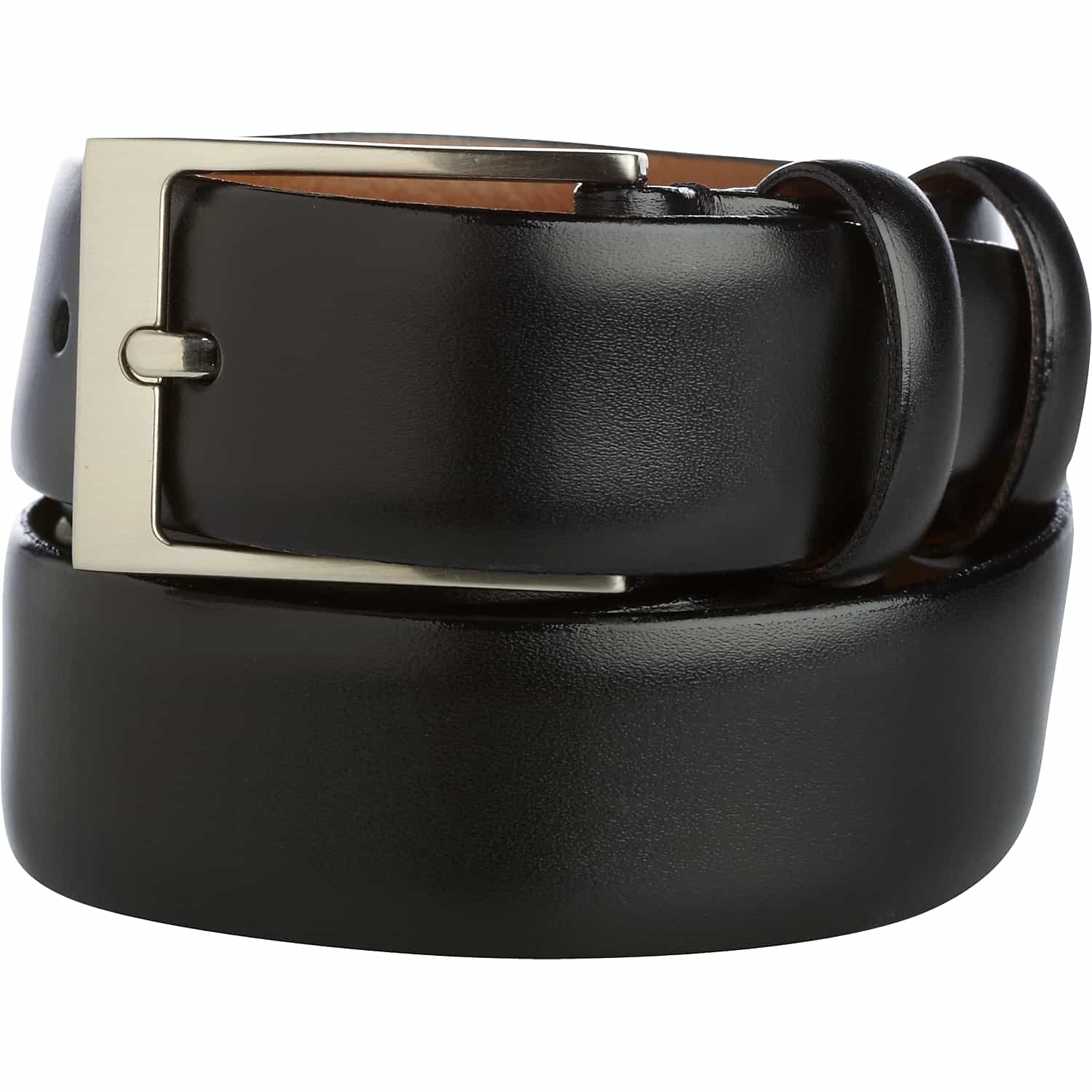
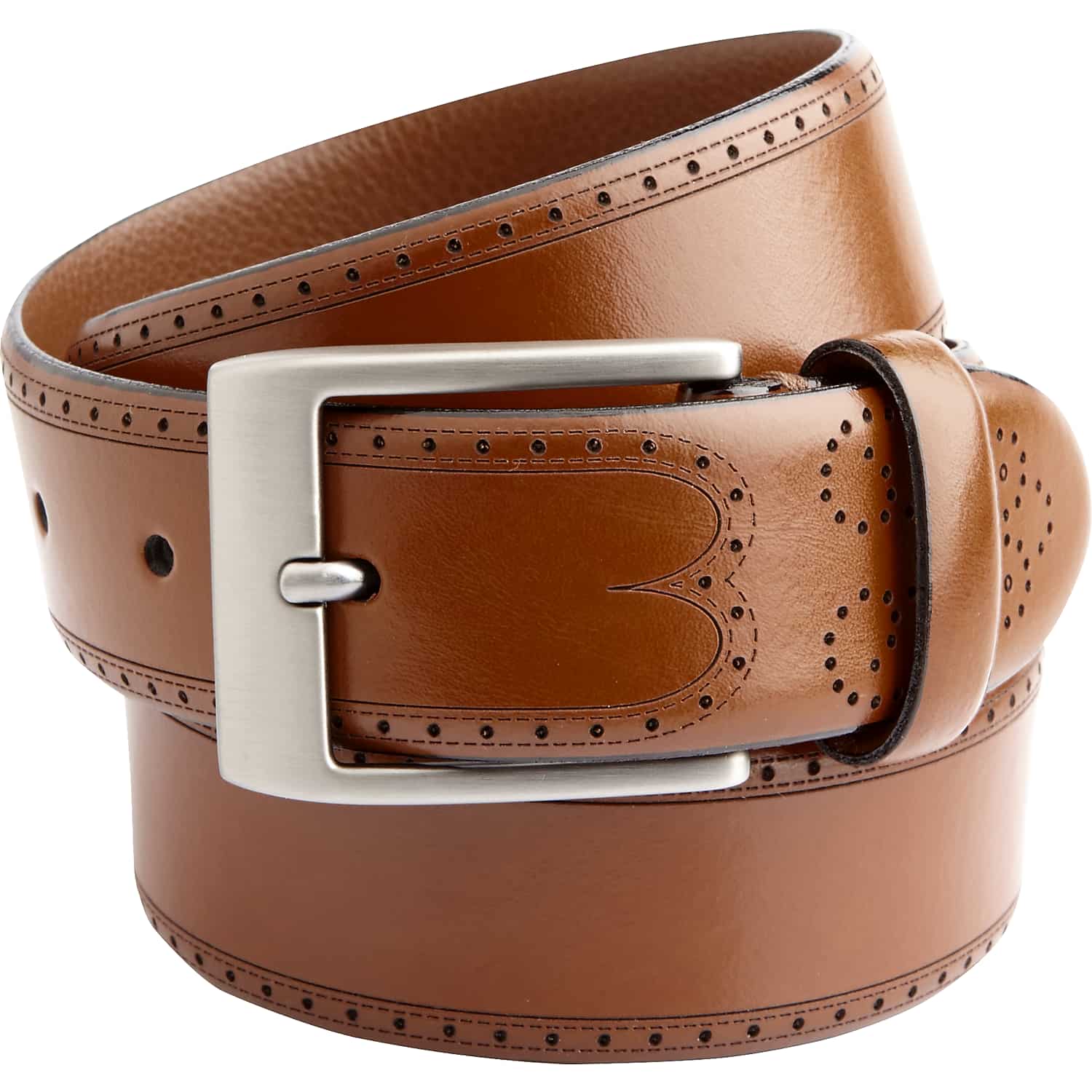
You can wear a belt if your tuxedo pants have belt loops, but it still isn’t the best choice for a formal event. Belt loops sometimes appear on less traditional tuxedo-inspired styles designed to work across several dress codes. But a leather strap and buckle still creates that horizontal break at the waist, making the trousers look more like regular suit pants.
For a black-tie occasion, leave the loops empty and use the support already built into the trousers. Formal suspenders or side adjusters keep the pants up and secure, while a cummerbund or waistcoat completes the look at the waist.
When a belt is unavoidable, choose a slim black dress belt with a minimal, understated buckle. It should blend into your outfit as quietly as possible and remain mostly hidden underneath the jacket.
Build the Black-Tie Look Without a Belt at Men’s Wearhouse
When it comes to black-tie formal wear, no single detail should feel louder than the tuxedo itself. A well-styled tux is a curated outfit from the bow tie down to the shoes, and black-tie accessories like cufflinks or studs add enough extra flourish without competing for attention.
Men’s Wearhouse can show you how to wear a tuxedo with confidence. With professional tailoring, your trousers can fit securely without relying on a belt, and you’ll be ready for everything from weddings to formal dinners.
Get every tuxedo detail right and complete your black-tie look with Men’s Wearhouse.
FAQ
Can You Wear a Belt to a Black-Tie Optional Event?
Black-tie optional lets you choose between a tuxedo and a dark formal suit. A belt is fine with a regular suit if its trousers have loops. If you’re wearing a tuxedo, skip the belt.
What Tuxedo Shoes Work for Black Tie?
Patent leather oxfords are the traditional tuxedo shoes, while polished black leather oxfords offer a slightly softer, less lacquered finish that still suits the dress code.
What Details Define a Classic Tuxedo?
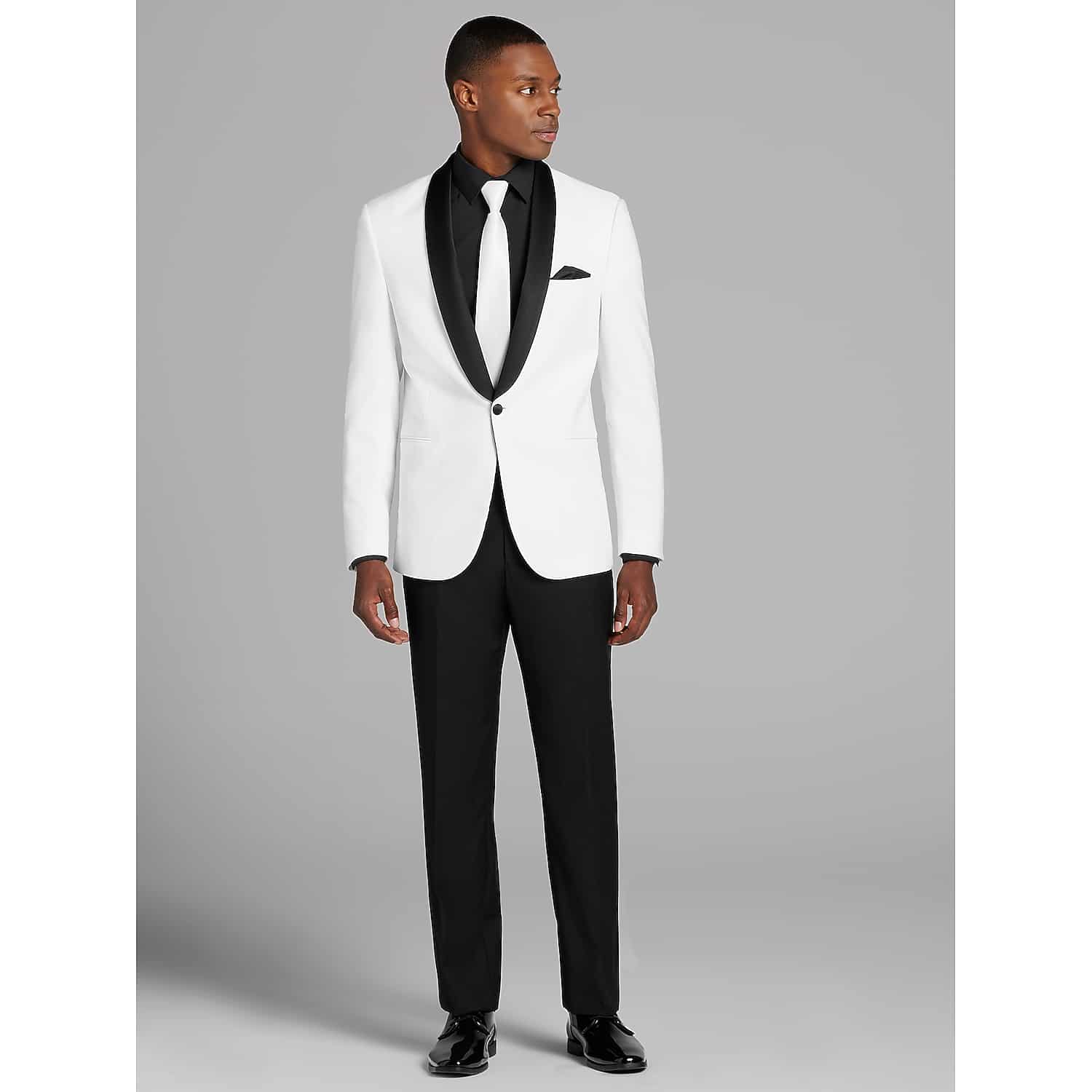
A classic tuxedo either has sharper peak lapels, which point upward, or rounded shawl lapels. Its formal shirt often features French cuffs, which fold back and fasten with cufflinks. A white silk pocket square is optional but adds a crisp finishing touch if you want a subtle accessory.
Shop Related Products