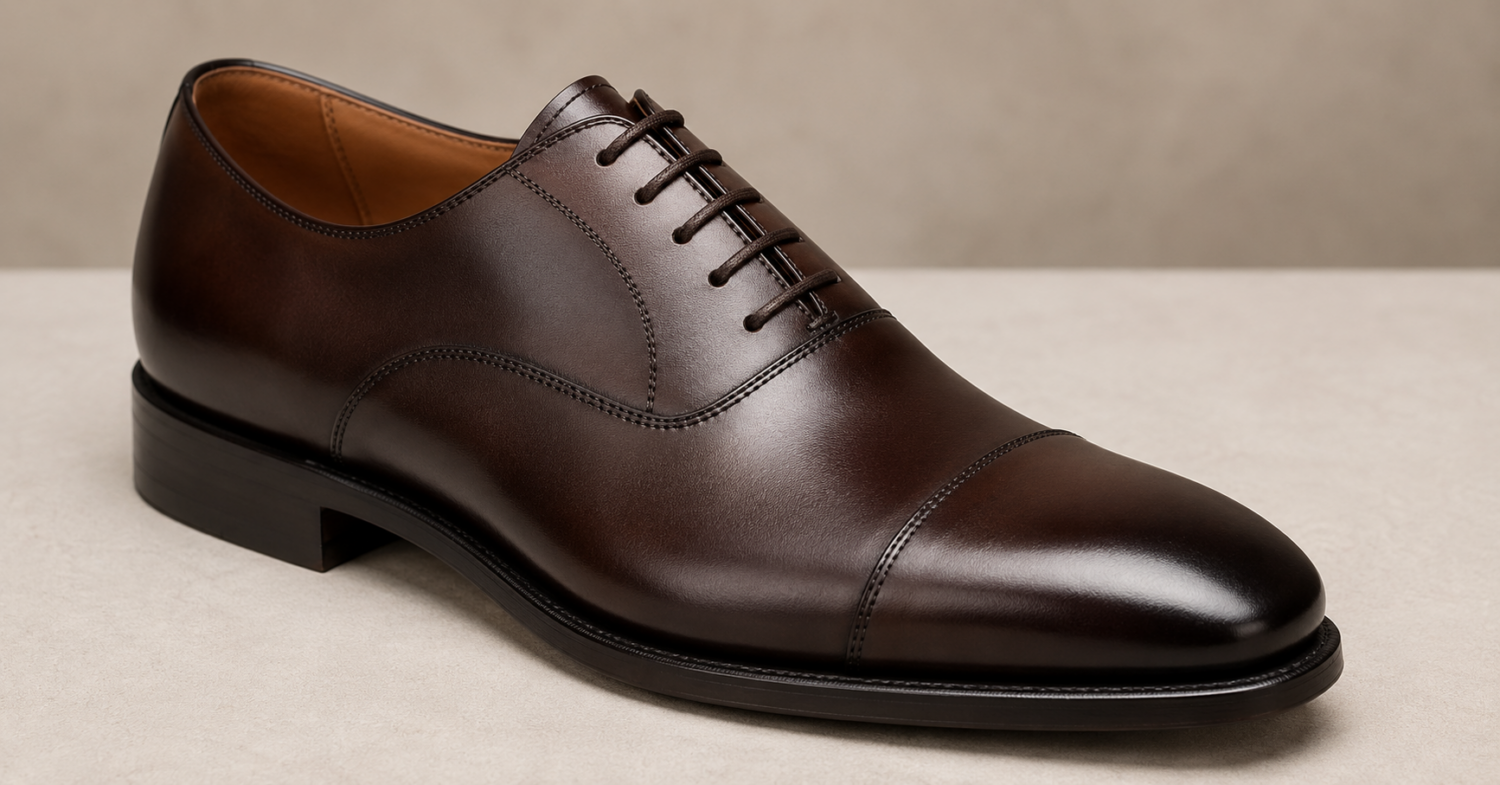

When it comes to formalwear, it’s easy to focus solely on finding the right suit and overlook details like how to lace dress shoes. Most people won’t notice the lacing at first glance, but it still influences the final impression.
A clean lacing pattern makes a pair of dress shoes look more refined. Uneven laces take away from an otherwise polished outfit. The way you tie your shoes also affects how they sit on your feet. This can influence comfort and help the shoe keep its shape during wear.
Let’s explore how to properly lace dress shoes so your footwear looks refined and feels secure.
Why Dress Shoe Lacing Matters
Lacing goes beyond function. It quietly shapes style and comfort. A neat lacing pattern brings balance and symmetry to the shoe, which complements the sleek design of dressier footwear like oxfords and derbies. Poorly laced shoes draw attention for the wrong reasons. Uneven laces and bulky crossings can make a well-tailored suit feel sloppy or unfinished.
Lacing also influences comfort. If you’ve ever dealt with pressure on the top of your foot, tight spots near the toes, or slipping at the heel, your lacing pattern may be the problem. Simple adjustments to the laces can improve the fit, especially for people with wide feet and high arches.
Different threading techniques also change the character of a shoe. Some methods have a refined look that’s better for business attire and formal occasions. Others lean more casual and pair well with relaxed outfits. The way you lace dress shoes should always match the setting and the rest of your ensemble.
Best Dress Shoe Lacing Styles
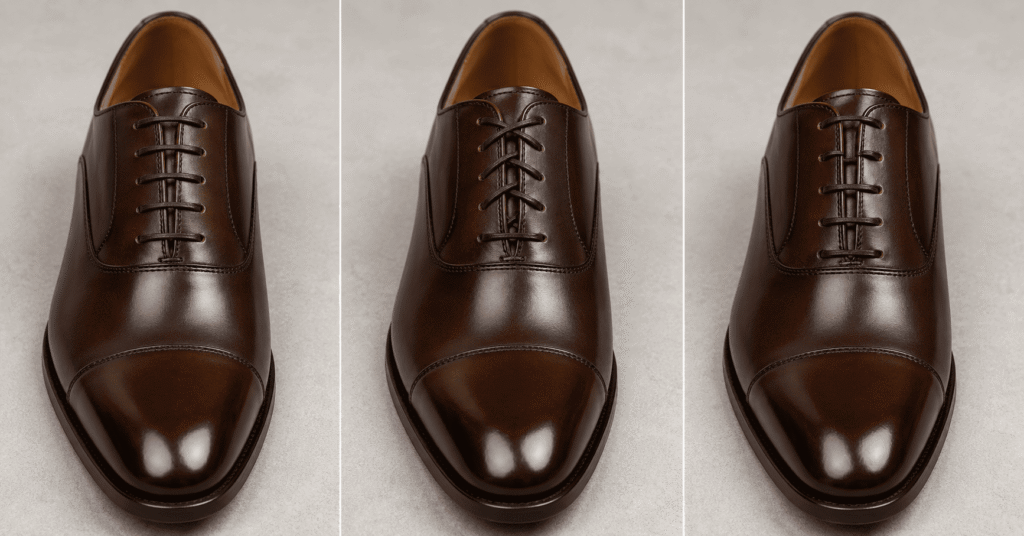
Here’s how to lace a men’s dress shoe in three classic styles.
Straight Bar Lacing
With straight bar lacing, your shoelaces run horizontally in parallel bars. Instead of crisscrossing, they form straight lines across the tongue, with the laces hidden beneath each row inside the shoe. The result is a streamlined and symmetrical pattern.
- Why it works: Straight bar lacing is popular for dress shoes like oxfords because it reduces clutter on the visible upper and keeps the tongue centered. It’s more about presentation than function, but it looks particularly nice paired with a slim-fit suit or tailored dress pants.
- When to use it: This style works best for business settings and formal events.
- Difficulty level: It’s fairly easy to learn, but it takes some patience when you’re starting out.
Crisscross Lacing
Crisscross lacing is the most common method, where the laces alternate crossing over each other in an “X” pattern as they move up the shoe. Each shoelace passes diagonally from one side to the other, creating a familiar woven look.
- Why it works: This technique is quick and gives you an evenly distributed fit that works well with almost any lace-up shoe. Plus, its versatility makes it suitable for both formal and casual footwear.
- When to use it: Use crisscrossing on derbies and oxfords for weddings, dinner dates, and everyday wear.
- Difficulty level: This is a very basic and beginner-friendly shoe lacing method.
European Straight Lacing
European straight lacing forms horizontal bars on the outside of the shoe. Unlike straight bar lacing, the laces cross diagonally underneath the eyelets inside the shoe. This keeps the exterior looking uniform while adding stability on the interior.
- Why it works: It combines the neat appearance of straight bar lacing with a secure fit from the crisscross tension. European straight lacing also helps the shoe hold its shape, preventing the upper from loosening or collapsing on itself.
- When to use it: Wear it with oxfords to the office or dressy occasions like an anniversary celebration.
- Difficulty level: Expect some difficulty until you figure out the intricate internal pattern.
Oxford vs. Derby Shoes: Does Lacing Change?
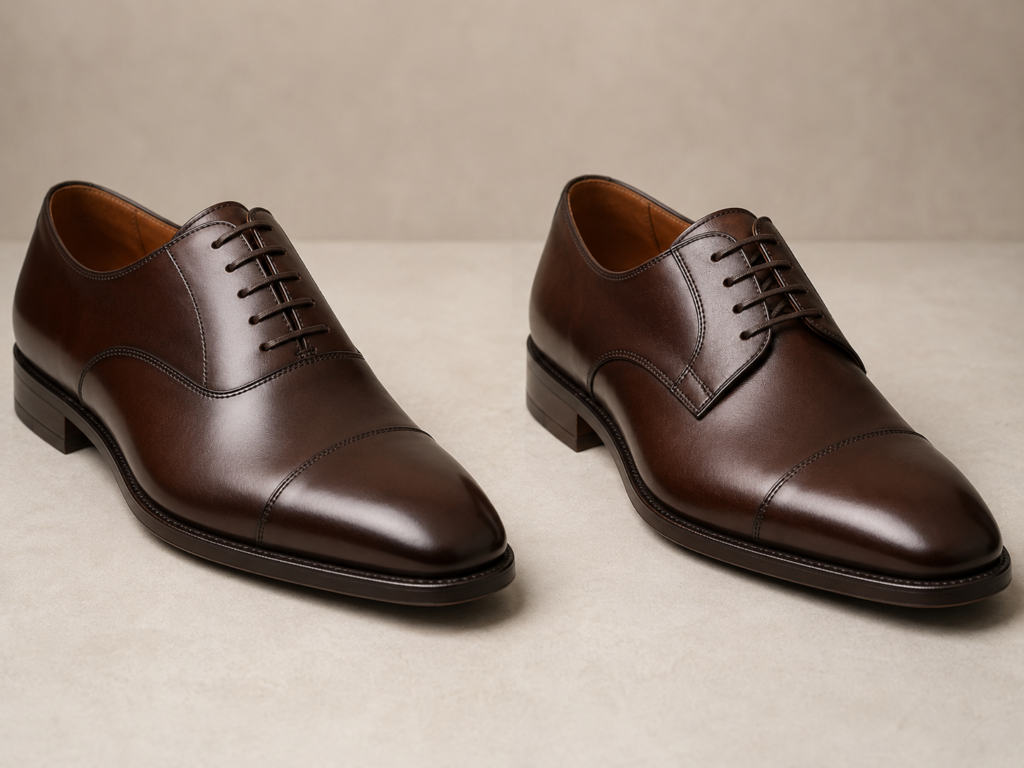
Oxford and derby constructions differ, and these differences determine how you should lace each style. Oxfords use a closed-lacing system: The eyelet tabs sit underneath the vamp — the front-most part of the upper that covers your toes. Because of this hidden structure, straight bar lacing works better with their design. The clean horizontal lines accentuate the sleek and minimal look of oxfords and allow the eyelet flaps to close evenly toward the center.
Derbies feature an open-lacing system, where the eyelet tabs sit on top of the vamp. This gives the shoe more flexibility and a slightly relaxed fit. Crisscross lacing works best with derbies, complementing the open structure and helping control the spread of the quarters — the rear part of the upper. The classic “X” pattern reduces pressure on top of the foot and allows an adjustable fit across the instep.
Tips To Help You Lace Dress Shoes Properly
These tips help you create a neat, balanced pattern that supports both the look of the shoe and the way it fits:
- Set up a clean starting point: Gently remove your old laces and smooth the tongue so it sits flat on the shoe.
- Make sure the laces are even: Line up the ends at equal length to prevent one side from pulling tighter than the other later on.
- Keep the tension balanced: Apply the same pressure on both sides as you work your way up to keep the fit consistent.
- Align bars or crosses: Be sure each bar or “X” sits in a straight, even line as you move upward, making adjustments as needed.
- Tie your shoes symmetrically: Finish with a centered knot and even loops so the sides match in size and everything is balanced.
Common Dress Shoe Lacing Mistakes To Avoid
Even a well-laced shoe can lose its clean look if a few small details are overlooked. Here are common mistakes that affect both appearance and comfort:
- Uneven lace length: When one lace is noticeably longer, the shoe looks off-balance and sloppy. Fix the issue by starting over and making sure the lace ends are equal before tying them.
- Twisted laces: This issue adds unnecessary bulk that makes the upper look messy. Take a moment to straighten the laces as you go, especially after each eyelet, to keep the pattern flat and uniform.
- Over-tightening: Pulling too tightly distorts the shoe’s shape and creates awkward creases across the upper. Instead, keep tension firm but even so the shoe closes smoothly without warping the leather or damaging its structure.
- Wrong lacing style: Loose, casual lacing on formal shoes throws off the look you’re going for. Stick with straight bar lacing for oxfords and crisscross lacing for derbies.
- Old or worn laces: Frayed and mismatched laces can cheapen the look of high-quality shoes, so replace worn laces and opt for neutral colors that match the shoe.
Choosing the Right Dress Shoe Laces
The laces you choose are just as important as how you tie them. Most athletic-style laces are too thick and clunky for dress shoes, and they can make even a well-crafted oxford or derby look less refined. Skip this style in favor of thin, waxed shoelaces that hold their shape and create a formal finish.
Slim, rounded laces work best with oxfords. They keep the profile understated and match the closed-lacing construction. The open-lacing system of derbies is a bit more relaxed, so wider flat laces are a better choice for their easygoing aesthetic.
And don’t forget to match your lace color to your shoe color: black shoes with black laces, and brown shoes with brown tones. This way, you have visual harmony within your outfit.
Men’s Wearhouse Helps Complete the Look
A statement-making look is built from the ground up, and every detail matters. Men’s Wearhouse makes it simple to create a polished outfit for any formal occasion. You’ll find dress shoes to wear to weddings and corporate events, along with tailored suits that fit well and feel comfortable. Accessories like ties, belts, and pocket squares round out the ensemble and add a personal touch.
If you’re unsure how to pull it all together, in-store guidance and styling support help you match pieces with total confidence. Thanks to the experts from Men’s Wearhouse, it’s never been easier to craft a formal look that’s uniquely yours.
Shop Related Products