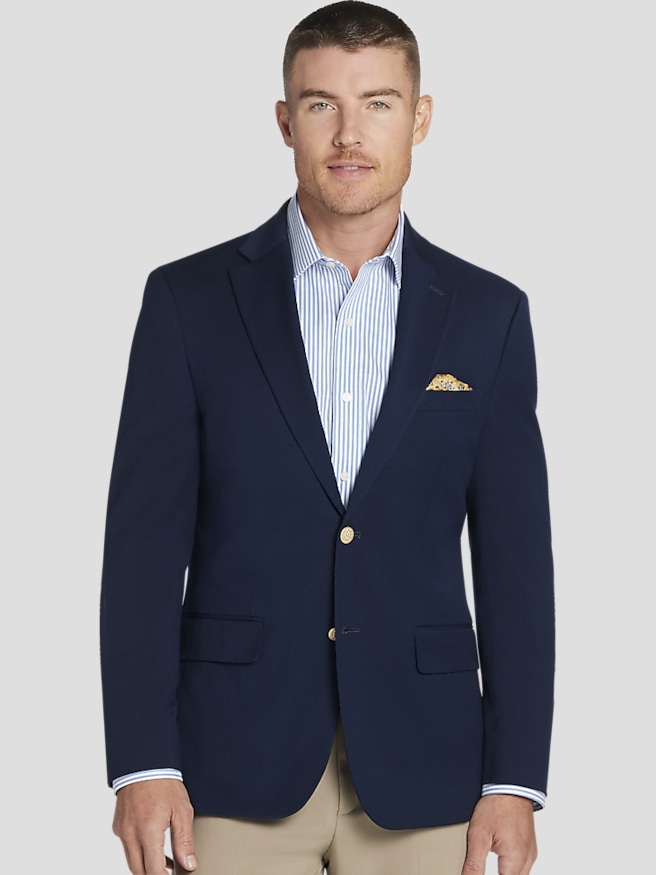
Men's jackets bring together everyday practicality and a finished appearance, adding shape to an outfit without requiring a full suit. Rooted in classic American sportswear, the category spans relaxed zip-front silhouettes, streamlined stand-collar designs, and more structured shapes that sit comfortably alongside tailored trousers. The distinction is often in the details: a neat collar frames a polo or button-down, a smooth front keeps the overall look understated, and ribbed trim gives the hem and cuffs a more athletic character. For a commute followed by dinner, a clean-lined jacket can work with dark jeans, a tucked-in shirt, and leather shoes. For travel or a casual gathering, the same general silhouette might accompany chinos, a knit shirt, and simple sneakers. Color affects that versatility, too. Navy, black, gray, and tan are easy to coordinate with familiar wardrobe staples, while a stronger color or contrasting detail makes the jacket more prominent in the outfit. A matte surface generally feels understated; a subtle sheen lends a sportier impression. Neither approach needs elaborate styling. When the jacket has pronounced pocket details, contrasting trim, or a distinctive collar, a simple shirt and trousers give those features room to stand out. Intended use also shapes which details matter most. Someone who regularly carries a phone, keys, and a card case may appreciate secure pockets that are easy to reach, while someone who spends much of the day seated may prefer a hem that does not bunch at the waist. A jacket worn primarily with office clothing benefits from enough room to sit smoothly over a button-down without pulling across the chest. For relaxed plans, a less structured shape can feel natural over a T-shirt or polo. These practical differences help establish a jacket's place in a wardrobe, whether it becomes a familiar everyday layer or a more polished option for dinners, celebrations, and other occasions that call for thoughtful casual dressing.
Fabric, construction, and fit determine much of how a men's jacket feels in use. Cotton can offer a familiar hand and a relaxed surface, although its tendency to crease depends on the weave and finishing. Nylon and polyester fabrics are often used where a smooth exterior, relatively low bulk, or resistance to everyday abrasion is useful. Wool-containing fabrics can contribute texture and a more tailored appearance, while blends combine characteristics that vary with their fiber content and construction. A small amount of stretch may improve ease of movement, but it does not replace a suitable cut through the shoulders, chest, and upper arms. The lining deserves attention as well: a smooth interior can help sleeves slide over a shirt, and the way the lining is attached can affect how freely the garment moves. Fiber content alone does not establish performance, so specific claims about protection or technical features should come from the garment's stated specifications. Fit is easiest to judge with the clothing that will normally sit underneath. Shoulder seams should follow the intended silhouette without an uncomfortable pull, and the front should close without pronounced horizontal strain. Reaching for a steering wheel, crossing the arms, and sitting down reveal restrictions that may not be obvious while standing in front of a mirror. Sleeves should allow comfortable movement without swallowing the hands, while the collar should rest naturally rather than pressing against the neck. A shorter hem emphasizes the waist and works well with many casual outfits; a longer cut changes the proportions and offers more coverage over the clothing beneath it. Ribbed hems sit differently from straight hems, so two jackets in the same labeled size may not fall alike. Size charts, garment measurements when provided, and the stated fit description are more useful together than a size label alone. Well-positioned pockets, neatly finished seams, and a zipper or buttons that operate smoothly also contribute to everyday comfort and help distinguish thoughtful construction from appearance alone.
Durability depends on both how a jacket is made and how it is treated after each wear. Stress tends to collect around pocket openings, cuffs, underarms, and closures, making those areas worth checking for secure stitching and early signs of wear. Overfilled pockets can distort the front, while repeated friction from a heavy shoulder bag may affect the fabric along one side. Keeping the pocket load modest and addressing a loose button promptly can help maintain the original shape. Care should always follow the sewn-in label rather than assumptions based on the jacket's appearance. A garment with a washable outer fabric may still include a lining, trim, or internal construction that requires a different cleaning method. Closing fasteners before laundering, when the instructions permit washing, can reduce snagging; drying methods and heat settings should likewise match the label. For garments that require professional cleaning, pointing out a stain and identifying its source can help the cleaner assess the treatment. Between cleanings, removing loose surface dust and hanging the jacket on a hanger suited to its shape can keep it looking tidy. A jacket also makes a practical gift for a partner, father, brother, friend, or graduate when the recipient's size and habits are familiar. The most useful choice reflects what that person actually wears: understated details for someone with a pared-back wardrobe, an easy-moving cut for frequent travel, or a more structured profile for regular dinners and workplace gatherings. For those considering a longer outer layer as well, the Tommy Hilfiger Coat category provides a related option to explore. Length, room over other clothing, and the overall silhouette help distinguish that role from a shorter jacket. Across these choices, a comfortable fit, suitable fabric, and manageable care requirements give a jacket a clear purpose beyond its initial appearance.