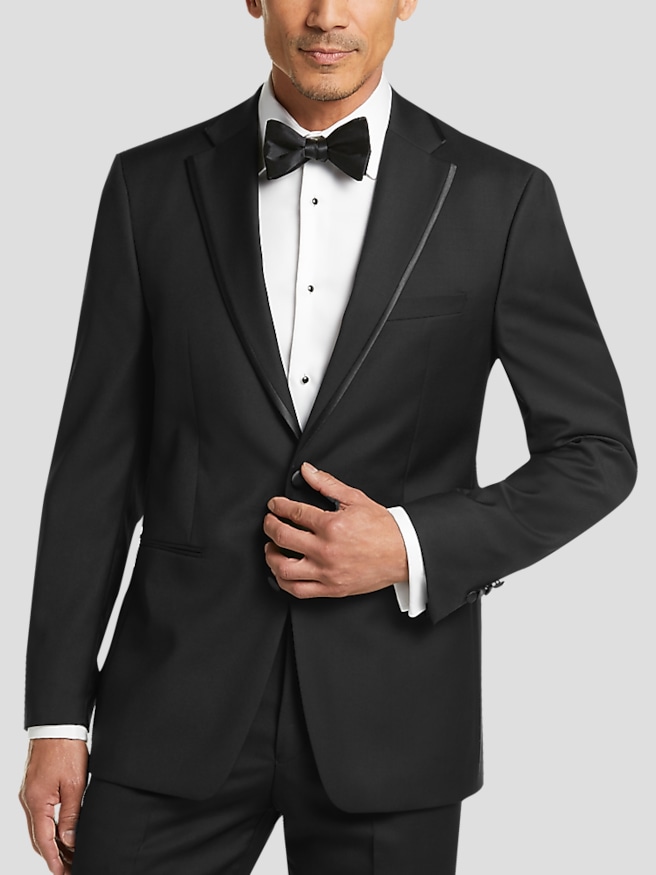
A three-piece tuxedo combines a dinner jacket, coordinating trousers, and a matching vest, also called a waistcoat, for a complete black-tie ensemble. Its defining details go beyond the addition of a third piece: satin or grosgrain lapel facings, formal buttons, and trousers with a coordinating side stripe distinguish a tuxedo from a conventional three-piece suit. For black-tie wedding receptions, charity galas, awards dinners, and formal celebrations, that combination creates a composed silhouette with a finished appearance even when the jacket is unbuttoned. Black is the classic choice, while midnight blue offers another established option for formal eveningwear. A waistcoat made from the same primary fabric as the jacket and trousers keeps the ensemble visually connected, with its neckline framing the shirt front rather than competing with the lapels. Traditional formal waistcoats have a low opening that leaves room for the shirt’s bib or pleated front to show. A peak lapel creates a strong, angular line across the chest and shoulders; a shawl collar has a continuous curve and a softer visual effect. Both have a longstanding place in black-tie dressing. A single-button jacket is a familiar choice, allowing the lapel line and waistcoat opening to work together without a crowded arrangement of buttons. Fabric also shapes the overall impression. Wool is valued for its drape, breathability, and natural resilience, while wool blends can combine those qualities with added structure or other performance characteristics. Polyester and viscose blends are another fabric category, with the finished feel depending on the weave, proportions, and construction. A restrained contrast between the main cloth and the lapel facing gives a tuxedo depth: matte fabric beside a subtle sheen often looks more refined than an ensemble with shine across every surface. For someone who attends formal events repeatedly, a coordinated three-piece tuxedo offers a consistent foundation that can be styled appropriately across a range of invitations without losing its identity as eveningwear.
The fit of a three-piece tuxedo depends on how all three garments work together, not simply on the size printed inside the jacket. Shoulder seams should sit near the natural edge of the shoulders, with the collar resting against the shirt collar rather than standing away from it. Across the chest, the jacket should close without pronounced pulling or diagonal creases radiating from the button. The waistcoat needs enough room to lie smoothly over the shirt while remaining close to the torso; excess fabric can bunch beneath the jacket, while an overly tight fit can cause the buttons to pull. Its lower edge should cover the trouser waistband so that a strip of shirt does not appear between the two pieces. That connection becomes especially noticeable when someone reaches across a dinner table, raises a glass, or stands for photographs. Trousers should sit at a height that supports this clean overlap, with enough room through the seat and thighs for sitting comfortably through a ceremony or an extended dinner. A narrow silhouette can look sharp, but it should not restrict a natural stride or make the trouser pockets flare. A more generous cut can look equally polished when the proportions are balanced and the hem is properly finished. Formal trousers often use side adjusters or suspender buttons instead of relying on a visible belt, keeping the waistline uncluttered beneath the vest. At the ankle, a clean hem with little or no break helps maintain the long line of the trousers and shows formal shoes neatly. Alterations can refine sleeve length, trouser length, and selected areas of the waist, although the jacket’s basic shoulder structure should already be close to the wearer’s shape. Thoughtful fit also supports durability: clothing under constant strain at the seat, armholes, or buttons is less comfortable and can place unnecessary stress on seams. For a milestone gift, accurate measurements and an opportunity for fitting are more useful than guessing a size from everyday clothing. The result should feel secure and easy to move in, whether the occasion involves greeting guests, dancing, or spending several hours seated.
Finishing pieces give a three-piece tuxedo its black-tie character without needing to dominate the ensemble. A white formal shirt provides a crisp foundation, with a collar that accommodates a bow tie and a front designed for the desired level of detail. Pleated fronts and textured bib fronts are established choices, while shirt studs and cuff links can add a restrained accent when the shirt is constructed to accommodate them. A black bow tie relates naturally to traditional black-tie attire, and a simple white pocket square adds contrast without competing with the waistcoat. The vest already covers the waistband, so a cummerbund is generally unnecessary. Polished black formal shoes and dark dress socks maintain a continuous line below the trousers. These details matter in close conversation as much as in photographs: a smooth shirt front, a bow tie sitting comfortably at the collar, and trouser hems that fall cleanly help the entire outfit look intentional. Dress-code distinctions remain important for other celebrations. For events centered on suits rather than formal eveningwear, Best Men's Three-Piece Suits For Homecoming offers a related category of coordinated dressing without making a three-piece suit interchangeable with a tuxedo. Long-term care helps preserve the distinction in the fabric and finish. Care-label directions should govern cleaning, and professional attention is often appropriate for structured jackets and contrasting lapel facings. Cleaning the coordinated pieces together when needed can help maintain a consistent appearance over time. Between occasions, a shaped hanger supports the jacket’s shoulders, while trousers benefit from hanging neatly along their crease. The waistcoat should be stored without crushing its front or stretching its shape. Gentle brushing can remove surface dust from suitable fabrics, and airing the garments before storage helps them stay fresh. Direct heat and aggressive pressing can damage delicate facings or leave unwanted shine, making careful treatment especially important around lapels, buttons, and pocket edges. Secure stitching, well-finished seams, and sound fabric provide the foundation for repeated wear; attentive storage and appropriate cleaning help a three-piece tuxedo retain its polished appearance for the next formal invitation.