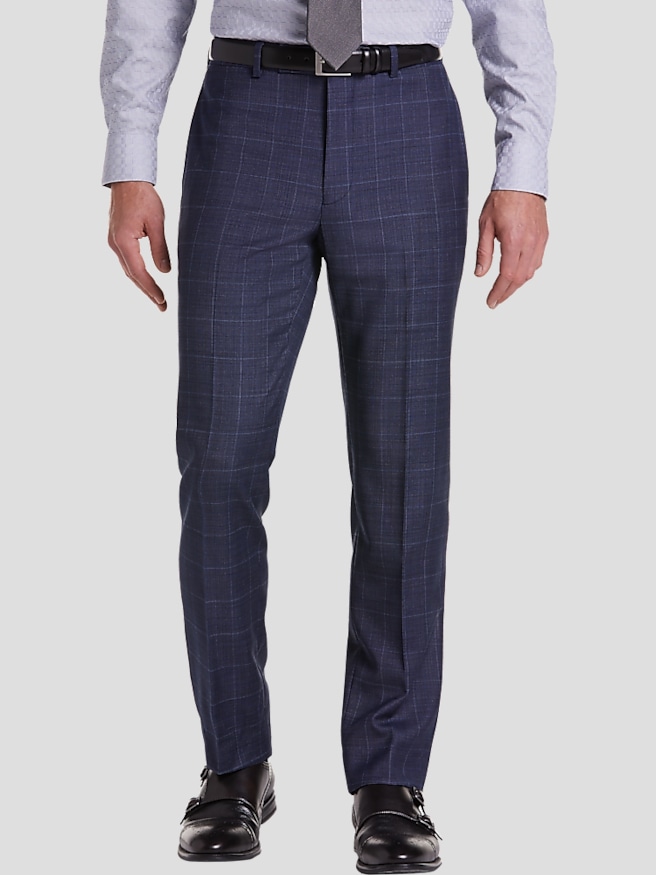
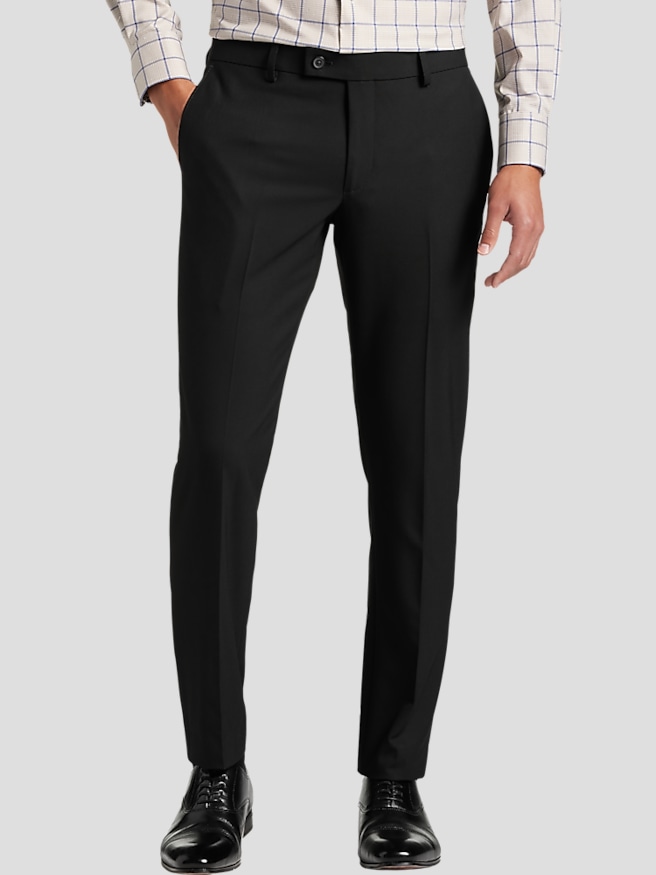
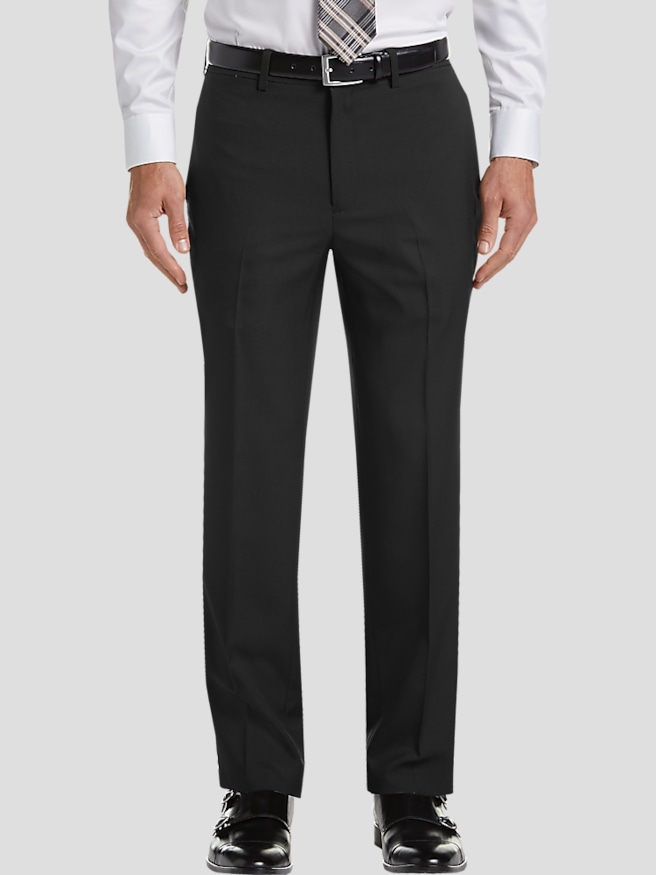
Tapered fit dress pants are tailored trousers that provide room through the seat and thighs, then gradually narrow toward the ankle for a clean, defined silhouette. That shape balances comfort above the knee with a neat lower leg, making tapered dress pants a useful choice for office wardrobes, wedding guest attire, dinners, and other occasions that call for a polished appearance. Taper describes the shape of the leg rather than how close the entire garment sits against the body: a tapered fit can have a relatively relaxed upper section without looking wide at the hem. Slim fit pants generally follow the body more closely throughout, while straight fit pants maintain a more consistent width from the knee down. Exact proportions vary by design, so the fit description and measurements matter more than the label alone. For someone with developed thighs, the combination of space up top and a narrower opening can create a sharp line without requiring an overly tight fit. The best result is a smooth drape through the hips, pockets that lie flat, and enough ease to sit comfortably through a meeting or dinner. Fabric plays an equally important role in that appearance. Wool can provide a refined surface and fluid drape, while wool blends combine those qualities with characteristics contributed by other fibers. Polyester and rayon blends may offer a smooth finish and easy movement, depending on the weave and construction. Cotton twill tends to have a more substantial, less fluid character that can suit business casual dressing. A small amount of elastane can add stretch, though stretch does not replace adequate room at the waist, seat, or thigh. Fabric weight, texture, and recovery all influence whether the pants hold a crisp crease, move softly, or feel more structured. Together, the cut and cloth determine whether a pair looks quietly formal or comfortably dressed up.
The appeal of tapered dress pants is especially clear in the details around the waist and hem. A waistband that stays level without digging in gives a tucked shirt a clean foundation, while the rise determines where the pants sit and how much room they provide between the waistband and crotch. A mid-rise cut can feel familiar and versatile; a higher rise can create a longer visual leg line and pair well with a tucked dress shirt or tailored jacket. Neither should pull across the front when seated. Flat-front construction keeps the upper portion visually simple, while pleats can add room and interest when they fall smoothly rather than spreading open under tension. Below the knee, the taper brings attention to the relationship between trouser length and footwear. A narrow hem often looks best with little or no break, meaning the fabric either lightly touches the shoe or falls without a pronounced fold. Too much length can collect above the shoe and interrupt the line that makes this fit distinctive. Someone who prefers a slight break can still achieve a polished finish, provided the hem opening clears the shoe neatly. With lace-up dress shoes, a subtle crease and restrained hem create an understated office look. With loafers, a clean finish at the ankle gives the same silhouette a less formal character. Navy, charcoal, and black serve as versatile foundations, while lighter neutrals and subtle patterns introduce contrast without relying on elaborate styling. A textured sport coat can complement smooth trousers, and a fine-gauge knit can soften the formality of a pressed front crease. For a closer-fitting alternative, Tapered Skinny Pants offer another silhouette to consider, with the precise difference depending on the cut. The distinction comes down to how much ease feels comfortable and how closely the leg should follow the body from thigh to ankle. Tapered tailoring works particularly well when each part of an outfit has balanced proportions rather than competing extremes of volume.
For repeated wear, tapered fit dress pants need to perform beyond the first standing impression. Walking up stairs, settling into a desk chair, and getting in and out of a car reveal whether the thigh room, rise, and waistband are comfortable in everyday use. Horizontal pulling across the lap, pockets that flare, or a hem that catches tightly on the calf can indicate that the cut needs more ease. A modest adjustment to length or waist may refine the fit, but alterations cannot always compensate for insufficient fabric through the seat and thighs. Construction also contributes to durability: secure stitching, neatly finished seams, stable pocket openings, and a firmly attached closure help trousers withstand regular movement. Stretch fabrics benefit from good recovery so that knees and the seat do not remain stretched out after sitting. No fabric is immune to wear, and repeated friction at the inner thighs, pocket edges, and hem can affect appearance over time. Care should follow the garment label, especially for blends whose fibers may respond differently to water, heat, and cleaning methods. Washable dress pants may require a gentle cycle and low heat or air drying, while other constructions call for professional cleaning. Pressing at the recommended setting, with a pressing cloth when appropriate, helps restore a crease without leaving a shiny surface. Hanging trousers neatly after wear reduces unnecessary folds, and addressing marks promptly according to the care instructions helps preserve the finish. Rotating between pairs also gives each garment time to air out between wears. These practical qualities make tapered trousers relevant to commuters, professionals building a coordinated wardrobe, graduates preparing for interviews, and guests dressing for celebrations. They can also make a thoughtful gift when the recipient’s measurements and preferred rise are known, since waist size alone does not establish a comfortable fit. From a presentation that requires a jacket to a restaurant dinner with an open-collar shirt, the lasting value of this silhouette is its balance: enough room for real movement, a controlled line through the lower leg, and a tailored appearance that does not depend on an excessively close cut.