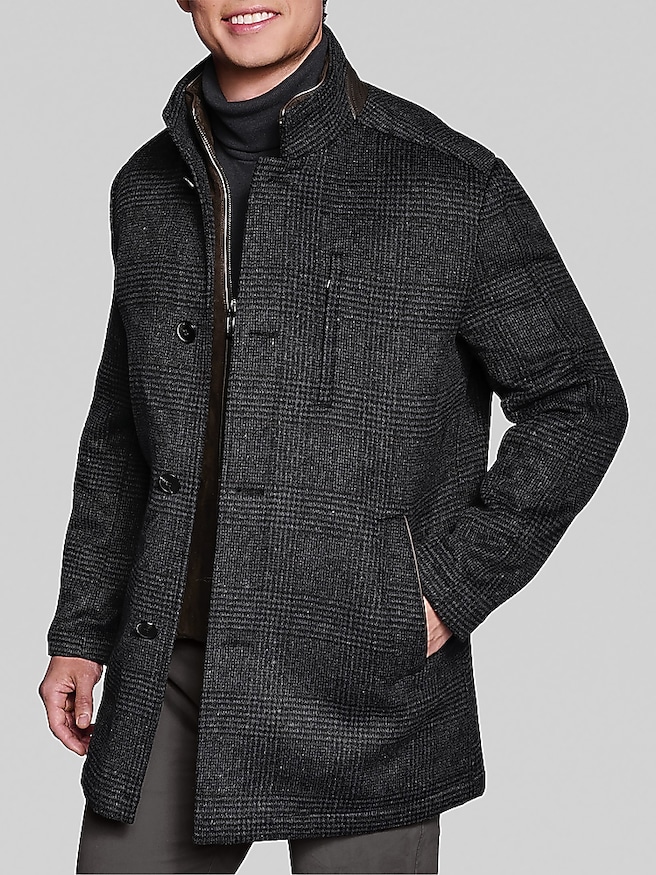
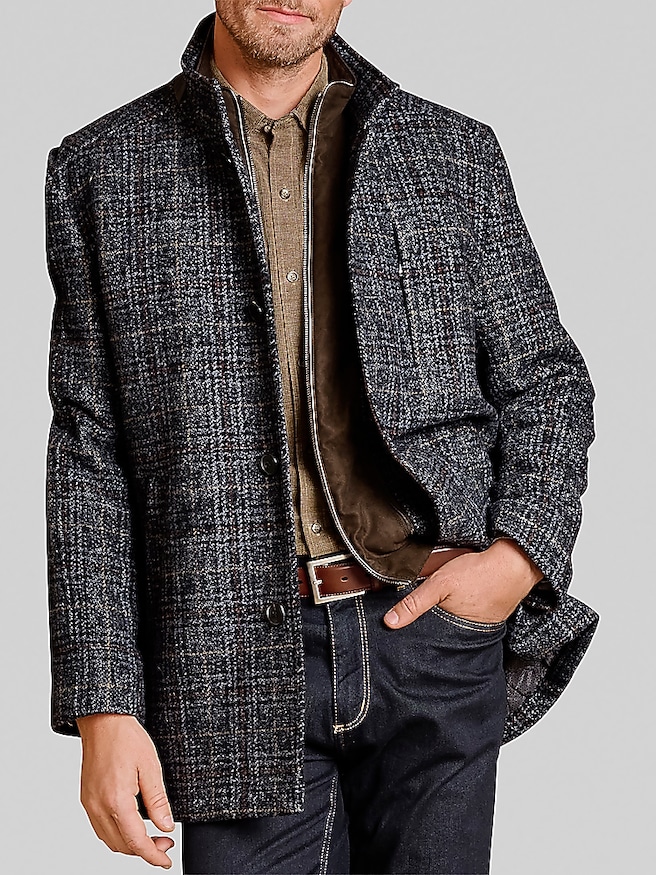
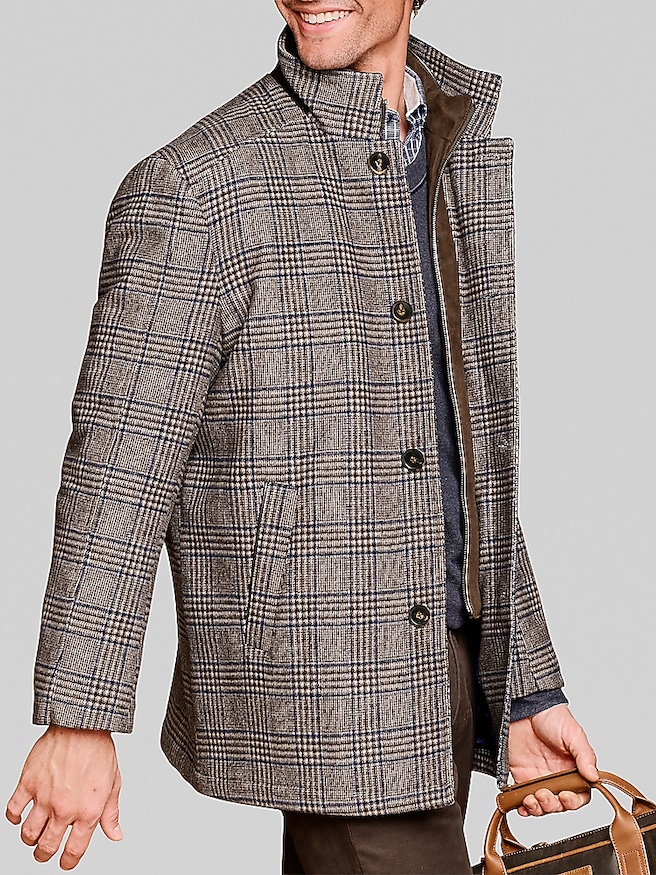
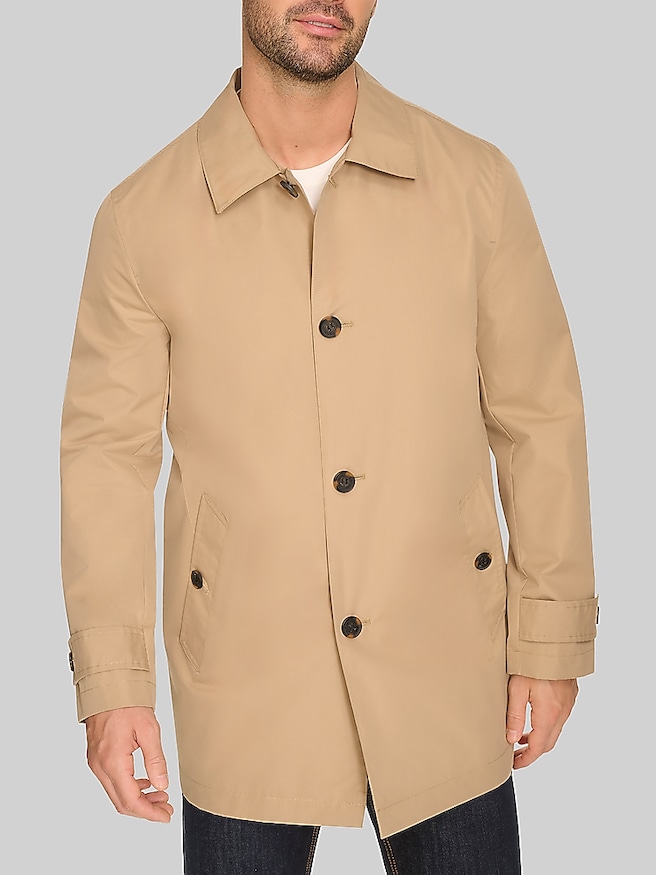
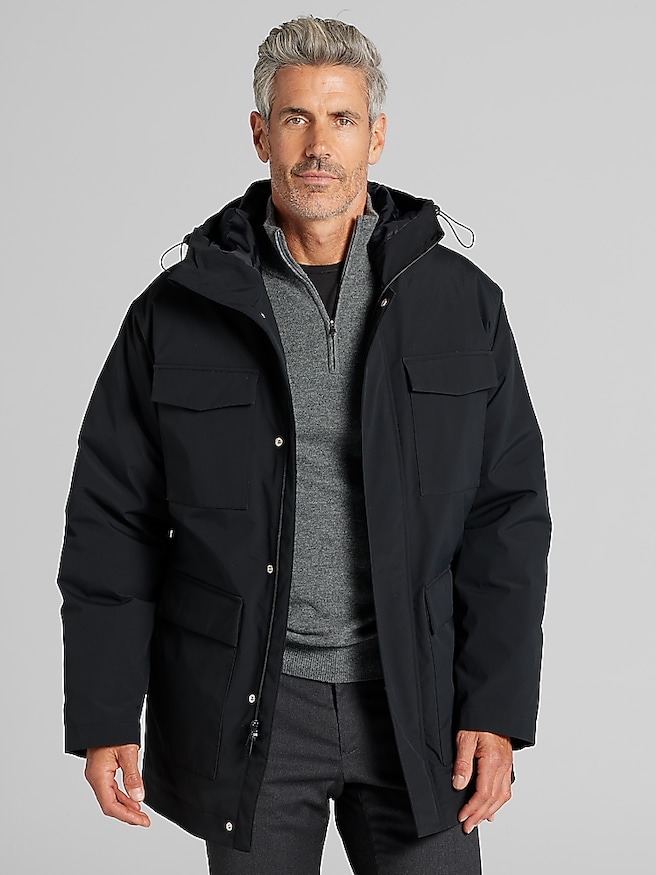
Stylish outerwear gives an outfit its shape before any other layer comes into view. A clean shoulder line, a well-balanced collar, and a length that works with the clothing underneath can make a coat feel just as considered as a tailored suit. Men’s outerwear spans several distinct looks: tailored wool coats bring structure to business and dress clothing, trench-inspired silhouettes offer a crisp transitional layer, bomber jackets lend a relaxed finish, and quilted or puffer styles emphasize warmth with a more casual profile. The strongest choice is not necessarily the most dramatic silhouette; it is the one that fits naturally into the places a day takes you. A longer coat can cover a suit jacket on the walk from the train to the office, while a shorter jacket feels less restrictive behind the wheel or on a weekend coffee run. During the cooler months, that balance of appearance and practicality matters more than a passing trend. Navy, charcoal, black, and earthy brown shades work easily with familiar wardrobe staples, while texture adds interest without requiring a bold color. Brushed wool creates a soft, substantial surface against smooth trousers; a matte shell gives denim and knitwear a streamlined finish. Minimal detailing tends to read as polished, while patch pockets, ribbed cuffs, and visible quilting suggest a more relaxed setting. For another perspective on modern silhouettes, Contemporary Outerwear connects naturally with a wardrobe built around clean lines and versatile layers. Whether dressing for a client meeting, an evening performance, or a neighborhood dinner, outerwear should support the occasion rather than compete with it. A coat worn over tailoring benefits from enough length and room to keep the layers beneath it looking smooth. With casual clothing, a jacket that finishes near the hip can create a balanced outline over straight-leg jeans or chinos. These proportions help an outer layer feel intentional, even when the rest of the outfit is simple.
Material and construction determine how outerwear feels through a full day, not just how it looks on a hanger. Wool and wool blends are valued for warmth, texture, and drape, making them well suited to coats with a more tailored shape. Fabric weight and weave matter, too: a dense cloth generally offers more protection from moving air than a loose weave, although wool alone should not be treated as waterproof. Blended fibers can influence weight, resilience, and surface feel, so the fiber label is more useful than appearance alone. Leather develops character through wear and benefits from care suited to its finish; suede has a softer, textured look but needs particular caution around moisture and stains. Faux leather offers a similar visual effect with its own care requirements and can react poorly to excessive heat. Lightweight woven shells are useful for layering, especially when the day moves between a chilly sidewalk and a heated building. Water-resistant fabric can help with brief exposure to light precipitation, but sustained wet weather calls for protection specifically described as waterproof, along with suitable seam construction. Insulated outerwear adds another consideration: down offers warmth with relatively little weight, while many synthetic fills retain useful insulating performance when damp. Neither fill type tells the whole story, since insulation quantity, distribution, coverage, and wind protection all affect comfort. Quilting helps hold insulation in place, and the spacing of those stitched sections contributes to the overall look. For someone who walks several blocks each morning, a collar that closes comfortably at the neck and cuffs that limit drafts may matter more than decorative hardware. For someone moving mostly between a car and indoor spaces, lighter construction may prove more comfortable than maximum insulation. Smooth linings help sleeves slide over sweaters and suit jackets without catching. Secure pockets keep everyday essentials contained, while reinforced pocket openings and neatly finished seams are useful signs of thoughtful construction in areas that see repeated wear.
Fit is where good-looking outerwear becomes easy to live in. The shoulder area should sit comfortably without pulling across the upper back, and the front should close over the layers actually worn underneath. A coat that fits over a thin shirt may feel tight over a substantial sweater, so layering room deserves attention without automatically choosing an oversized shape. Reaching forward, sitting down, and bending the elbows should feel natural; strained closures or pronounced pulling across the back can signal insufficient space. Sleeves need enough coverage for cooler weather without swallowing the hands, and cuffs should work comfortably with gloves when needed. Length also changes the experience of wearing a coat. Longer coverage helps shield more of the body outdoors, while shorter hems offer freedom for active routines. Small details become noticeable with use: a zipper that operates smoothly, a lining that stays in place, and pockets positioned where the hands naturally rest all contribute to lasting satisfaction. Care helps preserve both appearance and function. Follow the garment’s care label rather than assuming every wool blend requires the same treatment or every insulated jacket can go through the same wash cycle. Brush surface dust from suitable wool fabrics, address spills promptly using an appropriate method, and let damp outerwear dry away from direct heat. Structured coats benefit from supportive hangers, while clean, dry storage with room for air circulation helps prevent unnecessary creasing and musty odors. Avoid compressing insulated pieces for extended periods unless their care guidance permits it. These habits help outerwear stay presentable through commutes, dinners, travel, and repeated everyday wear. A versatile coat or jacket can also make a thoughtful gift for a father, partner, friend, or graduate building a professional wardrobe, particularly when size, climate, and personal style are familiar. The most useful choice reflects the recipient’s routine: polished enough for the occasions that matter, comfortable enough for regular wear, and practical enough to reach for whenever an extra layer is needed.