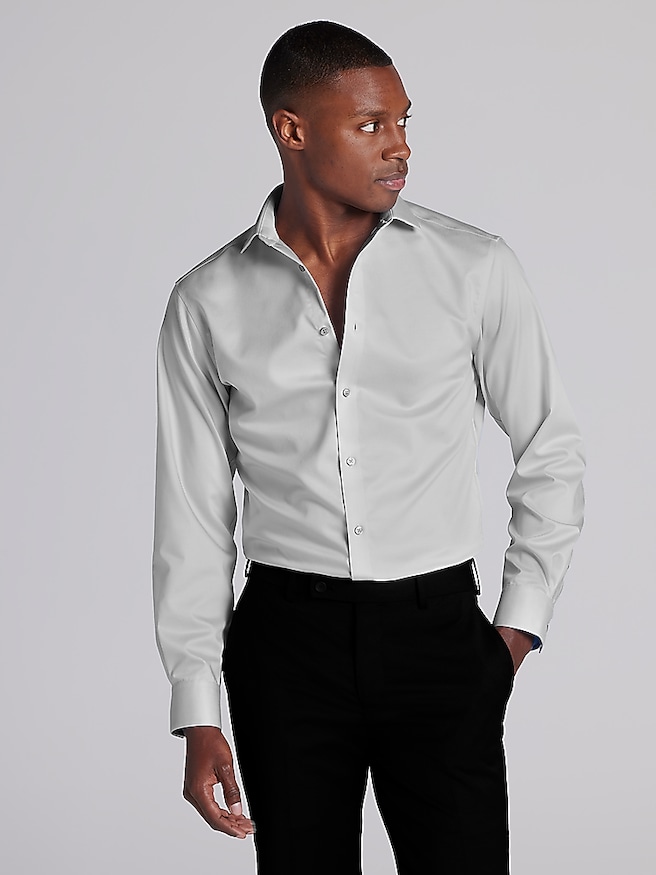
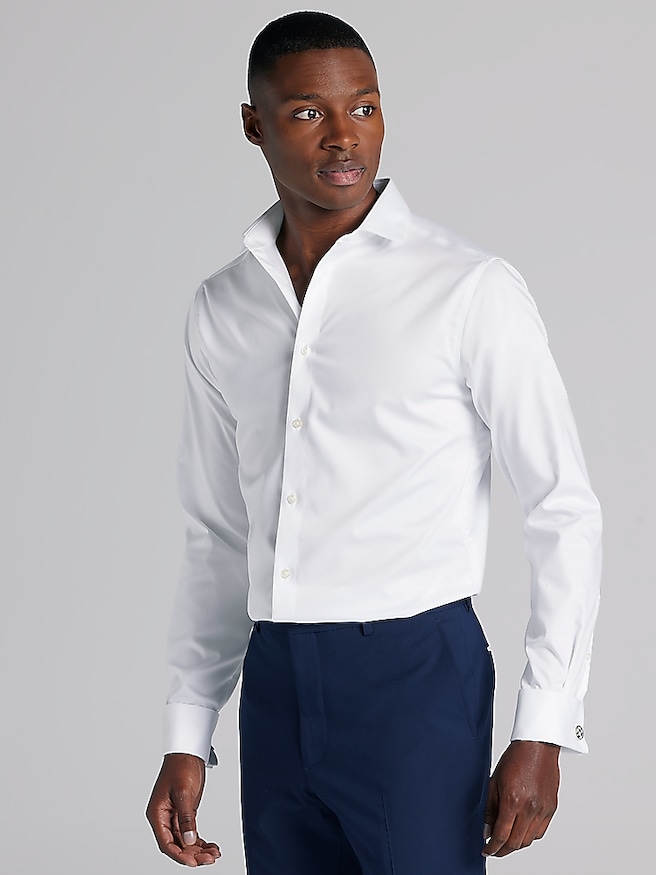
Stain-resistant dress shirts combine a polished, button-front appearance with fabrics or finishes designed to help resist everyday spills or make certain marks easier to remove in the wash. Depending on the treatment, water-based liquids such as coffee, water, or soda may bead on the surface instead of immediately soaking into the fabric. That extra margin can be useful when a crowded conference table, a hurried lunch, or a bumped glass interrupts an otherwise ordinary day. Stain-resistant does not mean stain-proof, however. Performance varies with the fabric, the finish, the substance spilled, and how long it remains on the shirt. Oils, salad dressing, and thick sauces can behave differently from water-based drinks and may still leave a mark that needs appropriate treatment. Some finishes primarily repel liquid, while others help release soil during laundering; those benefits are related but not interchangeable. The appeal is practical rather than dramatic: a dress shirt that offers some protection against common mishaps while still looking appropriate with tailored trousers, a suit, or a sport coat. These shirts suit office routines, business travel, client lunches, presentations, and celebrations where a neat appearance matters throughout the event. Someone moving from a morning meeting to a restaurant table has different demands from someone wearing a shirt for a short ceremony, but both can appreciate an extra measure of spill resistance. The best match still depends on how the shirt feels and fits, not just the treatment named on its label. A smooth collar, comfortable sleeves, and fabric that sits cleanly across the chest remain central to its usefulness. Stain resistance is an added feature, not a substitute for sound construction or ordinary care. A shirt that fits comfortably under a jacket and stays neatly tucked can earn a regular place in a wardrobe, with spill resistance providing a practical benefit when a day includes meals, movement, and extended wear.
Fabric composition plays a large part in the character of a stain-resistant dress shirt. Cotton can provide a familiar, soft feel, while cotton blends may combine that comfort with other performance characteristics. Polyester blends can contribute shape retention and easier care, and a small amount of stretch fiber can add give through the shoulders, elbows, and torso. Those qualities depend on the complete fabric construction rather than the fiber name alone. Stain resistance also does not automatically mean moisture wicking, breathability, stretch, or wrinkle resistance; each is a separate feature worth checking in the shirt’s description. A finer, smoother weave often creates a crisp look under a tailored jacket, while a fabric with subtle texture can give a solid color more dimension when worn without one. White and light blue are versatile foundations for business dressing, and restrained stripes or small checks bring variety without competing strongly with a tie. Darker colors can create a more understated look, although color alone does not determine how well a shirt resists staining. Fit deserves equal attention. A trim silhouette should follow the body without pulling between buttons, while a roomier cut should provide ease without leaving excessive fabric around the waist. For a fuller chest or broader shoulders, the important distinction is enough space to reach forward and sit comfortably without the shirt tightening across the back. Shoulder seams that sit near the shoulder edge, sleeves that reach the wrist, and a collar that closes without pinching help establish a balanced fit. Shirt length matters, too: a style intended for tucking needs enough length to stay anchored when reaching across a desk or standing after a long meeting. Collar shape and cuff construction complete the picture, whether the shirt is worn open at the neck with chinos or buttoned beneath a tie. These details make the difference between a shirt that merely looks correct on a hanger and one that remains comfortable through a full schedule.
Care requirements and long-term durability are especially important for shirts intended to see frequent wear. A stain-resistant finish can lose effectiveness over time, and its lifespan depends on its formulation, repeated laundering, and the care it receives. The care label is the most reliable reference for washing, drying, ironing, and any restrictions on cleaning agents. A spill that beads on the surface still deserves prompt attention; gently blotting rather than vigorously rubbing can help limit spreading, provided that approach is consistent with the garment’s instructions. Oily marks or colored sauces may need a fabric-appropriate stain treatment, and a visible mark is best addressed before drying or ironing, since heat can make some stains harder to remove. Fabric softeners, bleach, and other laundry additives are not suitable for every performance finish, so more aggressive cleaning is not necessarily better cleaning. Construction matters alongside the finish: secure buttons, even seams, and well-shaped collars and cuffs help a frequently worn shirt hold up to regular use. Wrinkle resistance is another separate consideration, particularly for a shirt that spends time beneath a jacket or packed for a business trip. For a related performance feature, Men’s Wrinkle Resistant Dress Shirts focus on a smoother appearance, though wrinkle resistance and stain resistance should not be assumed to come together. The right combination depends on the wearer’s routine and willingness to press or steam a shirt when needed. As a gift, a stain-resistant dress shirt can be a thoughtful choice for a graduate starting an office role, a frequent business traveler, or someone who regularly dresses for meetings and special events. Knowing the recipient’s neck size, sleeve length, preferred fit, and usual colors makes the choice more personal and useful. Ultimately, the strongest foundation is a shirt that feels good, coordinates easily with existing clothing, and has care requirements that fit everyday habits, with stain resistance adding reassurance rather than promising immunity from every spill.