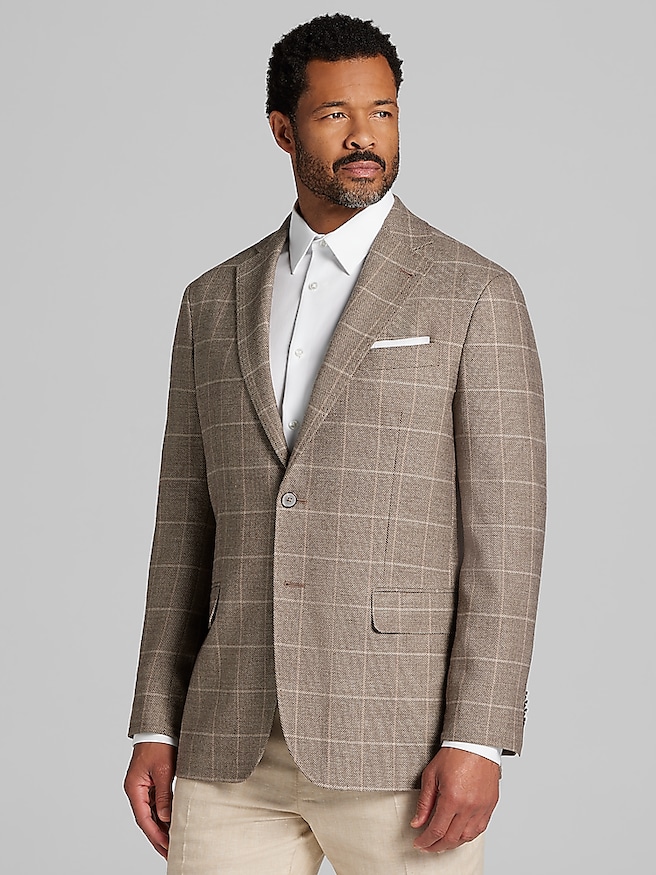
Spring tweed jackets bring the texture of traditional tailoring to lighter, more relaxed outfits. Tweed is known for its subtly irregular surface, often woven with contrasting yarns that create depth rather than a flat block of color. Herringbone, small checks, and heathered finishes give a jacket visual interest even when the rest of an outfit is simple. For spring, the important distinction is not the pattern alone but the weight and construction of the cloth: a lightly structured jacket in a finer wool or a breathable blend can feel quite unlike a dense tweed coat intended for winter. Traditional tweed is wool-based, while some spring interpretations use cotton or other blended fibers to create a similar textured appearance with a different feel. Fine wool offers resilience and a graceful drape; cotton can give the fabric a drier hand and a more casual character. Linen in a blend may add crispness and an appealingly relaxed surface, though some creasing is part of its nature. Fiber content is only one consideration, since a tightly woven fabric with substantial lining may feel warmer than its composition suggests. Partial lining and softer internal construction can reduce bulk, while fuller lining helps a jacket slide smoothly over a shirt. Stone, oatmeal, light gray, muted blue, and soft brown are especially versatile spring colors, with sage and subdued checks adding variety without demanding a completely new wardrobe. A pale herringbone may read almost like a solid from across a room, then reveal its distinctive weave up close. Within the broader category of Men's Tweed Jackets, spring styles are best understood as textured tailored layers selected for their manageable weight, comfortable construction, and ease of pairing. They suit someone who appreciates the definition of a sport coat but wants more surface interest than a smooth blazer, whether the destination is an office, a restaurant patio, or a daytime celebration.
The most useful spring tweed jacket is one that fits comfortably over the clothing it will actually accompany. Shoulder seams should sit close to the natural shoulder line, with the collar resting against the shirt collar rather than pulling away or bunching beneath it. When the jacket is buttoned, the front should lie cleanly without pronounced pulling around the closure. Enough room through the chest and upper arms makes ordinary movements easier, from reaching for a coffee cup to greeting someone across a table. Sleeve length should allow a small amount of shirt cuff to show when the arms hang naturally, though the precise balance depends on the shirt and the desired look. Jacket length also matters: a classic tailored length generally covers the seat, while a shorter cut creates different proportions and deserves a careful look from the side and back. A slim fit can feel sharp without being tight, and a roomier fit can still look defined when the shoulders and sleeves are right. Trying a jacket over both a button-down shirt and a fine-gauge knit helps reveal whether it has enough flexibility for different spring settings. Soft shoulders tend to support a more relaxed appearance; firmer structure gives the upper body a more pronounced outline. Notch lapels are an easy match for everyday tailoring, patch pockets lean casual, and flap pockets can make the jacket feel slightly dressier. Back vents should rest closed when standing rather than spreading under strain. For anyone considering alterations, shoulder fit deserves particular attention because changing that area is typically more involved than adjusting sleeve length or shaping the waist. Comfort while seated is worth checking, too, especially for a jacket intended for desk work, dinners, or ceremonies. Tweed already contributes texture and dimension, so a balanced fit lets the fabric stand out without excess volume or an overly close cut competing with it.
Styling spring tweed works best when the surrounding fabrics provide a little contrast. A light brown herringbone jacket over a pale blue Oxford shirt, with navy chinos and brown loafers, creates a polished combination for a business-casual office or lunch with clients. For a less formal afternoon, a softly constructed gray jacket can sit comfortably over a solid knit polo with dark, clean-lined jeans. Smooth cotton trousers give a nubby weave room to register, while a small-patterned shirt needs enough difference in scale to avoid competing with a checked jacket. At a spring wedding with a dress code that permits separates, light-toned tweed can work with tailored trousers, a crisp shirt, and a restrained tie; it is not a substitute for formal attire when the invitation specifies it. Graduation gatherings, anniversary lunches, and family portraits are other occasions where a textured jacket can add polish without requiring a matching suit. As a gift, it can appeal to a graduate building a tailored wardrobe or someone who regularly wears sport coats, provided the recipient's measurements and fit preferences are known. Long-term usefulness depends as much on care as on the initial choice. A robust-looking weave is not immune to snags, and rough bag straps or repeated rubbing can wear raised yarns. After wear, letting the jacket air out and placing it on a broad, shaped hanger helps preserve its shoulders and allows minor creases to relax. Emptying pockets prevents unnecessary stretching, and rotating between jackets gives the fabric time to recover. A gentle clothing brush may help lift surface dust when suitable for the fabric, but the care label should determine cleaning and pressing methods. Blot spills promptly rather than rubbing them into the weave, and seek professional attention when the label or stain calls for it. Avoid frequent cleaning simply out of habit, direct heat, or aggressive pressing that can flatten the texture. Stored clean in a breathable garment bag, a well-chosen spring tweed jacket can retain the distinctive surface and easy shape that make it worth wearing repeatedly.