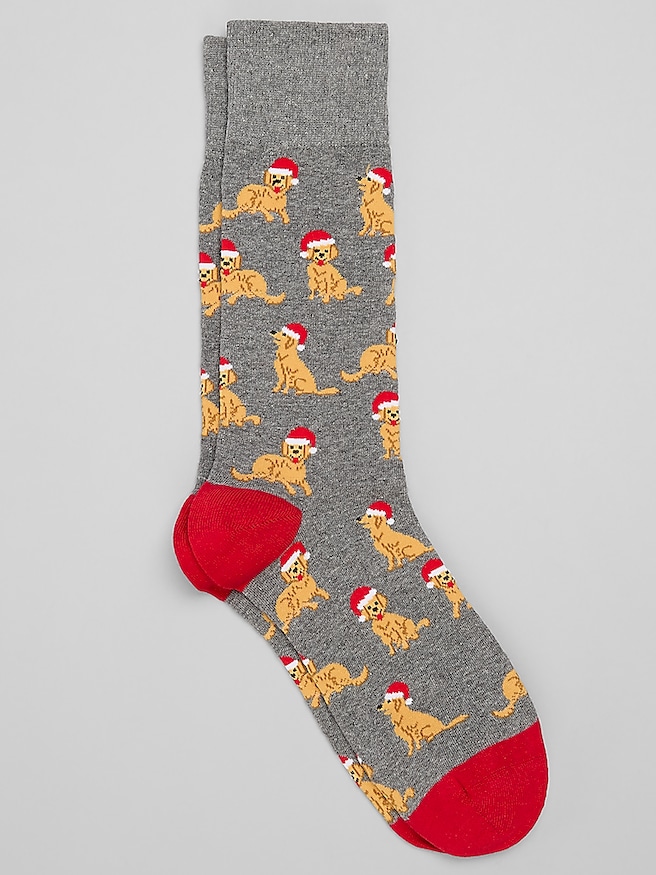
Practical holiday gifts are useful presents that fit the recipient’s daily routine, solve a familiar problem, or replace something that has earned its share of wear. In a wardrobe, that usefulness often comes down to comfort, dependable construction, and the ability to work with clothing someone already owns. A shirt that sits comfortably beneath a jacket, knitwear that adds warmth without excessive bulk, or an accessory that finishes several outfits can become part of an ordinary week rather than something saved for a special occasion. These gifts suit fathers, brothers, partners, friends, and coworkers whose days might include an early commute, a client meeting, a family dinner, or a relaxed weekend at home. Their value is personal: the recipient who dresses for an office has different needs from someone who spends most days in casual clothing, even when both appreciate a neat appearance. Familiar colors and understated patterns tend to make coordination easier, particularly when they echo the navy, gray, brown, or black already present in a wardrobe. A subtle texture can add interest without demanding an entirely new outfit. Practical does not have to mean plain, either. A rich color, a soft hand, or a carefully finished edge can make an everyday essential feel considered. Holiday giving also creates an opportunity to notice the small details someone might overlook for themselves, such as a fraying cuff, a stretched neckline, or an accessory that no longer looks its best. A replacement feels thoughtful when it reflects an established preference rather than asking the recipient to adopt a new style. The most successful useful gifts often have an obvious place in the recipient’s life: folded beside their everyday clothes, ready for the next workday, or packed for a visit with family. That connection to a real routine gives practical holiday gifts their lasting appeal, whether the exchange takes place at a Christmas gathering, an office celebration, or a quiet evening with close friends. It also keeps the gesture grounded in the person receiving it.
Materials and construction influence how comfortably a clothing gift wears and how well it handles repeated use. Cotton is commonly appreciated for its breathable feel, while wool provides insulation and can offer a polished appearance in both woven and knitted fabrics. Blended materials may combine softness with added stretch, shape retention, or easier care, although the fiber percentages and fabric construction matter more than a broad label alone. A lightweight knit can sit neatly beneath a jacket; a heavier knit creates more substance but needs enough room in the outer layer to avoid bunching at the shoulders and sleeves. Smooth fabrics often slide more easily under other clothing, while pronounced textures bring dimension to simpler outfits. For someone who moves frequently between a desk, a car, and appointments, comfort through the shoulders, elbows, and waist can matter as much as appearance. Stretch can support movement, but it does not replace an appropriate fit. Seams should lie smoothly, buttons should close without pulling, and sleeves should allow ordinary reaching without making the entire garment ride up. Durability shows up in less dramatic details: even stitching, secure fastenings, reinforced areas subject to friction, and edges that feel neatly finished rather than rough. Accessories benefit from the same attention. Supple leather should flex comfortably, and hardware should operate smoothly without feeling awkward in the hand. Care requirements deserve equal weight because a gift is more practical when its upkeep fits the recipient’s habits. Machine-washable clothing can simplify a busy week, but the care label still determines the appropriate water temperature, cycle, and drying method. Some knits need reshaping and flat drying, while other garments call for professional cleaning. Heat can affect fit, elastic recovery, and surface appearance, making care instructions especially important for pieces intended for frequent wear. A fabric’s appeal is not just how it feels when unwrapped; it is also how comfortably it wears, how easily it fits into laundry routines, and how well its construction supports repeated use.
Fit and intended use bring those details together. Clothing sizes can vary across cuts and fabric types, so a size label is only a starting point. A well-fitting garment the recipient already wears provides useful context for shoulder width, sleeve length, overall length, and preferred room through the body. Someone who likes a close silhouette may find excess fabric distracting, while someone who layers regularly may appreciate a little more ease. Length matters, too: a piece intended to stay tucked needs sufficient coverage, whereas one worn untucked should have proportions that look deliberate. Accessories can offer a less fit-dependent gift, though measurements still matter for anything worn around the waist, neck, hands, or feet. An existing favorite often provides better clues than an estimate based on appearance. Intended use is just as revealing. The frequent traveler may appreciate clothing that coordinates easily and does not require a complicated care routine. Someone attending holiday meals and family photographs may get more use from a polished layer that also works for ordinary dinners afterward. A new graduate entering an office environment may welcome versatile wardrobe foundations, while a longtime professional may prefer a comfortable update to something worn every week. Even small preferences carry weight: a smooth neckline instead of a bulky collar, a quieter pattern instead of a bold contrast, or a familiar fabric against the skin. Those observations make a useful gift feel personal rather than purely functional. For a recipient whose sense of humor is part of the celebration, Funny Holiday Gifts offers a more playful direction. Practical choices can express personality through color, texture, and details suited to the recipient’s taste. A successful holiday gift does not need an elaborate occasion to justify wearing it. It earns its place by being comfortable on a long day, appropriate for familiar settings, and easy to combine with the rest of a wardrobe. That is the appeal of giving something useful: the thought behind the present becomes apparent each time it is worn.