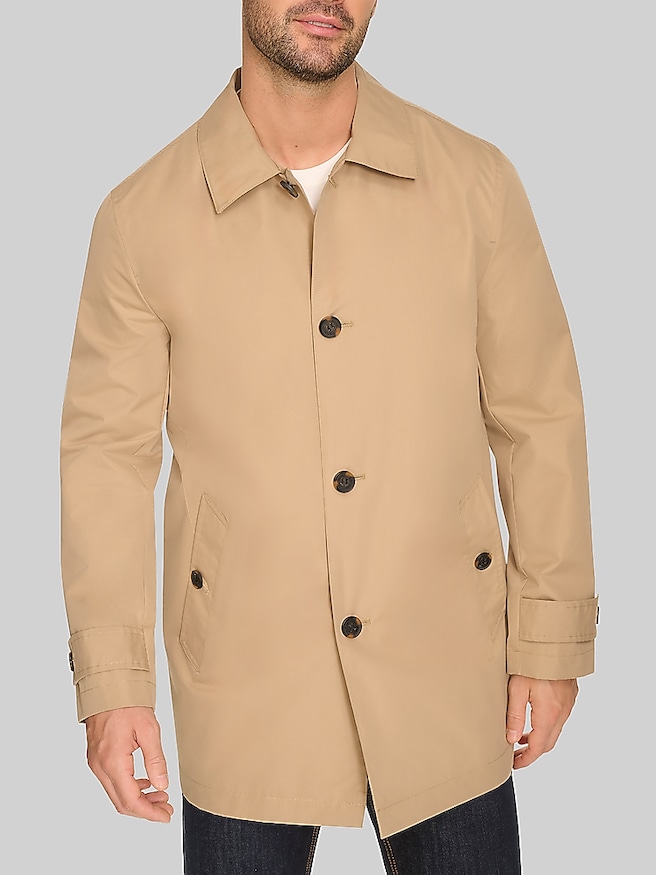
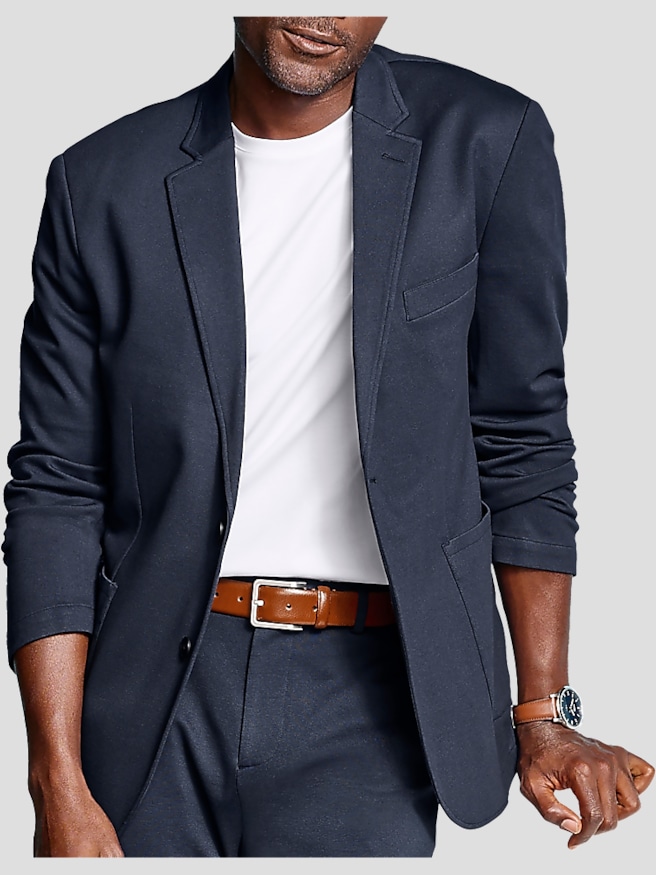
Navy outerwear includes dark blue coats, jackets, and other protective layers that bring a versatile, understated color to everyday dressing. In a clothing collection, navy generally refers to the fabric’s color rather than an official military uniform or a particular style of construction. Its appeal comes from the balance it strikes: polished enough to wear over tailoring, relaxed enough to pair with denim, and easy to coordinate without making every outfit look the same. A smooth navy coat over a charcoal suit creates a clean, composed silhouette, while a textured jacket with a gray sweater and tan chinos feels more casual. Brown leather shoes pick up the warmth in that combination; black footwear keeps the effect sharper. Navy also works well with cream, olive, burgundy, and lighter shades of blue, giving the color a useful place in wardrobes built around familiar neutrals. The shape of the outer layer determines much of its character. Longer coats provide coverage over suit jackets and tend to suit business settings, evening plans, and occasions that call for a more finished appearance. Shorter jackets allow easier movement when driving, walking through town, or heading out for a casual dinner. A restrained collar, discreet fastenings, and simple pockets let the fabric and fit carry the look, while quilting, visible zippers, or a hood introduce a more practical, casual feel. Navy can appear nearly black in subdued light or show a clearer blue tone outdoors, so texture and nearby colors influence how it reads. Matte finishes tend to blend quietly into an outfit, whereas smoother surfaces can make the shade look deeper. For anyone drawn to familiar shapes and subtle detailing, Classic Outerwear offers a related perspective on timeless outer layers. Navy’s usefulness lies in that same sense of continuity: it complements clothes already in regular rotation while still giving an outfit a distinct finishing layer.
Material and construction matter as much as color when considering navy coats and jackets. Wool and wool-blend fabrics are often associated with structured overcoats because they can provide warmth, substance, and a clean drape. The blend, weave, and fabric weight all affect the result; a dense cloth feels different from a softer, more loosely woven fabric, even when both share a similar fiber label. Brushed surfaces give navy a softer appearance, while a compact weave creates a crisper outline. Cotton shells can bring a familiar, substantial feel to casual jackets, though untreated cotton should not be assumed to provide reliable protection from rain. Nylon and polyester shells are often used where low weight, easy movement, or resistance to light moisture is useful. Water-resistant and waterproof are not interchangeable descriptions: dependable rain protection depends on the fabric, seams, closures, and the garment’s stated performance features. Insulated construction adds another consideration. Down can provide warmth with relatively little weight, while synthetic insulation generally tolerates damp conditions better, although performance varies with the fill and overall design. A quilted surface helps hold insulation in place and adds visual texture, but quilting alone does not indicate how warm a jacket will be. Linings also change the wearing experience. A smooth lining can slide comfortably over a blazer or sweater, and a lined sleeve may prevent fabric from catching when putting the garment on. Practical details become noticeable in ordinary moments: a collar that closes comfortably on an exposed train platform, pockets that keep hands sheltered, or a zipper that operates easily without snagging the fabric underneath. Pocket placement should feel natural rather than forcing an awkward reach. Secure interior storage can be useful for small essentials, but overfilled pockets may distort the outline. The most suitable combination depends on how the outerwear will be used, whether that means brief walks between buildings, a daily commute, or extended time outside.
Fit gives navy outerwear its finished appearance and determines whether it remains comfortable through a full day. A coat intended to cover tailoring needs enough space for a jacket’s shoulders and sleeves without looking oversized through the body. Trying it over the kind of clothing normally worn underneath gives a more useful impression than evaluating it over a thin shirt alone. The shoulder area should sit smoothly, the front should close without pulling, and the sleeves should allow a comfortable reach toward a steering wheel or overhead shelf. Some designs use a relaxed or dropped shoulder intentionally, so the overall shape matters more than a single seam position. Length deserves similar attention: an overcoat should cover the suit jacket beneath it, while a shorter casual layer should still provide comfortable coverage when sitting or bending. A back vent or two-way zipper can make a longer garment easier to move in, depending on its construction. Good durability comes from more than a heavy feel. Even stitching, firmly attached buttons, neat lining seams, and reinforcement around pockets all contribute to how well an outer layer handles repeated wear. Care should follow the garment’s label, since wool blends, coated shells, and insulated fabrics may need very different treatment. Gentle brushing can remove surface dust from suitable wool fabrics, while prompt attention to marks helps keep a dark blue surface looking even. Structured coats benefit from supportive hangers and room to air out before storage. Washable jackets need the recommended cleaning and drying methods, particularly when insulation or a protective finish is involved. Navy outerwear can also make a thoughtful gift for someone starting an office role, refreshing a well-used wardrobe, or spending more time commuting on foot. Knowing the recipient’s usual layering habits, preferred coat length, and care preferences helps make the choice personal. A comfortable fit and practical construction give this adaptable color a lasting role in everyday dressing.