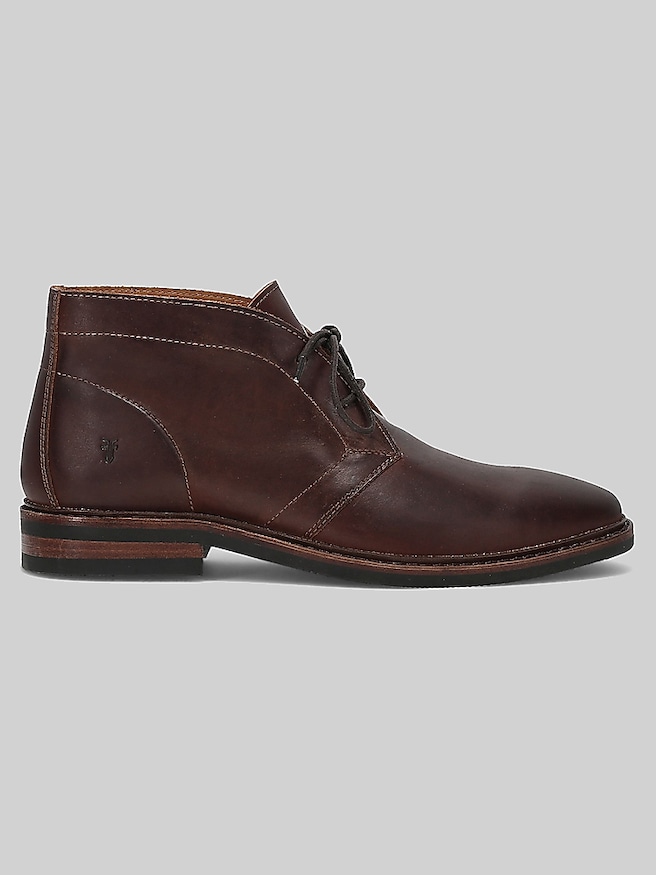
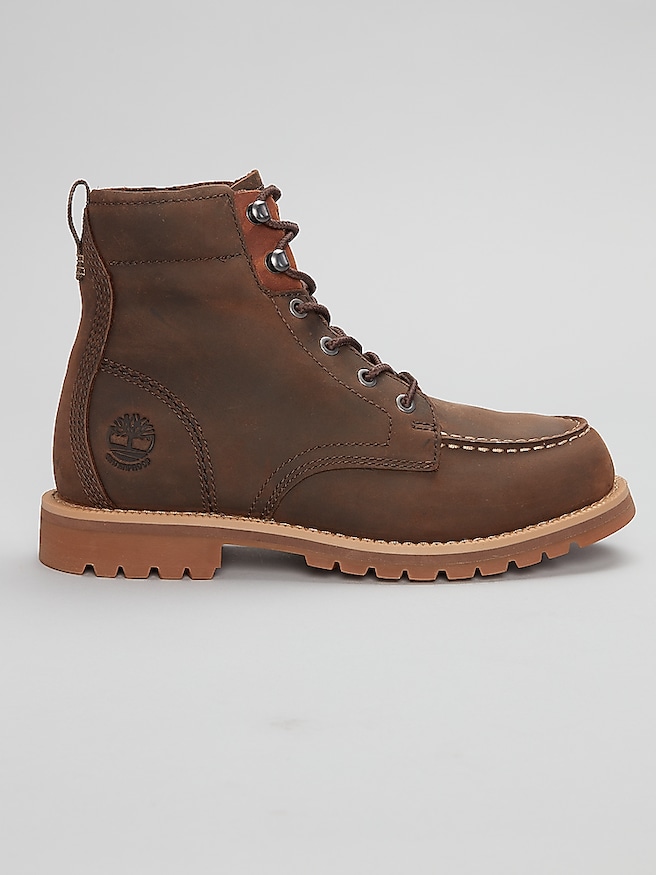
Moc toe chukka boots combine an ankle-high profile and a short lace-up closure with a distinctive U-shaped seam around the top of the toe. That raised outline, inspired by moccasin styling, gives the front of the boot more texture and definition than a plain-toe chukka. The result sits comfortably between a casual shoe and a more substantial boot: relaxed enough for straight-leg jeans, yet polished enough for chinos and a button-down shirt. Traditional chukka styling typically includes two or three pairs of eyelets, though the exact height, lacing pattern, and proportions vary by design. The moc toe describes the appearance of the toe area, not a guarantee of any particular construction method, level of cushioning, or protective feature. Some shapes have a broad, rounded front with pronounced stitching; others use a slimmer outline and subtler seams for a cleaner finish. Those differences influence how the boots work with the rest of an outfit. A fuller toe and thicker sole complement textured denim, corduroy, and relaxed trousers, while a lower-profile shape feels more at home with tapered chinos and an unstructured blazer. Brown leather brings depth to navy, olive, and gray clothing, and tan suede creates a softer contrast against dark denim. Black leather can make the same moc toe detail feel more understated, especially with charcoal trousers and a simple knit polo. For an office with a relaxed dress code, dinner with friends, or a day spent moving between appointments, this style offers a useful balance of character and versatility. It is generally a casual or smart-casual choice rather than a substitute for formal dress shoes. Within the broader category of men's lace-up chukka boots, moc toe designs stand out through their stitched toe shape, giving otherwise straightforward outfits a distinct focal point without requiring bold colors or decorative hardware.
Materials and construction make a noticeable difference in how moc toe chukka boots feel, wear, and develop character. Smooth leather can look crisp with tailored casual clothing, while full-grain leather may retain natural surface markings and develop a patina with regular wear and appropriate care. Suede has a soft, brushed surface that emphasizes the relaxed side of the silhouette; pebbled leather adds visible texture and can make minor scuffs less conspicuous. None of these materials alone determines overall quality or comfort. Leather thickness, lining, seam placement, sole attachment, and the shape of the footbed all contribute to the experience on foot. A leather lining may feel smooth against socks, while textile linings vary in softness and breathability according to their composition. Underfoot, a cushioned footbed can soften the step, but cushioning and support are not the same thing. Someone who spends much of the day standing may prefer a stable platform and a secure heel rather than an especially soft interior. Outsole choice matters, too. Rubber soles come in many densities and tread patterns, from relatively flat profiles to deeper lugs that give the boot a more rugged appearance. Crepe rubber lends a distinctive casual look and can feel flexible underfoot, although its performance and wear characteristics depend on the compound and construction. A lugged outsole does not automatically mean a boot has tested slip resistance, and heritage-inspired styling does not make it protective work footwear. Stitched sole construction may allow repairs or resoling in some designs, but visible stitching alone does not establish that a sole is replaceable. Cemented construction can offer a lighter, more flexible feel, with repair options that depend on the specific design. For frequent wear, strong seams, neatly finished edges, a stable heel counter, and an outsole suited to the intended activity are more meaningful than appearance alone. A pair used mainly for office days has different demands placed on it than footwear expected to handle hours of walking on pavement.
A comfortable fit starts with the relationship between the boot’s shape and the foot, not simply the size marked inside. Moc toe stitching may create the impression of a spacious front, but actual toe room depends on the underlying shape and width of the boot. Toes should have room to move without pressing into the front or against the raised seam, and the widest part of the foot should sit comfortably within the forefoot. The heel should feel secure without rubbing, while the laces should hold the instep without creating a concentrated pressure point. Trying boots with the socks intended for regular wear gives a more useful sense of fit than relying on size alone. Anyone who uses an orthotic should also account for its thickness and confirm whether the existing footbed can be removed. Leather may soften and conform somewhat through wear, but boots that pinch or crowd the toes should not be expected to become the correct size through a break-in period. For travel, commuting, or long social occasions, comfort over several hours matters more than an appealing first impression in front of a mirror. Care is equally practical. Loose dirt can be removed from smooth leather with a soft brush or cloth, followed by an appropriate cleaner and occasional conditioning according to the maker’s directions. Suede needs a suede brush and products intended for its nap rather than ordinary leather cream. The raised moc toe seam deserves attention because dust can collect along its edges; gentle brushing helps keep that defining detail neat. Allowing boots to air out between wears, using properly sized shoe trees, and keeping them away from direct heat can help preserve their shape and finish. Regular checks for worn heel edges, separating soles, or damaged laces can catch maintenance needs before they affect comfort. As a gift for a partner, parent, or graduate, moc toe chukka boots make the most sense when the recipient’s size, width, and everyday wardrobe are known. Their appeal is straightforward: recognizable stitching, an easy ankle-high shape, and enough visual substance to make familiar casual clothes feel thoughtfully put together.