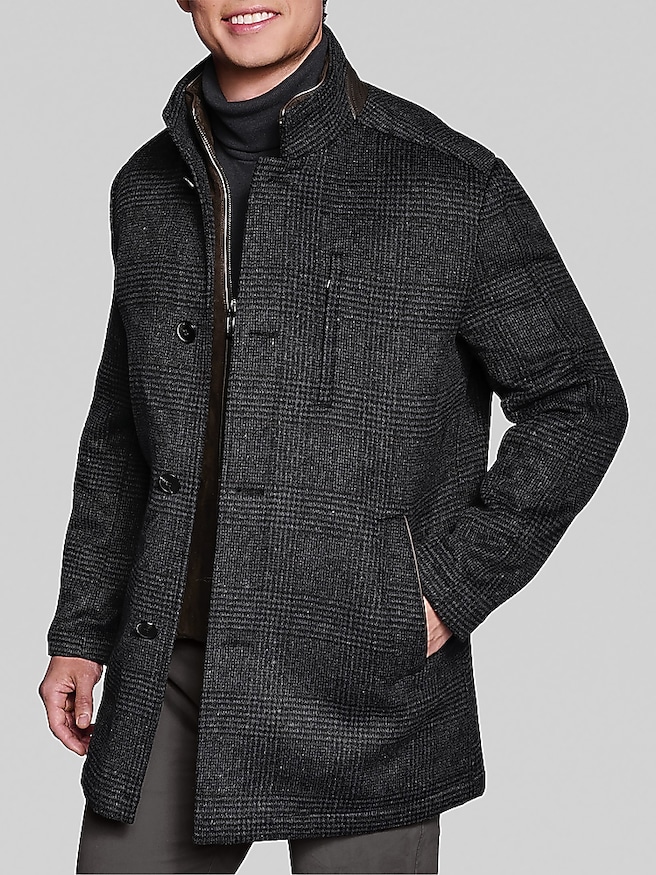
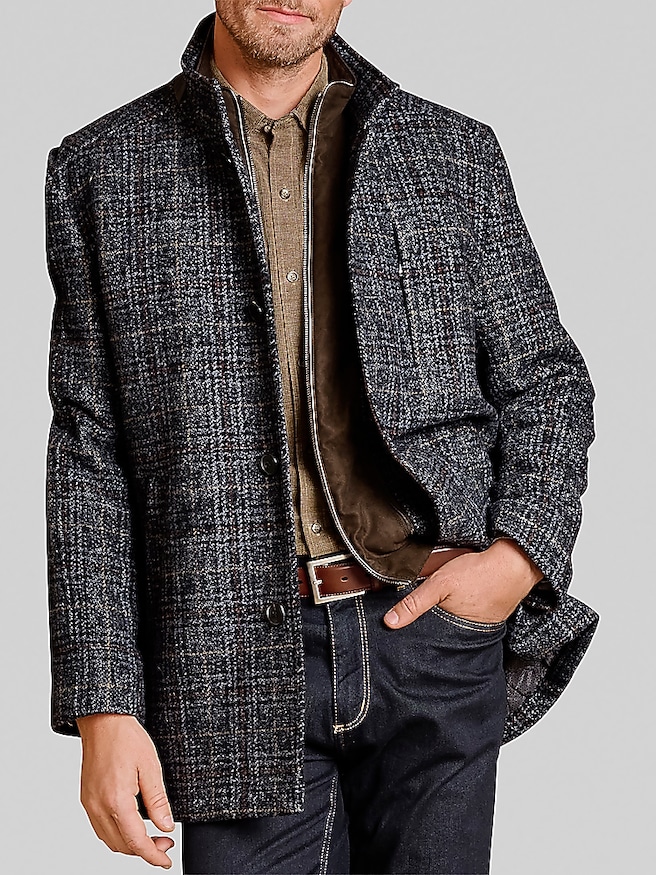
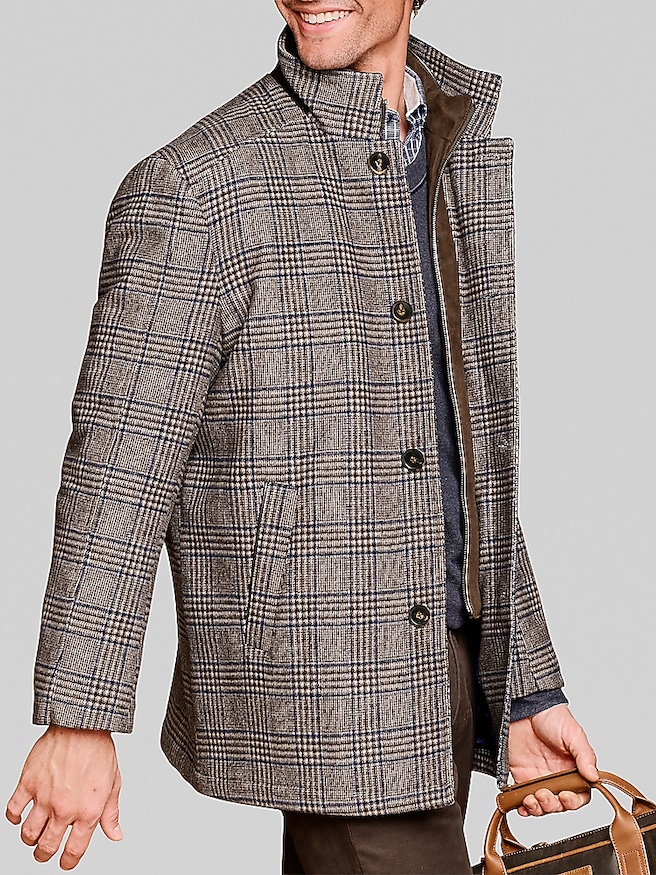
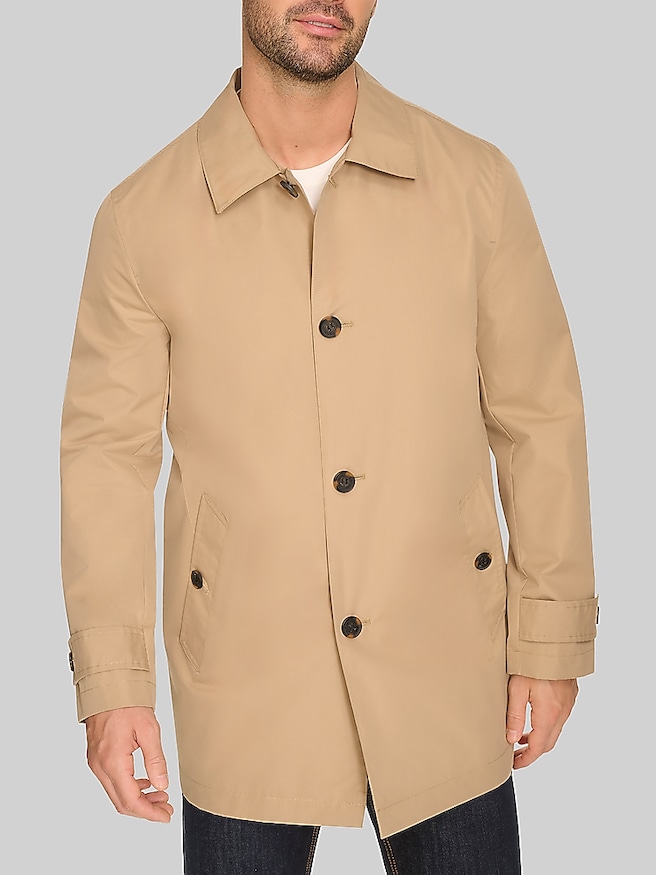
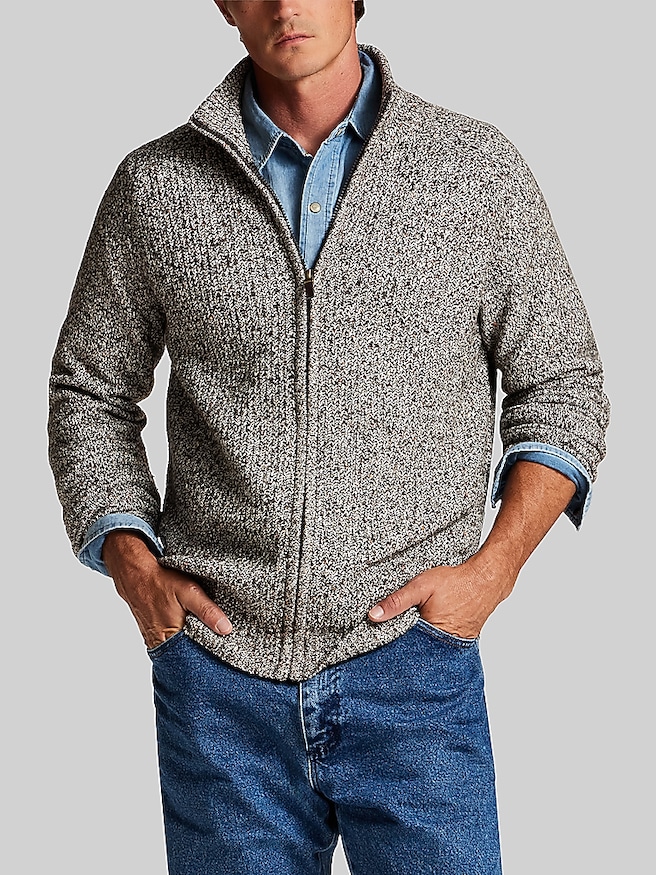
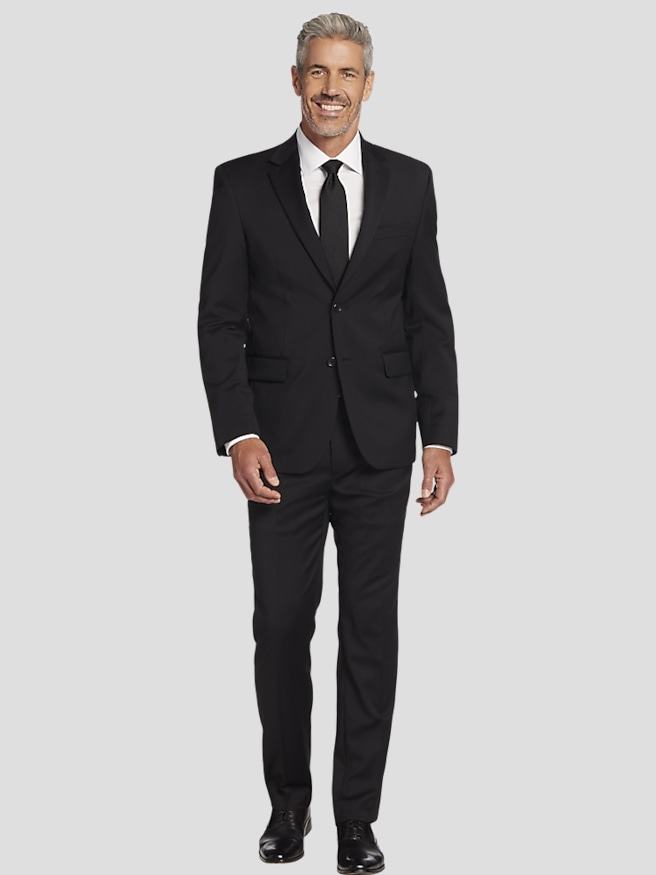
Men’s zip-up jackets bring a useful balance of structure and ease to everyday dressing. A full-length zipper makes the shape easy to adjust, whether the jacket is worn open over a T-shirt or fastened over a button-down for a more finished look. Unlike a pullover, the front opens completely, so adding or removing a layer does not mean disturbing a neatly tucked shirt. That practicality suits a commute, a casual office, a weekend lunch, or an evening at a neighborhood restaurant. The silhouette also makes a difference: a bomber-inspired shape has a compact, athletic feel, while a straight hem and a simple stand collar create a cleaner line. A point collar can lend a zip-front jacket the familiar character of a casual overshirt, especially when paired with chinos and leather sneakers. Materials give each style its own personality. Cotton twill has a recognizable woven texture and enough body to hold a defined shape. Jersey and other knit fabrics tend to feel more relaxed, with flexibility that works well for desk time, driving, and everyday movement. Polyester and nylon can contribute to a smooth finish and resistance to abrasion, although performance depends on the fabric and construction rather than fiber content alone. Wool blends introduce texture and a more tailored appearance, while leather offers a distinctive surface that develops character with regular wear and proper care. A matte finish usually blends easily into an understated outfit; a subtle sheen makes the jacket more noticeable without requiring a bold color. Black, navy, gray, and earthy shades coordinate readily with familiar wardrobe staples. For a simple combination, a dark zip-up jacket over a light crewneck creates contrast, while similar shades across the jacket and trousers give the outfit a more continuous line. The appeal is not limited to one age or personal style. Students, commuters, frequent travelers, and anyone who prefers uncomplicated layers can make use of a jacket that feels comfortable without looking overly casual.
Fit determines whether a zip-up jacket feels like a natural part of an outfit or a layer that needs constant adjustment. Shoulder seams generally sit close to the edge of the shoulder in a conventional fit, though dropped-shoulder designs are intentionally more relaxed. Across the chest, enough room for a shirt or fine-gauge sweater helps the front hang smoothly when fastened. Strong horizontal pulling around the zipper can indicate that the body is too close, while excess fabric beneath the arms may create bulk inside an otherwise streamlined shape. Sleeve length matters just as much: cuffs that finish near the wrist keep the hands clear, and the sleeves should allow a comfortable reach toward a steering wheel or across a desk. Trying the jacket both open and closed reveals how it will behave through a typical day. A shorter, waist-length cut emphasizes the proportions of a bomber silhouette, while a slightly longer body can provide more overlap with an untucked shirt. Neither is automatically more flattering; the relationship between jacket length, torso length, and trouser rise matters more than the size on the label. Details also influence comfort and durability. Ribbed cuffs and hems create a defined outline, while straight cuffs and an unbanded hem tend to drape more freely. A lining can help the jacket slide over shirt sleeves, and smooth interior seams reduce friction against the layers beneath it. Pocket placement deserves attention, particularly for anyone who carries a phone, keys, or a slim wallet. Heavy objects can pull at the front and change the way the jacket hangs, so secure pockets work best when they are not overloaded. A zipper should travel smoothly without catching adjacent fabric, and stitching around pocket openings and other stress points should look even and secure. These small construction details often become more noticeable with repeated wear, especially in a jacket that moves regularly between the car, the office, and time away from work.
A well-chosen zip-up jacket can fill several roles without making every outfit look the same. With dark denim and a plain crewneck, it keeps the focus on clean proportions and texture. Over an Oxford shirt with chinos, a simple style can suit a workplace where casual layers are welcome. A textured knit jacket pairs naturally with smooth trousers, while a woven jacket can add definition to a softer jersey shirt. Keeping one element relaxed and another more structured often makes the combination feel intentional rather than overly matched. For more casual styling inspiration, Mens Cool Jackets offers a related point of reference. Maintaining the jacket’s appearance begins with its care label, since similar-looking fabrics may need very different treatment. Some cotton and synthetic styles tolerate machine washing, while certain wool blends, leather finishes, linings, or trims require specialized care. Closing the zipper before washing, when the label permits washing, can help limit snagging, and following the specified drying method helps protect the original shape. High heat can affect elastic components, coatings, and some synthetic fibers. Leather benefits from appropriate cleaning products rather than ordinary laundry detergent, and spot treatment should follow the manufacturer’s recommendations. Between wears, emptying the pockets and allowing the jacket to air out can reduce unnecessary cleaning. Woven and leather jackets generally benefit from a supportive hanger, while heavier knit styles may retain their shape better when folded. These practical considerations also matter when choosing a jacket as a gift for a birthday, graduation, or another personal milestone. The recipient’s usual fit, preferred colors, and daily routine are more useful clues than an unfamiliar trend. Someone who dresses neatly for work may appreciate a restrained collar and smooth finish, while someone with a laid-back wardrobe may get more use from a flexible knit and relaxed shape. The strongest choice is a jacket that complements how the recipient already dresses, with enough versatility to become a familiar part of the weekly rotation.