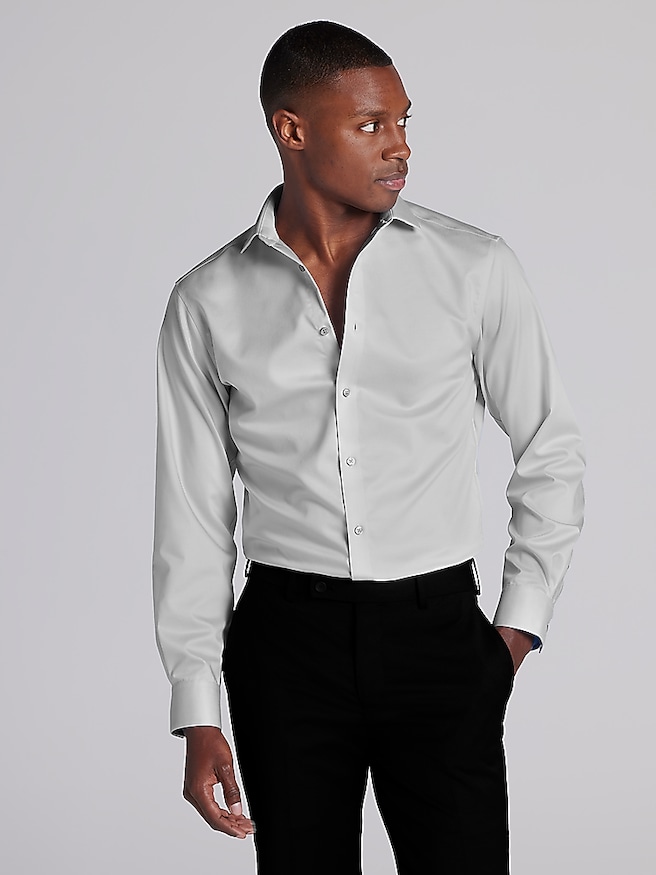
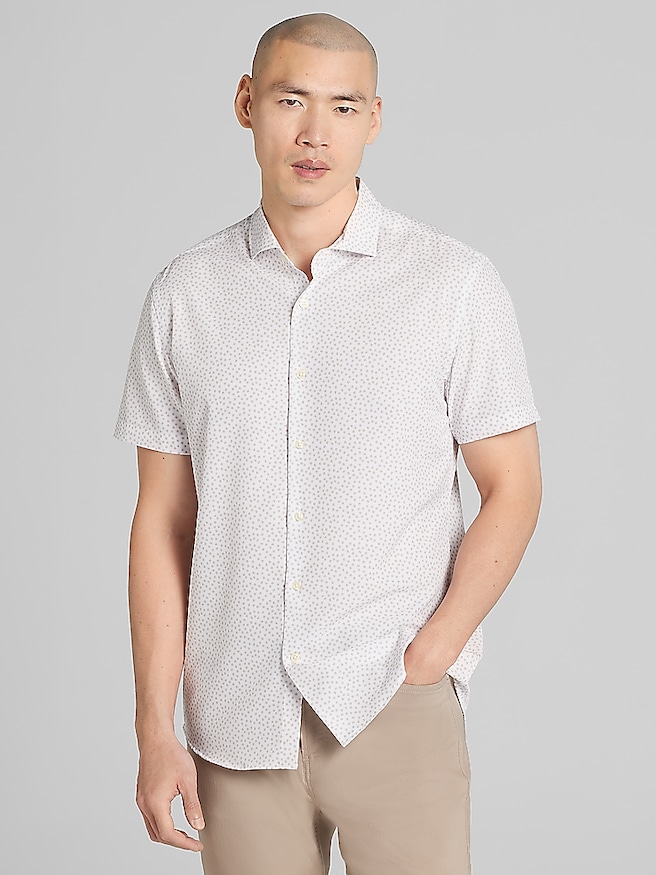
Men’s trim fit dress shirts have a shaped silhouette that sits closer to the body than a traditional full-cut shirt, with less excess fabric through the chest, waist, and torso. The result is a clean line under a suit jacket and a neater appearance when the shirt is worn on its own with dress pants. Trim fit describes the cut, not a requirement to wear a shirt tightly: a well-fitting dress shirt should still leave room to reach forward, sit comfortably, and move without pulling across the buttons. For someone whose shirt tends to bunch above the waistband or billow at the sides, a trimmer shape can make a noticeable difference. The shoulder seams should sit near the edges of the shoulders, while the front placket should lie flat rather than forming gaps across the chest. A buttoned collar needs enough space to feel comfortable with a tie, and sleeves should reach the wrist without swallowing the hand. When worn beneath a jacket, a small amount of shirt cuff can remain visible for a balanced finish. Neck and sleeve measurements are useful starting points, but the shape through the middle matters just as much. Two shirts with the same labeled measurements can fit differently because of their armholes, sleeve widths, back construction, and waist shaping. Trim fit and slim fit are related terms rather than universally identical cuts, so measurements and fit descriptions are more useful than the label alone. A shirt that looks smooth while standing should also feel comfortable at a desk or behind the wheel. Those who need additional room through the chest and waist may prefer men’s relaxed fit dress shirts, especially when ease of movement takes priority over a closely shaped profile. The most convincing tailored appearance comes from the right proportions, not simply choosing a smaller size.
Fabric affects how a trim fit dress shirt feels, drapes, and holds its appearance through repeated wear. Cotton is a familiar choice for its breathable feel and versatility, while cotton blends can bring together different qualities, including easier care, stretch, or resistance to wrinkling, depending on their composition and finish. A small amount of elastane can help a closely cut shirt move more comfortably across the shoulders and elbows, though stretch does not replace adequate room in the chest or a correctly sized collar. Weave makes a difference, too. Poplin generally has a smooth, relatively crisp surface that works well with business tailoring. Twill has a subtle diagonal texture and often a softer drape, while pinpoint and other textured weaves add quiet dimension without relying on a bold pattern. Fabric weight, density, and color influence opacity; a pale shirt may benefit from a smooth undershirt close to the wearer’s skin tone when extra coverage is wanted. Non-iron and wrinkle-resistant descriptions refer to fabric treatments or performance characteristics, not a promise that every crease will disappear under every condition. The care label remains the best reference for washing, drying, ironing, or professional cleaning. Prompt removal from the dryer, when machine drying is permitted, can help limit set-in wrinkles, while hanging a shirt with the collar and placket smoothed helps preserve its shape between wears. Excessive heat can affect some stretch fibers and finishes, making the recommended settings especially important. Durability also depends on construction and everyday handling: even stitching, secure buttons, and neatly finished seams support repeated use. Collars and cuffs take frequent contact, so treating marks according to the care instructions before they become established helps keep these visible areas presentable. A shirt that receives appropriate care is better positioned to retain the clean surface and defined shape that make a trim fit appealing.
The versatility of men’s trim fit dress shirts comes from how easily a streamlined shape works across professional and dressed-up settings. A white or light blue shirt provides a straightforward foundation for a navy or charcoal suit, whether the occasion is a job interview, a client presentation, or a wedding with a suit-and-tie dress code. Fine stripes and small checks add interest while remaining easy to coordinate with solid trousers and jackets. When both the shirt and tie have patterns, a difference in pattern scale helps each remain distinct; a narrow stripe can sit comfortably beside a larger, more open tie pattern without making the outfit feel crowded. Collar shape also influences the finished look. A point collar creates a narrower frame for a tie, while a spread collar leaves more room for a fuller knot. With the top button open, a collar that sits neatly beneath a jacket helps the outfit look deliberate rather than unfinished. Button cuffs are practical for regular office wear, while French cuffs introduce cufflinks and a dressier detail when the occasion suits them. For business-casual settings, a trim shirt paired with tailored chinos can look polished without a tie, provided the collar, cuffs, and overall fit remain tidy. Shirt length matters here: longer dress-shirt tails are designed to stay tucked, and a closer cut does not automatically mean a shirt is intended to be worn untucked. For someone building a work wardrobe, a few compatible colors and restrained patterns can support many combinations without making every outfit look the same. These shirts can also make thoughtful gifts for a graduate starting a professional role, a partner preparing for an important event, or someone who enjoys dressing with precision. Knowing the recipient’s neck size, sleeve length, and preferred fit makes that choice more personal and useful. Across those occasions, the strongest combination is consistent: comfortable movement, fabric suited to the wearer’s routine, and a silhouette that looks clean from the collar to the tucked hem.