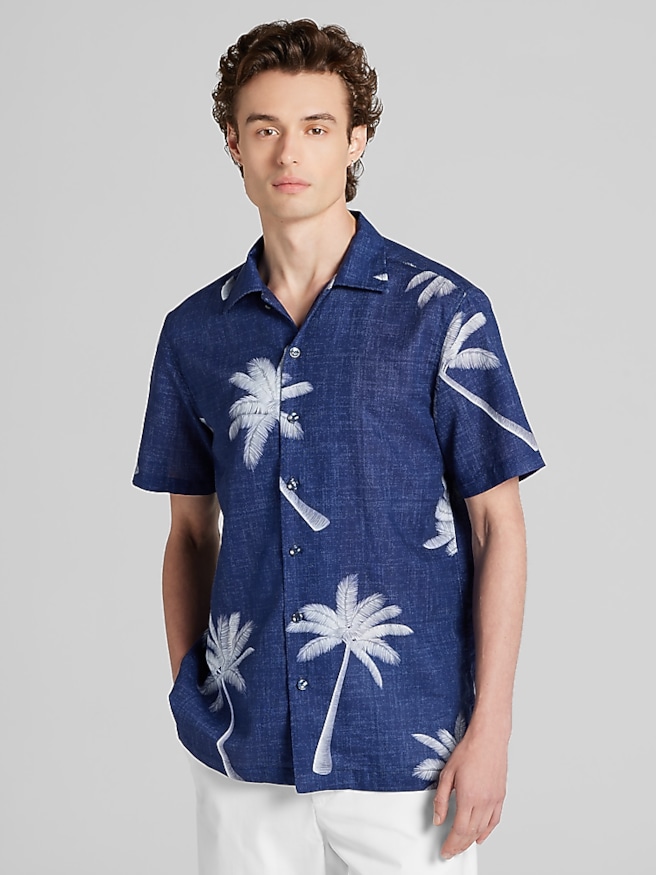
Men’s summer vacation shirts bring together breathable fabrics, comfortable cuts, and relaxed details that suit time away, whether the itinerary includes a coastal town, a resort courtyard, or long afternoons exploring neighborhood cafés. Lightweight linen, cotton, and fabrics designed to move moisture away from the skin are useful starting points, while camp collar shirts, polos, T-shirts, and lightweight button-front styles cover a range of activities. The best match depends on how a shirt feels in motion and where it will be worn: an open collar suits a leisurely lunch by the water, while a polo brings a more finished appearance to dinner without feeling formal. Linen has an airy feel and a distinctive texture, with natural creases that belong to its easygoing character rather than indicating poor quality. It is not naturally wrinkle-resistant, so a softly rumpled finish is part of the appeal. Cotton feels familiar against the skin, and lightweight cotton fabrics such as seersucker can be especially comfortable for warm destinations. Seersucker’s puckered surface holds portions of the fabric away from the body, reducing cling. Fabric weight and construction matter alongside fiber content; a dense cotton shirt may feel warmer than a loosely woven blend. Some linen blends offer a softer hand or better crease recovery, depending on the other fibers and finishing. Performance fabrics can be useful for active sightseeing, particularly when they are designed for moisture management and quick drying, though those properties should be confirmed in the garment details. Fine-gauge merino is another possibility for travel because of its moisture and odor management properties, but a lightweight construction is important for summer comfort. White, pale blue, sand, and other light shades absorb less sunlight than dark colors under comparable conditions, although color alone cannot guarantee a cool feel. Breathability, fit, humidity, and activity all influence comfort during a day outside.
The shape of a vacation shirt matters just as much as the fabric, especially when a day moves from a shuttle ride to a walking tour and then an outdoor meal. A comfortable shoulder seam generally sits near the shoulder’s edge on a traditionally cut shirt, while the chest and back should leave enough room to reach forward without pulling across the buttons. Relaxed fits offer space for airflow, but excess fabric can bunch under a backpack or overwhelm the proportions of shorts. Slimmer cuts can still work for summer travel when they skim rather than grip the torso. A small amount of stretch may help with movement, although stretch alone does not make a fabric breathable. Short sleeves should allow easy arm movement, with an opening that does not squeeze the upper arm. For shirts worn untucked, a hem around the middle of the fly often creates balanced proportions; longer shirttails are generally easier to keep tucked into trousers. Camp collars lie open at the neck and have an easy, informal character that works with drawstring shorts, chinos, or lightweight pants. Polos offer a useful middle ground between a T-shirt and a woven collared shirt, especially for a casual restaurant or a visit with friends. Lightweight long-sleeve button-front shirts add coverage and can feel appropriate for an evening meal when paired with neat trousers and loafers. Restaurant and resort dress requirements still matter, since a casual collar does not automatically satisfy every dress code. Prints also influence how a shirt fits into a travel wardrobe. A broad botanical pattern makes a stronger statement, while narrow stripes, small geometric motifs, and solid colors are easy to repeat across several outfits. For a wider view of these fabrics and silhouettes, Men's Summer Shirts offers a related starting point for building a coordinated warm-weather wardrobe. Repeating two or three colors across shirts and bottoms helps a compact suitcase support more combinations without making every outfit look alike.
Vacation shirts also need to stand up to packing, repeated wear, and whatever laundry arrangements a trip allows. Even stitching, securely attached buttons, and neatly finished seams are useful signs of careful construction, particularly at stress points such as armholes and side seams. Lightweight does not have to mean fragile, but very open weaves and delicate surface textures may need extra care around rough bag straps or hook-and-loop closures. Cotton can absorb substantial moisture and may remain damp longer than a quick-drying synthetic fabric, a practical distinction after a humid afternoon or an unexpected splash. A shirt described as moisture-wicking moves moisture through the fabric; that description does not by itself promise rapid drying, odor resistance, or sun protection. For extended outdoor use, a labeled UPF rating provides more meaningful information about ultraviolet protection than color or sleeve length alone. Covered skin benefits from the garment’s coverage, while exposed areas still need appropriate sun protection. Care instructions deserve attention before packing, particularly when a shirt requires dry cleaning or a drying method that will be difficult away from home. Where the label permits machine washing, gentle handling and suitable water temperatures can help preserve shape and color. Excessive dryer heat can shrink some fabrics or affect stretch fibers, and removing a shirt promptly after drying can reduce settled-in creases. Linen may benefit from pressing or steaming when a crisper finish is wanted, always at a setting appropriate to the garment. Folding shirts along their seams or rolling suitable casual fabrics can keep a suitcase organized, but neither method guarantees a wrinkle-free arrival. Hanging shirts after unpacking gives them space to air out and makes outfit choices easier. These practical qualities also make summer vacation shirts thoughtful gifts for a frequent traveler, a recent graduate planning a getaway, or someone celebrating a honeymoon or retirement trip. A familiar fit, a manageable care routine, and colors that work with the recipient’s existing wardrobe are often more useful than a dramatic print chosen only for the destination. The most useful vacation shirts feel comfortable through the planned activities and remain easy to wear long after the suitcase is unpacked.