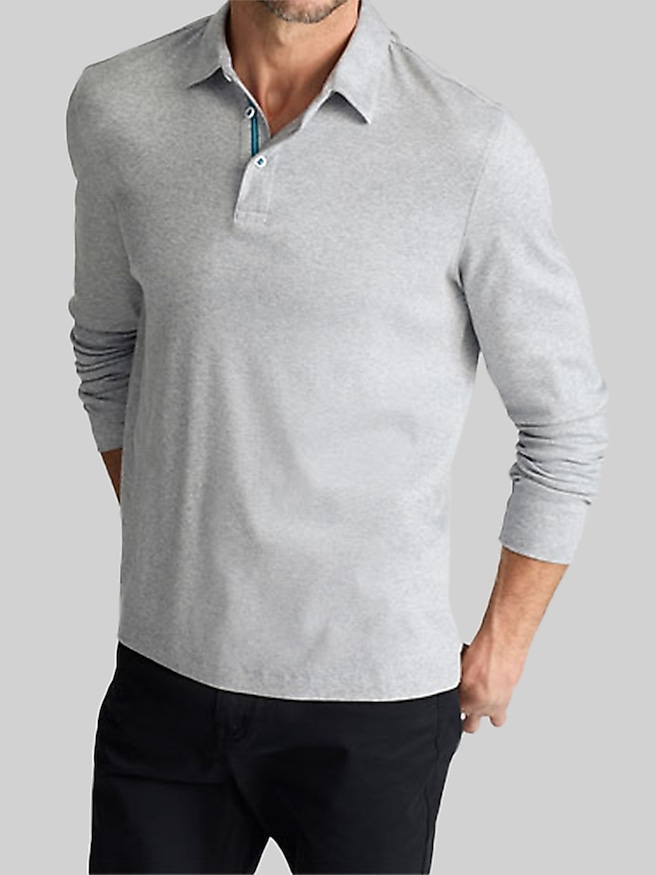
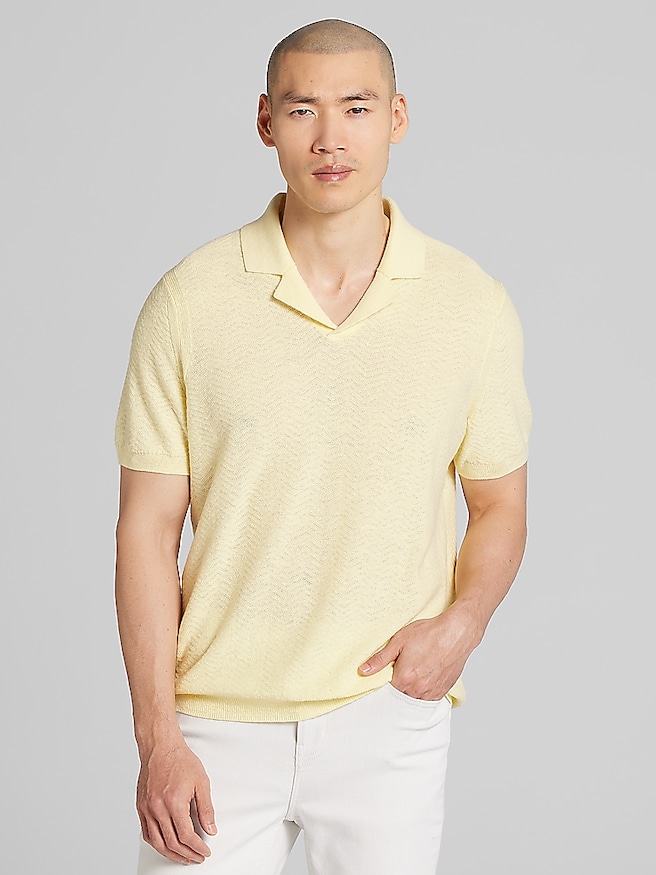
Men’s moisture-wicking polo shirts combine the finished look of a collar and button placket with fabrics designed to move perspiration away from the skin. Rather than simply absorbing moisture and holding it against the body, a wicking fabric helps spread it across a larger surface area so it can evaporate more readily. That makes these polos useful for days that move between a desk, a commute, a round of golf, and dinner with friends. Moisture management, breathability, and drying speed are related qualities, but they are not interchangeable: breathability describes how readily air and water vapor pass through a fabric, while wicking describes how liquid moisture travels through it. Performance depends on the fibers, knit structure, fabric weight, and any applied finish, not just a claim on a label. Polyester is common because it absorbs relatively little water and can be engineered to transport moisture along its fibers. Nylon can contribute a smooth hand and durability, while elastane adds stretch for reaching, bending, and swinging. Cotton blends offer a familiar softness, though their drying behavior depends on the proportion of cotton and the overall construction. A fine jersey knit typically has a smooth face that works well with tailored casual clothing; a textured piqué knit gives the shirt a more traditional polo appearance. Mesh sections or open-knit structures may support airflow, but they are not features of every performance polo. Fabric feel matters, too. Some knits are fluid and lightweight, while others have enough substance to maintain a clean outline through the torso. Neither is automatically better: the right balance depends on whether the shirt will spend most of its time at a workstation, on a golf course, or moving between appointments. The appeal of Moisture Wicking Polos is that practical moisture management can sit comfortably alongside everyday polish, without requiring the look of a workout shirt.
Fit determines how naturally a moisture-wicking polo moves and how neatly it pairs with the rest of an outfit. A trim fit follows the chest and waist without pulling across the button placket, while a classic fit allows more room through the torso. Stretch can make either silhouette more forgiving, but it does not replace adequate space across the shoulders or under the arms. Shoulder seams generally look most balanced near the edge of the shoulder, and sleeves should allow an easy bend at the elbow without gripping the upper arm. A placket that spreads open or diagonal lines radiating from the chest can suggest that the shirt is too close-fitting. Excess fabric gathering above the waistband may indicate more length or fullness than the wearer prefers. For an untucked look, a hem around the middle of the fly often creates a balanced proportion, although torso length and personal preference matter. A longer hem can be useful for keeping a shirt tucked during a golf swing or a day of standing, sitting, and reaching. Side vents may help the hem fall more easily over the hips. These details influence how the same category of shirt works across different settings. With chinos and a leather belt, a smooth-knit polo can suit an office where collared casual clothing is appropriate. With five-pocket pants and clean sneakers, it feels relaxed enough for errands or an informal meal. Under an unstructured jacket, a collar with enough body to hold its shape helps the neckline stay tidy rather than disappearing beneath the lapels. Solid colors offer straightforward coordination, while subtle texture or a restrained pattern adds interest without dominating an outfit. Moisture-wicking polos can also make thoughtful gifts for golfers, frequent travelers, or anyone who prefers a collared shirt for daily wear. Knowing the recipient’s usual fit, preferred sleeve length, and tendency to tuck or untuck is often more useful than choosing solely by color.
Care and construction have a lasting effect on how a performance polo looks and feels after repeated wear. The care label is the starting point because a shirt’s fiber blend, stretch content, dyes, and finishes may call for different washing and drying methods. Many synthetic polos tolerate machine washing, but not every fabric responds well to the same cycle or dryer setting. Fabric softeners can leave residue that interferes with moisture transport in some performance textiles, so they are often best avoided when the care instructions advise against them. Using an appropriate amount of detergent and rinsing thoroughly helps prevent buildup, especially around the underarms and neckline. Prompt washing after heavy perspiration can also help limit lingering odors; moisture-wicking fabric is not automatically odor-resistant, and an odor-control treatment should only be expected when it is specifically identified. Separating smooth performance knits from rough fabrics and securing hook-and-loop closures on other garments can reduce snagging during washing. Drying according to the label, then folding or hanging the shirt promptly, helps preserve its shape and keeps the collar and placket looking orderly. Excessive dryer heat can affect some stretch fibers and finishes, while ironing requires particular care with synthetics. Over time, even stitching, secure buttons, a stable collar, and well-finished hems contribute to a polo that continues to look presentable. Pilling and snags depend on both construction and friction, including contact with bag straps, rough seating, or abrasive laundry loads. For travel, a knit that releases wrinkles easily and dries efficiently after an approved wash can simplify packing, but wrinkle resistance should not be assumed from moisture-wicking performance alone. The same distinction applies to sun protection: a polo should only be treated as having a specific UPF rating when that rating is stated. Together, fabric composition, fit, finishing, and manageable care requirements make these shirts a practical part of a wardrobe built around regular movement and a consistently neat appearance.