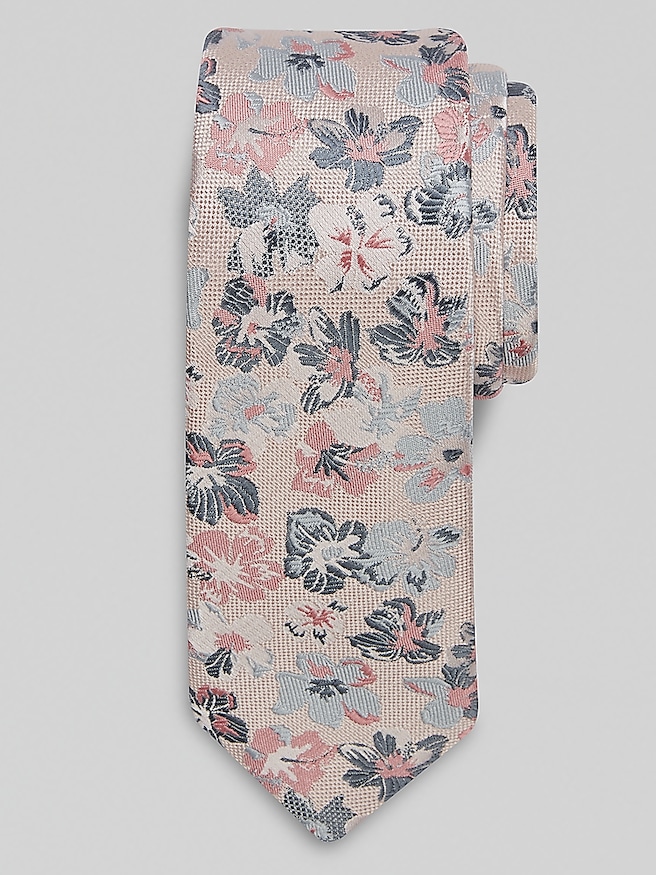
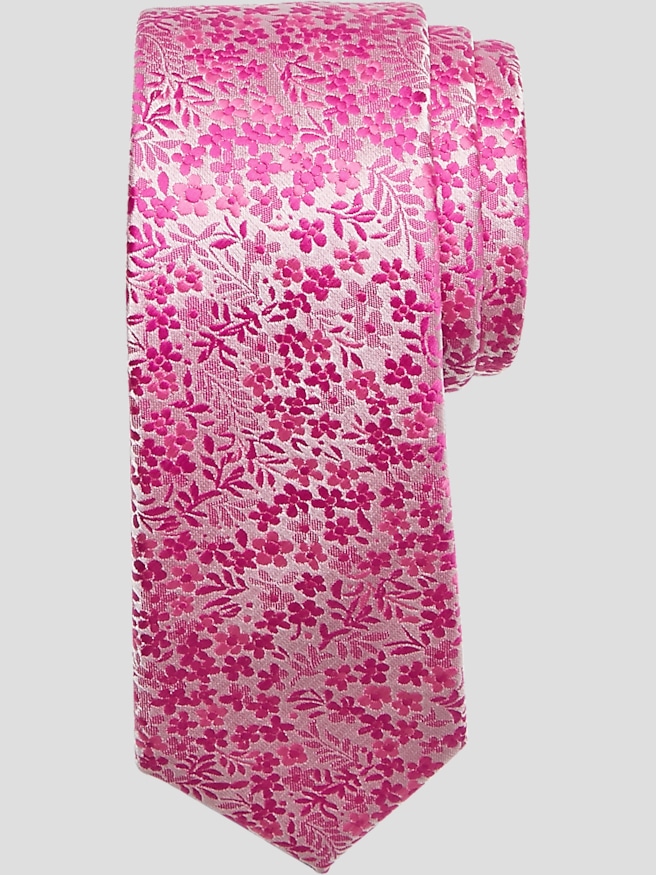
Men’s floral print ties bring color, movement, and a personal touch to tailored clothing without changing the foundation of an outfit. Against a solid shirt and a well-fitting jacket, a pattern of small blossoms or branching leaves creates a clear focal point, whether the setting is a wedding, a business dinner, or an evening celebration. The appeal of the best men's floral ties lies in that balance: enough detail to feel distinctive, with colors and proportions that work comfortably alongside familiar suits. Small, closely spaced flowers can read almost like texture from across a room, making them an understated option for offices where patterned neckwear fits the dress code. Larger blooms and open botanical arrangements have a more expressive character, especially when their colors contrast strongly with the background. Navy, burgundy, and deep green grounds give floral patterns a substantial visual base, while cream, pink, blue, or gold accents offer easy connections to shirts and pocket squares. A navy tie scattered with pale blue flowers, for example, looks cohesive against a light blue shirt without matching it exactly. With a charcoal suit and white shirt, a burgundy floral tie adds depth while keeping the overall impression polished. Printed floral designs can have crisp outlines, shaded petals, or a loose, painterly quality; each creates a distinct effect even within the same color family. Pattern density matters as much as flower size. A tightly packed design looks rich and intricate, while widely spaced motifs allow more of the background color to show. For someone who usually wears solid ties, a restrained two-color floral can introduce pattern without making the outfit feel unfamiliar. More colorful designs suit occasions where individual expression belongs in the picture, from a celebratory dinner to a wedding portrait. The strongest combinations give the floral pattern room to stand out rather than surrounding it with equally prominent details.
Fabric and construction influence how a floral tie looks, knots, and holds its shape over repeated wears. Silk often gives printed colors a rich appearance and offers a smooth drape, though the finish may range from softly lustrous to relatively matte. Cotton generally has a less reflective surface that works naturally with textured jackets and less formal tailoring. Linen can add visible texture and a relaxed character, with creasing that is part of the fabric’s appearance. Polyester and blended fabrics may offer useful resistance to wrinkles and everyday wear, depending on their construction, but the care label remains the best reference for handling any tie. Weight is worth considering alongside fiber content: a substantial tie can produce a fuller knot, while a lighter fabric may sit more neatly beneath a close-fitting collar. The interlining helps support the tie’s shape and recovery, and smooth edges, even stitching, and a blade that hangs straight are useful signs of careful construction. Width works best in proportion to the jacket lapels, shirt collar, and wearer’s overall frame rather than following a rigid age-based rule. Skinny ties, often around 2 to 2.5 inches wide, create a narrow line beside slimmer lapels. Traditional widths, commonly around 3 to 3.5 inches, offer a balanced look with more substantial lapels and classic tailoring. Length matters just as much: when tied, the front tip should generally reach the waistband or the middle of the belt buckle. Taller wearers or those using fuller knots may need additional length to achieve that position comfortably. A four-in-hand knot gives many floral ties a slightly asymmetrical finish that keeps the pattern visible, while a half-Windsor creates a more symmetrical shape when the collar has enough space. Neither should crowd the collar or pull it out of position. A small dimple beneath the knot adds dimension, helping the fabric fall cleanly rather than looking flat against the shirt.
Floral neckties work especially well when the rest of the outfit provides a clear, quiet backdrop. A solid white shirt shows the colors accurately and keeps even an intricate print easy to read. Pale blue softens the contrast, while a finely striped shirt can work when its pattern is noticeably smaller or simpler than the flowers. Combining a floral tie with a checked jacket takes a little more restraint: keeping the shirt solid and repeating one subdued color helps the elements feel connected. A pocket square does not need to reproduce the tie’s print; a plain linen square or a subtle border that echoes one accent color often looks more considered. For wedding parties, a shared background color can establish cohesion even when the floral arrangements vary, provided the couple’s dress expectations allow it. Grooms and guests can also use botanical neckwear to reflect colors in the celebration without making every accessory identical. A floral tie belongs most naturally with suiting or dressy separates; events that specify black tie generally call for a bow tie and the appropriate formal attire instead. Beyond celebrations, a small-scale floral can bring personality to a presentation or client dinner in a workplace that welcomes patterned ties. As a gift, it offers a practical way to acknowledge someone’s taste, especially when the colors relate to suits and shirts already in regular rotation. A recipient who favors navy tailoring may get more use from a restrained blue floral than a high-contrast multicolor design. Thoughtful care helps preserve that usefulness. Untying the knot after each wear, rather than pulling the narrow end through a tight knot, reduces unnecessary stress on the fabric and seams. Hanging the tie smoothly or rolling it loosely allows it to rest without sharp folds. Blot spills gently instead of rubbing, avoid applying heat to a stain, and follow the labeled cleaning instructions. For delicate fabrics or persistent marks, a professional cleaner experienced with neckwear can assess the safest treatment. Stored away from direct sunlight and protected from snags, a well-made floral tie can remain a distinctive part of a tailored wardrobe through many occasions.