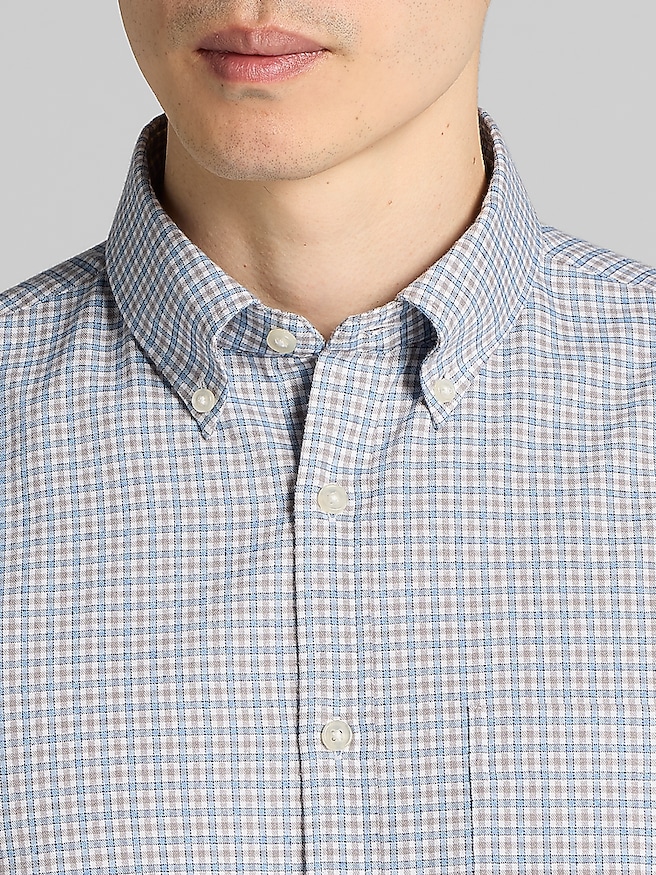
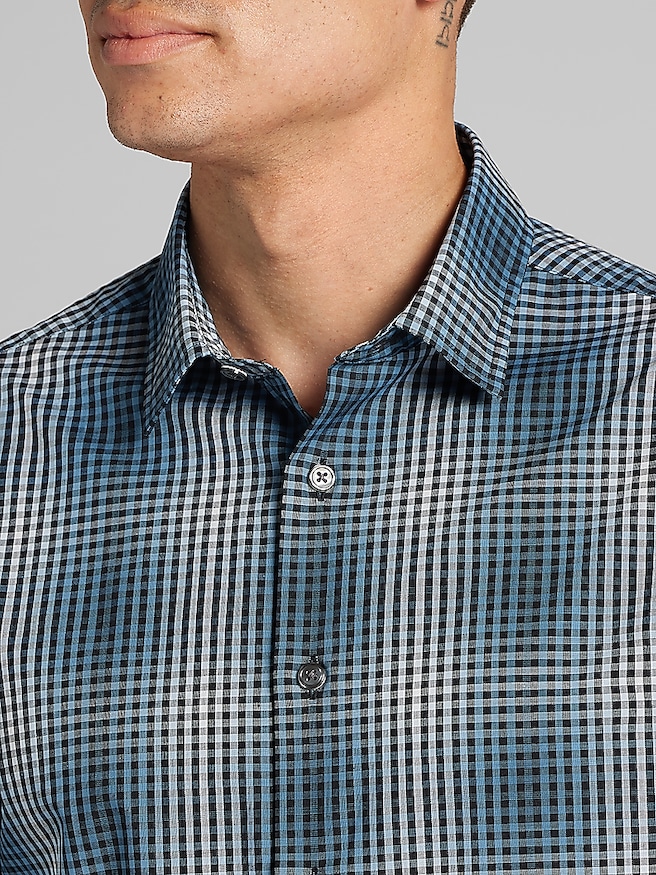
Men's blue plaid shirts combine intersecting lines and checks with shades ranging from pale blue to deep navy, creating an easy foundation for casual outfits and many business-casual settings. The pattern adds more visual interest than a solid shirt while remaining straightforward to coordinate with familiar wardrobe staples. A small-scale plaid with subtle contrast often has a quieter, more polished appearance, while broad checks and bolder lines give a shirt a more relaxed character. White accents can make blue look crisp and bright; gray, brown, or muted green accents can soften the overall effect. Fabric matters just as much as color. Cotton poplin has a smooth surface and a relatively crisp feel, making it suitable for shirts worn neatly tucked into chinos or trousers. Oxford cloth has a more textured weave that works naturally with denim and other casual pieces. Twill is recognizable by its diagonal weave and can provide a substantial feel with a fluid drape, depending on the yarn and construction. Brushed cotton flannel gives plaid a softer, more textured appearance suited to relaxed outfits, without making every plaid shirt a flannel shirt. Plaid describes the pattern, not the material, so two blue plaid shirts can feel and wear quite differently. Cotton-rich blends may incorporate polyester to help with shape retention or elastane for stretch, though the fiber percentages and construction determine how noticeable those qualities are. A stretch fabric can be useful for someone who spends the day moving between a desk, a commute, and errands, while all-cotton fabric may appeal to someone who prefers a familiar natural-fiber feel. Fabric weight, surface texture, and the contrast within the plaid all influence whether a shirt reads as understated, rugged, or refined. Those details explain why blue plaid can work across several parts of a wardrobe rather than belonging to just one kind of outfit.
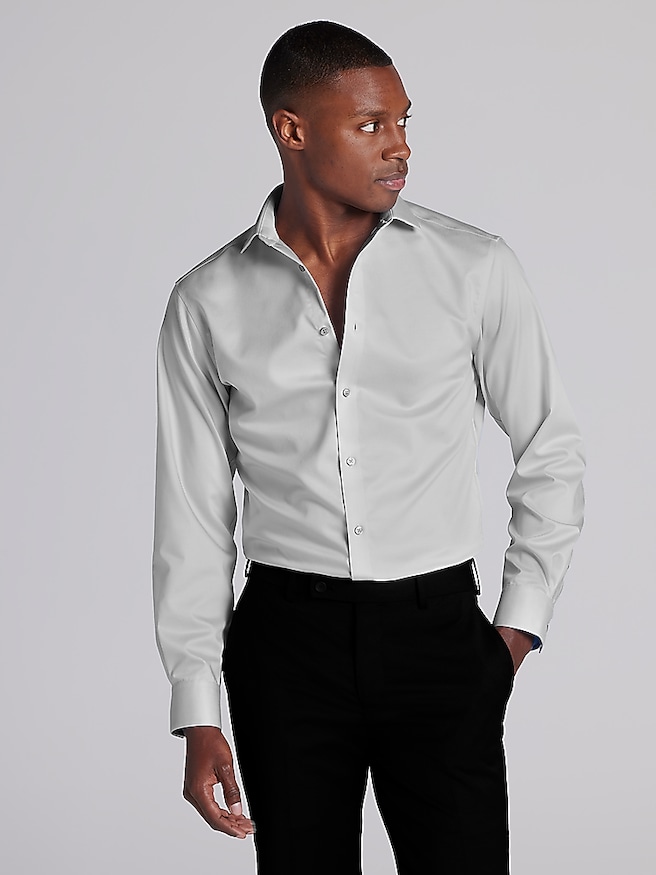
The versatility of blue plaid shirts depends partly on fit: the same pattern can look sharp and streamlined or easygoing and roomy depending on the cut. Slim fits generally sit closer through the chest and waist, classic fits tend to provide a straighter shape with more room, and relaxed fits emphasize ease of movement. These names are not standardized, so measurements and the way a shirt sits on the body matter more than the label alone. Shoulder seams should generally meet near the edge of the shoulder, and a buttoned front should lie smoothly rather than pull into gaps across the chest or stomach. There should be enough room to reach forward, sit comfortably, and bend the elbows without the sleeves or back feeling restrictive. Stretch can add flexibility, but it does not replace an appropriate fit. Shirt length also changes the finished look. A longer, curved shirttail typically stays tucked more securely, while a shorter hem can look balanced worn untucked; the exact result depends on torso length and the shirt's proportions. For an office that permits patterned shirts, a fine blue plaid tucked into charcoal trousers creates a composed outfit without the severity of formal business attire. With dark jeans and casual leather shoes, a larger plaid feels comfortable for dinner or a weekend gathering. An open collar keeps the effect relaxed, while a structured collar under an unpatterned jacket gives the shirt a more finished appearance. When adding another pattern, differences in scale help prevent the outfit from looking busy. A small plaid usually pairs more easily with a broad, restrained jacket pattern than with another equally small check. Solid pants and simple layers let the blue remain the focal point, particularly when the shirt contains several accent colors.
Care and construction help determine how well a blue plaid shirt holds its appearance through repeated wear. The care label is the most reliable starting point because cotton, stretch blends, brushed fabrics, and special finishes can require different handling. For machine-washable shirts, washing with similar colors and using the recommended water temperature can help protect the blue tones and reduce unwanted color transfer. Excessive dryer heat may contribute to shrinkage or affect stretch fibers, while removing a shirt promptly after drying can limit deep creases. Some fabrics look best with a light press; others have a naturally textured finish that does not need to appear perfectly smooth. Easy-care and wrinkle-resistant descriptions can indicate less upkeep, but they do not mean a shirt will remain crease-free through every activity. Following any ironing instructions is particularly important around collars, cuffs, and fabrics containing synthetic fibers. Durability involves more than fabric thickness. Neat, secure seams, firmly attached buttons, and well-finished buttonholes all contribute to dependable everyday use. Plaid alignment across the front can also influence how carefully finished a shirt looks, although matching patterns at every seam is not universal. Areas that receive frequent friction, including the collar edge and cuffs, benefit from regular attention to stains and wear rather than repeated aggressive washing. A shirt worn often for work may need a different care routine from one reserved for dinners and social plans, making upkeep a practical part of the decision. Blue plaid also makes a thoughtful gift for a father, brother, partner, or friend who already enjoys patterned shirts. Familiarity with the recipient's preferred collar size, sleeve length, fit, and usual laundry routine makes the choice more personal and useful. For someone building an everyday wardrobe, a restrained blue plaid can bridge solid shirts and more expressive patterns; for someone with an established style, a distinctive check size or fabric texture offers variety without abandoning a familiar color.