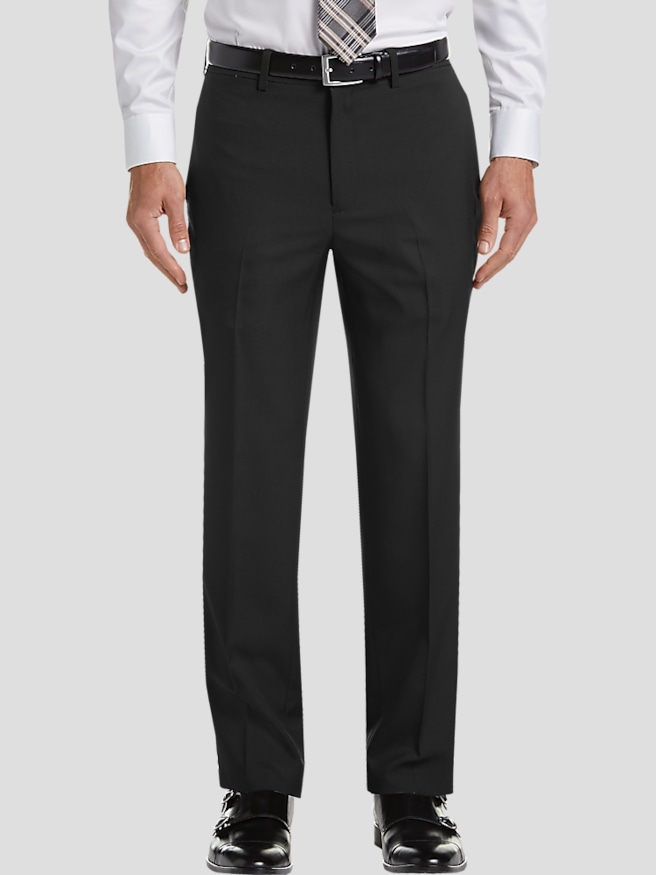
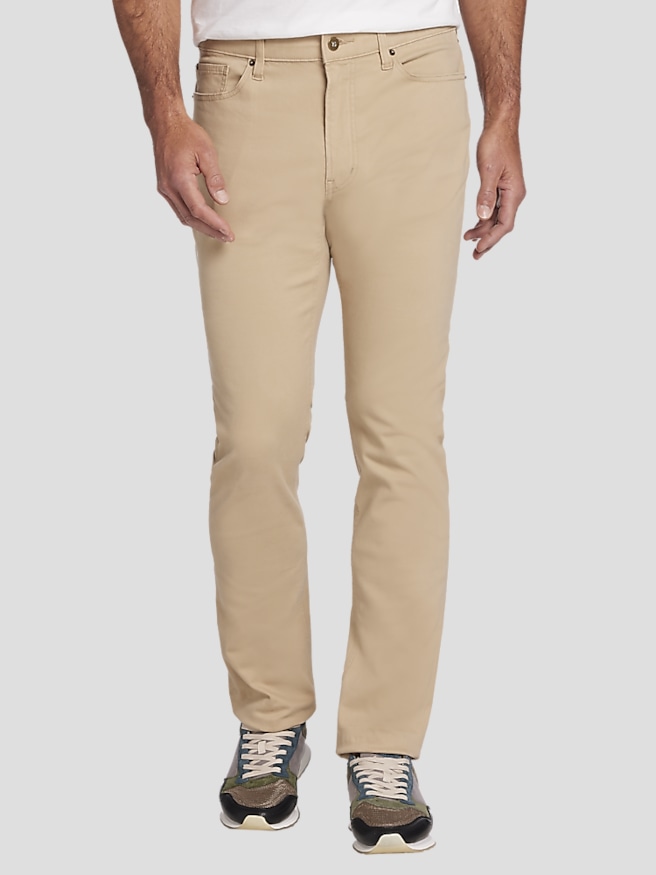
Men’s athletic fit work pants are designed to give fuller thighs and a stronger seat more room without leaving excess fabric through the lower leg. The defining shape is generous where muscular builds need space, often with a gradual taper toward the ankle for a clean finish. That balance matters when a workday involves more than standing still: settling into a desk chair, climbing stairs between meetings, stepping into a truck, or bending to reach a low shelf. A waistband that fits comfortably should not require tightness across the thighs, and extra thigh room should not mean an oversized waist. Athletic cuts address that mismatch, making them useful for men whose proportions do not sit comfortably in a conventional slim silhouette. The fit is not limited to athletes; anyone who prefers room through the hips and upper legs with a more defined lower leg may appreciate the shape. Compared with a relaxed cut, an athletic cut generally places its extra space around the seat and thighs rather than carrying the same fullness all the way to the hem, although measurements vary by style. A comfortable rise is equally important because it influences how the pants sit when seated and whether the waistband pulls down during movement. Across the front, pockets should lie relatively flat rather than flare outward, while the fabric at the seat should drape without strong horizontal pulling. Stretch can make movement easier, but it cannot fully compensate for a cut that is too tight. For office settings, a tapered leg creates a neat line over loafers or lace-up shoes. For work that calls for boots, a little more room at the hem helps the fabric fall over the footwear instead of catching above it. The result should feel comfortable through a full stride and look composed after hours of sitting, walking, and getting back up again.
Fabric and construction determine how men’s athletic fit work pants perform beyond the fitting room. Cotton twill offers a familiar texture and a substantial feel that suits many business-casual workplaces, while cotton blended with elastane can provide useful give through the knees and seat. Polyester or nylon blends may contribute strength, quicker drying, or improved shape retention, depending on the fabric and its construction. A small stretch percentage does not tell the whole story: the weave, fabric weight, and direction of stretch also affect how freely a pair moves. Stretch recovery matters just as much as flexibility, particularly for pants that need to maintain their shape after a long drive or an afternoon at a desk. For hands-on work, a sturdy canvas or tightly woven twill can be useful where fabric repeatedly brushes against benches, shelving, or equipment. Reinforced seams, secure pocket attachments, and reinforced knees can add durability in high-wear areas when those details are part of the design. A gusseted crotch can also support a wider range of motion by adding fabric where several seams would otherwise meet. These construction details serve a distinct purpose from the athletic silhouette itself; roomy thighs alone do not make pants abrasion-resistant or suitable for strenuous job-site use. Likewise, stretch fabric does not establish protective performance. Workplaces with requirements for flame resistance, visibility, or other protective clothing call for garments specifically rated for those hazards. In offices, customer-facing roles, and mixed desk-and-floor environments, priorities may lean toward a smooth surface, breathable comfort, and a finish that resists everyday wrinkling. Moisture management can be helpful during a brisk commute or frequent trips between indoor spaces, but performance claims should come from the garment’s stated features rather than its appearance. For a related category focused on functional fabrics, Men's Performance Work Pants offers another way to explore workday clothing. Athletic fit describes the shape; performance features describe what the fabric or construction is designed to do.
The most useful athletic fit work pants suit the routine surrounding the job as well as the hours spent doing it. A clean-front pair in charcoal, navy, or a muted earth tone can work with a tucked-in button-down for a presentation, then feel equally at home with a knit polo for a less formal afternoon. During the cooler months, the same streamlined shape sits comfortably beneath an overshirt, sweater, or tailored jacket without adding unnecessary bulk around the waist. Pocket layout can make a noticeable difference in daily wear. Slanted front pockets keep essentials accessible, while secure back pockets help contain small belongings; fuller utility pockets serve a practical purpose when carrying tools or supplies, but create a more casual profile. Overfilled pockets can distort even a well-proportioned fit, especially through a tapered leg. Length deserves similar attention. A modest break over dress shoes keeps the silhouette tidy, while pants worn with substantial boots may need a slightly wider opening and enough length to cover the top of the boot during normal movement. Care helps preserve that balance of comfort and appearance. The care label should guide washing, drying, pressing, or professional cleaning because cotton-rich fabrics, stretch blends, and dressier materials can have distinct needs. Excessive dryer heat can shorten the life of elastic fibers and may contribute to shrinkage, so lower heat or air drying is appropriate when the label permits it. Prompt attention to stains, empty pockets before washing, and securely fastened closures help reduce avoidable wear. Hanging pants neatly after use can limit creasing, and rotating between pairs gives each one time to air out between wears. For a practical gift tied to a new role or a wardrobe refresh, familiar waist, inseam, and fit preferences are more useful than guessing from build alone. Whether the day centers on client conversations, time on a retail floor, or light hands-on tasks, athletic fit work pants bring their greatest value when the cut, material, and construction match the actual demands of the work.