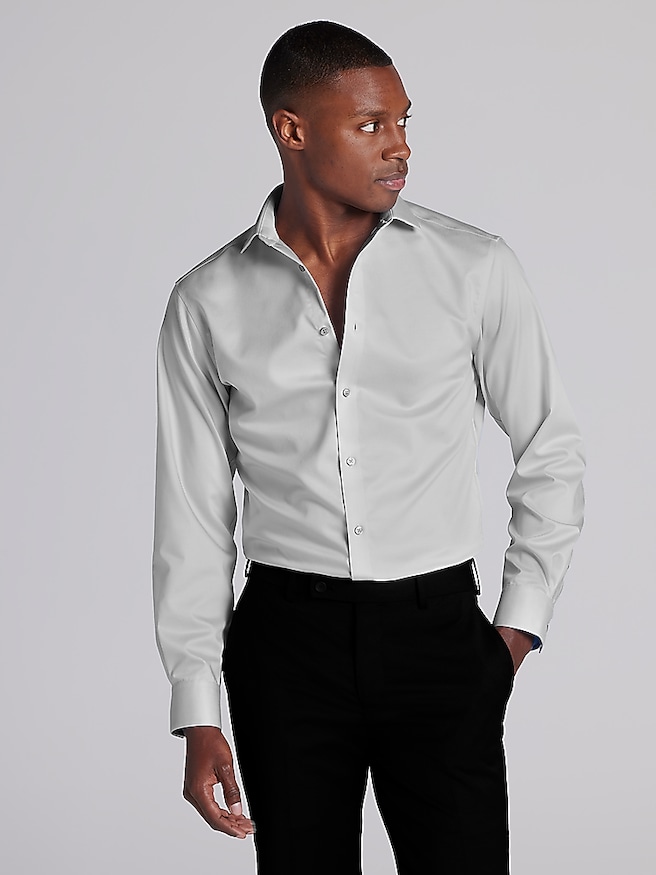
Men’s athletic fit dress shirts are designed with room through the shoulders, chest, and upper arms and a more tapered waist, creating a tailored shape for a muscular or V-shaped build. That combination addresses a familiar fit problem: a shirt that accommodates a broad chest can leave too much fabric around the middle, while a narrower cut may pull across the buttons or restrict movement through the back. An athletic cut balances those proportions without relying on an oversized neckline or excessively long sleeves to create space. The result should look neat beneath a suit jacket and feel comfortable when worn on its own. Athletic fit is not simply another name for slim fit; slim cuts typically follow a narrower line throughout the torso, while athletic cuts account for a greater difference between chest and waist measurements. Both sit within the broader range of men's fitted dress shirts, although exact proportions vary by maker and design. Shoulder seams should sit near the natural shoulder edge, the button placket should lie flat, and the fabric should skim the waist rather than cling to it. Horizontal tension lines across the chest, gaps between buttons, or sleeves that bind when the elbows bend can indicate that more room is needed. A comfortable fit also leaves enough space through the upper back for everyday movements, such as reaching across a desk or putting on a jacket. Neck size and sleeve length remain important even when the torso shape feels right: a buttoned collar should sit comfortably without squeezing, and cuffs should rest near the wrist without covering the hand. Men with similar chest measurements may still need different proportions through the arms or midsection, so the athletic label is a starting point rather than a guarantee. For anyone whose shoulders and waist rarely seem to fit the same shirt, that distinction can make getting dressed considerably simpler.
Fabric influences how an athletic fit dress shirt feels, drapes, and holds its appearance over a full day. Cotton is a familiar choice for its breathable feel and ability to take a crisp press, while cotton blends can offer a balance of softness, wrinkle resistance, and easier upkeep, depending on their composition and finish. A small amount of elastane or another stretch fiber can help the fabric move with the body, particularly across the shoulders and elbows. Stretch should support a suitable fit, not compensate for a shirt that is too small; a chest that pulls at the buttons will still look strained even when the material has give. Weave matters as much as fiber content. Poplin generally has a smooth, relatively flat surface that works well with polished tailoring, while twill has a subtle diagonal texture and often a softer drape. Fine pinpoint weaves bring understated texture that can transition comfortably between a business suit and dress pants worn without a jacket. Fabric weight, color, and weave density also affect opacity, especially in white and other pale shades. A low-contrast undershirt with a neckline suited to the collar opening can help keep the finished look clean. Construction details deserve attention, too: even stitching, secure buttons, and neatly finished seams contribute to a shirt that stands up to repeated wear. Care requirements vary, so the garment label should determine washing, drying, and ironing methods. Excessive heat can affect fibers and alter fit, while leaving a shirt tightly packed after laundering can set unnecessary creases. Promptly hanging it on a supportive hanger helps preserve the shoulder shape, and smoothing the collar, cuffs, and front placket keeps the most visible areas tidy. Wrinkle-resistant finishes may reduce pressing, but they do not make every shirt completely wrinkle-free. Thoughtful care protects the proportions that make an athletic cut useful in the first place, helping the shirt maintain a clean line through repeated workdays and dress occasions.
The appeal of athletic fit dress shirts extends beyond wearing them with a full suit. A tapered torso can sit smoothly beneath a vest, reduce bunching at a trouser waistband, and create a finished appearance when a jacket comes off during a meeting or reception. Solid white and light blue are straightforward foundations for business settings, interviews, and ceremonies, while restrained stripes and small checks add visual interest without overwhelming a tailored outfit. A spread collar can frame a fuller tie knot, a point collar creates a more elongated line, and a button-down collar often lends a less formal character. Collar construction also affects how neatly a shirt sits open at the neck, making it relevant for offices where ties are optional. With a tie, the collar should close comfortably and provide enough structure to support the knot. Without one, a well-fitting neckline and a smooth placket help the shirt look intentional rather than unfinished. Barrel cuffs suit many everyday dress settings, while French cuffs create a more formal appearance and require cufflinks. Sleeve length should allow the cuff to remain near the wrist as the arm moves, with a small amount showing beyond a properly fitted jacket sleeve. Hem length matters, too: a dress shirt intended to stay tucked needs enough fabric below the waistband to remain secure when sitting, standing, or reaching. Men who lift weights, swim, row, or naturally have broad shoulders may appreciate the proportions, but body shape—not an exercise routine—is what determines whether the cut works. These shirts can also make a practical gift for a graduate starting an office role, a partner preparing for an important event, or someone refining an established work wardrobe. Knowing the recipient’s neck size, sleeve length, and preferred torso fit makes that choice more personal. A successful athletic fit brings together ease of movement, balanced proportions, and a tidy silhouette, whether the day calls for a presentation, a wedding toast, or dinner in tailored trousers.