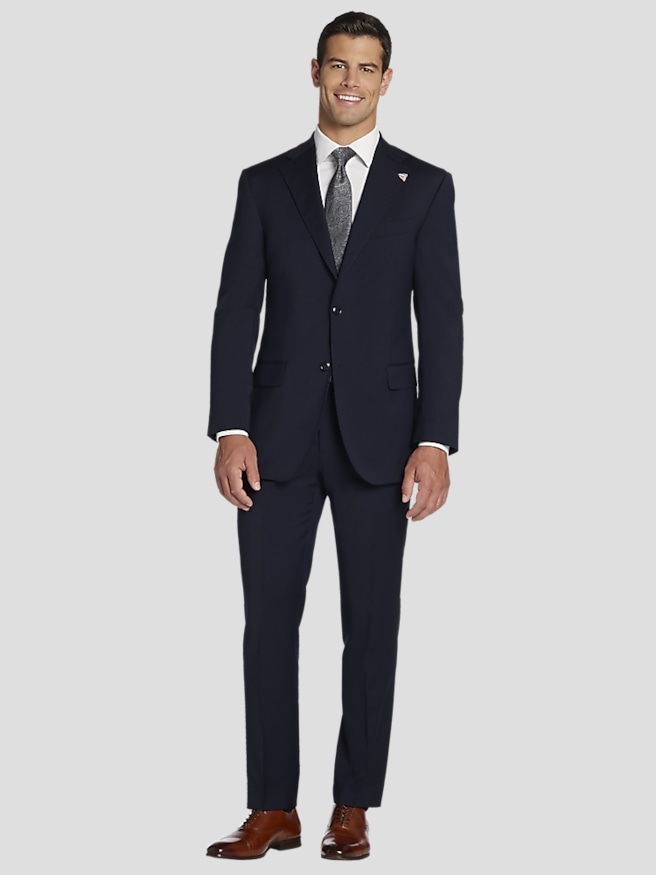
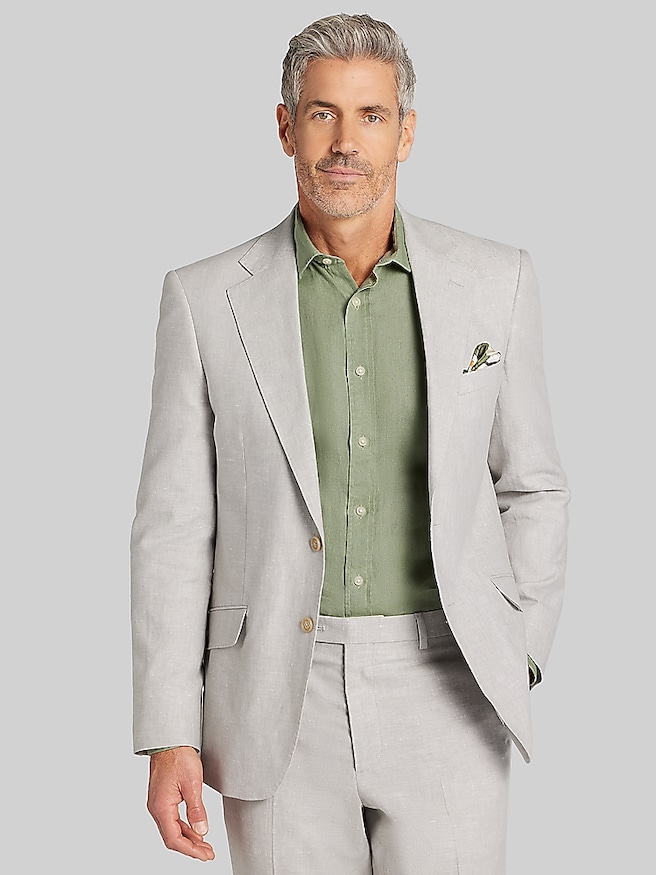
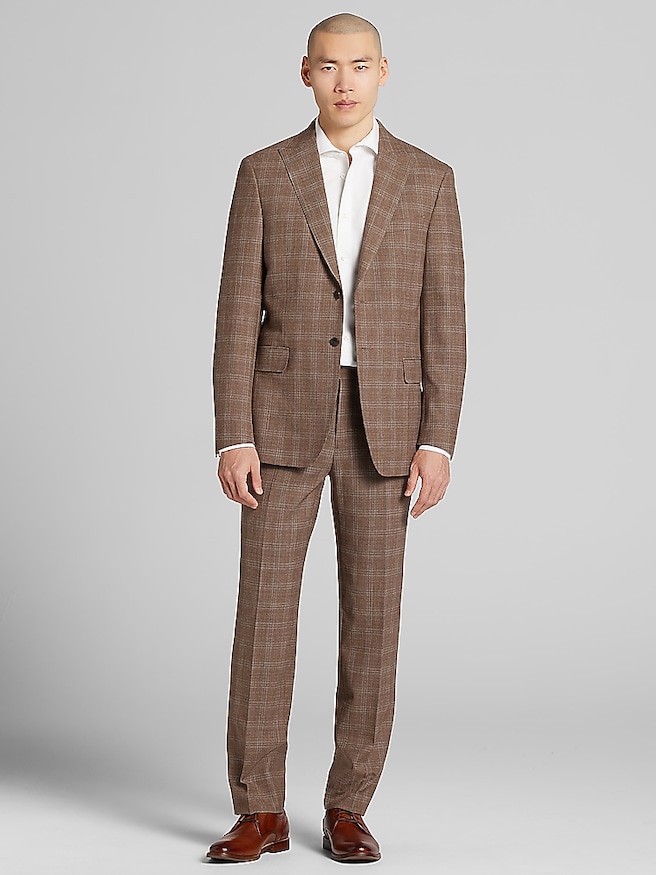
A well-cut suit brings a sense of purpose to the day, whether that means walking into an interview, presenting to a client, or taking a place beside the wedding party. Classic tailoring gets its character from proportion: a jacket that frames the shoulders, lapels that balance the chest, and trousers that continue the silhouette without pulling or pooling. Those details matter more than an elaborate pattern or an eye-catching accessory. For someone building a first tailored wardrobe, a solid navy or charcoal suit creates a dependable foundation that can look businesslike with a white shirt and understated tie or more celebratory with a textured tie and pocket square. For an experienced suit wearer, subtle surface texture or a restrained check can add variety without making coordination complicated. Suiting has long served both professional and ceremonial purposes, and its lasting appeal comes from that flexibility. The same coordinated jacket and trousers can move between a conference room, a graduation ceremony, and an evening reception when the dress code calls for a suit. A notch lapel generally feels familiar and versatile, while a peak lapel gives the jacket a more pronounced, dressier line. Details such as pick stitching, pocket placement, and button stance contribute to the overall impression, but they work best when the proportions feel balanced on the person wearing them. A two-piece suit keeps the presentation straightforward; a coordinated vest, when part of the ensemble, adds another layer of structure and formality. The most useful choice reflects actual routines rather than an imagined occasion. Someone who wears tailoring several days a week may prioritize easy coordination and comfort while seated, while an occasional wearer may place greater emphasis on a versatile color and a silhouette that feels natural after months between events. In either case, a suit should help its wearer feel appropriately dressed without making every movement feel deliberate.
Fabric and construction shape how a suit looks, moves, and holds up to repeated wear. Wool is valued in tailoring for its drape, breathability, and natural resilience, though the weight, weave, and finishing of the cloth all influence its feel. Blended fabrics combine fibers to achieve particular characteristics rather than following a single formula. Polyester can contribute strength and wrinkle resistance, viscose can add softness and fluidity, and a small amount of spandex can provide stretch. The fiber label is a useful starting point, but it does not tell the whole story: two fabrics with similar compositions can have noticeably distinct textures and levels of structure. A smooth, tightly woven cloth tends to create a crisp visual impression, while a more textured weave adds depth even in a solid color. Lining, shoulder padding, and internal support also affect the finished silhouette. A structured jacket can establish a defined shoulder line, while lighter construction may feel less rigid during a long day. Fit determines whether those materials and construction details can do their job. Modern fit generally describes a shaped silhouette with some room through the chest and body, while slim fit typically sits closer and tapers more noticeably; exact proportions vary, so the fit name alone is not enough. Shoulders should lie cleanly, and the collar should rest near the shirt collar rather than standing away from it. With the jacket buttoned while standing, pronounced pulling across the front can signal that more room is needed. Trousers should sit securely at the intended waist position and allow comfortable sitting, walking, and climbing stairs. Stretch can make movement easier, but it cannot compensate for a garment that is too small. Sleeve length, trouser hems, and modest waist adjustments are common areas for tailoring, whereas substantial shoulder changes are more involved. Trying the suit with the intended dress shirt and shoes makes those proportions easier to judge, especially the amount of trouser break and the sliver of shirt cuff visible beneath the jacket sleeve.
Everyday coordination and thoughtful care help a suit earn its place in a wardrobe. A pale blue shirt softens the contrast of charcoal tailoring, while a white shirt provides a clear backdrop for almost any traditional suit color. Small-scale tie patterns can introduce interest without competing with the fabric, and a pocket square does not need to match the tie exactly to feel coordinated. Shoe choice should follow the occasion as much as the suit: polished lace-ups create a more formal impression, while a clean, understated loafer can work where the dress code is less strict. For another perspective on blue tailoring, Men's Joseph Abboud Blue Suits offers a related point of comparison. Beyond styling, the way a suit is handled between wears has a meaningful effect on its appearance. Emptying the pockets prevents keys, phones, and wallets from distorting the jacket or stretching the trousers. A broad, shaped hanger supports the jacket shoulders, and trousers benefit from being hung neatly along their crease or supported on an appropriate trouser hanger. Letting the garments air out before placing them in a breathable garment bag helps keep them fresh without unnecessary cleaning. Care instructions should always determine the cleaning method, since fibers, linings, and internal construction may require different handling. Professional cleaning when needed, prompt attention to stains, and careful pressing can preserve the cloth and finish; frequent cleaning is not a substitute for good daily habits. Wearing and cleaning the jacket and trousers together also helps them maintain a consistent appearance over time. For frequent use, rotating between suits gives each ensemble a rest and reduces concentrated wear. A suit can also be a thoughtful gift for a graduate, a new professional, or someone preparing for a milestone celebration, especially when the recipient can participate in choosing the fit and arranging alterations. That involvement turns a personal garment into something genuinely useful: tailoring that suits the wearer's build, respects the occasion, and feels comfortable through the last handshake or photograph.