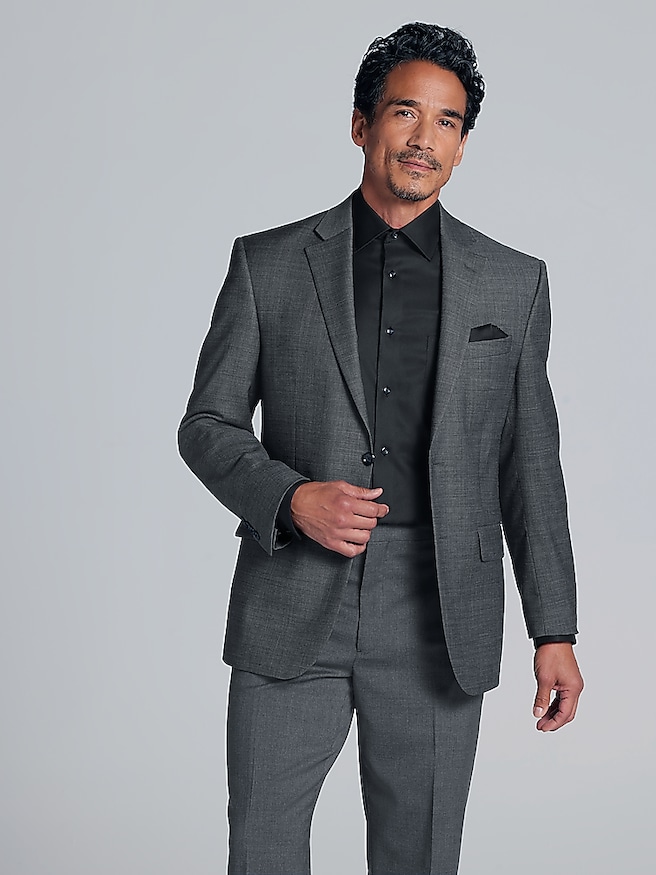
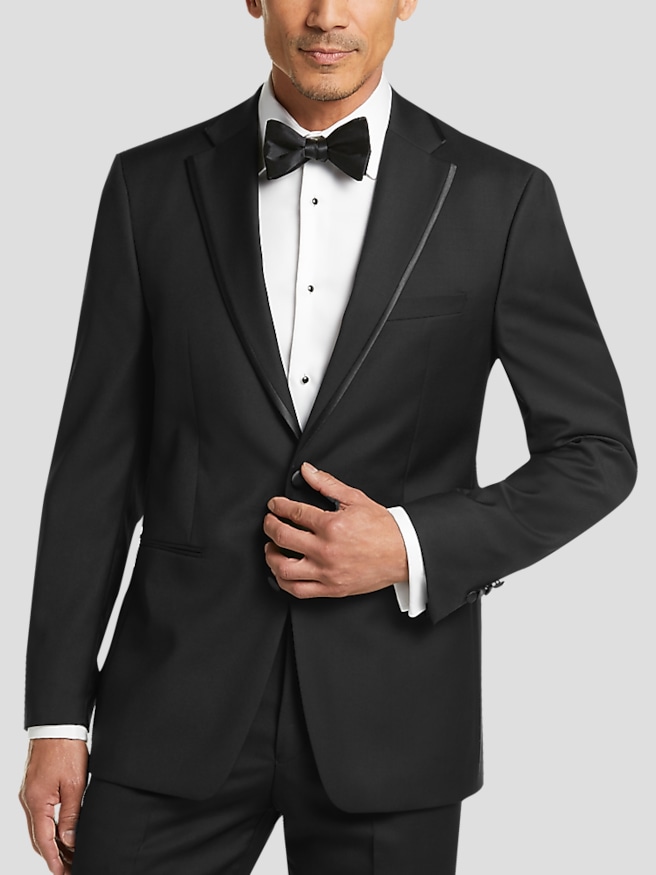
Gray tuxedos bring a softer color palette to formal dressing without losing the crisp lines and distinctive details that set a tuxedo apart from a suit. Shades range from pale silver and light gray to steel and deep charcoal, giving each look its own character under daylight, ballroom chandeliers, or evening reception lighting. Light gray has an airy, understated appearance that works especially well for daytime weddings and celebrations with a flexible formal dress code. Mid-gray provides a balance between light and dark, while charcoal creates a richer, more restrained effect for evening occasions. The appropriate shade depends on the setting and invitation as much as personal preference: a gray tuxedo can suit many formal weddings, proms, and celebratory dinners, but traditional black-tie hosts may expect black or midnight blue. Satin or grosgrain detailing on the lapels, covered buttons, and a coordinating stripe along the trouser leg are common tuxedo features, although construction varies. Those contrasting textures give gray cloth depth, particularly when the jacket moves between brighter and softer light. A peak lapel creates an angular line across the chest, while a shawl collar offers a rounded, continuous outline. Neither needs elaborate accessories to feel dressed up. For a groom, gray can establish a distinctive look while keeping the overall wedding party coordinated; for a guest, the same color can feel polished without drawing attention away from the occasion. Anyone considering a broader range of coordinated looks can explore Gray Formal Wear for context beyond the tuxedo silhouette. Across these shades, the appeal is the balance of color, texture, and proportion: gray provides room for personal expression, while the tuxedo’s defining details keep the outfit rooted in formalwear. The result can feel understated in a quiet ceremony or more dramatic against the dark backdrop of an evening celebration, depending on the fabric finish and styling.
Fabric and fit shape how a gray tuxedo looks and feels throughout an event, from standing for photographs to sitting through dinner and moving across a dance floor. Wool is a traditional choice because it drapes cleanly, allows moisture vapor to escape, and can recover from minor creasing between wears. Wool blends may add resilience or stretch, depending on their composition, while fabrics containing synthetic fibers can offer practical wrinkle resistance with a distinct feel and drape. Fiber content alone does not determine comfort; weave, cloth weight, lining, and jacket construction all matter. During the cooler months, a slightly more substantial cloth can feel appropriate for an evening venue, but a heavily heated reception room still makes breathability worth considering. A smooth finish emphasizes sharp tailoring, while subtle texture gives the gray surface dimension without relying on a bold pattern. Very lustrous fabric reflects more light and can appear paler in photographs, so a shade viewed near a window may look noticeably changed under warm indoor lighting. Fit should remain comfortable without looking loose or strained. Jacket shoulders should follow the natural shoulder line, with sleeves hanging cleanly rather than twisting or pulling. When the jacket is fastened, strong diagonal creases around the button can indicate that the body is too tight. The collar should sit close to the shirt collar, and the lapels should lie flat against the chest. Slim fits create a closer outline, while roomier cuts allow more ease through the torso and thighs; neither should prevent a comfortable seat or a natural stride. Trouser length also changes the impression. Little to no break creates a crisp finish, while a slight break gives a more traditional line above the shoe. Trying the complete outfit with the intended shirt and footwear makes these proportions easier to judge. For someone who expects several hours of photographs, greetings, and dancing, ease through the upper back, seat, and knees is just as important as the view in a mirror.
The most effective styling lets the gray tuxedo remain the center of the outfit. A crisp white formal shirt creates clear contrast with every shade, and a black bow tie with polished black dress shoes offers a dependable foundation, particularly when the lapels have black facing. For a wedding with a coordinated color palette, a restrained accent in a pocket square or boutonniere can connect the look to the setting without making every accessory match exactly. A pocket square with a simple fold keeps the chest area clean, while modest cuff links add detail that becomes visible during a toast or handshake. Shirt studs, when appropriate to the shirt design, can echo the metal finish of the cuff links. Formal trousers often use side adjusters or suspender buttons rather than belt loops, helping maintain an uninterrupted waistline; the waistband construction should determine which support works best. Care between occasions helps preserve both appearance and useful life. Always follow the garment’s care label, especially when the tuxedo combines wool cloth with contrasting lapel fabric or decorative trim. After wear, empty the pockets and let the jacket and trousers air in a dry, ventilated space before storing them. A broad, shaped hanger supports the jacket shoulders, and properly hanging the trousers helps retain their crease. Brush away surface dust gently with a clothing brush suitable for the fabric. Spills deserve prompt attention, but vigorous rubbing can spread a mark or damage the finish; a professional cleaner can assess delicate cloth and mixed materials. Excessive cleaning and direct heat may shorten the life of fine formalwear, so cleaning should reflect actual soil, odor, and care requirements rather than habit alone. A breathable garment bag protects against dust without trapping residual moisture. With thoughtful alterations, measured styling, and consistent care, a gray tuxedo can remain a dependable part of a formal wardrobe for milestone celebrations and occasions that call for a considered, polished appearance.