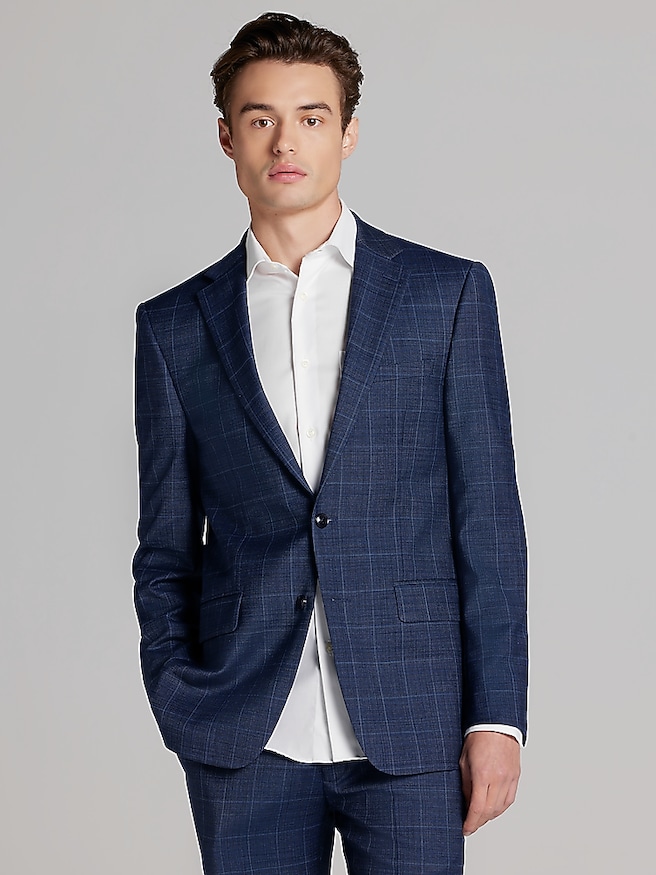
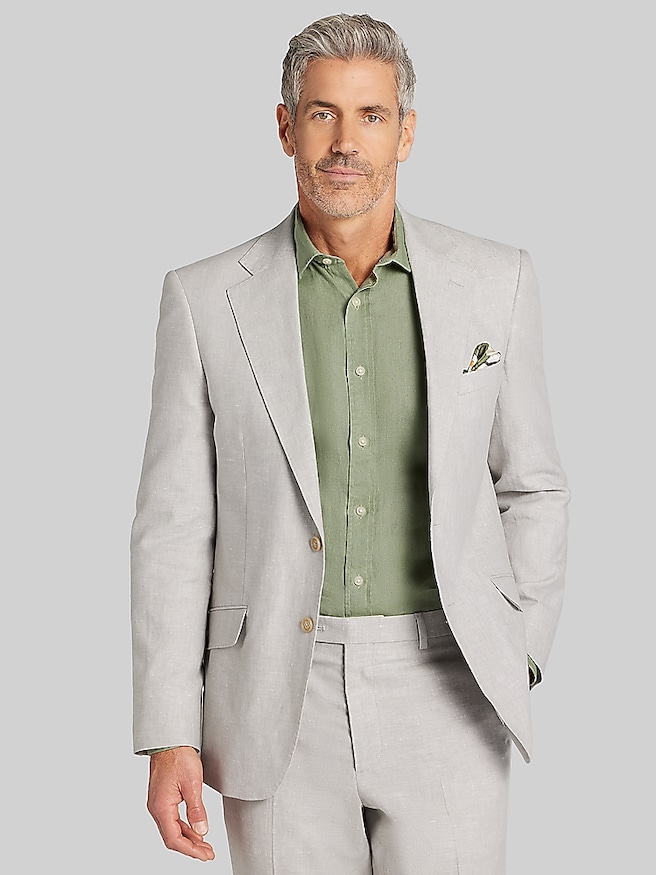
Fall suits for weddings bring together rich colors, substantial textures, and polished silhouettes that feel at home against autumn foliage, candlelit tables, and wood-paneled reception spaces. Navy, charcoal, chocolate brown, olive, and deep burgundy offer distinct ways to interpret the season without turning an outfit into a costume. Navy and charcoal tend to suit more traditional settings, while earthy shades can complement a vineyard, country estate, or rustic lodge. The invitation’s dress code matters more than the scenery, though: a barn wedding may still call for formal attire, and a downtown celebration may have a relaxed dress code. Fabric gives each color its character. Smooth worsted wool has a clean surface and crisp drape that work well for dressier ceremonies, while wool flannel introduces a soft, lightly brushed finish. Tweed and other visibly textured weaves bring depth to daytime celebrations and less formal venues. Medium-weight wool is often a practical starting point because it balances structure, breathability, and comfort across an outdoor ceremony and an indoor reception. A heavier cloth can feel reassuring at an open-air gathering, but it may be less comfortable in a crowded ballroom. Fabric composition, weave, lining, and construction all influence how a suit feels; weight alone does not tell the whole story. Wool blends can offer useful performance characteristics, depending on their composition, while a small amount of stretch may make sitting and dancing more comfortable. A waistcoat adds another layer and keeps the outfit looking intentional when the jacket comes off, although it also adds warmth. For grooms, groomsmen, family members, and guests, the strongest fall wedding suits balance the atmosphere of the celebration with the practical demands of a full day. A dark, understated suit can also move naturally into future business occasions or evening events, while a distinctive texture or earthy shade brings more seasonal personality to the wardrobe.
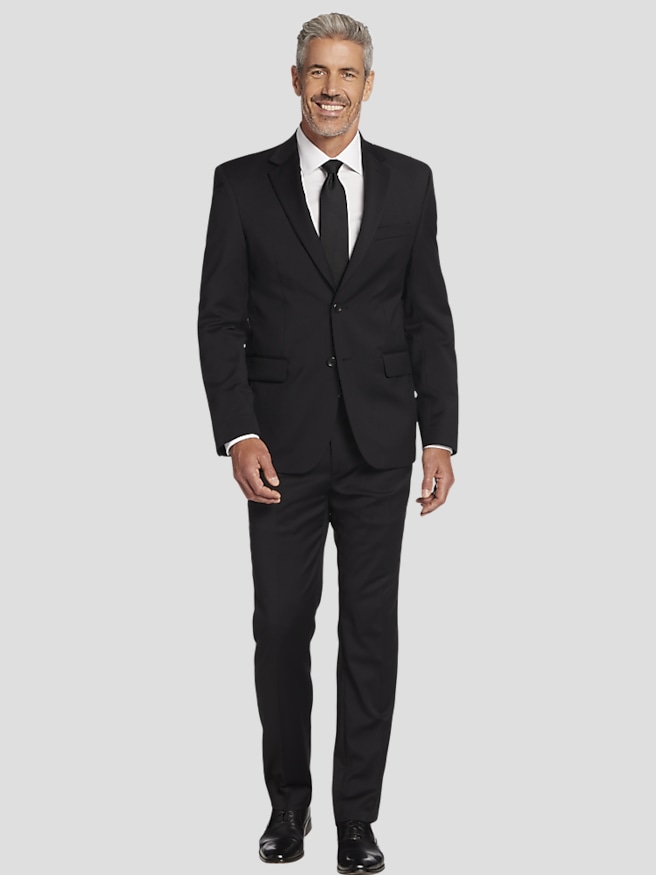
Fit determines whether those fabric and color choices look considered from the ceremony through the final dance. A well-fitting suit jacket rests smoothly across the shoulders, with sleeves that hang cleanly and a collar that stays close to the shirt rather than pulling away. The front should button without deep creases radiating from the fastening point, and the lapels should lie flat instead of bowing outward. Slim, tailored, and classic fits describe general silhouettes, but the best result depends on body shape and personal comfort rather than the label alone. A slim silhouette follows the body closely; a classic silhouette usually provides more room through the chest, waist, and seat. Neither should restrict a handshake, an embrace, or a comfortable seat at dinner. Jacket length also affects balance, especially in photographs taken from several angles. Trousers need enough room through the seat and thighs to sit without strain, with a waistband that stays comfortably in place. A slight break at the shoe creates a traditional finish, while a shorter, cleaner hem can feel more contemporary. Excess fabric pooling around the ankles tends to distract from either approach. The shoes intended for the celebration are useful during a fitting because their shape and height influence the trouser hem. The shirt and any waistcoat should be considered at the same time, since added layers can change how the jacket closes. For members of a wedding party, coordinated color and fabric create cohesion without requiring every person to wear the same silhouette. Individual alterations can preserve that shared appearance while accommodating a range of builds. A groom may stand apart through a waistcoat, a subtly distinct tie, or a boutonniere rather than a dramatic change in suit color. Guests generally benefit from a quieter interpretation that respects the requested attire and leaves the couple at the center of the celebration. Time spent on fit is especially noticeable in a suit worn for hours, not just for a few posed pictures.
Shirts, neckwear, and shoes complete the seasonal character without needing to match every element of the décor. A crisp white shirt provides clear contrast with dark wool, while pale blue can soften navy, gray, or brown. Burgundy, forest green, muted gold, and warm rust can work as restrained accents, particularly when the suit itself is understated. Texture often creates a more natural connection than exact color matching: a softly woven tie can complement flannel, while a smoother silk finish can sharpen a suit with a visible weave. A pocket square can echo one accent without duplicating the tie’s pattern. Dark brown leather shoes often sit comfortably beside earthy shades and navy, while black leather gives charcoal and other dark suits a more formal finish. The invitation remains the deciding reference; a conventional suit is generally not a substitute for a tuxedo when black tie is specified. Wearing a suit to a wedding also means accounting for the less photographed parts of the day, from walking across gravel to spending several hours at a reception table. Comfortable, broken-in shoes, socks that stay in place, and an appropriate overcoat can make those moments easier without compromising the outfit. After the celebration, thoughtful care helps preserve the suit for its next occasion. Empty the pockets, let the fabric air out, and use a broad, supportive hanger that maintains the jacket’s shoulder shape. Light brushing can remove surface dust from suitable wool fabrics, while spills deserve prompt attention according to the care label rather than vigorous rubbing. Professional cleaning is best guided by the garment’s instructions and actual condition, not treated as an automatic step after every wear. Excessive heat can flatten textured cloth or leave shine, so pressing and steaming should suit the fabric and construction. Once clean and fully dry, the suit benefits from breathable storage with room around it. Sound seams, a smooth lining, and fabric that recovers well after movement support lasting use, but careful handling matters just as much. With balanced proportions and considered details, a fall wedding suit can retain its appeal well beyond a single celebration.