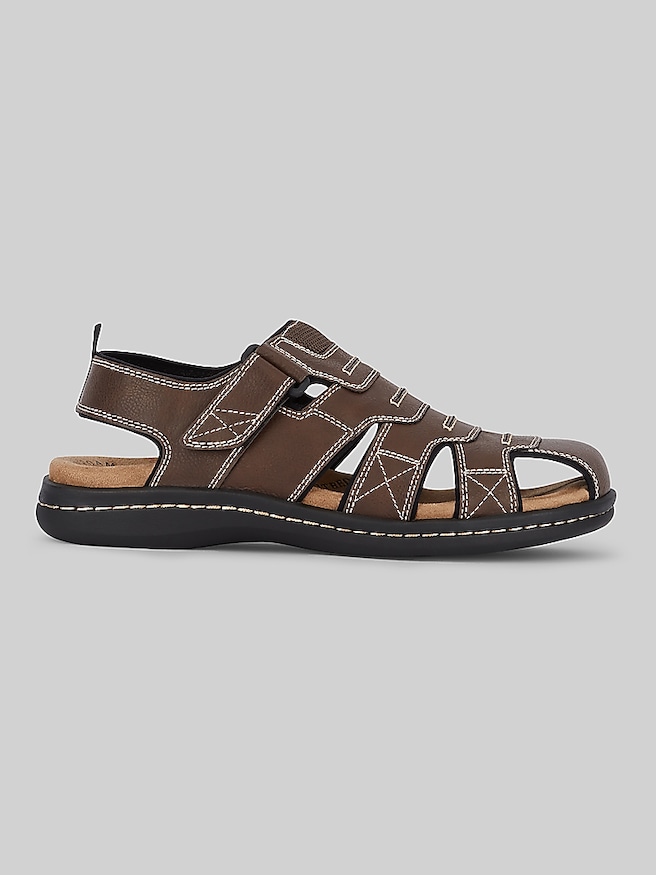
Dress shoes bring a finished look to tailored clothing, whether the setting is a client meeting, a wedding reception, or an evening that calls for more than sneakers. Their character comes from the shape of the toe, the arrangement of the laces, the texture of the upper, and the profile of the sole. An Oxford has closed lacing, with the lace tabs attached beneath the front section of the upper, creating a neat appearance that complements a suit. A Derby has open lacing, with the tabs attached on top, and its more adjustable opening can accommodate a range of foot shapes. Loafers offer a slip-on alternative that works with tailored trousers and less structured outfits, while monk straps use buckles for a distinctive finish without laces. Plain toes keep the design understated; cap toes add a defined seam across the front; and wingtip patterns introduce decorative perforations and a more expressive look. These details help set the tone without requiring an entirely separate wardrobe for every occasion. Smooth black leather has a restrained appearance alongside charcoal or navy tailoring, while brown shades introduce warmth and coordinate easily with blue trousers, khakis, and textured sport coats. The depth of the color matters, too: dark brown generally looks more subdued than lighter tan, especially when the rest of the outfit is formal. For a relaxed combination, the denim featured in Men's Dark Wash Jeans Under $100 pairs naturally with loafers or brown lace-ups and an unstructured jacket. A clean hem allows the shoe’s shape to remain visible rather than disappearing beneath excess fabric. Matching the overall level of formality matters more than coordinating every detail perfectly. A sleek, minimally decorated shoe supports a crisp suit, while visible stitching, pronounced texture, and a heavier sole can feel more at home with business-casual clothing. The dress code remains the deciding factor, particularly for occasions where formal footwear is expected.
Materials and construction influence how dress shoes feel, how their appearance develops, and how much attention they need between wears. Leather uppers can soften and develop creases with use, though the feel and appearance depend on the leather’s finish, thickness, and underlying quality. The term “genuine leather” identifies a material, not a complete measure of craftsmanship or durability. Smooth leather often responds well to compatible conditioner and polish, while suede requires a brush and care products intended for its textured surface. Synthetic uppers can provide a uniform finish and straightforward cleaning, but they generally do not stretch, absorb conditioner, or develop a patina in the same way as leather. Lining materials also affect the experience inside the shoe, especially around the heel and across the top of the foot. A smooth interior, neatly finished seams, and a tongue that stays comfortably in place can matter during a full day at a desk followed by several hours standing at an event. Underfoot, cushioning can soften the feel of each step, but softness alone does not establish good support. The shape of the footbed, the firmness beneath the arch, and the stability of the heel all contribute to comfort. Rubber outsoles may offer flexibility and useful grip on everyday surfaces, while leather outsoles have a traditional appearance and a different feel underfoot. Tread pattern and sole composition matter more than appearance alone when moving across polished floors or navigating stairs. Cemented construction joins the upper and sole with adhesive; other construction methods incorporate stitching. Repair possibilities vary by design, and decorative stitching around an edge does not necessarily mean a sole can be replaced. Durability also depends on wear patterns: repeated abrasion at one heel, deep flexing across the forefoot, and an unsuitable fit can shorten a shoe’s useful life. Balanced construction, appropriate care, and time between wears help preserve both structure and appearance.
Fit is what turns a polished-looking pair into footwear that feels appropriate for the day ahead. Dress shoes should hold the heel securely, leave the toes free from pressure, and bend near the ball of the foot rather than forcing the foot to flex in the wrong place. A pointed exterior does not mean the toes should extend into the narrow tip; the usable space inside the shoe matters more than its apparent length. Width deserves the same attention as size, since pressure along the sides may reflect an unsuitable width rather than a need for a longer shoe. Trying both shoes with the socks intended for regular wear gives a more realistic sense of the fit, and walking across a firm surface can reveal rubbing, heel movement, or pressure beneath the forefoot. Anyone who uses an orthotic also needs enough interior depth, along with a removable footbed if the insert requires that space. A short adjustment period may soften certain materials, but it should not be expected to correct pinching or persistent discomfort. Once the fit is right, routine care helps maintain the finish. Surface dust can be removed with a soft brush or cloth, and cleaning products should match the upper material. Leather conditioner and polish serve different purposes, so compatibility matters, especially with coated or specialty finishes. Shoe trees can help maintain shape between wears, while using a shoehorn reduces repeated crushing at the back of the heel. Giving footwear time to air out and storing it away from direct heat helps protect its structure. These practical details make dress shoes useful for professionals, graduates building a work wardrobe, wedding guests, and anyone who wants a dependable finishing touch for tailored clothing. As a gift for a graduation, a new job, or another milestone, they are most thoughtful when the recipient’s preferred style, usual width, and actual fit are understood. A familiar silhouette that suits regular occasions is more likely to earn a lasting place in a wardrobe than a dramatic design chosen only for its appearance.