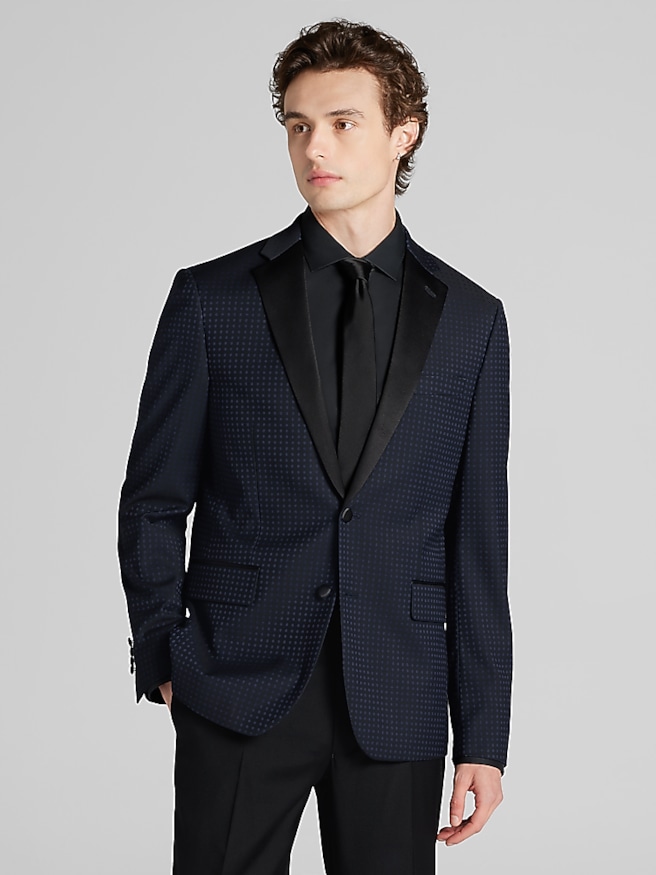
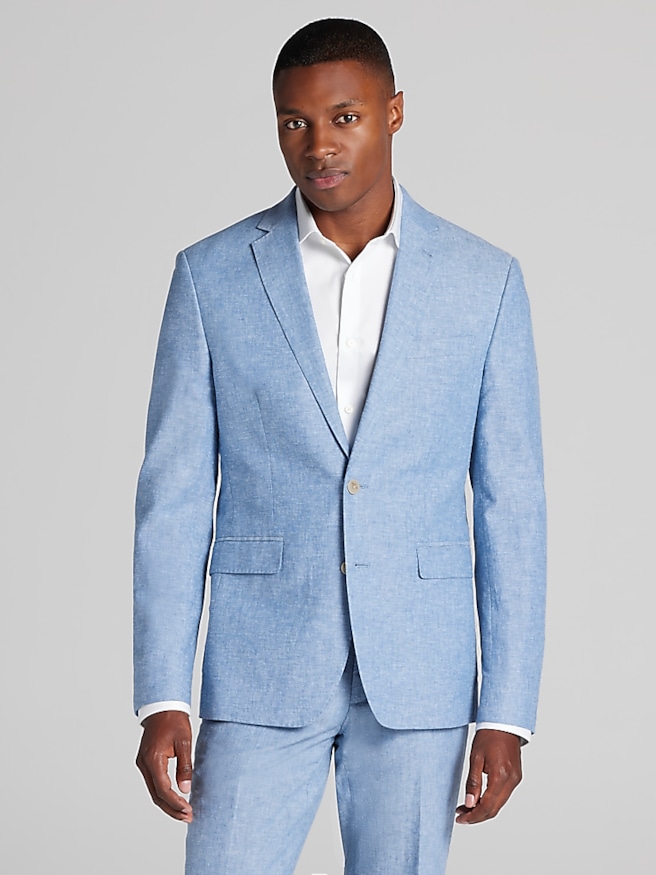
Dinner jackets bring a distinct sense of occasion to evening events, with tailored lines and dressier details that set them apart from everyday sport coats. Traditionally worn as part of a black-tie outfit, a dinner jacket often features satin or grosgrain lapel facings, a covered front button, and streamlined pockets. Those details create a polished frame for a formal shirt and bow tie, whether the setting is a wedding reception, an awards dinner, or a benefit gala. Black and midnight blue are classic choices for traditional evening attire, while ivory, textured fabrics, and expressive patterns can suit celebrations with a more flexible dress code. The invitation remains the best starting point: a strict black-tie event calls for a more traditional combination than a party that encourages individual style. A dinner jacket also differs from a standard suit jacket in how it works with the rest of an outfit. Rather than relying on an ordinary matching suit, traditional evening dressing pairs the jacket with formal trousers, often finished with a coordinating stripe along the outer seam. An ivory dinner jacket, for example, is traditionally paired with black formal trousers rather than ivory pants. Peak lapels create a defined, angular outline, while a shawl collar traces a smooth curve from the neck toward the front closure. Both have a long association with formal dressing, and the choice between them often comes down to the shape and mood of the outfit. A crisp white shirt keeps attention on the jacket’s silhouette; a neatly tied bow tie and polished shoes complete the look without competing for attention. For a guest taking photographs before a reception or a host greeting people at the entrance, the effect should feel composed rather than elaborate. A dinner jacket earns its place through that balance: enough distinction to mark an important evening, with proportions and details that remain wearable beyond a single celebration.
Fabric and fit have a direct influence on how a dinner jacket looks after the first photograph and how comfortable it feels through an entire event. Wool is valued for its drape, resilience, and ability to recover from light creasing, while blended fabrics can combine structure with practical wrinkle resistance. Polyester, viscose, and other fibers contribute different qualities depending on the weave and proportions, so fiber content alone does not tell the whole story. A smooth cloth gives satin lapels a clear contrast; a subtly textured surface adds depth without depending on a bold print. Velvet creates a richer visual effect because its pile catches light differently as the wearer moves, making it especially distinctive at dinners and performances where expressive evening attire is welcome. The fabric should fall cleanly over the body rather than look stretched or rigid. At the shoulders, the jacket should follow the natural outline without pronounced overhang, dents, or pulling. The collar should sit close to the shirt collar, and the lapels should lie flat instead of lifting away from the chest. With the jacket buttoned while standing, the front should close comfortably without strong diagonal wrinkles radiating from the button. There should also be enough room to sit at a dinner table, reach for a glass, and move across a dance floor without the upper back feeling restricted. Sleeve length usually leaves a small amount of shirt cuff visible, creating a deliberate finish at the wrist. Jacket length and trouser proportions work together, so trying the full outfit with the intended shoes gives a more useful picture than assessing the jacket alone. Slim, tailored, and roomier cuts describe different silhouettes, not a ranking of how dressed up someone looks. A clean fit matters more than the label, and alterations to sleeve length or the waist can refine the result when the shoulders and overall proportions are already suitable.
Thoughtful finishing and consistent care help a dinner jacket stay useful for more than one invitation. A restrained outfit often has the most staying power: formal trousers with a clean break, a shirt that sits smoothly beneath the jacket, and accessories chosen to complement the lapels rather than compete with them. A white pocket square can add definition at the chest, while a simple bow tie keeps a textured jacket from feeling crowded. For school celebrations, Men's Homecoming Dinner Jackets connects this formalwear tradition with an occasion where personal style often plays a larger role. The same attention to fit still applies, especially for a first formal event when borrowed sizing assumptions can lead to sleeves that hide the hands or shoulders that extend too far. Dinner jackets can also make meaningful gifts for graduates, partners, or family members who regularly attend formal gatherings, although accurate measurements and an understanding of the recipient’s preferred fit are essential. Longevity depends partly on construction and partly on handling. Even seams, secure buttons, a smooth lining, and neatly finished lapel edges are useful details to assess because they affect both appearance and repeated wear. After an event, empty the pockets and let the jacket air out before putting it away. A broad, shaped hanger supports the shoulders, and a breathable garment bag helps protect the fabric from dust without trapping moisture. Care instructions should determine the cleaning method; structured jackets and decorative finishes often require professional attention. Avoid repeated pressing directly on satin facings, and treat velvet with particular care so its pile is not crushed. Spills are best addressed promptly without vigorous rubbing, which can spread a mark or damage the surface. Allowing space in the closet also protects the lapels and sleeves from being flattened. With appropriate care and a well-proportioned fit, a dinner jacket can become a dependable part of an occasion wardrobe, ready for the next evening that calls for something beyond an everyday suit.