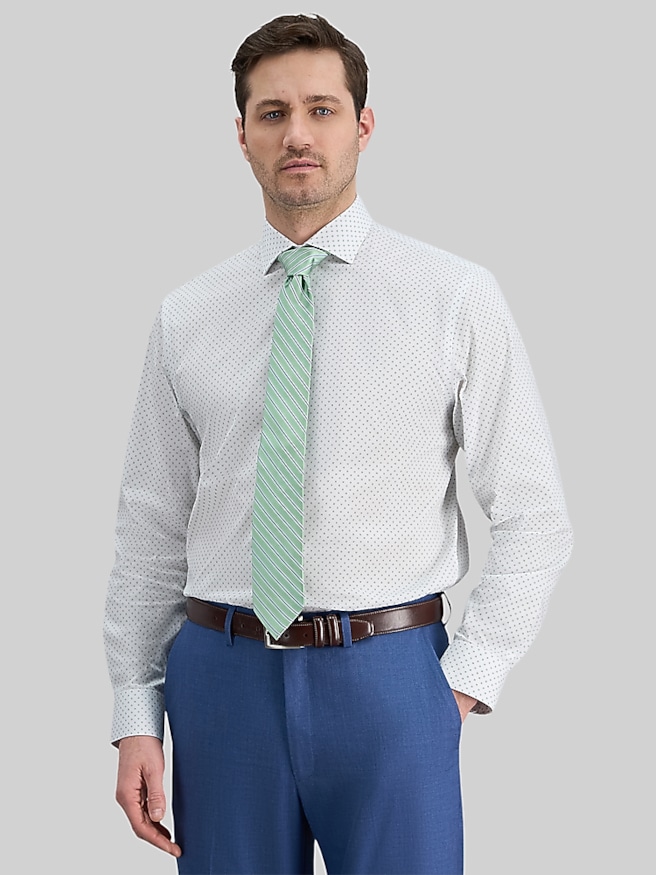
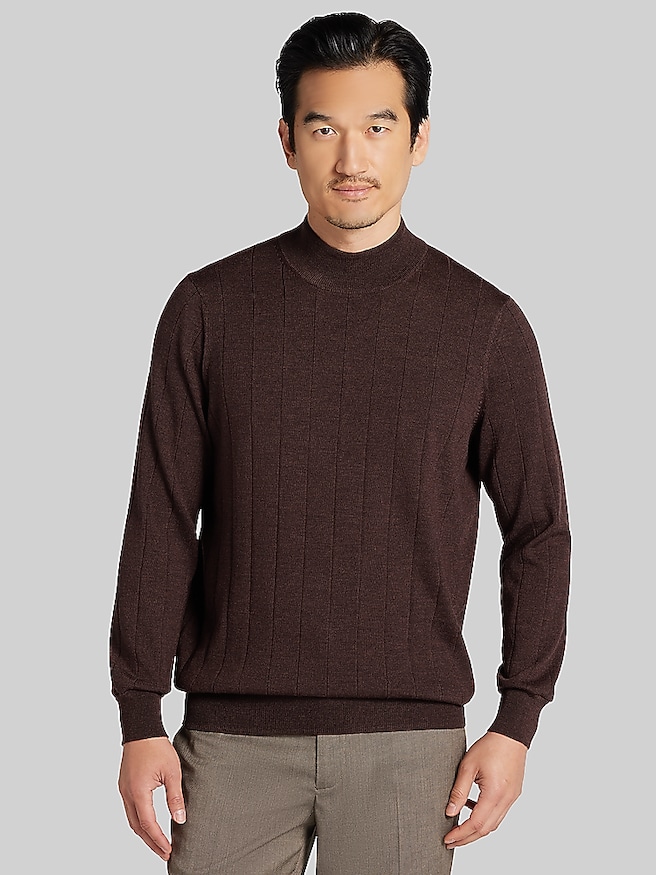
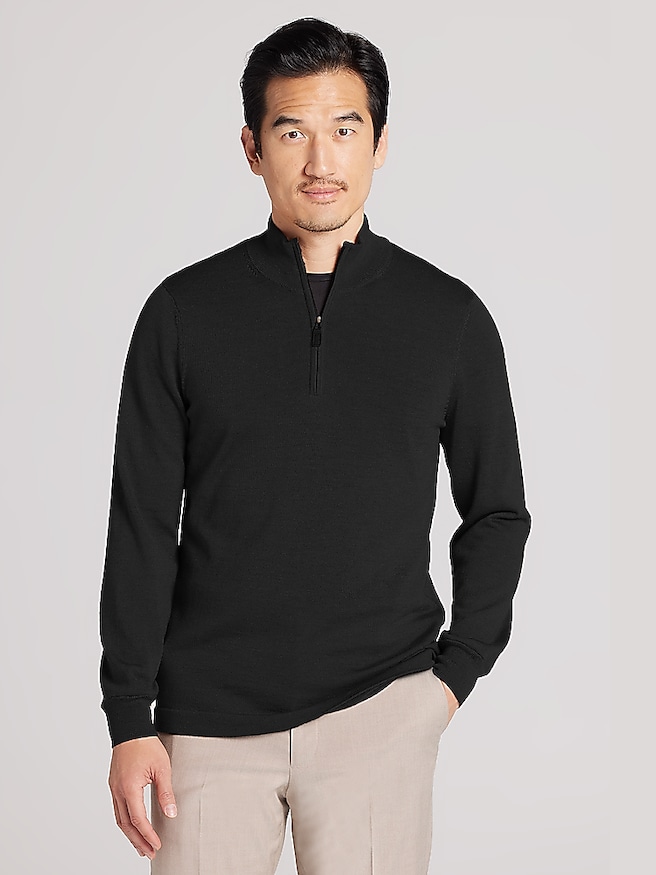
Button-front sweaters are knit layers with button closures at the neckline or along the front, combining the softness of a sweater with an opening that can be adjusted for fit and styling. Full-button versions, commonly called cardigans, open completely and slip easily over a T-shirt, polo, or dress shirt. Partial-button styles keep a pullover shape while adding definition around the collar. Both bring texture to an outfit without the structured feel of a tailored jacket, making them useful for office days, dinners, travel, and relaxed gatherings. A fine-knit cardigan over an Oxford shirt creates a composed business-casual look, while a textured sweater worn with a plain crewneck and dark denim feels more laid-back. The neckline makes a noticeable difference: a V-neck frames a shirt collar and leaves room for a tie, while a shawl collar adds a substantial folded edge around the neck. Ribbed cuffs and hems give the silhouette definition, and details such as patch pockets or contrasting buttons can make an otherwise simple knit feel more distinctive. Neutral shades like navy, charcoal, oatmeal, and brown work easily with patterned shirts and familiar trouser colors. Deeper colors can add interest without requiring a busy pattern. For a pullover shape with a shorter opening, Men's Quarter-Button Sweaters offer a related option that keeps the button detail concentrated near the neckline. The choice between a full opening and a partial one often comes down to how the sweater will be worn. A cardigan can stay open to reveal the shirt beneath it, while a shorter placket creates a more continuous front. With either construction, the buttons are part of the visual design as well as the function. Small, understated buttons tend to blend into a refined outfit, while larger buttons can give a knit a more casual character. That range makes button-front sweaters adaptable pieces rather than clothing reserved for a single dress code.
Fabric and construction shape how a button-front sweater feels, drapes, and holds up to repeated wear. Cotton often has a familiar, comfortable hand and works well in outfits built around chinos, denim, and casual shirts. Merino wool can provide a smooth, fine texture that layers neatly over a dress shirt, while other wool knits may have a more pronounced surface and a fuller feel. Cashmere is known for its soft touch, though the quality of the yarn and construction still matter. Blends combine fibers to balance qualities such as softness, shape retention, stretch, and ease of care; the fiber percentages give a more useful picture than a broad fabric description alone. Knit structure matters just as much. A compact, fine-gauge knit usually sits closer to the body and fits more easily beneath a blazer. Cables, pronounced ribs, and other raised stitches add dimension and can become the focal point of an outfit. Fit should account for the layer underneath, especially across the chest, upper arms, and shoulders. When a sweater is buttoned, the front should lie relatively flat rather than pulling into gaps between the buttons. Shoulder seams generally sit near the shoulder edge on a conventional fit, though relaxed designs may intentionally extend beyond it. Sleeves that finish around the wrist allow shirt cuffs to show without gathering heavily at the hands. A hem that rests near the hip typically works well with both tucked and untucked base layers, depending on their length. Sitting at a desk or reaching for a bag should not make the knit feel restrictive. Stretch in the fabric is helpful, but it should not have to compensate for a size that is too small. A trim cardigan can look sharp with tailored trousers, while a roomier shape pairs naturally with a straightforward T-shirt and jeans. The strongest combination is one in which the shirt, sweater, and trousers have compatible proportions, with enough room for movement and no bulky bunching beneath the knit.
Thoughtful care helps preserve the shape and surface that make button-front sweaters appealing. The sewn-in care label is the starting point, since fiber content, dye, trim, and construction can all affect cleaning requirements. Some knits can be machine washed on a gentle setting, others call for hand washing, and some require professional cleaning. Where washing is permitted, gentle handling helps limit stretching and friction. A wet sweater can become heavy, so supporting the fabric rather than lifting it by the shoulders helps protect its shape. Drying flat, when directed by the label, keeps the body and sleeves from lengthening under their own weight. Once dry, folding is generally a better storage choice than hanging, which can leave shoulder marks or stretch the garment. Occasional pilling can develop where a knit rubs against a bag strap, a chair, or another layer; it does not automatically mean the sweater is poorly made. A fabric comb or sweater shaver designed for the material may help, provided it is used carefully and according to its instructions. Buttons also deserve attention. A loose thread is easier to address before a button detaches, and fastening or unfastening each button rather than pulling at the opening reduces strain on the surrounding knit. These small habits matter for a piece that may move regularly between a workday outfit and a casual evening look. Button-front sweaters can also make practical gifts for someone who appreciates comfortable clothing with a polished finish. A familiar neckline, a color that works with the recipient’s usual shirts, and care requirements that suit everyday habits are useful considerations. Someone who favors collared shirts may get more use from a smooth V-neck cardigan, while someone who lives in denim may prefer visible texture or a relaxed collar. Personal preferences remain more important than any single style rule. A well-chosen button-front sweater feels at home in the wearer’s routine, whether that means a day of meetings, dinner with friends, or a family celebration.