Burgundy silk ties combine a deep red color with the natural luster and fluid drape of silk, making them a versatile finishing touch for business attire, wedding outfits, and dressed-up social occasions. The shade sits comfortably beside navy, charcoal, and gray tailoring, adding color without the brightness of a vivid red tie. Against a white shirt, burgundy creates a crisp focal point; with a pale blue shirt, the contrast feels softer and particularly suited to everyday office wear. Color depth can vary from a red-forward wine shade to a darker burgundy with subtle purple or brown undertones, so the overall effect depends on the surrounding fabrics and lighting. A smooth silk surface reflects more light and can make the color look richer, while a textured weave breaks up that reflection for a quieter appearance. Satin, twill, jacquard, and grenadine describe fabric constructions rather than separate fibers, and each gives a silk tie a distinct character. Silk satin has a smooth face and noticeable sheen that works well with polished tailoring for a wedding reception or evening celebration. Twill introduces fine diagonal ribs, while jacquard uses woven patterns to create dimension, whether the design is nearly tonal or more pronounced. Grenadine has an open, textured weave that adds visual interest without needing a printed motif. Printed silk can carry anything from small dots to detailed paisley, often with a softer surface effect than a richly woven pattern. A solid burgundy tie offers the simplest pairing with a patterned shirt or suit, while a restrained geometric design adds detail to otherwise plain tailoring. For an important presentation, a navy suit, white shirt, and burgundy silk tie create a composed combination that does not depend on elaborate accessories. For a wedding guest, the same color can feel more celebratory alongside a light gray suit and a lightly patterned pocket square. The invitation’s dress code still sets the standard; traditional black-tie attire generally calls for a black bow tie rather than a burgundy necktie.
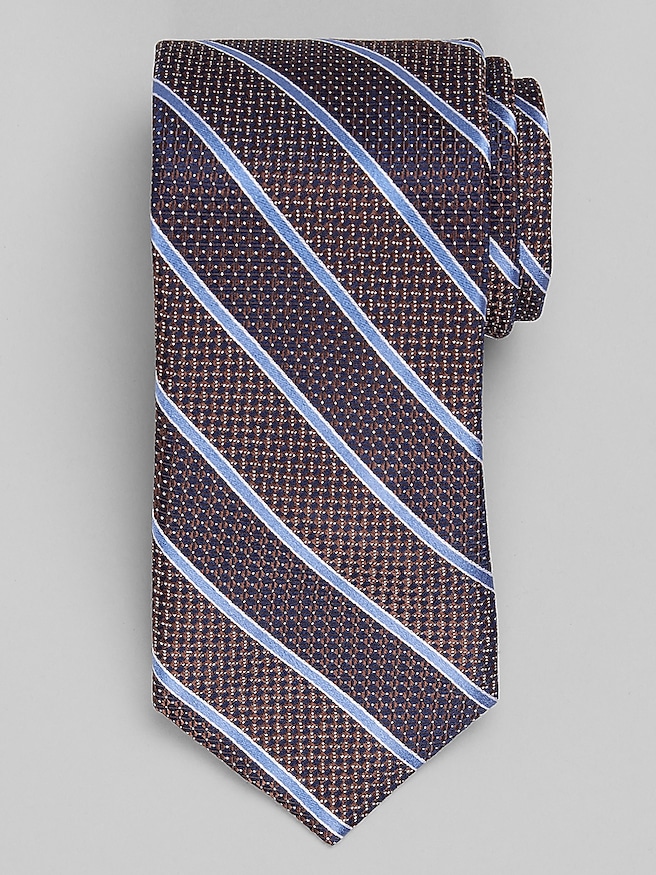
The proportions of a burgundy silk tie matter as much as its color, particularly where the knot meets the collar and the blade lies against the jacket. A balanced width usually relates to the width of the suit’s lapels and the wearer’s frame, rather than following a single measurement for every outfit. A narrower tie can sit naturally beneath trim lapels, while a broader blade often looks more at home with fuller tailoring. Length also depends on height, torso length, neck size, and knot choice. Once tied, the tip should generally reach around the waistband, with the narrow end tucked neatly behind the front blade. Someone with a longer torso or larger neck may benefit from additional length, especially when using a knot that consumes more fabric. A four-in-hand produces a relatively compact, slightly asymmetrical knot that suits many everyday shirt collars. A half-Windsor creates a more symmetrical shape and can fill a moderately spread collar without becoming oversized. Fabric thickness changes the result: a substantial woven silk tie makes a fuller knot than a lighter silk, even when both are tied the same way. The most comfortable arrangement lets the collar close properly and the tie sit snugly without pulling or bunching the shirt. Pattern scale helps keep the rest of the outfit coherent. Small burgundy dots can sit beside a broad shirt stripe, while a larger paisley often benefits from a solid shirt that gives the design room to stand out. When both shirt and tie have patterns, a clear difference in their scale makes the combination easier to read. A pocket square can pick up a secondary color from the tie rather than duplicate its exact fabric and design; white linen is another understated option. Burgundy provides a red-centered accent, while Brown Silk Ties offer an earthier alternative for wardrobes built around tan, cream, olive, and navy. Both colors can work with classic tailoring, but burgundy creates a more distinct contrast against cool gray and blue fabrics.
Silk’s appeal comes from its combination of softness, strength, and light reflection, but a tie’s lasting appearance also depends on its construction and care. The outer fabric, interlining, stitching, and finishing work together to influence how the tie drapes and how well it settles after being knotted. An interlining adds body, helping the blade hang smoothly rather than looking limp, although heavier construction is not automatically better for every collar or knot. A well-balanced tie should feel supple enough to shape without requiring an excessively tight knot. Repeatedly pulling a knot apart by its narrow end can strain the fabric and seams; reversing the tying steps gently places less stress on the tie. Untying it after each wear also gives compressed folds a chance to relax. Between uses, a smooth tie rack or a loose roll can help preserve its shape, provided the fabric is not crowded, sharply folded, or exposed to direct sunlight for extended periods. Care instructions deserve close attention because silk ties are not generally suited to routine machine washing, and the outer fabric and interlining may respond differently to moisture. For a spill, gentle blotting with a clean, dry cloth is safer than rubbing, which can spread the mark or disturb the surface. Water and household stain treatments can leave rings or affect dyes, so a cleaner experienced with silk neckwear is a sensible option for persistent marks. Direct ironing and high heat can flatten texture or alter sheen; any pressing should follow the care label. For travel, a tie case or a loose roll placed where it will not be crushed helps reduce deep creases. These considerations also make burgundy silk ties thoughtful gifts for someone starting an office role, preparing for interviews, attending weddings, or building a more complete dress wardrobe. A solid or small-scale pattern is often easy to coordinate, especially when the recipient already wears navy or charcoal suits. The most useful gift reflects the recipient’s usual collar styles, preferred tie width, and everyday level of formality, giving the rich burgundy color a practical place in outfits they already enjoy wearing.