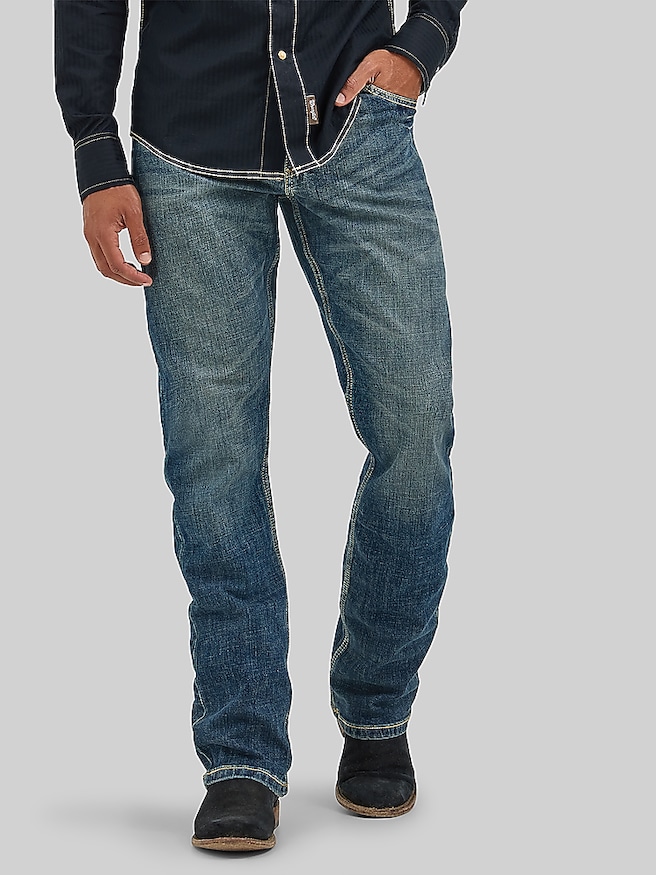
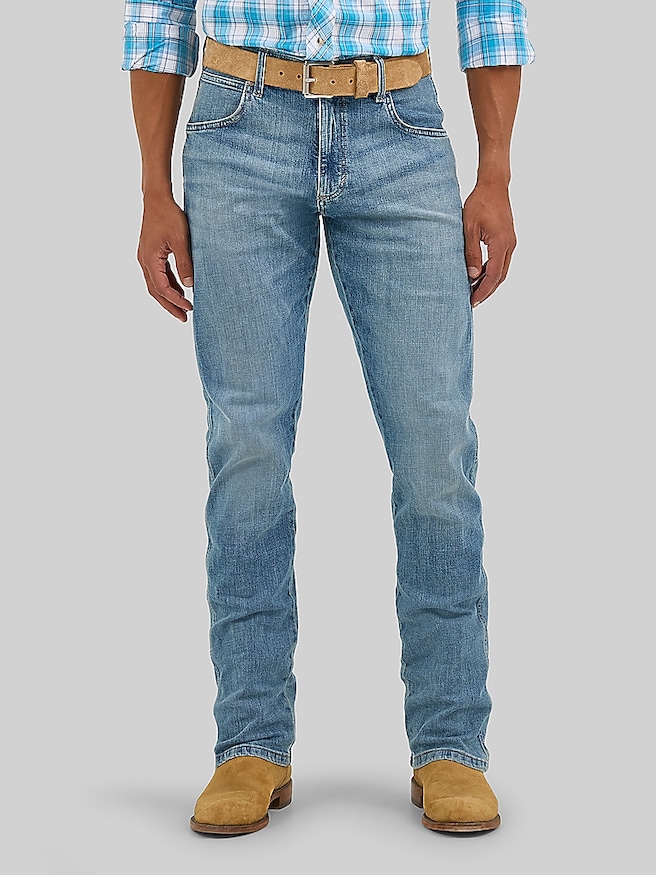
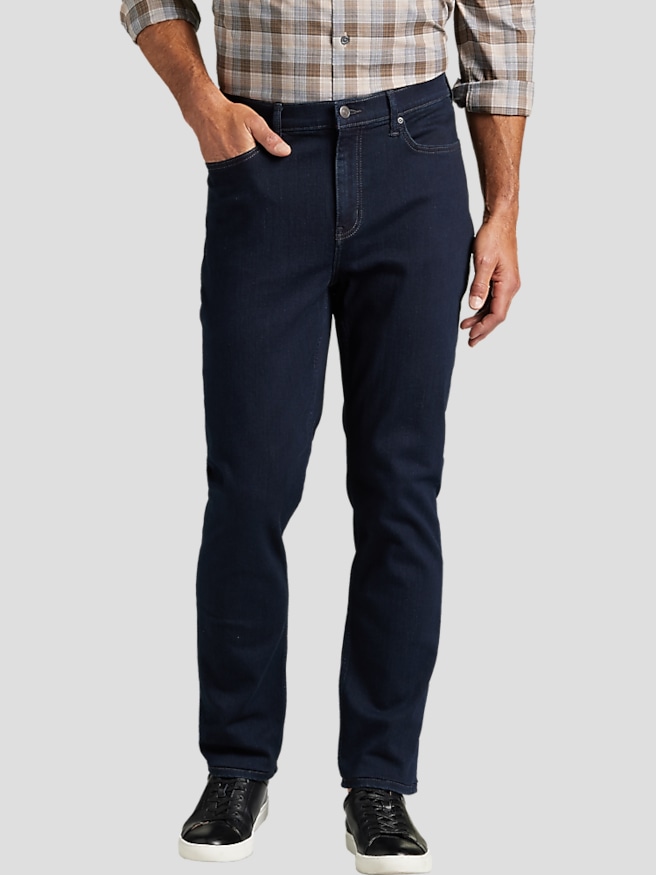
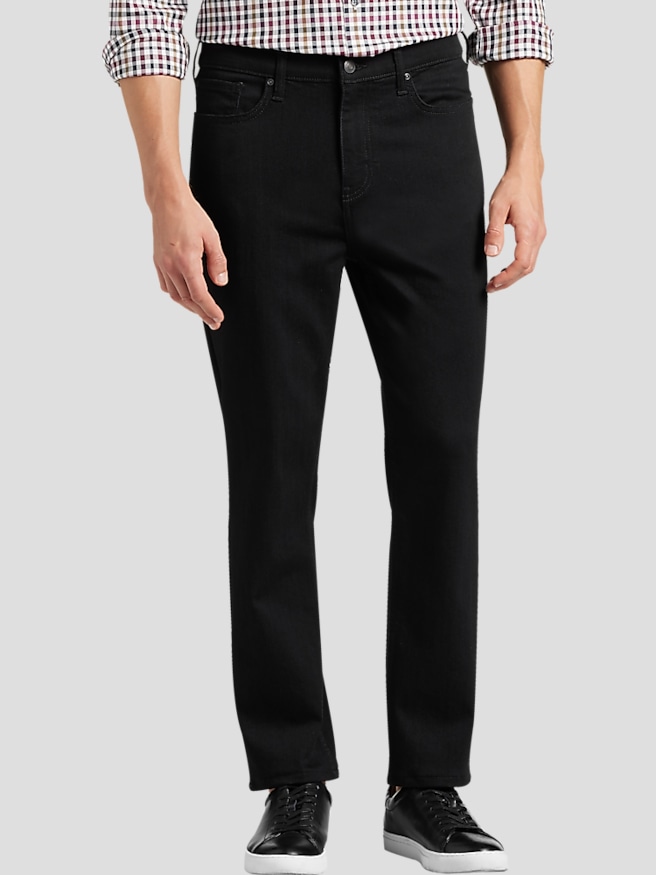
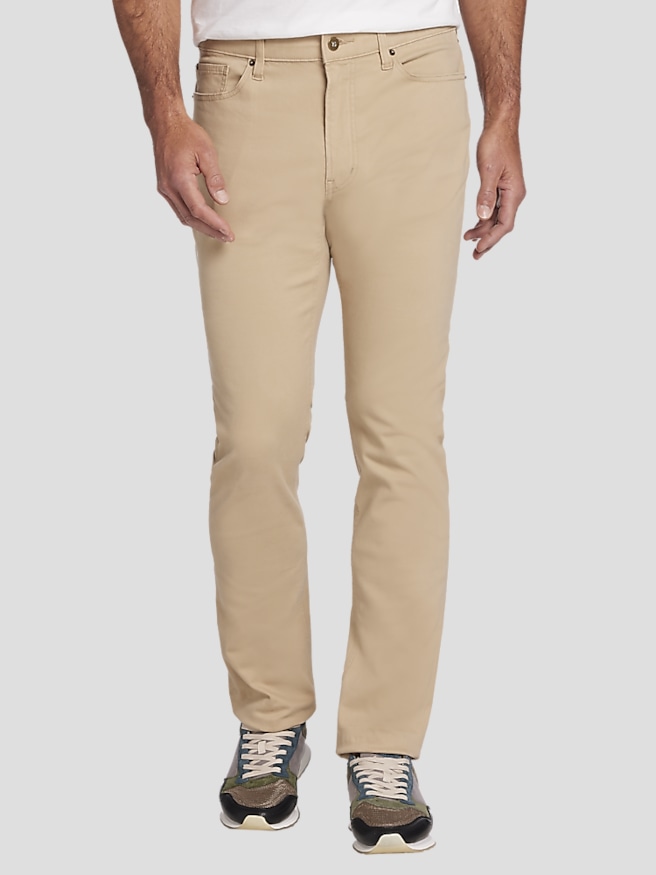
Blue slim fit jeans for men offer a close, streamlined shape without the deliberately tight outline of skinny denim. The fit generally follows the seat and thighs, then narrows toward the ankle, creating a balanced line with everything from a tucked-in button-down to an untucked knit shirt. Blue denim also has a depth that changes with the wash: dark indigo looks more polished, medium blue feels familiar and relaxed, and pale blue brings a visibly worn-in character. Subtle fading across the thighs or around the pockets adds dimension, while an even wash keeps the focus on the shape of the jeans. For an office where denim is welcome, dark blue slim fit jeans can pair naturally with a small-pattern shirt, a textured sport coat, and leather loafers. A medium wash with a polo and low-profile sneakers feels equally at home at a casual dinner or an afternoon gathering. Lighter washes work especially well with uncomplicated pieces, such as a white T-shirt or a navy knit, where the contrast feels intentional rather than busy. The right choice depends as much on the setting as on personal taste. A pair intended for frequent workdays may call for restrained fading and minimal distressing, while jeans worn mainly for concerts, neighborhood errands, or relaxed get-togethers can have more visible texture. Footwear makes a noticeable difference, too. A narrow leg opening can sit neatly above a sneaker, whereas boots need enough room at the hem to avoid catching or bunching. Blue slim fit denim is useful for men who like a defined silhouette but still want familiar five-pocket styling and the easy character of jeans. It also gives simple outfits a little structure: a plain shirt looks more deliberate when the waistband sits comfortably, the knees fall in the right place, and the hem meets the shoe without a heavy stack of fabric. Jeans remain casual clothing, however, and do not replace tailored trousers when a dress code calls for them.
Fabric composition plays a major role in how slim fit jeans feel through a full day. Cotton gives denim its recognizable texture and substantial hand, while a small amount of elastane can add flexibility through the hips, thighs, and knees. Other fibers may be included to influence softness, strength, or how well the fabric returns to shape after wear. Stretch denim can be helpful for sitting through a commute, moving between meetings, or spending several hours at a dinner table, but stretch alone does not determine comfort. The cut still needs to leave enough room through the seat and thighs. All-cotton denim generally feels firmer at first and can soften with repeated wear; a stretch blend may feel more accommodating from the start. Fabric weight matters as well. A substantial denim can create a more defined outline, while a lighter fabric may drape more softly. Neither is automatically better, and the most useful choice reflects how the jeans will be worn. A comfortable waistband should stay in place without needing a belt pulled tightly, and the front pockets should lie reasonably flat instead of pulling open. Pronounced horizontal tension lines across the hips or thighs can suggest that the fit is too close, even when the waist measurement seems correct. Rise is another important distinction within slim fits. A mid-rise can provide comfortable coverage when seated and works well with both tucked and untucked shirts, while a lower rise sits farther down on the hips. Inseam length affects the finished appearance just as much as waist size. A small break at the shoe looks relaxed without excessive bunching; a shorter hem creates a sharper ankle line. Men with more developed thighs may find that one slim cut feels comfortable while another restricts movement, since measurements vary between designs. Being able to sit, walk, and bend naturally is a more useful measure of fit than the label alone. Enough ease for ordinary movement helps preserve both comfort and the intended shape.
Well-made denim balances appearance with construction details that stand up to regular wear. Even stitching, secure belt loops, reinforced pocket corners, and a smoothly operating zipper all contribute to everyday usefulness. Areas that experience repeated friction, including the inner thighs, pocket edges, and hems, naturally show wear sooner than less exposed sections. A hem that drags under the heel can fray prematurely, while overloaded pockets may distort the shape of otherwise neatly fitted jeans. Care also influences how blue denim ages. The garment’s care label should take priority, since fiber blends, finishes, and dyes can require different treatment. When washing is appropriate, turning jeans inside out and using cold water with similar colors can help limit surface abrasion and color transfer. Dark indigo may release dye, especially early in its life, so care around pale upholstery, light-colored shoes, and other clothing is worthwhile. Washing only as needed, treating small marks promptly according to the care instructions, and avoiding excessive dryer heat can help preserve the fabric and fit. Stretch denim in particular benefits from care that protects its elastic fibers. Blue jeans can develop gentle fading at the knees, seams, and pocket edges over time, giving them a personal appearance that reflects repeated wear. That natural change is part of denim’s appeal, though a more uniform dark wash may suit someone who prefers a consistently polished look. As a gift, slim fit jeans make the most sense when the recipient’s usual waist, inseam, preferred rise, and comfort with stretch are known; a familiar size alone may not account for differences in cut. For a wardrobe built around similarly streamlined shapes, Mens Slim Fit Black Jeans provide another color direction alongside blue denim. Blue remains distinctive for its range of indigo tones and the way its surface gains character, making it a dependable choice for everyday outfits that need to look considered without feeling dressed up.