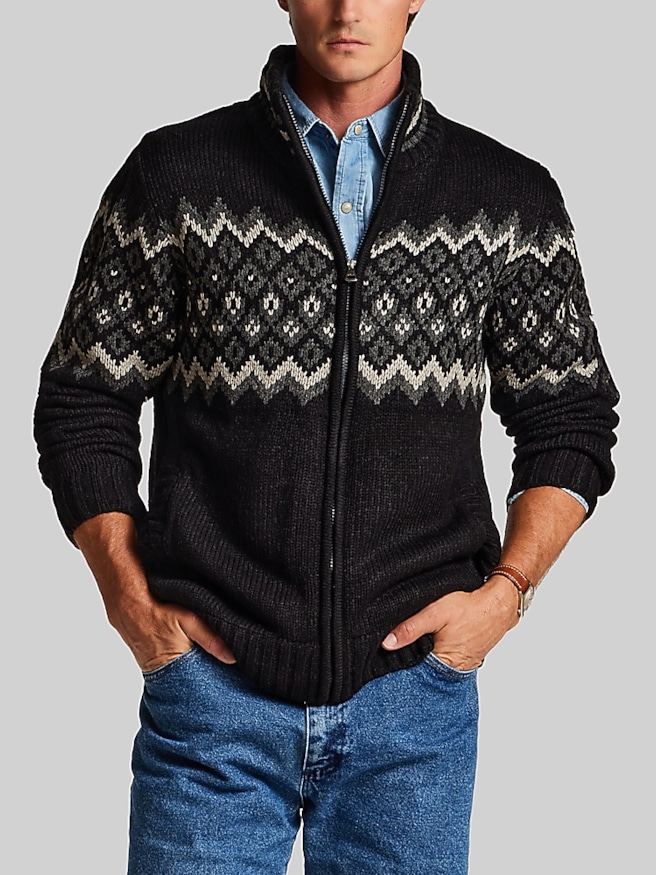
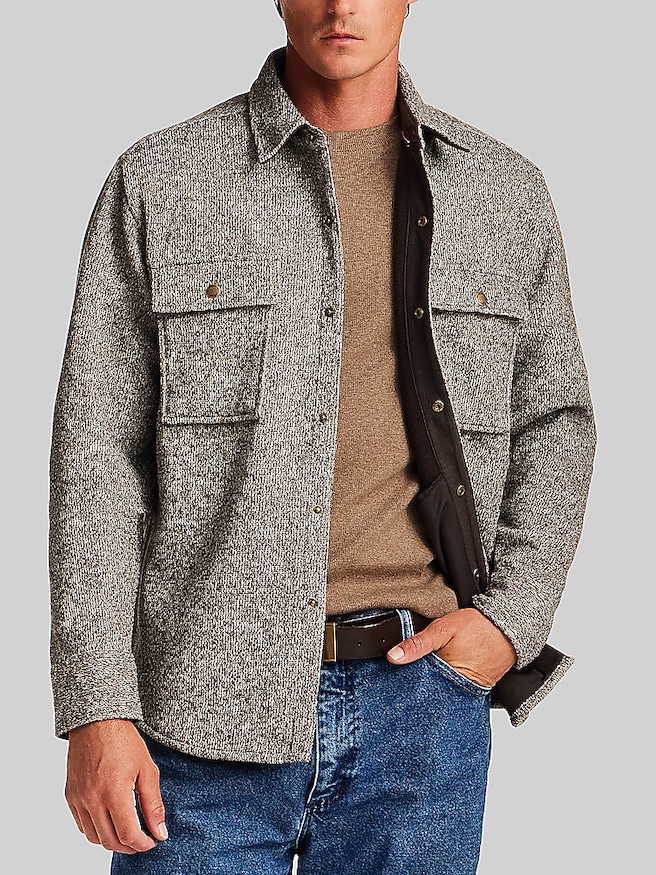
Black sweater jackets combine the flexible feel of a sweater with details associated with a jacket, such as a full front opening, defined collar, pockets, or a more substantial knit. The result is a layer that can look composed without the formality of a tailored sport coat. Unlike a pullover, a sweater jacket opens at the front, making it easy to show a shirt underneath and adjust the overall silhouette. Zip-front designs tend to have a streamlined, casual character, while button-front versions can resemble a structured cardigan. A stand collar adds definition around the neckline; a folded collar creates a softer frame for a polo or button-down shirt. Black keeps these details understated, allowing the shape of the garment and the texture of the knit to do much of the visual work. A fine, smooth surface reads differently from a pronounced rib or textured stitch, even when the color is the same. That distinction matters for everyday dressing: a smoother knit can sit comfortably alongside tailored trousers, while a more textured version brings depth to denim or cotton chinos. For men who move between desk work, informal meetings, and dinner plans, this category offers a useful middle ground between a relaxed cardigan and a more structured jacket. It also suits settings where a sweatshirt feels too casual but a blazer would feel unnecessarily dressed up. Black sweater jackets belong to the broader family of Knit Jackets, with a dark, versatile finish that makes subtle differences in construction especially noticeable. Collar height, pocket placement, ribbing, and the shape of the hem can all influence whether the overall effect feels sporty, refined, or comfortably in between. The most useful choice reflects the clothes it will accompany and the places it will be worn, rather than relying on color alone to establish its character.
Material and construction have a substantial effect on how a black sweater jacket feels, hangs, and holds its shape. Cotton knits often have a familiar, comfortable hand and can provide a clean surface for everyday outfits. Wool, including merino wool, can offer resilience and a softer drape, although feel varies with fiber quality, yarn, and finishing. Blended fabrics may combine natural fibers with nylon, polyester, or other fibers to influence strength, recovery, and ease of care. No fiber label tells the whole story: knit density, stitch pattern, and garment weight also contribute to the finished result. A fine-gauge knit generally creates a smoother profile, while a thicker or more pronounced stitch adds visible dimension and can make the garment feel more substantial. Closely worked edges and neatly finished seams help maintain a composed appearance, especially around the front opening, cuffs, and pocket entries. Fit deserves the same attention as fabric because knit construction can stretch around the body without actually fitting well. On a conventional set-in sleeve, the shoulder seam should sit near the natural shoulder rather than pulling inward or hanging far down the arm. The front should close without strained buttons, a distorted zipper, or pronounced horizontal pulling across the chest. Enough room through the upper arms and body allows a shirt underneath without creating bulky folds. A useful fit also feels comfortable when seated, reaching forward, or bending an elbow, not just while standing still. Sleeves that bunch heavily at the wrists can make the whole layer look oversized, while a hem that catches tightly at the hips may cause the body to ride up. Ribbed cuffs and hems create a more defined outline; straighter finishes allow a looser drape. Pockets add convenience, but carrying heavy objects in them can stretch the knit and interrupt an otherwise clean line. These practical details help distinguish a sweater jacket that simply looks appealing on a hanger from one that works comfortably through a full day.
A black sweater jacket is especially adaptable when the surrounding pieces provide a clear contrast in texture, shade, or proportion. With charcoal trousers, a white Oxford shirt, and leather loafers, it can support an understated office outfit in a workplace with a flexible dress code. With dark indigo denim and a plain crew-neck T-shirt, the same general silhouette feels more relaxed without looking unfinished. Stone chinos, gray trousers, and muted blue shirts give black a lighter visual backdrop, while an all-black combination benefits from enough difference between the knit and the pants to keep the outfit from looking flat. Black paired with navy can also feel deliberate when the shades are distinct and the fabrics have contrasting surfaces. A shirt collar should sit neatly inside the neckline rather than fighting a tall zip collar, and an untucked shirt looks more intentional when its hem does not extend far below the jacket. For travel, a flexible knit layer can be comfortable during long periods of sitting, though care requirements and resistance to wrinkling vary by fabric. As a gift for a partner, father, brother, or friend, a black sweater jacket makes sense for someone who already favors simple layers and understated colors. Familiarity with the recipient’s usual size, preferred fit, and approach to garment care is more useful than guessing from appearance alone. Care should always follow the sewn-in label, since washable cotton, wool blends, and garments requiring professional cleaning need different treatment. When washing is permitted, gentle handling and reshaping can help preserve the original proportions; drying flat is often appropriate for knits when the label directs it. Folding rather than prolonged hanging can reduce stretching at the shoulders. A fabric brush or suitable lint roller helps keep a black surface looking neat, and careful removal of pills can refresh areas exposed to friction. Excessive heat, rough handling, and overloaded pockets can shorten the useful life of a knit garment. Thoughtful care preserves the qualities that make this category appealing: comfortable movement, a defined silhouette, and an uncomplicated appearance that works across many everyday occasions.