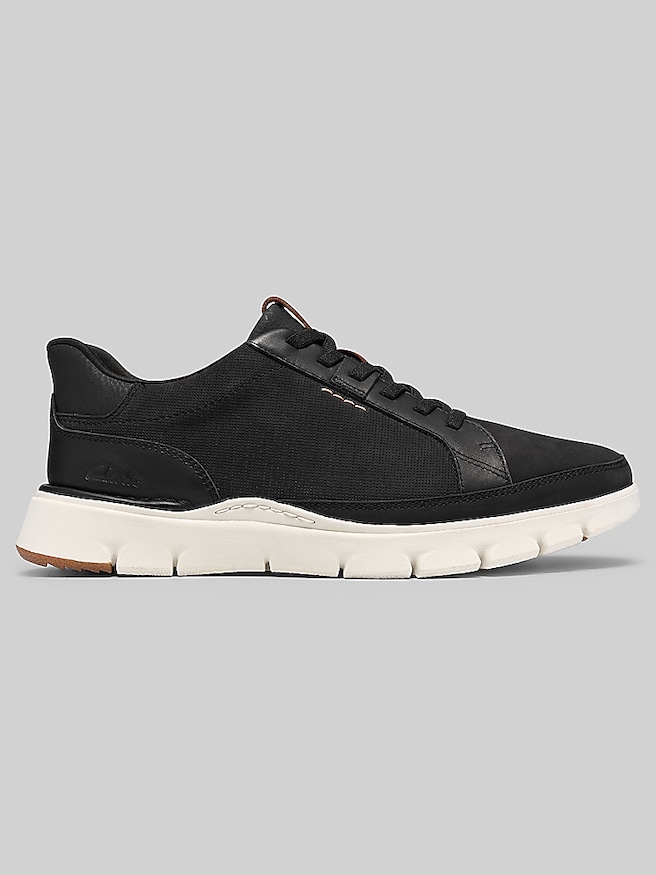
Black lace-up sneakers are casual shoes with a black upper and an adjustable lace closure, offered in silhouettes that range from understated low-tops to more substantial high-tops. Their appeal comes from a combination of familiar comfort and easy coordination: black works with dark denim, gray trousers, olive chinos, and many of the other colors that anchor a casual wardrobe. The details determine how relaxed or refined the shoes look. A smooth upper, discreet stitching, and a slim sole create a quieter profile, while layered panels, pronounced tread, and a padded collar give sneakers a more athletic character. An all-black design keeps the upper, laces, and sole visually connected; a contrasting sole adds definition and makes the shoe a more noticeable part of an outfit. Low-top shapes leave the ankle visible and work neatly beneath tapered pants, while high-tops create a stronger line that pairs well with straight-leg denim. For an office with a casual dress code, black leather lace-up sneakers can complement chinos, a button-down shirt, and an unstructured jacket without looking like gym footwear. With jeans and a simple crewneck, the same general silhouette feels ready for a coffee stop, a casual dinner, or a day spent moving between appointments. Trouser length matters here: a hem that meets the top of the shoe shows its shape more clearly than fabric that bunches over the laces. Black sneakers can also accompany relaxed tailoring when the setting welcomes a less traditional approach, though they do not replace dress shoes for occasions with a formal dress requirement. The most useful pair is one whose proportions suit the clothes worn most often. A low-profile shape blends into a streamlined wardrobe, while a broader sole can balance roomier pants and heavier fabrics. Neither approach needs elaborate styling; the consistent black color provides a steady foundation while texture and silhouette supply the distinction.
Materials influence the appearance, feel, and upkeep of black lace-up sneakers as much as their overall shape. Smooth leather generally has a structured appearance and can develop creases with wear, while suede brings a soft, matte texture that makes black look less uniform. Canvas has a relaxed character, and mesh or knit panels can allow more airflow, depending on the lining and construction. Synthetic uppers vary considerably: some emphasize a smooth finish, while others add flexibility or textured overlays. A material name alone does not establish quality or comfort. Secure stitching, neatly finished edges, reinforced eyelets, and a well-attached sole are useful construction details, especially for shoes that will see frequent wear. Rubber outsoles can provide abrasion resistance, but traction depends on the tread, the rubber compound, and the surface underfoot—not simply the thickness of the sole. Cushioning also feels distinct from one design to another. A soft footbed may feel welcoming at first, while a firmer platform may feel more stable during an extended period of standing. Fit brings these elements together. Toes need room to move without pressing against the front or sides, the heel should feel secure rather than repeatedly lifting, and the upper should hold the midfoot without creating pressure across it. The laces allow small adjustments through the instep, but tightening them cannot correct a shoe that is fundamentally too wide or too long. Likewise, loosening the laces will not reliably resolve a narrow toe box. Trying sneakers with the socks normally worn with them gives a more realistic sense of fit, and checking both feet helps account for small size differences. Some leather uppers soften through use, but painful pressure is not a sensible starting point. For commuting, sightseeing, or casual errands, everyday sneakers may fit the occasion well; dedicated running, court, or training activities call for footwear designed for those movements rather than a lifestyle silhouette selected primarily for its appearance.
Keeping black lace-up sneakers looking sharp depends on care suited to the upper, sole, and lining. Surface dust can soften the appearance of black, particularly along seams and around the toe, so gentle, regular cleaning often makes a noticeable difference. Smooth leather typically responds to a soft cloth and a cleaner intended for footwear leather, with conditioning used according to the material’s care directions. Suede calls for a suitable brush and suede-specific treatment rather than the same routine used on smooth leather. Canvas, mesh, and synthetic materials also need their own care approach; a shoe that looks washable is not necessarily suitable for a washing machine. Manufacturer care instructions take priority, especially when an upper combines several materials or includes bonded details. Allowing shoes to air-dry away from direct heat helps protect their shape and construction, and removing loose debris from the outsole keeps dirt from collecting in the tread. Laces deserve attention as well: frayed ends and embedded grime can make an otherwise tidy pair look neglected. Matching replacements should have an appropriate length and thickness for the eyelets so the closure remains easy to adjust. Giving shoes time to air out between wears and using removable insoles only as directed can also support everyday upkeep. These practical details matter when black sneakers become the pair reached for before a commute, an afternoon with friends, or a relaxed evening out. As a gift for a dad, brother, partner, or graduate, they are most thoughtful when the recipient’s size, width, and preferred silhouette are known; familiar color alone cannot guarantee a comfortable fit. For someone building a small footwear rotation, black offers a neutral starting point, while blue lace-up sneakers introduce another color option alongside denim and neutral pants. Across either direction, a comfortable fit, suitable construction, and manageable care requirements matter more over time than an eye-catching detail that does not suit everyday use.