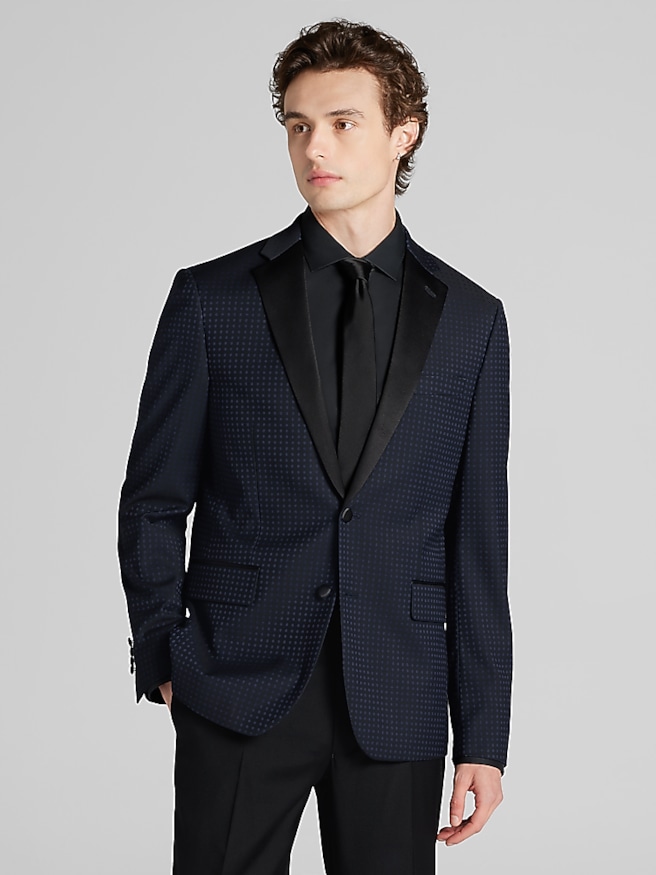
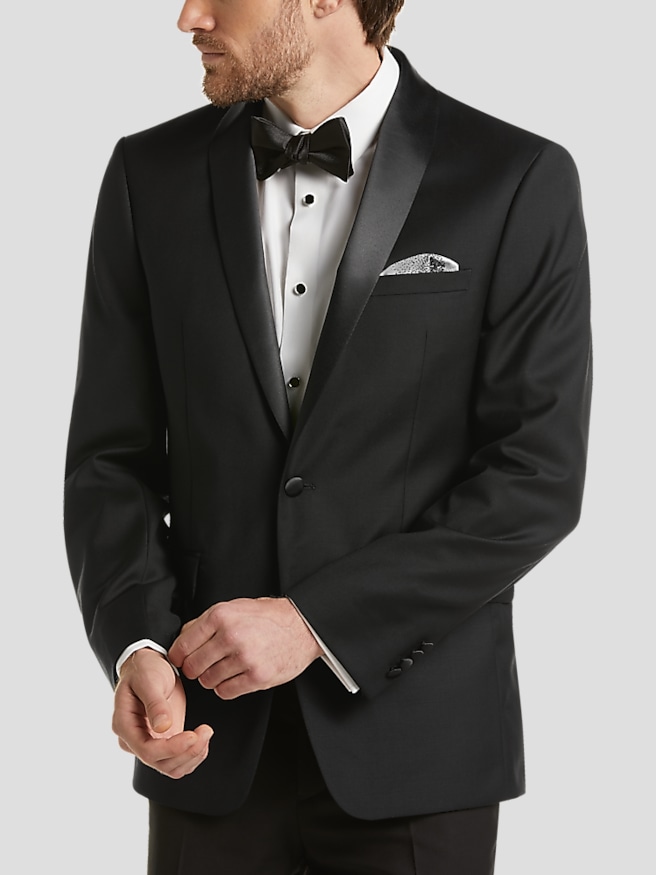
Big and tall shawl-lapel dinner jackets combine a smooth, rounded lapel with proportions intended for larger chest measurements, taller frames, or both. Unlike a notched or peaked lapel, a shawl lapel curves continuously from the collar down the front, creating an uninterrupted line associated with formal eveningwear. The effect is especially distinctive with a bow tie and a crisp dress shirt: the shirt front remains visible while the curved lapel frames it without sharp angles. These jackets suit weddings, gala dinners, awards ceremonies, and other dressy evening events when the invitation allows this style of formalwear. A dinner jacket is not simply an everyday suit jacket in a darker color; its fabric, lapel treatment, buttons, and overall finish contribute to its formal character. Many traditional designs feature satin or grosgrain facing, while other interpretations use matching fabric for a more understated appearance. Black offers a classic foundation, midnight blue creates a similarly formal impression, and ivory or deep jewel tones can bring contrast where the dress code permits. Velvet adds a plush surface that catches light as the wearer moves, making it a distinctive option for celebratory evening settings. Wool and wool-blend fabrics provide a tailored appearance, with their drape and texture depending on the weave and fiber content. Smooth finishes emphasize the clean outline of the jacket, while subtle texture adds visual depth without relying on a bold pattern. For a groom, a wedding guest, or someone attending a milestone celebration, the appeal is a recognizable formal silhouette with room for personal style. A restrained design can support a traditional black-tie ensemble, while a more expressive fabric or color works best when the event welcomes creative formal dressing. The invitation and setting matter: an expressive jacket that feels right at a celebratory reception may be less suited to a strictly traditional black-tie occasion.
Fit gives big and tall formalwear its intended shape, and the two sizing needs are not interchangeable. A broader build may need additional room through the chest, upper arms, and midsection without extra body length, while a taller build may need longer sleeves and a longer jacket without a substantially wider torso. Chest size, height, shoulder breadth, and body proportions all contribute to how a dinner jacket sits. The shoulder seam should rest near the natural shoulder rather than extending noticeably down the arm, and the collar should lie close to the shirt collar without a pronounced gap. When the jacket is buttoned, the front should close comfortably rather than pulling into an X-shaped crease around the fastening. Enough room to sit through dinner, reach across a table, or move onto the dance floor makes a meaningful difference over several hours. That ease should come from suitable proportions, not simply from choosing an oversized jacket that loses definition through the shoulders and waist. Jacket length also affects balance: a body that is too short can make the torso look compressed, while excessive length can overwhelm the legs. Sleeves typically finish near the wrist bone, allowing a modest amount of shirt cuff to show, though posture and arm length influence the final adjustment. Lapel width deserves similar attention. A rounded lapel with enough visual presence can balance a broad chest, while the opening beneath it should leave space for the shirt and bow tie. A single-button front is a familiar choice because it keeps the closure simple and preserves the long curve of the lapel. Tailoring can refine sleeve length and shape through the body, but the underlying shoulder fit is harder to change. For someone who stands tall but has a relatively lean frame, added length should not mean excess fabric at the waist. For someone with a fuller midsection, a clean front and comfortable closure matter more than a sharply tapered outline. The best result looks composed while standing and remains comfortable once seated.
Fabric and construction influence how a shawl-lapel dinner jacket feels throughout an event and how well it holds its appearance over time. Wool can offer a balanced combination of drape, breathability, and resilience, while blends vary according to their fiber content and construction. Velvet brings a richer texture but needs care to avoid crushing its pile. A lining helps the jacket slide over a dress shirt, although comfort also depends on fit, fabric weight, and the garment’s construction. Lapel edges, button attachment, pocket finishing, and smooth seams all contribute to a polished appearance and dependable wear. For coordinating an outfit, formal trousers in a compatible fabric and color create a more cohesive result than everyday dress pants. A dress shirt with an appropriate formal collar, a bow tie in proportion to the wearer, and polished formal shoes complete the foundation without competing with the curved lapel. Where the dress code permits, a pocket square adds a small point of contrast; keeping accessories restrained lets the jacket’s texture and shape remain visible. The broader category of Designer Dinner Jackets offers another way to explore the role of fabric, lapel shape, and finishing in formal dressing. Long-term care begins with the garment’s care label, since facing materials, fibers, and internal construction may require specialized cleaning. A broad, supportive hanger helps preserve the shoulders between occasions, and an uncrowded closet keeps the lapels from being pressed flat against neighboring garments. Allowing the jacket to air after wear and addressing marks promptly can help maintain its appearance without unnecessary cleaning. Direct heat or an iron applied to satin or velvet can leave unwanted shine or flatten the surface, so pressing methods should suit the material. For travel, a garment bag and careful packing help protect the lapels and shoulders. With suitable fit and attentive care, a big and tall dinner jacket can remain a dependable part of a formal wardrobe for occasions that call for a deliberate, dressed-up finish.