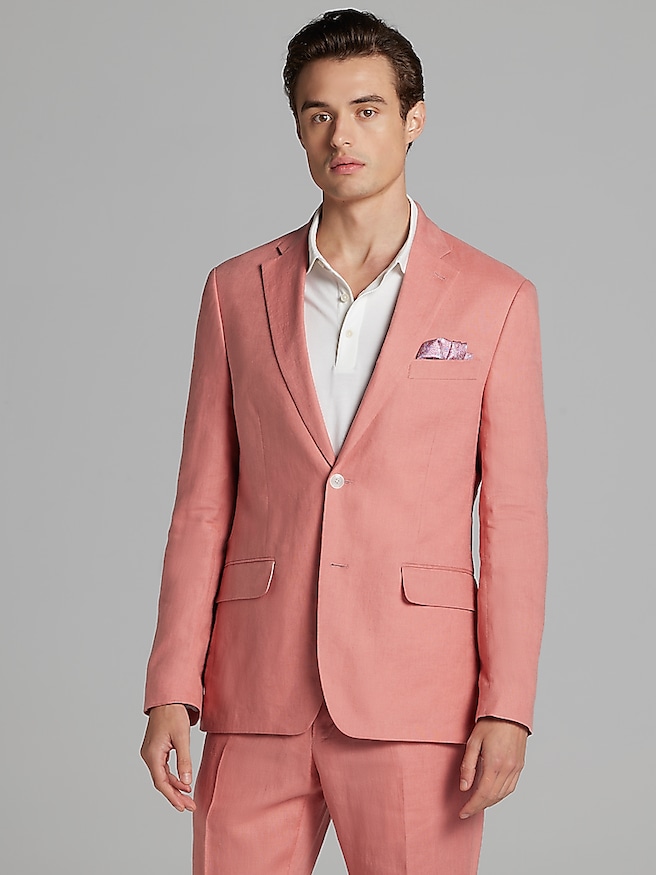
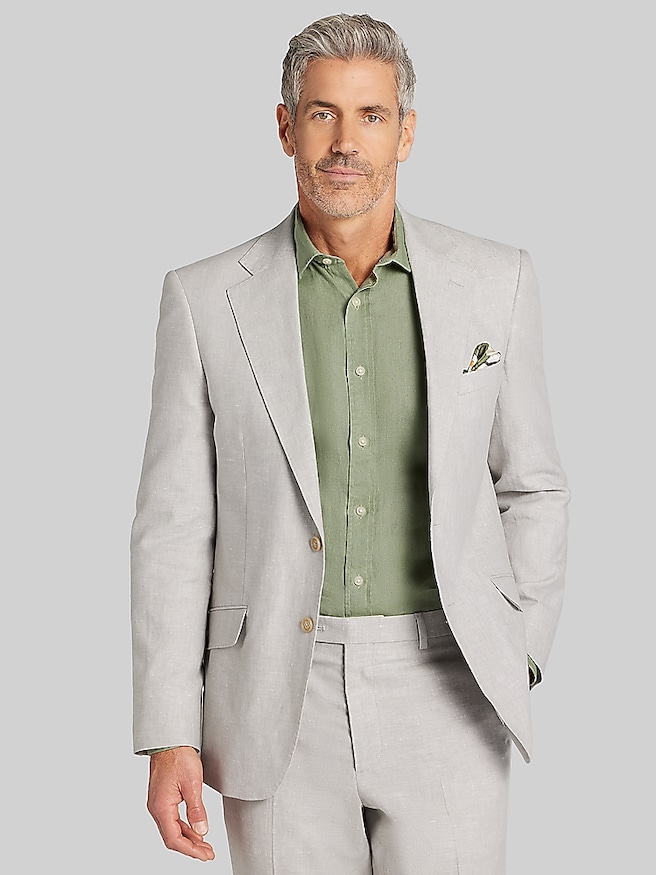
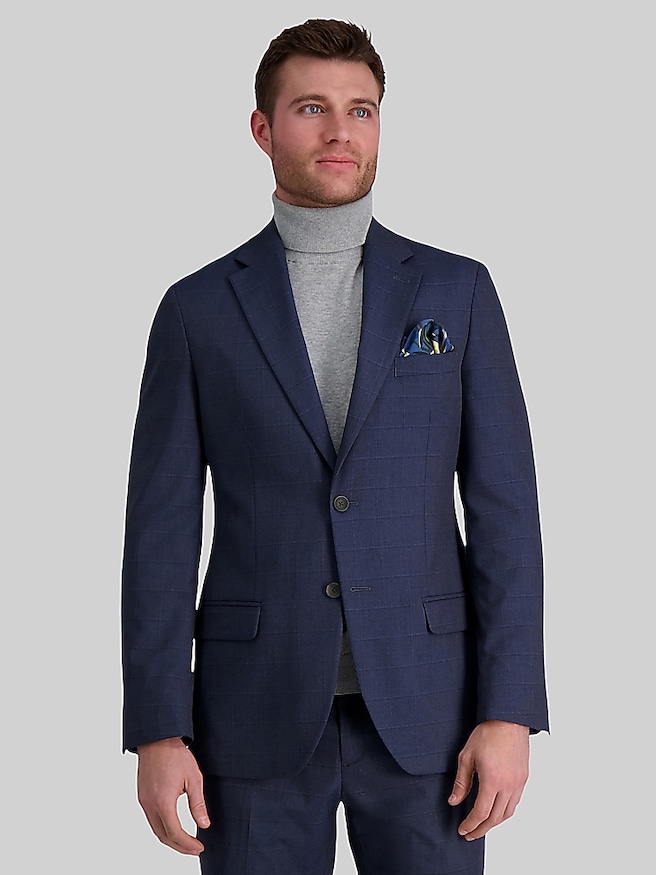
The best place to buy men's suits brings together clear fabric information, useful fit options, and the details that help a suit feel right beyond the fitting room. A suit for a first interview has a different job from one worn to a wedding or to the office several days a week, even when each starts with the same jacket-and-trouser foundation. For business settings, a smooth finish, restrained pattern, and balanced proportions create a polished impression without competing for attention. Navy and charcoal are versatile foundations because they work with a broad range of shirts, ties, and leather accessories. Black carries a more formal character, while lighter neutrals and textured fabrics can feel less businesslike. Subtle stripes and small-scale checks add definition without dominating the outfit. The fabric matters as much as the color: wool can drape cleanly, breathe comfortably, and recover from ordinary creasing, making it a practical choice for repeated wear. Worsted wool typically has a smoother surface that suits professional and dress occasions. Wool blends may combine that familiar appearance with other performance characteristics, depending on their composition, while a small amount of stretch can offer flexibility during a long commute or an evening spent moving between tables and the dance floor. Cotton tends to have a more relaxed surface and develop visible creases, which can be part of its appeal in less formal settings. Fabric weight and construction also affect how a jacket hangs, how substantial the trousers feel, and how the suit responds to movement. A refined appearance does not depend on shine or stiffness; often, it comes from a fabric that falls smoothly and holds its shape. For someone building a first suit wardrobe, versatility carries real value in everyday use. For someone who already dresses formally, an additional suit might serve a more distinct purpose, such as client presentations, ceremonies, or celebrations where the dress code calls for something more considered than a sport coat and separate trousers.
Fit gives all those fabric and styling choices their purpose. A jacket should sit cleanly across the shoulders, with the sleeve meeting the shoulder near its natural edge rather than drooping down the upper arm. The collar should rest close to the shirt collar, and the lapels should lie smoothly instead of lifting away from the chest. When the jacket is buttoned, pulling around the fastening can indicate that the torso needs more room; excess folds can suggest that the shape is too generous or that the proportions need adjustment. A close fit is not the same as a restrictive one. There should still be room to sit through a ceremony, reach across a conference table, and walk comfortably without feeling as though every movement rearranges the outfit. Slim, tailored, and classic fit labels describe broad silhouettes, but their measurements can vary, so the shoulder, chest, waist, seat, and thigh deserve more attention than the label alone. The appeal of Men's Tailored Suits lies in a defined outline that follows the body without relying on tightness for shape. Jacket length helps balance the upper and lower body, while sleeve length allows a small amount of shirt cuff to show. Trousers should sit securely at the intended waist position, with enough room through the seat and thigh for sitting and walking. At the hem, a slight break creates a familiar dress-trouser finish, while little or no break gives the line a cleaner, shorter appearance. These small differences become especially noticeable when the full outfit is viewed together. Alterations can refine sleeve length, trouser hems, and some areas of the waist, but they cannot easily correct every structural mismatch. A strong starting fit through the shoulders and torso makes those finishing adjustments more effective. Separate jacket and trouser sizing can also matter for broader shoulders, a narrower waist, or a fuller lower body. The goal is a suit that looks composed while standing and remains comfortable when the day becomes less still.
Lasting satisfaction with a suit depends on how naturally it fits into a routine. Someone who wears a suit frequently may appreciate resilient fabric, comfortable lining, and trousers that maintain a clean drape through hours of sitting. Someone dressing for occasional milestones may place greater emphasis on a timeless color and proportions that will still feel appropriate the next time an invitation arrives. Details such as secure buttons, neatly finished seams, smooth pocket openings, and lining that does not pull contribute to the experience of wearing the garment. Durability is not simply a matter of thickness; it reflects the relationship between fabric, construction, fit, and care. A suit that is too tight can place unnecessary strain on seams, while an overfilled pocket can interrupt the jacket's shape. After wear, a broad, shaped hanger helps support the shoulders, and hanging trousers along their crease helps preserve their line. Giving the fabric time to rest between wears, brushing away surface dust, and addressing marks promptly can reduce unnecessary cleaning. The care label remains the authority for cleaning and pressing, since fibers, linings, and internal construction may require particular handling. Excessive heat or aggressive pressing can flatten texture or leave shine, so a careful professional finish can make a noticeable difference. Styling can remain straightforward: a crisp shirt provides a clean base, a tie adds formality when needed, and shoes with an appropriate dress finish help the outfit feel complete. Matching the formality of the accessories matters more than making every color identical. A suit can also be a meaningful gift for a graduation, a career milestone, or another important transition, especially when the recipient takes part in choosing the fit and finishing details. Personal involvement keeps the gift practical as well as thoughtful. Whether the occasion is a major presentation, a family wedding, or an ordinary workday with higher expectations, the right suit earns its place through comfortable movement, dependable construction, and an appearance that feels intentional rather than overdone.