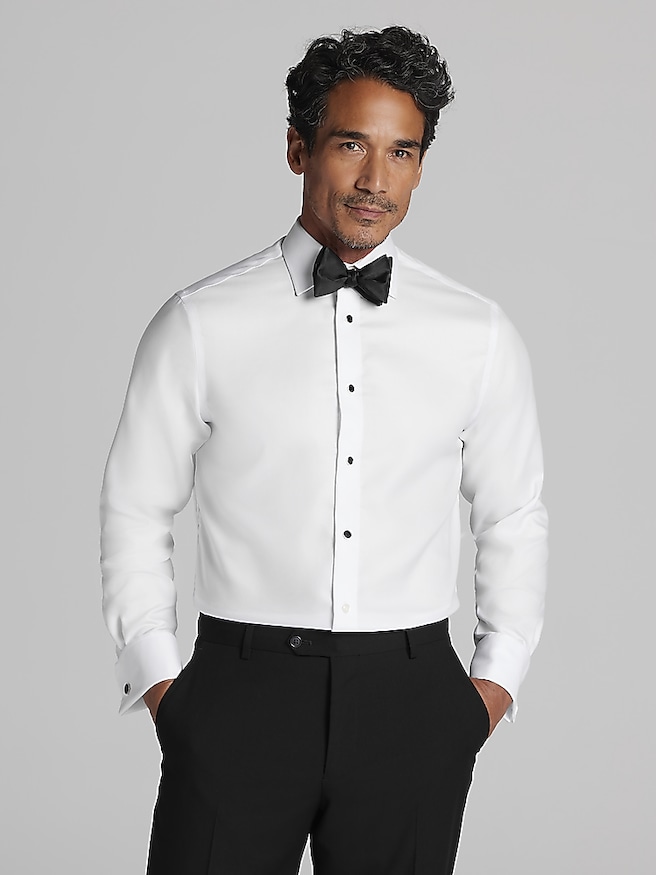
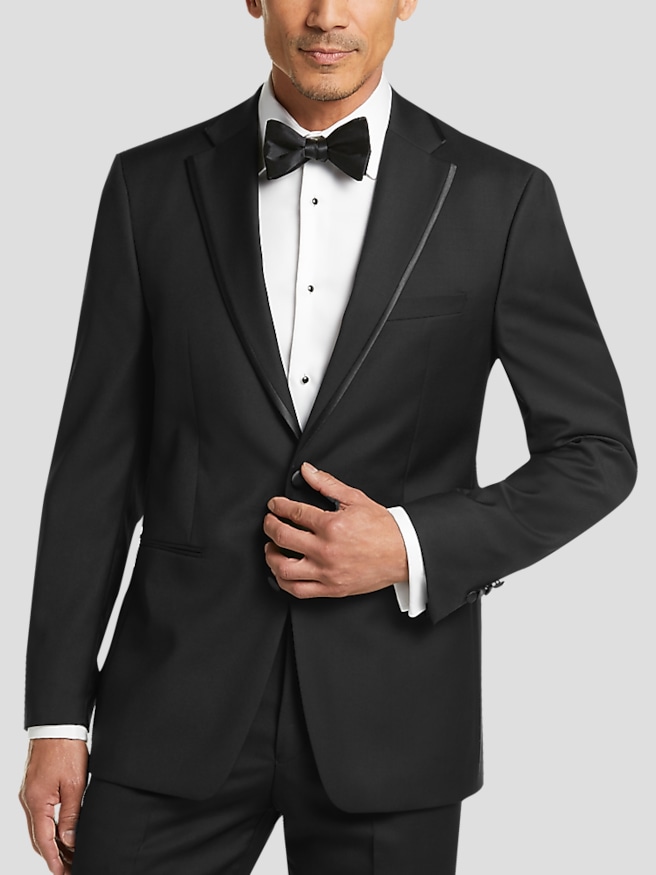
An all-white wedding tuxedo brings a clean, distinctive look to formal wedding attire by pairing a white tuxedo jacket with white formal trousers and coordinating finishing details. Unlike a white dinner jacket worn with black trousers, the all-white approach carries the same color family through the full silhouette. That continuity draws attention to the cut of the jacket, the shape of the lapels, and the contrast between matte fabric and polished trim. Satin or grosgrain details at the lapels, buttons, and trouser seams can distinguish tuxedo styling from an ordinary white suit, though construction and detailing vary. A shawl collar creates a smooth, rounded frame around the shirtfront, while peak lapels give the shoulders and chest a more angular outline. Neither requires an elaborate setting to feel appropriate: a restrained tuxedo can look striking against a simple ceremony backdrop, beside floral arrangements, or at a candlelit reception. The look is especially suited to a groom who wants a clear visual distinction from attendants dressed in darker formalwear. Matching white attire can also create a cohesive wedding-party presentation when that choice is part of the couple’s plans. For guests, white formalwear is appropriate only when the hosts specifically welcome it and the dress code supports the choice. Color coordination matters throughout the outfit. Bright white, soft white, ivory, and cream have distinct undertones, and shades that seem nearly identical on their own may look noticeably different side by side. A bright white shirt beneath an ivory jacket, for example, can make the jacket appear warmer than expected. Comparing the jacket, trousers, shirt, and accessories together under the same lighting gives a more reliable impression than judging each separately. Wedding photography adds another consideration: textured cloth and subtle sheen can help define an otherwise pale outfit, while a consistent color palette keeps the overall effect intentional. The goal is not simply more white, but a balanced combination of shade, surface, and proportion.
Fabric and fit determine how an all-white wedding tuxedo looks beyond the first photograph. Wool and wool-blend fabrics are often valued for their drape and ability to recover from ordinary creasing, while other blends may contribute smoothness, structure, or easier maintenance according to their composition. Fiber content alone does not establish quality; the weave, fabric weight, lining, and construction also affect how the garment hangs. White cloth makes opacity particularly important. A fabric that looks substantial on a hanger may reveal pocket bags, seam allowances, or a strongly colored underlayer when worn under bright lighting. Smooth, unobtrusive underlayers and neatly positioned pockets help maintain a clean surface. Texture deserves equal attention. A restrained weave can give the jacket depth without competing with its formal details, whereas a highly reflective finish creates a more pronounced statement. Fit should support the entire wedding day, from standing for the ceremony to sitting through dinner and moving across the dance floor. Jacket shoulders should follow the natural shoulder line without extending conspicuously beyond it, and the collar should sit close to the shirt collar rather than pulling away. With the jacket fastened, the front should lie smoothly instead of forming pronounced pulling lines around the button. Slim fits create a closer outline, but they should still allow comfortable movement through the chest, seat, and thighs. A roomier cut can look equally polished when its proportions are controlled. Trouser length also changes the impression: a minimal break gives a crisp finish, while excess fabric at the ankle can interrupt the long white line. Sleeve length should leave a modest amount of shirt cuff visible, with the exact balance reflecting the jacket and shirt proportions. Tailoring can refine these details, but major shoulder or structural problems are better addressed through the initial fit. A fitting with the intended shirt and shoes makes it easier to assess sleeve length, trouser hems, and the complete silhouette together.
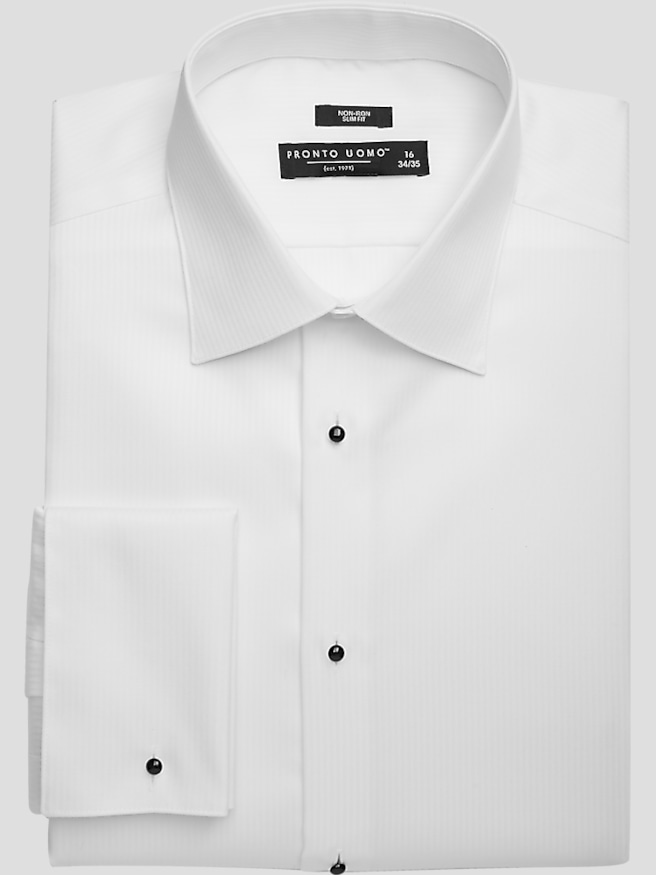
The shirt and accessories give an all-white wedding tuxedo its final level of formality. A white tux shirt for wedding celebrations provides a clean foundation beneath the jacket, with collar shape, front treatment, and cuffs influencing the finished look. A pleated front introduces traditional texture, while a plain formal front creates a quieter surface. A turndown collar offers a familiar frame for a bow tie; a wing collar produces a more distinctive formal profile and benefits from careful coordination with the rest of the outfit. French cuffs accommodate cufflinks, adding a small point of personal expression without overwhelming the white palette. For a fully tonal effect, a white or closely coordinated bow tie keeps attention on shape and texture. A black bow tie introduces deliberate contrast, shifting the result from head-to-toe white toward white-led formalwear. A waist covering, when included, should sit smoothly and avoid adding bulk beneath the jacket. Pocket squares work best when their texture complements rather than duplicates every other accessory, and a boutonniere should be positioned securely without dragging the lapel out of shape. Footwear should match the intended formality and color direction, with clean lines and a well-maintained finish. Keeping trouser pockets lightly filled helps prevent visible outlines, especially in pale fabric. Care is particularly important because small marks can stand out against white. Follow the garment’s care label, and use a cleaner experienced with formalwear when professional cleaning is required. Aggressive rubbing, improvised stain treatments, and direct heat can damage fabric or leave visible changes in color and sheen. Satin trim also needs protection from snagging and excessive pressing. After wear, a shaped hanger supports the jacket, while properly hung trousers are less likely to develop unwanted creases. Let garments air before placing them in a breathable garment bag, and store them in a clean, dry space away from prolonged direct light. Thoughtful handling preserves the fabric and structure, helping an all-white tuxedo remain polished for anniversary portraits, formal celebrations, and other occasions that suit its distinctive character.