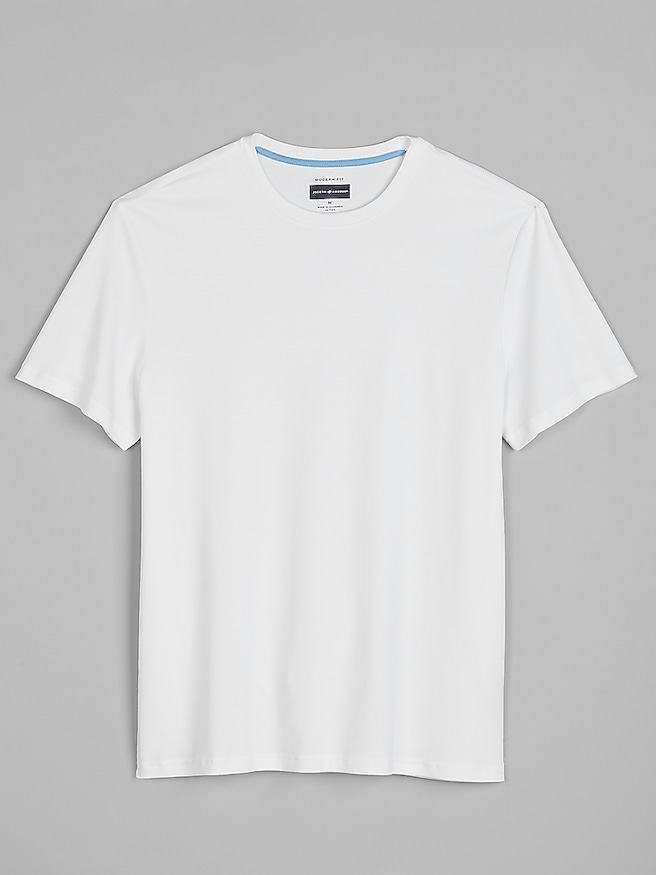
2XLT T-shirts combine a double-extra-large size with tall proportions, giving men who need both room and length an alternative to standard-length tees. The “T” indicates a tall cut, usually with additional torso length and, depending on the design, adjusted sleeve proportions. That distinction matters when a shirt fits comfortably across the chest but lifts above the waistband while reaching for a shelf, sitting down, or leaning forward. A 2XLT tee is intended to address that mismatch without requiring a larger size simply to gain coverage. Exact dimensions vary by maker and cut, so the size label is a starting point rather than a universal set of measurements. Chest circumference, body length, shoulder width, and sleeve length together give a clearer picture of how a shirt will sit. Height alone does not determine the right fit: a longer torso, broader shoulders, or a preference for more coverage can make tall sizing useful for men with different builds. In a conventional fit, the shoulder seams sit close to the shoulder edges, the chest has enough ease for comfortable movement, and the body falls without pulling across the stomach. A relaxed cut creates more space through the torso, while a closer cut keeps excess fabric to a minimum beneath other clothing. Neither should rely on stretching the fabric tightly to achieve the intended silhouette. For untucked wear, a balanced hem covers the waistband without extending so far that it overwhelms the rest of the outfit. For tucked wear, extra body length helps keep the shirt anchored through ordinary movement. Comparing measurements with a well-fitting tee laid flat can be more useful than choosing by a familiar letter size alone. The result should feel natural whether the shirt is worn on its own, beneath an open button-front shirt, or as a simple base layer.
Fabric gives 2XLT T-shirts much of their character, influencing everything from the way the hem hangs to how the neckline feels after a full day of wear. Cotton is a familiar choice for its softness and absorbency, with variations in yarn and knit creating noticeably different textures. Combed cotton generally feels smoother because processing removes shorter fibers, while ring-spun cotton yarn can give a tee a softer, more refined hand. A lighter jersey tends to drape easily and takes up less space beneath another shirt; a heavier jersey usually has more substance and can create a more structured outline when worn alone. Fabric weight is not a complete measure of quality, though. Knit consistency, seam construction, and finishing also affect how well a shirt holds its shape. Cotton-polyester blends combine the feel of cotton with fibers that can help improve drying time and dimensional stability, although performance depends on the blend and construction. A small amount of elastane adds stretch and recovery, which can be useful when moving between a desk, a commute, and everyday errands. That stretch complements proper sizing rather than replacing the need for adequate chest and shoulder room. Smooth seams matter especially in a shirt worn directly against the skin, and a flat, resilient neckband helps keep the collar looking neat. Reinforced stitching at stress points and evenly finished hems are useful construction details to consider for frequent wear. Neckline choice changes both appearance and layering possibilities: a crew neck provides a clean frame at the collar, while a V-neck leaves a more open line and may sit below an unbuttoned shirt collar. Sleeve shape also influences the overall balance. Sleeves that follow the upper arm without gripping it tend to look tidy, while a wider opening gives a more relaxed impression. A pocket adds a casual detail, whereas an unbroken front keeps attention on fit, texture, and color.
The everyday usefulness of 2XLT T-shirts comes from how easily they work with the rest of a wardrobe. A solid tee with dark jeans and clean sneakers creates a straightforward casual outfit, while chinos and an open overshirt add another layer of texture without making the look complicated. In a workplace that permits casual clothing, a neat neckline, smooth fabric, and a hem that stays in place can make a plain T-shirt look intentional rather than like an afterthought. For travel, the most useful fit allows comfortable sitting and reaching without bunching excessively at the waist. At home, ease through the chest and sleeves can matter more than a closely shaped silhouette. Color influences versatility, too: neutral shades are easy to repeat across outfits, while a richer color can bring interest to otherwise simple combinations. Lighter fabrics and shades may show the outline of an underlying layer more clearly, so opacity is worth considering when a tee will be worn alone. A 2XLT T-shirt can also be a practical gift for someone whose usual tees have enough width but not enough length, particularly when the recipient’s preferred measurements, neckline, and fabric feel are already known. If more room through the chest and body is needed alongside tall proportions, 3XLT Shirts offer another sizing category to consider; the measurement chart remains the best way to compare the two. Care helps preserve the proportions that make a tall tee useful in the first place. Follow the garment’s care label, since cotton, blended fabrics, and stretch knits may have different washing and drying requirements. Where permitted, washing in cold water and using lower dryer heat can help limit shrinkage and reduce stress on fibers. Turning shirts inside out can reduce surface abrasion during washing, and separating rough or heavily fastened garments helps protect smoother knits. Preshrunk fabric can still change dimensions, so avoiding unnecessary heat remains worthwhile. Folding tees neatly or using supportive hangers helps prevent distortion between wears. With suitable fabric, balanced proportions, and consistent care, a tall-size tee can remain a dependable foundation for everyday dressing.