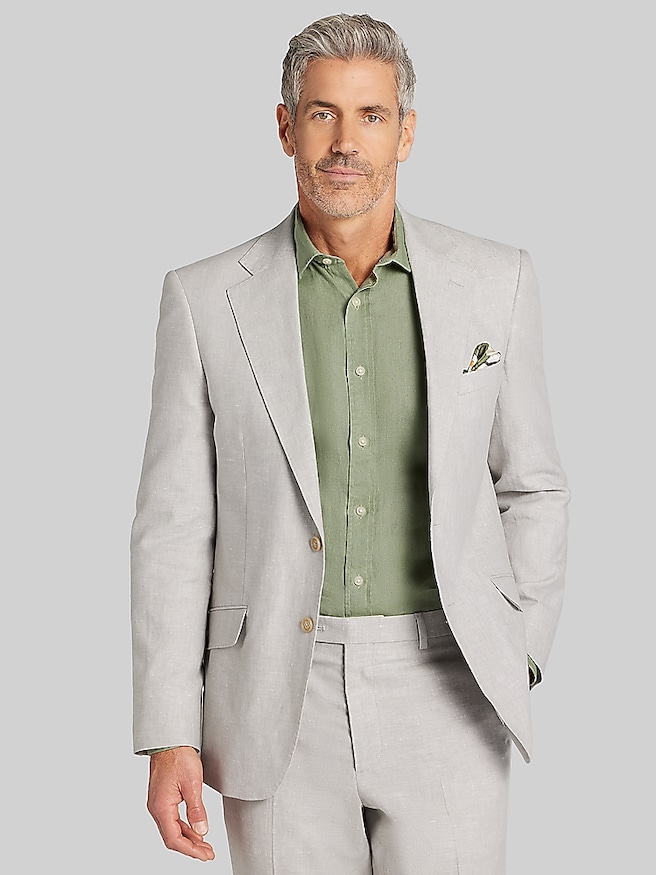
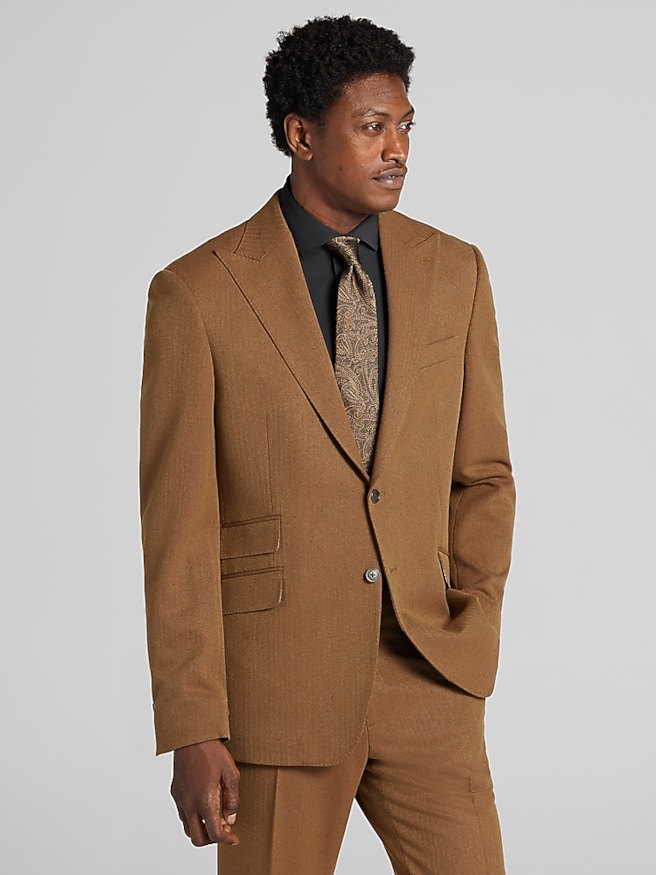
1920s-inspired three-piece Halloween suits bring a Jazz Age look to costume parties through a coordinated jacket, vest, and trousers. The vest, also called a waistcoat, is the defining third piece: it adds a tailored layer across the torso and keeps the outfit looking complete when the jacket comes off. The effect can suggest a sharply dressed city character, a speakeasy host, or a guest at an extravagant Roaring Twenties gathering without depending on an elaborate costume. Much of the appeal comes from recognizable details rather than exact historical reproduction. A higher trouser rise, a vest that meets the waistband, and lapels with a little presence create a convincing vintage-inspired silhouette. Pinstripes and chalk stripes give the look a graphic, metropolitan character, while textured tweeds and muted checks suggest a more understated interpretation. Black, charcoal, navy, and brown each provide a foundation for period-inspired styling, with the pattern and accessories doing much of the storytelling. A dark striped suit with a crisp shirt feels distinctly different from a brown textured suit with a softly patterned tie, even though both share the same three-piece structure. The strongest combinations usually have one clear visual focus. When the suit has a pronounced stripe or check, a quieter shirt and tie keep the overall effect intentional rather than crowded. A pocket square can add contrast without matching the tie exactly, and polished lace-up shoes help carry the tailored look from head to toe. A brimmed hat or pocket-watch chain may reinforce the theme, but neither is necessary for the suit to read as 1920s-inspired. Those details work best as accents to a well-proportioned outfit, not substitutes for one. For Halloween gatherings with a vintage dress code, the jacket, vest, and trousers establish the character before any additional accessories enter the picture. That makes the three-piece format especially useful for an outfit that needs to feel festive in photographs and still look composed across a dinner table.
Fabric and fit determine how that character feels through an entire event. Wool and wool-blend suiting can provide a defined drape, while textured cloth brings visual depth that remains noticeable even in subdued colors. Tweed describes a family of textured fabrics rather than a single fiber content, so the fabric label matters more than the name alone. Polyester blends may offer useful wrinkle resistance, although comfort, breathability, and recovery depend on the complete fabric composition and construction. Smooth cloth tends to emphasize the line of the jacket and trousers; a nubby surface creates a more tactile, lived-in impression. Neither needs to look distressed to suggest another era. A clean finish and balanced proportions often do more for the theme than artificially aged details. At the shoulders, the jacket should sit neatly without extending far beyond the natural shoulder line or pulling across the upper back. The lapels should lie flat, and the front should close without deep tension lines around the button. A vest should follow the torso comfortably rather than squeeze it, with enough length to avoid an exposed band of shirt above the trousers during ordinary movement. That relationship is especially important when the jacket is worn open or removed for dancing. Trousers need room through the seat and thighs for sitting, walking, and climbing stairs; an exaggeratedly tight leg can work against the relaxed drape associated with many period-inspired looks. A fuller cut can suggest vintage tailoring without becoming oversized, while a closer contemporary fit can offer a subtler interpretation. For a Halloween dinner followed by a crowded party, ease at the waist and across the back matters as much as the mirror view. Secure buttons, tidy seams, and a lining that moves smoothly over the shirt also contribute to comfortable wear. Alterations to sleeve length, trouser hems, or the waist can sharpen the proportions, but they cannot reliably correct every mismatch in the underlying cut. The best foundation is a suit that already feels balanced before those finishing adjustments.
The versatility of a three-piece suit extends beyond a single Halloween appearance. It can suit an adult attending a themed house party, a performer developing a period-inspired character, or a host who wants to look dressed for the occasion while greeting guests and moving between rooms. Coordinated outfits can also work for a group, with a shared color palette creating cohesion while individual ties, shirts, and pocket squares keep each person distinct. For someone drawn to classic tailoring, a suit may make a thoughtful gift, though accurate measurements and personal fit preferences are more useful than guessing from everyday clothing sizes. The same jacket and trousers can later take on a less theatrical role with a simple shirt and restrained accessories, provided the cut and pattern fit the occasion. A vest can also change the balance of an outfit without requiring the full Halloween styling every time. Broader interpretations of this aesthetic appear in Mens Vintage Style Suits, where the connection is the enduring appeal of tailored proportions and distinctive fabric. Preserving those qualities takes straightforward care. The garment’s care label should determine whether professional cleaning or another method is appropriate; a suit should not be assumed machine washable because it contains synthetic fibers. After wear, emptying the pockets, allowing the pieces to air, and using a supportive jacket hanger help maintain their shape. Trousers benefit from careful hanging that avoids unwanted creases, and the vest should be stored without stretching its shoulders. Surface dust and lint can often be addressed with a suitable clothing brush, while stains deserve prompt attention according to the fabric’s care requirements. Costume makeup, adhesive decorations, and rough accessory clips can mark or snag tailored cloth, so keeping them away from collars and lapels helps protect the finish. With thoughtful styling and care, the result feels like a complete outfit with a Halloween identity, rather than a collection of props competing for attention.