
Not every formal dress code follows the same rules for what to wear. While black tie and white tie events both put formalwear front and center, they have very different requirements. Knowing the difference between black tie vs. white tie styling can help you walk into any room feeling confident and appropriately dressed.
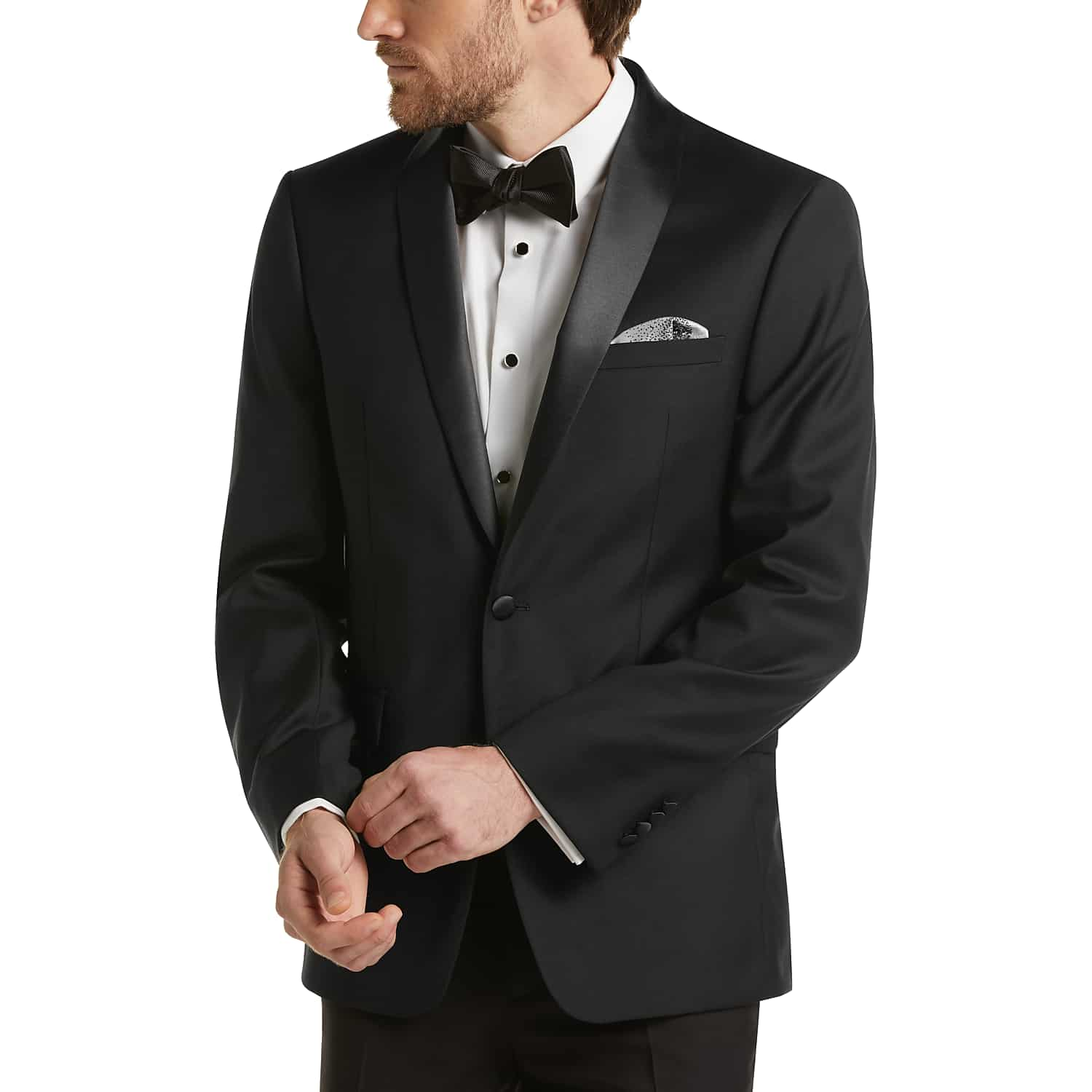
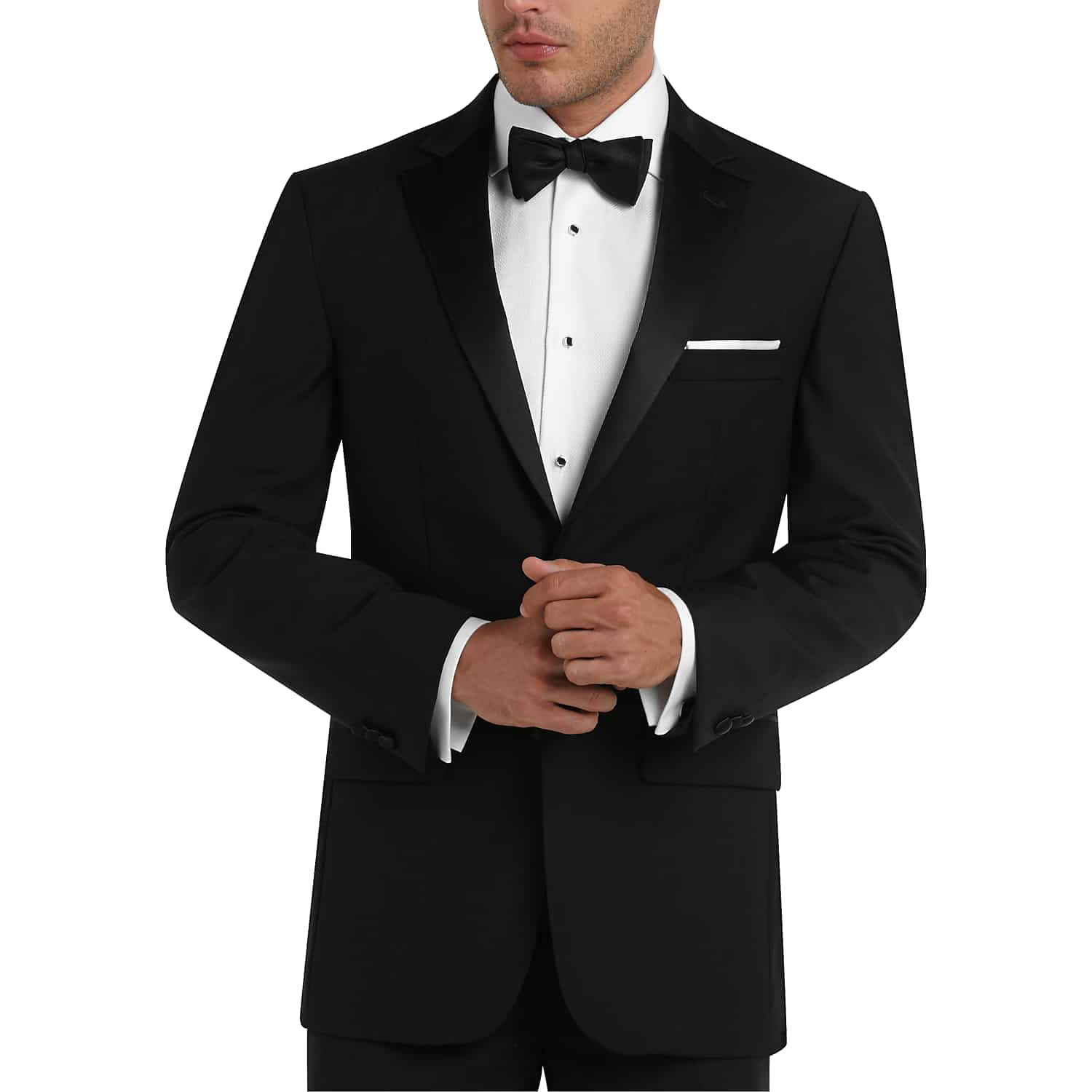
Black tie attire calls for a black tuxedo, crisp white shirt, black bow tie, and polished dress shoes. You can choose between a cummerbund or formal waistcoat to complete the look. Black tie invitations are common for weddings, galas, charity events, and formal dinners.
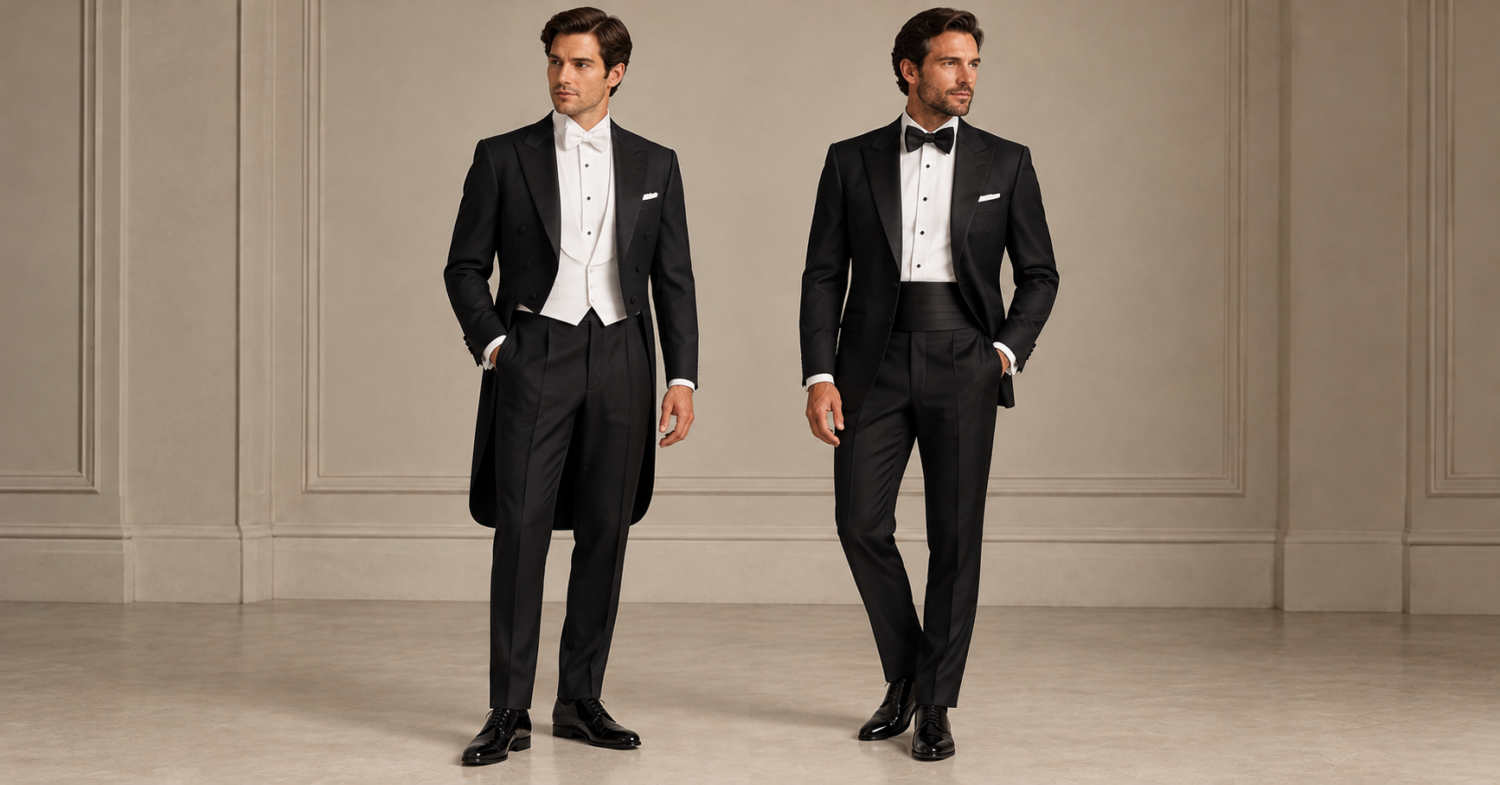
White tie attire is the most formal dress code. The classic look includes a black tailcoat, matching trousers, white dress shirt, white bow tie, white waistcoat, and polished shoes. This style follows stricter conventions and is reserved for high-profile events and exceptionally formal occasions, such as state dinners or ceremonial receptions. White tie is rare and rooted in tradition — so you need to stick to the dress code to a T.
Here’s a breakdown of the two dress codes side by side:
| White tie | Black tie | |
| Formality | Highest level of formal dress | Formal |
| Jacket | Black tailcoat | Black tuxedo jacket |
| Trousers | Matching black trousers, typically with satin side stripes | Matching tuxedo trousers, typically with one satin stripe |
| Shirt | Formal white dress shirt, traditionally with a wing collar | Formal white dress shirt |
| Tie | White bow tie | Black bow tie |
| Shoes | Polished black formal shoes, traditionally patent leather | Black Oxfords or patent leather dress shoes |
| Waist covering | White waistcoat | Black cummerbund or waistcoat |
| Frequency | Reserved for highly formal invitations | Often seen at weddings, galas, and other formal events |
How To Dress for White Tie
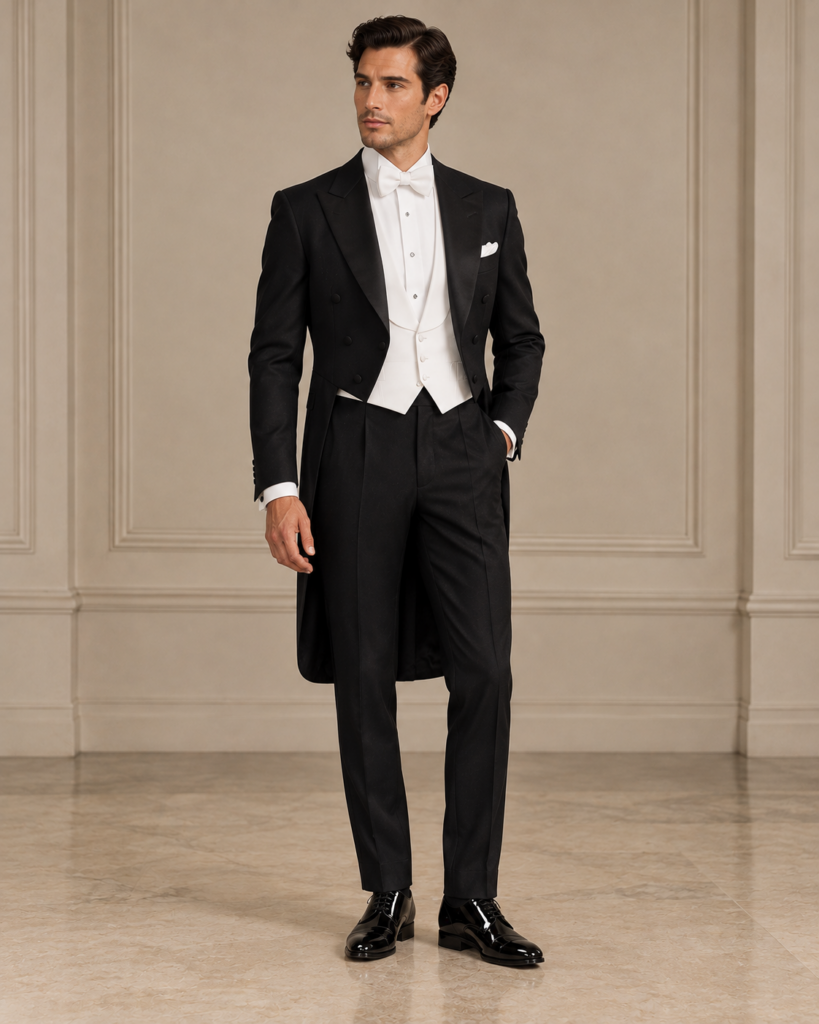
When an invitation specifies a white tie dress code, every part of your outfit adheres to a historic blueprint, so getting the details right is key.
- Tailcoat: Choose a black tailcoat and leave it unbuttoned. The distinctive tails should fall to the back of your legs without looking loose or oversized.
- Trousers: Wear matching black trousers with two satin side stripes. The double stripes help differentiate from black tie trousers, which have only one stripe down the side.
- Shirt: Go with a white piqué (marcella) shirt, ideally one that has a wing collar and bib front.
- Waistcoat: Add a low-cut white waistcoat, and make sure the bottom edge is completely hidden beneath the front panels of the tailcoat. The tailcoat points should sit about 1–2 centimeters below the waistcoat for the desired silhouette.
- Bow tie: Finish with a white self-tie bow tie.
- Shoes: Wear opera pumps or patent leather Oxfords to give your outfit a sense of sophistication and some extra shine.
- Accessories: Leave accessories understated with simple statement pieces like white shirt studs, cufflinks, and a white pocket square.
How To Dress for Black Tie
If you’re invited to a formal event, such as a ball or gala, the invite will probably say “black tie.” Although it’s less rigid than white tie, it still has rules you need to follow closely.
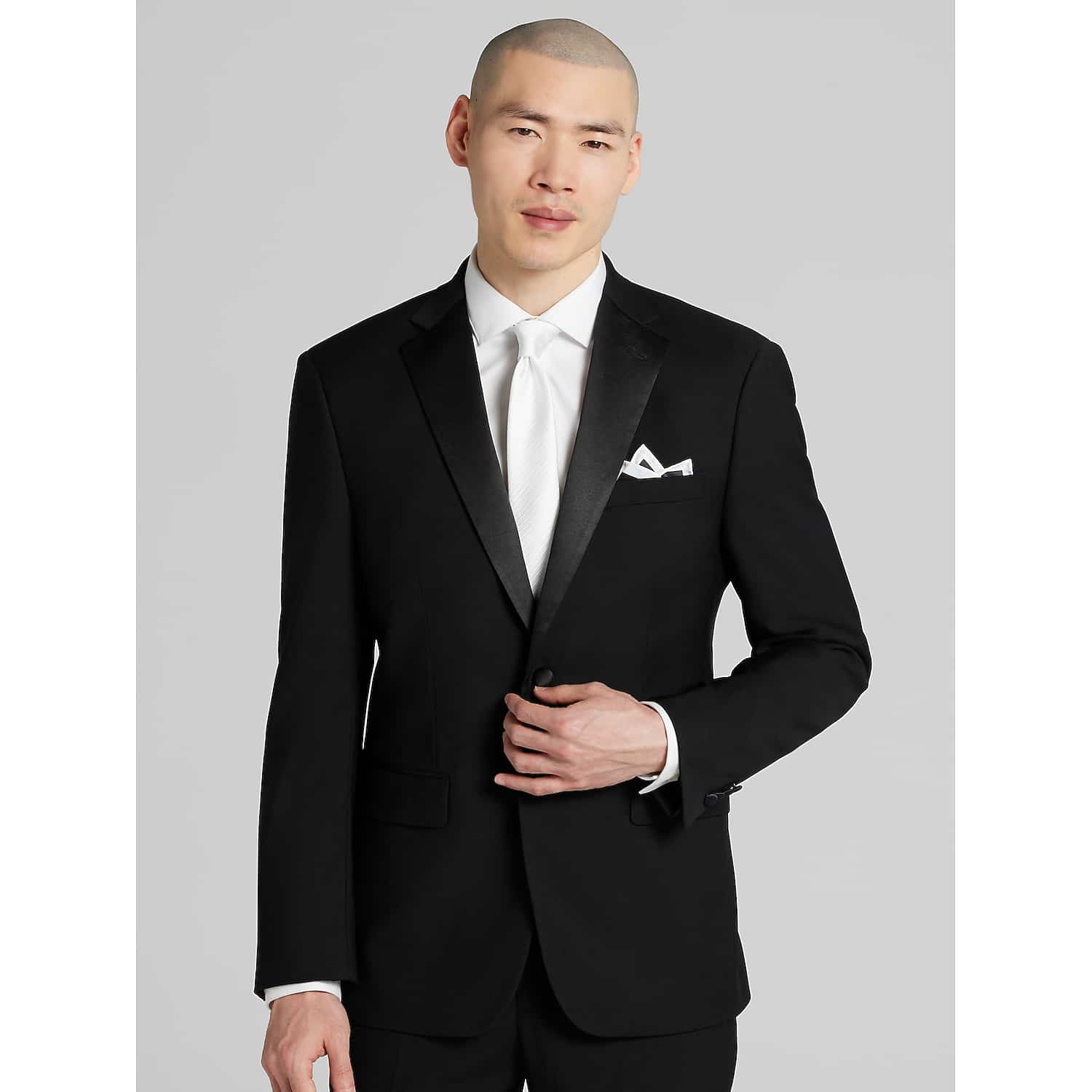
- Tuxedo jacket: Start with a black tuxedo jacket made with satin or grosgrain lapels. The most popular choice is a single-breasted jacket with one button and either peak lapels or a shawl collar.
- Trousers: Look for tuxedo trousers that match the jacket fabric. They should have a satin or grosgrain stripe down the outside seam of each leg and sit at your natural waist.
- Shirt: Wear a formal white tuxedo shirt with a turndown collar, French cuffs, and a pleated or piqué front panel. The shirt should fit close to your body without feeling restrictive.
- Bow tie: Stick with a silk black bow tie that matches the tuxedo’s lapels.
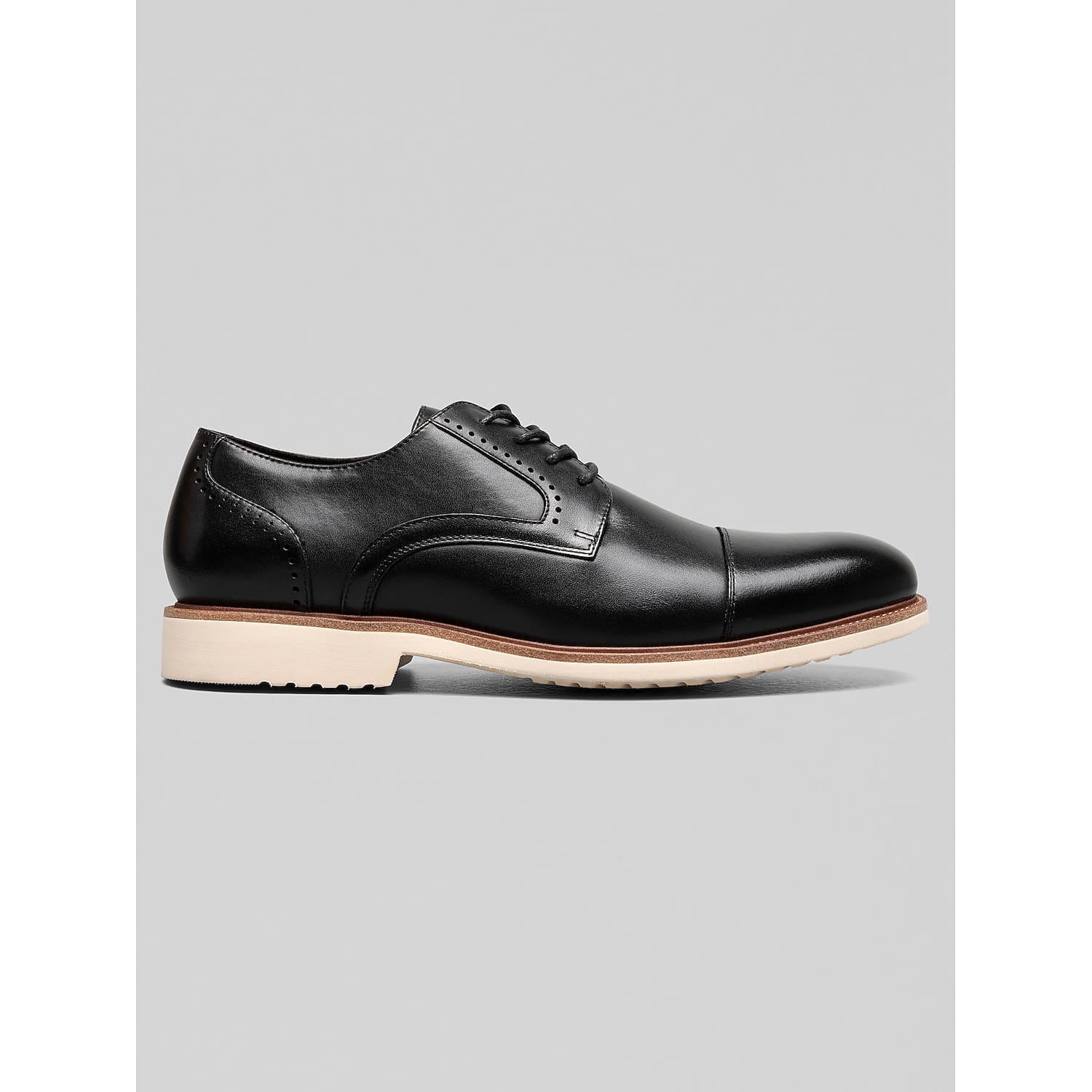
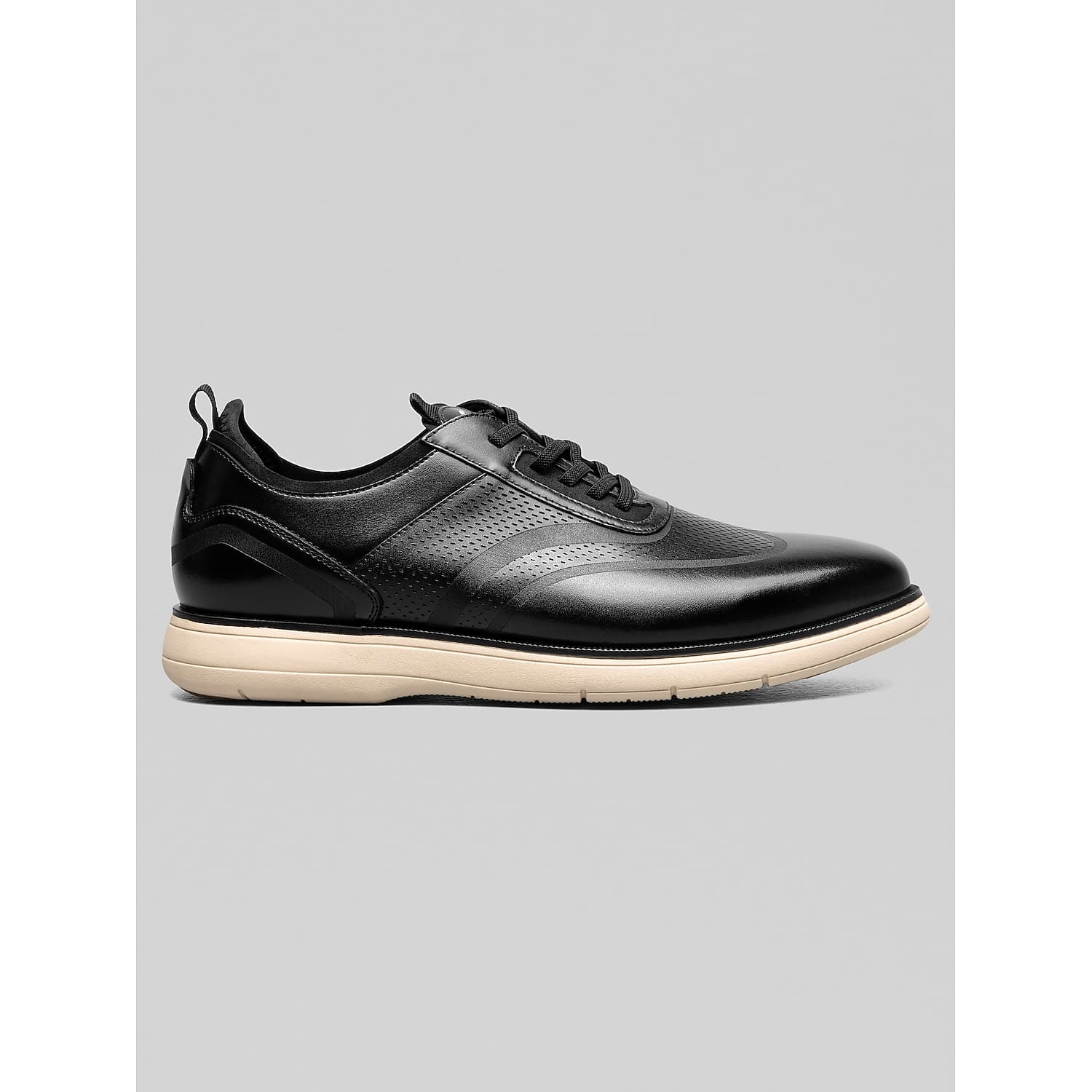
- Shoes: Stay true to the dress code with patent leather dress shoes, formal slippers, or black patent leather Oxfords, and skip the broguing or other decorative elements.
- Waist covering: Put on a cummerbund or low-cut waistcoat to cover the waistband of the trousers and create a smoother transition between the shirt and jacket.
- Accessories: Opt for minimal, elegant accessories like cufflinks, shirt studs, and a white pocket square. A slim dress watch can work well, too, but casual wristwear and flashy jewelry don’t belong with this type of formalwear.
When To Wear White Tie vs. Black Tie
Choosing white tie or black tie formalwear starts with reading the event invitation carefully. The dress code on the invitation sets the tone for the evening and gives you the best insight on what to wear.
White tie is the most formal (and less common) dress code. Today, it’s almost never requested outside of grand and official occasions like state banquets, royal gatherings, and elite award ceremonies. You’re far more likely to receive an invite with a black tie dress code, as it’s the standard for formal evening events, such as weddings and charity dinners.
If the dress code is white tie, expect an ultra-formal affair with traditional attire. If it’s black tie, a classic tuxedo is the better choice for the occasion.
Common White Tie and Black Tie Mistakes
Small details have a bigger impact than you might think, and can make or break your look if they don’t work together.
Wearing the Wrong Level of Formality
One of the biggest mistakes with white tie and black tie is wearing an outfit that falls short of (or goes beyond) the dress code. Every formal event has specific expectations, but dressing to the right level of formality ensures you fit the occasion.
A black suit can look sharp, but it doesn’t replace a tuxedo for a black tie event. A tuxedo, while formal, doesn’t meet the requirements of a white tie dress code. These events always need a tailcoat and other traditional attire, such as double-striped trousers. A “black tie optional” dress code offers more flexibility, but it doesn’t mean casual clothing is appropriate. You should still aim for formal evening wear in that case.
Missing or Mismatched Formal Details
The wrong accessories or finishing touches can distract from an otherwise well-chosen outfit. As you select these pieces, consider how they fit into the look as a whole.
A pre-tied bow tie is usually too stiff and lacks the natural shape of a traditional bow tie. A white dinner jacket can be part of black tie attire, but it’s not right for white tie events.
Find Your Perfect Look at Men’s Wearhouse
Formalwear can feel complicated. The good news is, you don’t have to figure it out on your own. Men’s Wearhouse can help you put together a head-turning look, whether you’re dressing for a classic black tie affair or a white tie gala.
Need a tux for an upcoming event? Choose from tuxedo rental options that make it easy to dress for the occasion without committing to a formal wardrobe. In-store tailoring can fine-tune the fit, while expert guidance from the Men’s Wearhouse team makes sure your shirt, jacket, and accessories all coordinate.
If you don’t know where to start, in-store associates are ready to help navigate the dress code, find the right pieces, and put the finishing touches on your head-to-toe look.
Shop Related Products