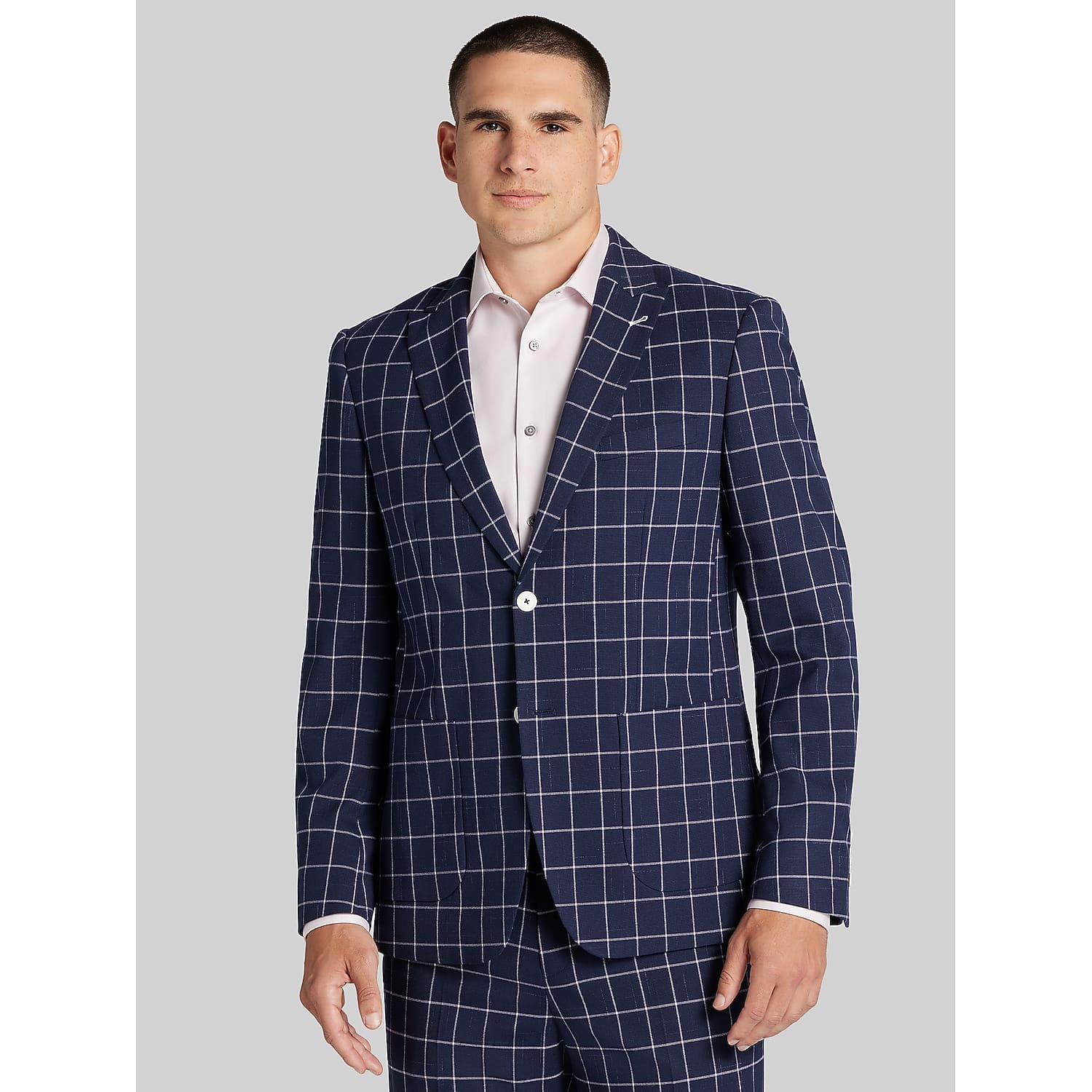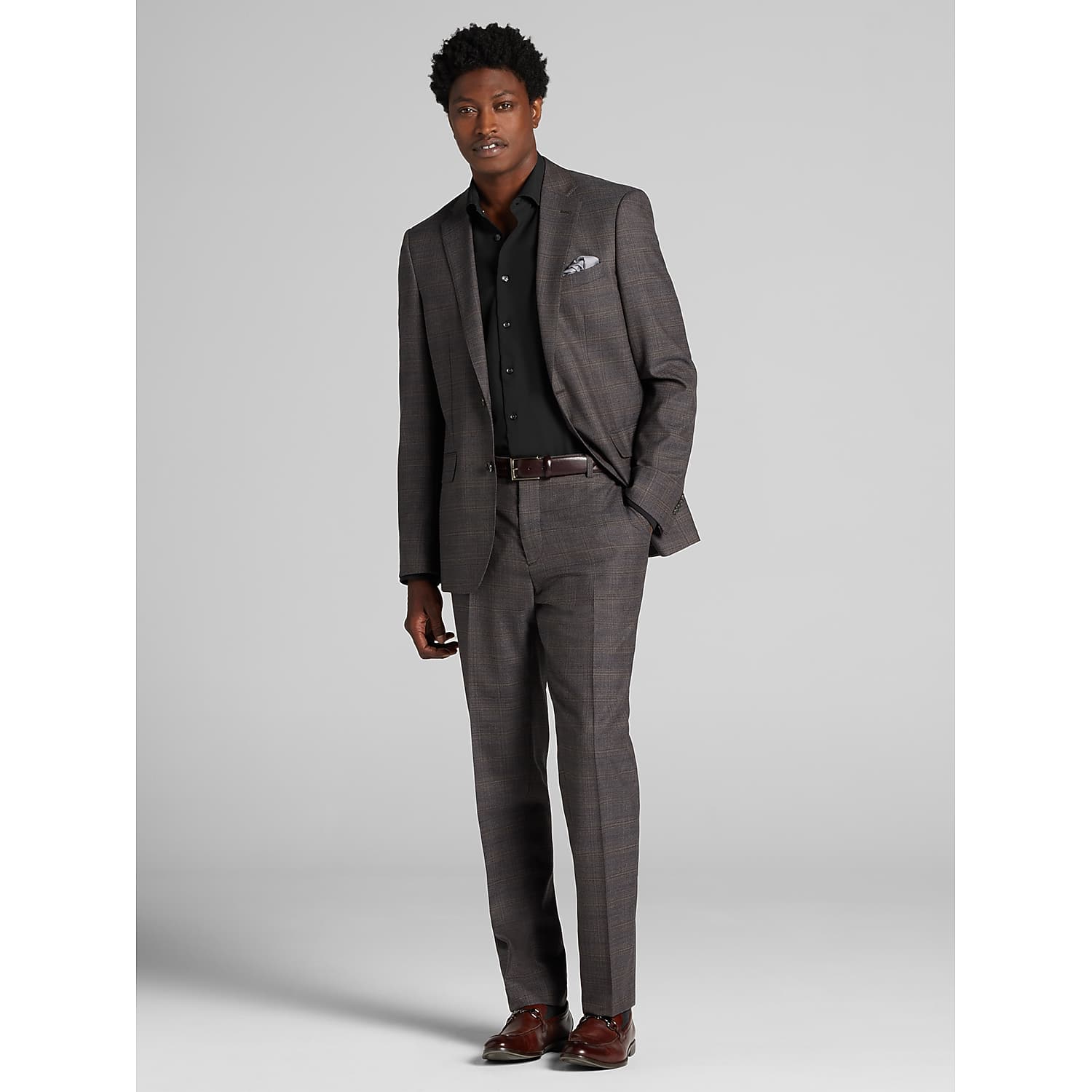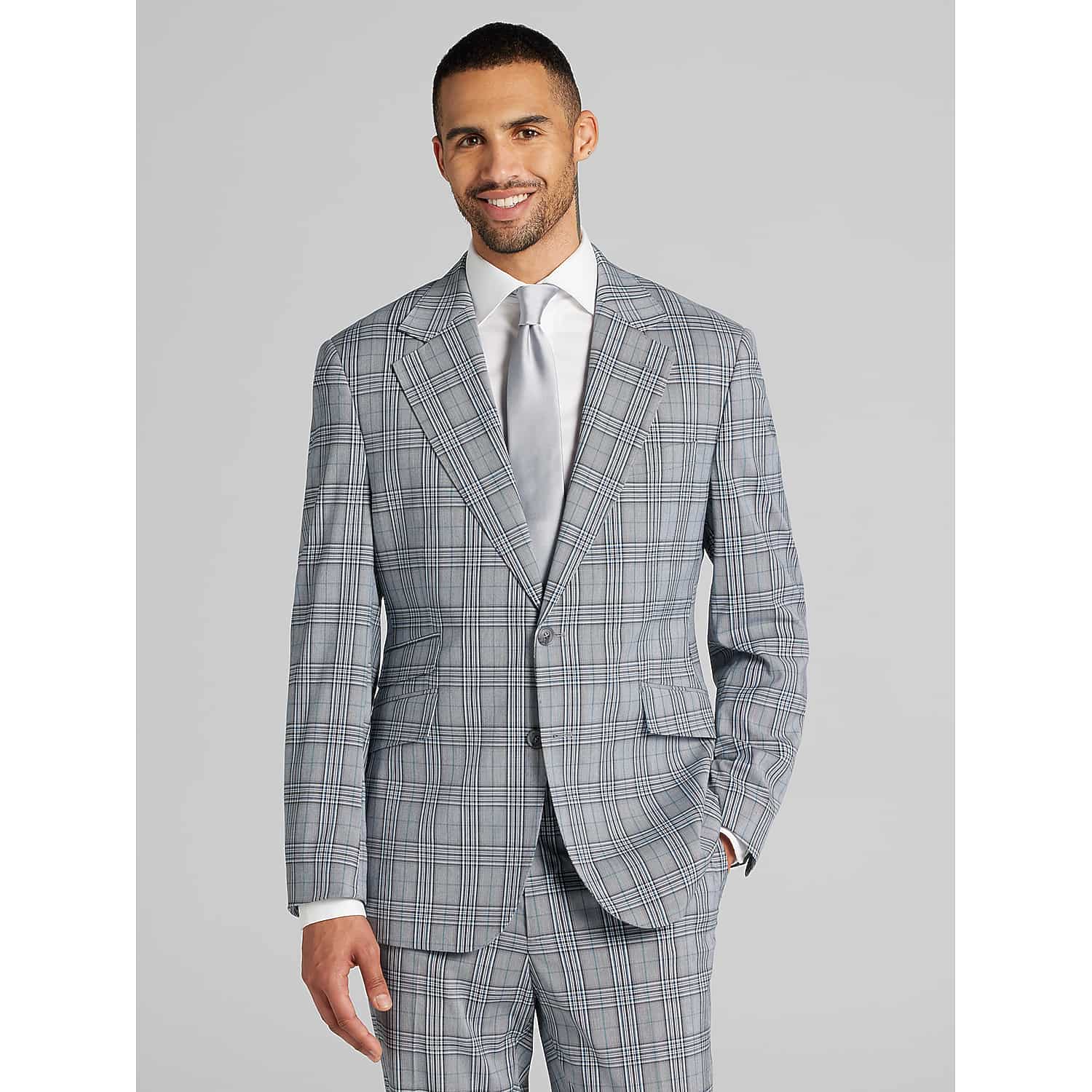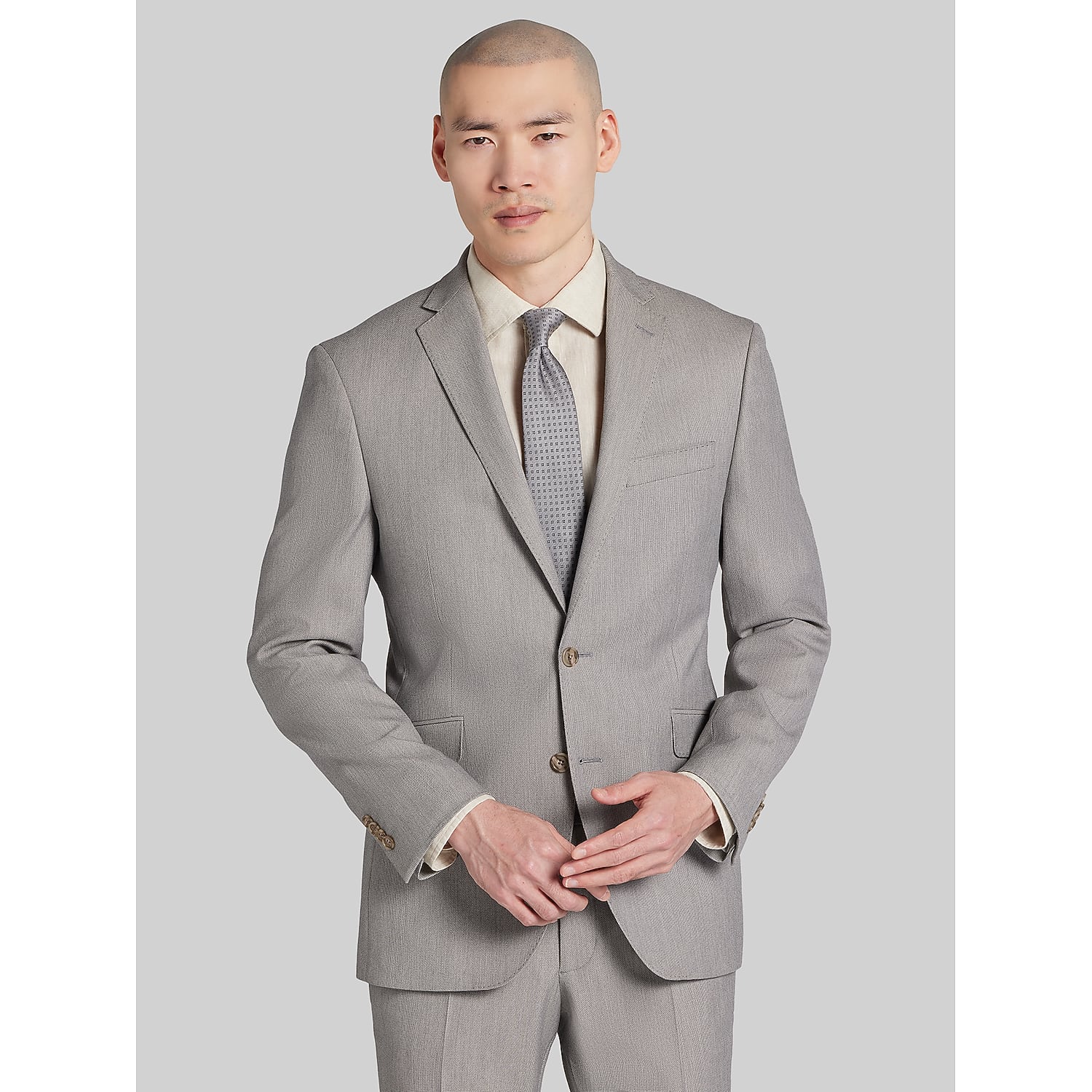

No matter the price tag, an expensive suit that doesn’t fit properly will look off. That’s because tailored versus untailored suits vary in shape and construction, and those differences matter.
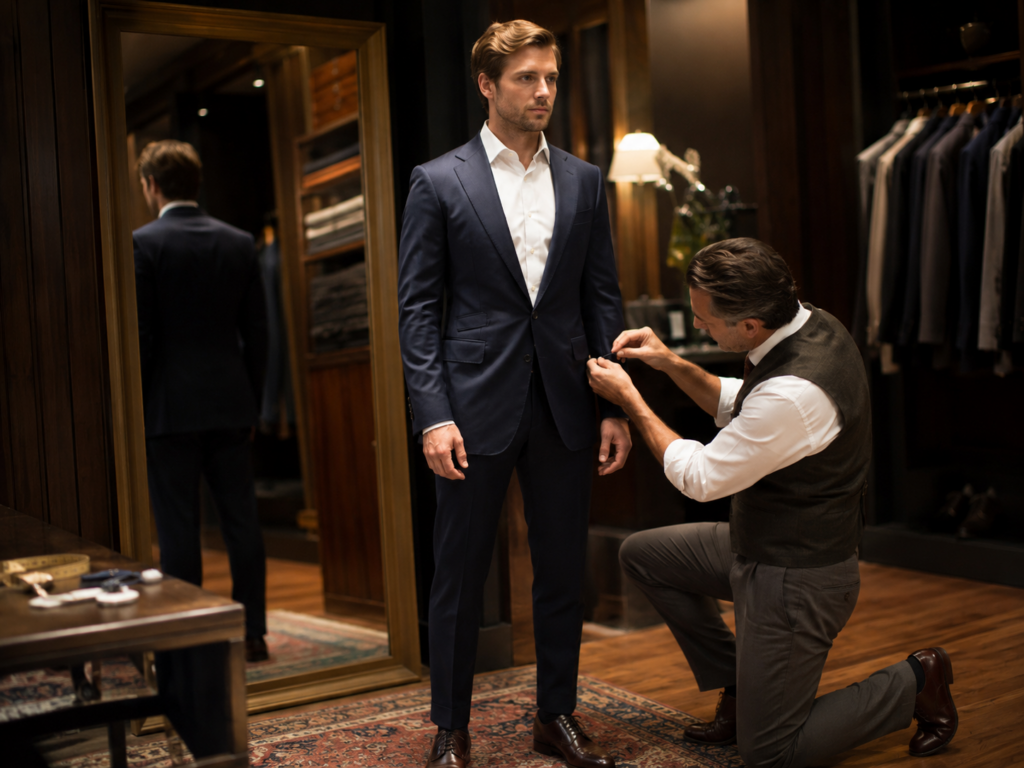
A tailored suit is altered to fit your body. An untailored one comes straight off the rack, exactly as the manufacturer made it. The difference becomes evident the moment you put the jacket on, and it’s often what people notice when you walk into the room.
Here’s what tailored and untailored really mean, how each one fits, and when each makes the most sense.
Tailored vs. Untailored Suit: The Key Differences
Knowing the difference between a tailored suit versus an untailored suit helps you choose an outfit that fits your style and the event.
What Is a Tailored Suit?
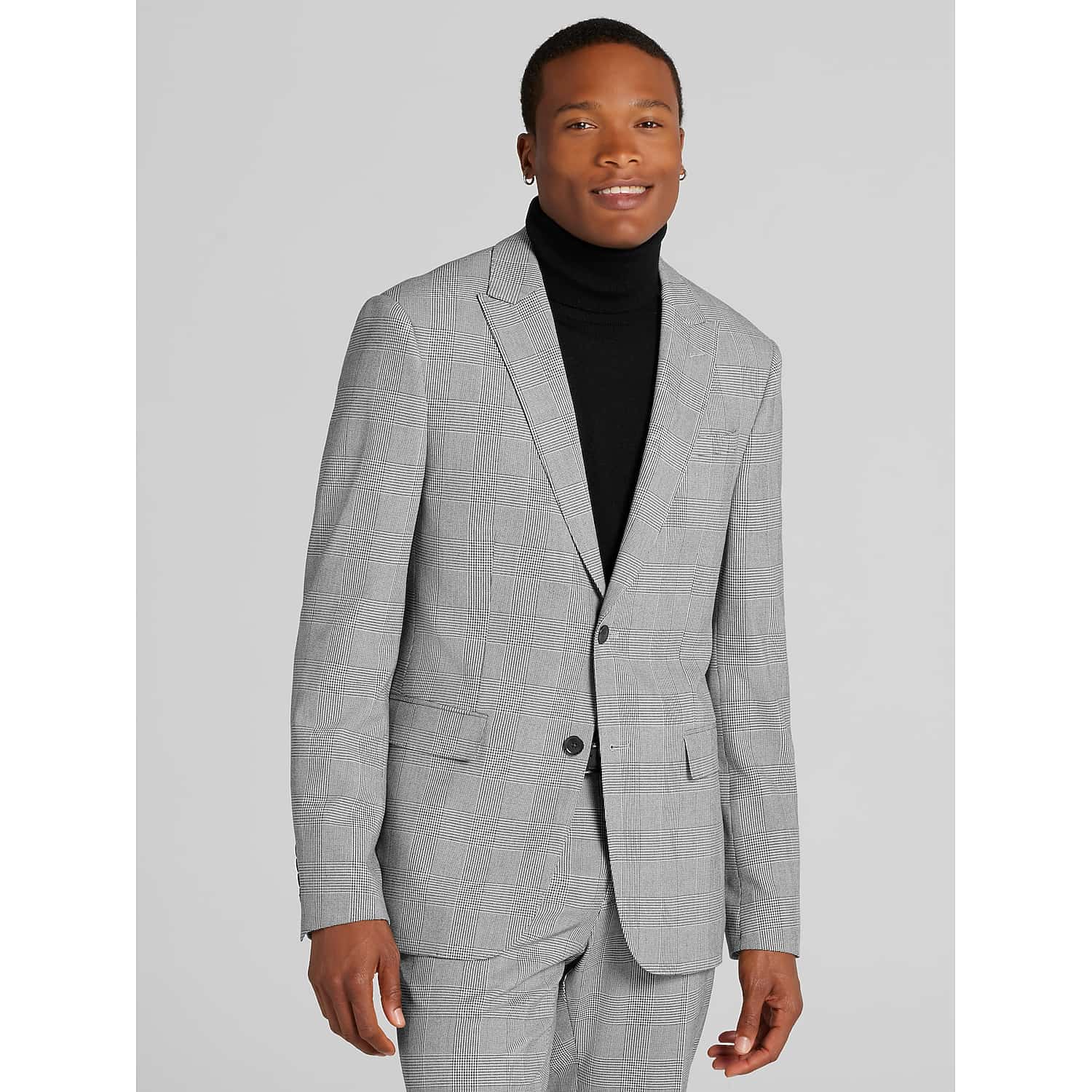
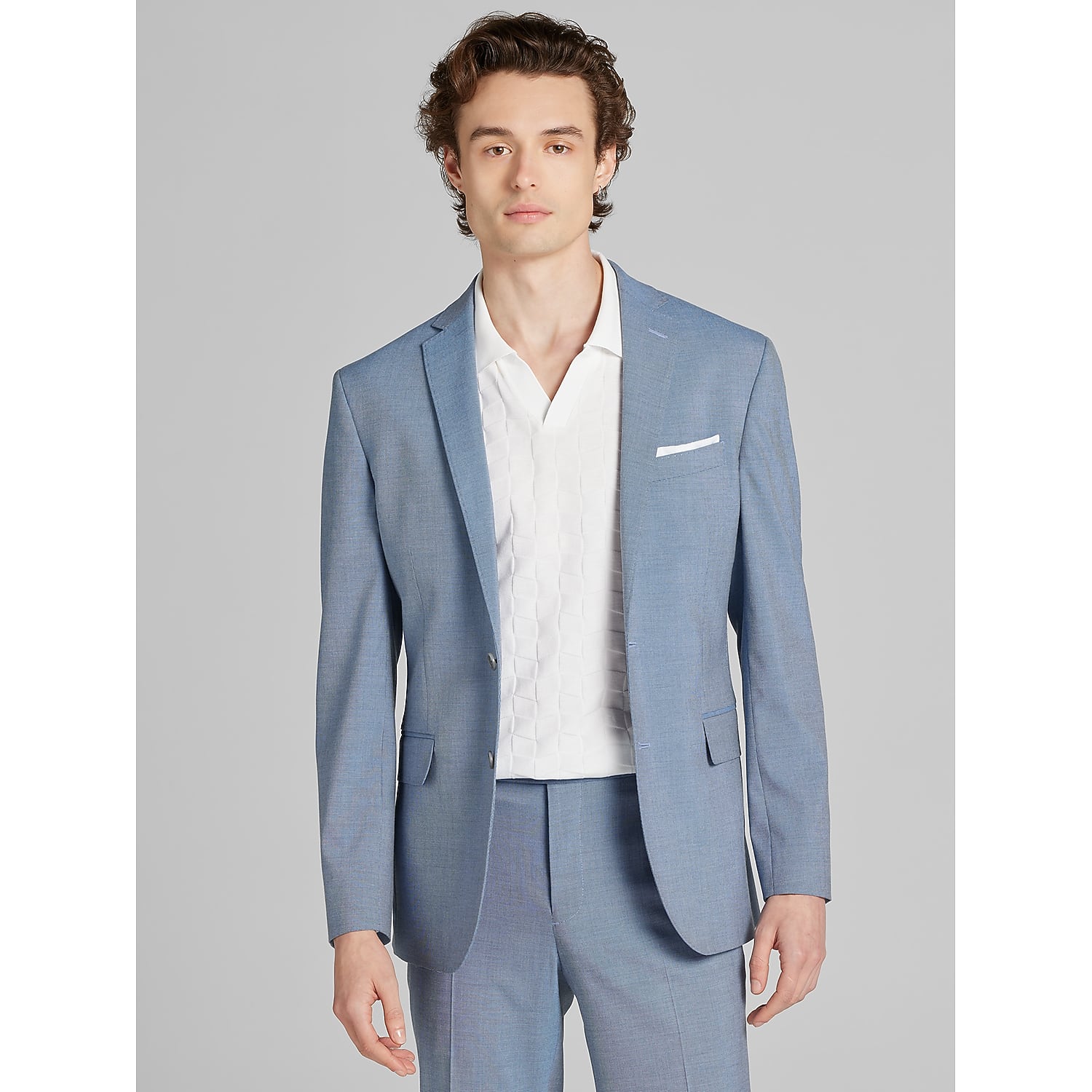
A tailored suit is adjusted to your unique measurements. It follows your body without hanging loose. You’ll see it in the clean lines, flat shoulders, and a jacket that closes smoothly across the chest. Excess fabric doesn’t bunch or pull.
“Tailored” can mean a few different things. A made-to-measure suit cut to your specific measurements from an existing pattern is the most common meaning. A bespoke suit is a custom type of tailoring — built from scratch, including the pattern. But most suit tailoring involves buying a suit off the rack, then having a tailor adjust it for fit. All three styles are considered tailored because each suit was adjusted for you specifically.
What Is an Untailored Suit?
An untailored suit is one you pick off the rack, without any alterations. It’s made to fit based on a generalized size chart meant to fit as many people as possible at that size. It’s practical when you want to pick a suit quickly, but a size label covers a broad range of builds, so it rarely lines up perfectly with any one person.
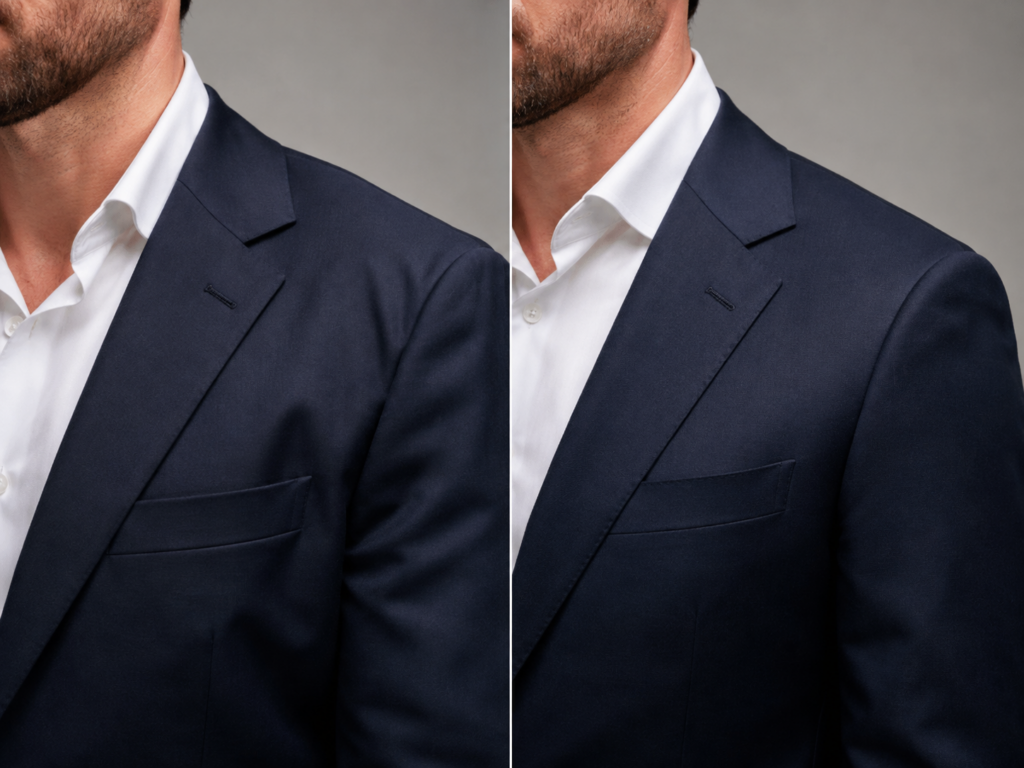
An untailored suit usually shows a few common fit issues. The sleeves or trouser hems run long, so the cuffs disappear and fabric gathers just above the shoe. The waist often looks boxy, with extra room through the middle. The collar and shoulders bunch because the jacket was cut for an average build. These signs aren’t indicative of poor quality but of sizing limits, which is why an off-the-rack suit looks good but doesn’t ever fit exactly.
How a Tailored Suit Fits Differently
Once you know how a suit should fit, you can tell a sharp suit from a poorly fitted one in seconds, whether it’s on the rack or on you.
Shoulders
The shoulder seam should end right where your shoulder does. When the seam passes the shoulder, the jacket appears too big. If it stops short, the fabric wrinkles. Place your hand over the shoulder seam. If the padding extends past your shoulder, the jacket is too large.
Narrowing or reshaping the shoulders tends to be one of the most difficult and expensive alterations, so check them first.
Chest and Waist
Button the jacket and look in the mirror to see how it sits across the chest. It should close smoothly, with no pulling and no creases forming around the button. You should be able to slide a flat hand under the lapel comfortably. If it pulls, the jacket is too small.
A tailor can adjust the chest by about half an inch in either direction. Like the shoulders, the chest should fit well before any alterations.
Below the button, a tailored jacket tapers in slightly at the waist, providing shape. An untailored jacket falls straight from the chest to the hem, which often appears boxy.
Sleeves and Jacket Length
Your jacket sleeve should end above the wrist bone, revealing approximately half an inch of shirt cuff underneath. If the sleeve falls over your hand or rides up the forearm, it needs adjusting. For the jacket length, let your arms hang naturally. The hem should cover your seat and fall around the middle of your hand.
Trousers
Ideally, the trouser waist should sit securely on its own without the need for a belt. At the shoe, aim for a slight break — a single fold where the hem rests on the top of the shoe. If the legs end up too wide or the hems too long, there’s plenty of room for adjustment. Hemming is one of the quickest and most affordable alterations, so trousers are rarely a reason to pass on a suit style you otherwise like.
What Tailoring Can (and Can’t) Fix
A skilled tailor can fix most fit problems. A few, however, are difficult or not worth the expense.
What a tailor can fix easily:
- Taking in the waist: Bringing the side seams in slightly so the jacket follows the torso cleanly.
- Shortening sleeves and hems: Setting the jacket sleeves and trouser lengths to match your limb lengths.
- Tapering the trousers: Slimming wide legs from the knee down to create a clean line.
- Slimming the jacket body: Trimming an overly boxy torso to fit closer to your frame.
What is harder or not worth the cost:
- Shoulders: Narrowing or completely reshaping the shoulders is one of the toughest and most expensive alterations. It’s essentially taking the jacket apart and rebuilding it.
- A chest that’s too tight: A tailor can adjust the chest approximately half an inch in either direction, so if it pulls too tightly across the chest, it can’t always be saved.
- Trousers or a seat sized too small: Your trousers only have so much fabric inside the seams to let out, so a pair that’s a few sizes too small will always be too small.
- Adding length to sleeves or hems: A tailor can only let a hem down so long as the extra fabric inside allows, which generally isn’t by much.
When selecting a suit off the rack, the best option is to choose one where the shoulders and chest already fit well, since those tend to be the toughest to alter. Let a tailor handle anything else.
Which Should You Choose?
Picking between tailored versus untailored depends less on price and more on how often you wear the suit and what you need one for.
An off-the-rack suit with minor alterations is often the right choice if:
- You wear a suit occasionally: For the odd wedding or job interview, a good off-the-rack suit with slight tailoring will suffice.
- You’re on a budget: A suit off the rack with a small handful of alterations costs less than a made-to-measure suit.
- You need one fast: You can choose an off-the-rack suit and have common alterations completed sooner than ordering a made-to-measure suit.
Alternatively, a tailored suit makes sense if:
- You wear suits regularly: If a suit is part of your everyday job or you attend events frequently, a dependable fit is worth the investment.
- You’re hard to fit off the rack: If you have long arms or an athletic build that the size chart doesn’t account for, tailoring solves the problem.
- You want something stores don’t carry: A specific fabric or cut that you can’t find on the rack is where made-to-measure and bespoke come into play.
For most, a well-chosen off-the-rack suit with a few minor adjustments works. It gives you a polished fit without the cost or wait of a fully custom suit.
Get the Right Fit at Men’s Wearhouse
You don’t have to figure out tailored versus untailored suits alone. At Men’s Wearhouse, a trained associate can check how a suit fits through the shoulders and chest and help you find the right size. Once you find a suit you like, in-store tailors can handle the remaining adjustments. Men’s Wearhouse helps you find a suit that fits right off the rack and can tailor it when needed, so you always look sharp and feel sure.
Shop Related Products