Think of a classic suit, and you probably picture a fitted jacket, crisp shirt, and matching trousers. You might think that familiar combination has always been around, but suits were invented as part of a long fashion journey.
Over the centuries, the suit evolved alongside shifting social rules, advances in tailoring, and the changing ways people lived and worked. Let’s take a closer look at the history of the suit and how it transformed from traditional dress into a true menswear staple.
When Were Suits Invented?
While the earliest suit dates back to 17th century England, we don’t know of any one person who invented the suit. That’s because men’s suiting changed little by little, with a series of refinements that spanned hundreds of years.
King Charles II and the Three-Piece Suit
A key transition in the evolution of the suit came in October 1666. King Charles II introduced a new style of dress at the English royal court. He moved the traditional courtier’s garb away from the heavily decorated clothing of the era (with ribbons and lace) toward a more subdued, streamlined silhouette. Men began wearing a long coat, waistcoat, and knee-length breeches together, and the three-piece suit was born.
Beau Brummell and the Inspiration for Modern Suits
Then came George Bryan “Beau” Brummell in the early 1800s. Brummell, an English socialite and defining figure of the Regency era, took a much different approach to men’s fashion. He favored understated clothing rather than the flashy fabrics worn at court, opting for finely-tailored coats, full-length trousers, and crisp white linen.
Brummell’s attention to detail, emphasis on fit, and carefully groomed appearance changed what men considered stylish. Even though he didn’t invent the modern suit, his influence on menswear is still felt today.
From Frock Coats to Lounge Suits
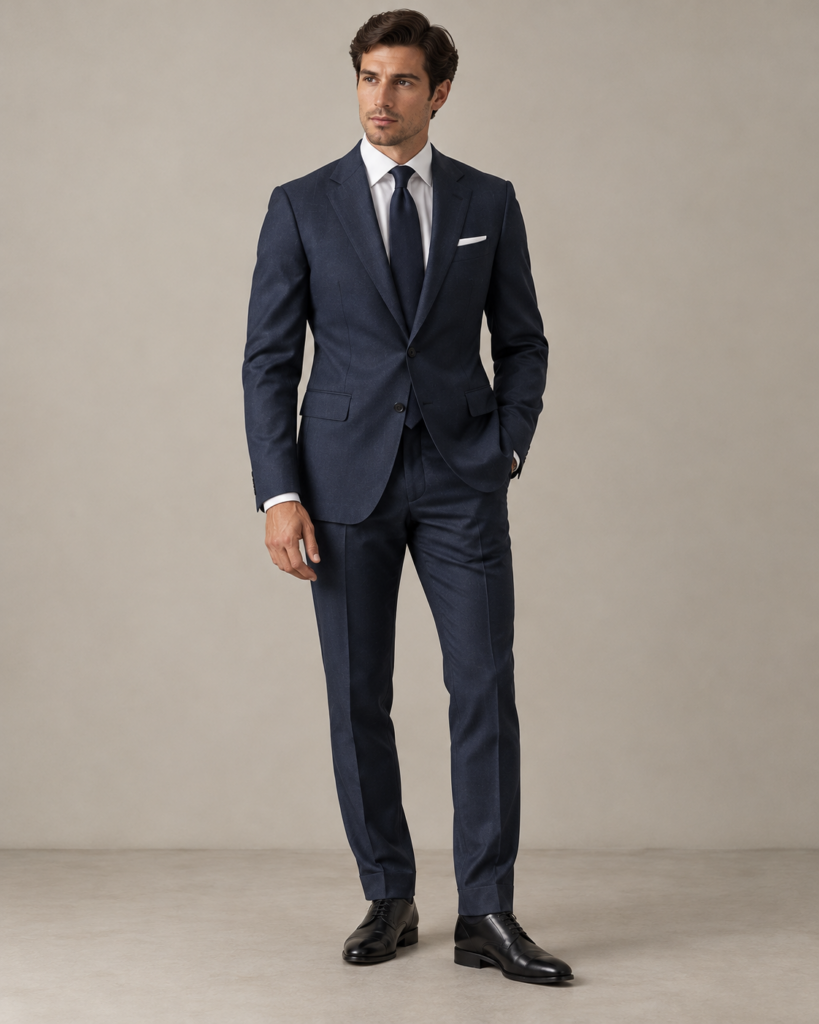
In the 19th century, structured coats gradually gave way to more practical styles. The lounge suit played a big part in that shift, as it moved from casual country wear to a mainstay of public and professional dress.
The frock coat was long and fitted through the body, usually reaching just below the knees and worn over a waistcoat and shirt. It remained a staple through much of the 1800s for daytime wear and professional or formal social occasions.
The morning coat has a cutaway front and long back, creating a signature curved shape. Men often wore a morning coat with a waistcoat and trousers for formal daytime outings.
The lounge suit came on the scene in the 1850s and 1860s as a casual alternative to the rigid dress code of the era. Its shorter jacket and matching trousers were appropriate for country outings and leisure. But by the 1870s, men could acceptably wear the lounge suit for business and travel. This was when the first suit and tie came out, as the necktie replaced Victorian cravats.
The lounge suit’s popularity reflected broader changes in how men dressed. King Edward VII, then the Prince of Wales, made relaxed tailoring fashionable through his public appearances and personal style. His preference for comfort and casual elegance helped the lounge suit find its way into professional settings and regular wear (taking over from where morning coats left off).
When Did Suits Become Everyday Menswear?
For a long time, putting on a suit meant you were dressing up for a major occasion or trying to show off your social status. That changed by the late 1800s.
First, factories got much better at manufacturing ready-to-wear clothing in standard sizes, making suits more affordable for the average person.
Second, cities boomed and office jobs began replacing manual labor. Men needed to look professional every day, but nobody wanted to sweat through their commute in a stiff, old-fashioned frock. The lounge suit was the perfect middle ground for this new class.
Before too long, the suit became a symbol of a reliable, hard-working man, and wearing a well-made suit signaled you were serious about your job. By the early 1900s, the transformation was complete: Men wore suits for everyday life and casual social gatherings, saving ultra-formal coats for high-society events.
How the Suit Evolved Over Time
Over the years, changing fashions, cultural shifts, and new ideas about work and style have all impacted men’s suiting. Here’s a breakdown of how suit styles have varied from one decade to the next.
1920s to 1930s
In the early 20th century, the “drape suit” reigned supreme. It featured structured shoulders, narrow waists, and higher-rise trousers that created a timeless silhouette. Double-breasted suits also gained popularity around this time, giving men another option when dressing for the boardroom or upscale events.
1940s to 1960s
After World War II, fabric restrictions pushed suits toward simpler designs, which is why single-breasted jackets became more common. Fuller cuts returned in the late 40s and early 50s, but by the 60s, youth culture pushed menswear in a new direction with shorter jackets and slimmer styles.
1970s to 1990s
The 70s went big with wide lapels, bold colors, and flared trousers. By the 80s, structured “power suits” were everywhere on the business scene. Most men in the 90s opted for relaxed fits and a more casual approach to tailoring.
2000s to Present Day
Slim-fit suits were front and center in the 2000s and 2010s. Men today have a lot more choice than they did in previous decades. Instead of following a trend or wearing the same shape, you can choose from a variety of fits and styles.
Find the Right Suit at Men’s Wearhouse
The modern man knows that the right fit matters as much if not more than the suit itself. With proper tailoring, the jacket sits neatly on your shoulders, the trousers fit comfortably at the waist, and the whole outfit has a more sophisticated appearance. Whether you prefer a traditional silhouette or something fitted, a few thoughtful adjustments can help the suit look and feel like it was made for you. That’s why our in-store tailors are ready to help you whenever you want to look your best.
At Men’s Wearhouse, you can find classic, modern, and slim-fit suits for the office, weddings, formal events, and other life milestones that call for a polished look.
Shop Related Products