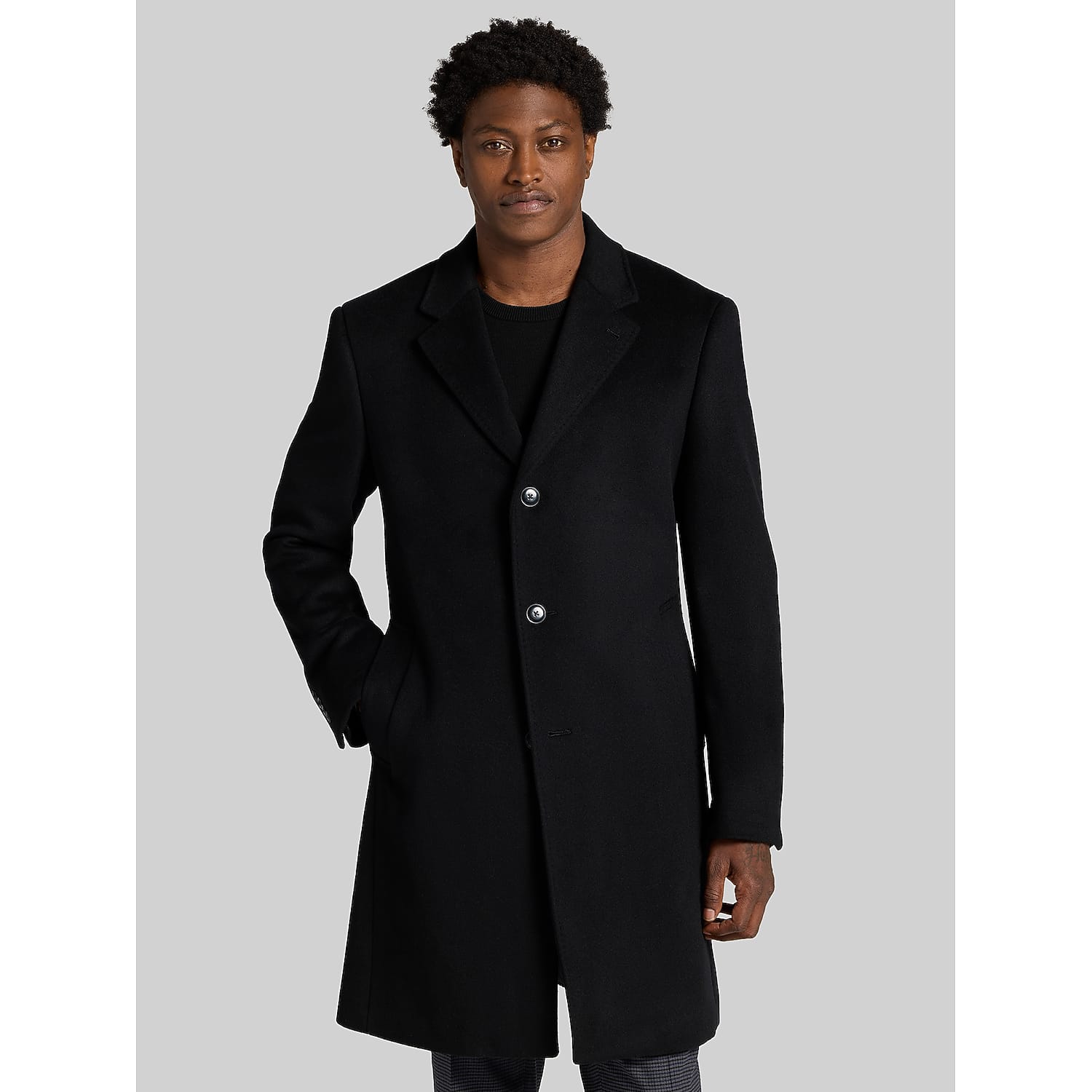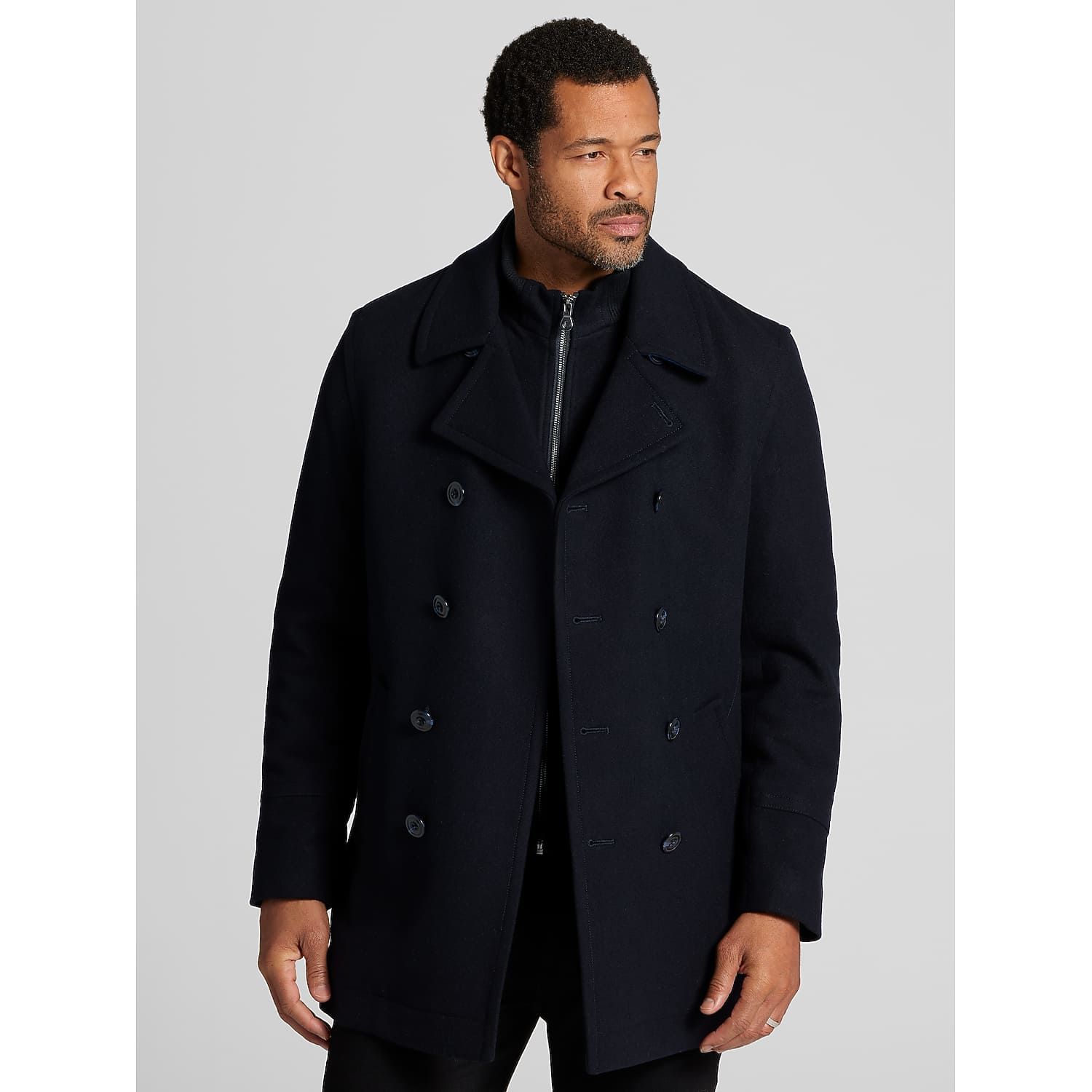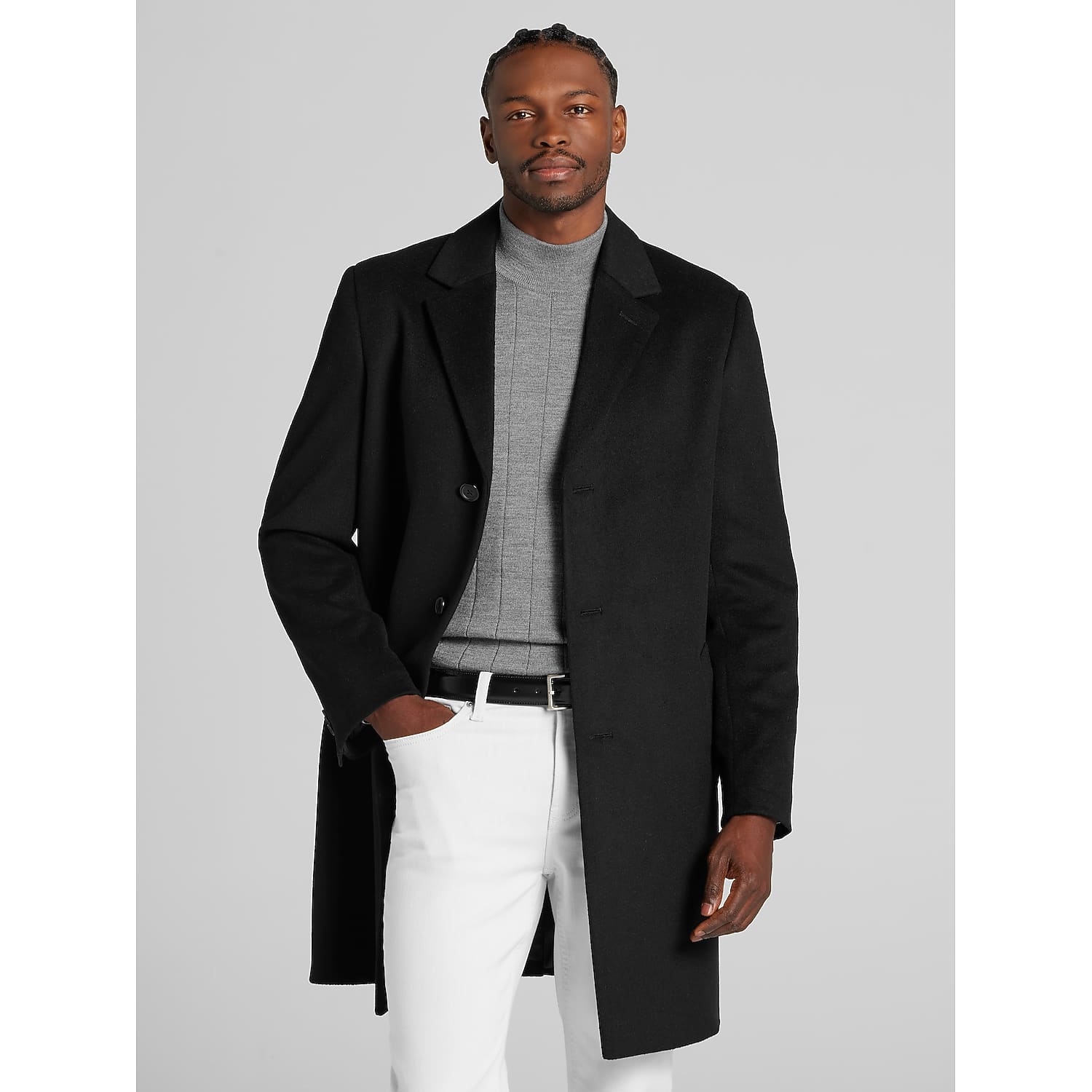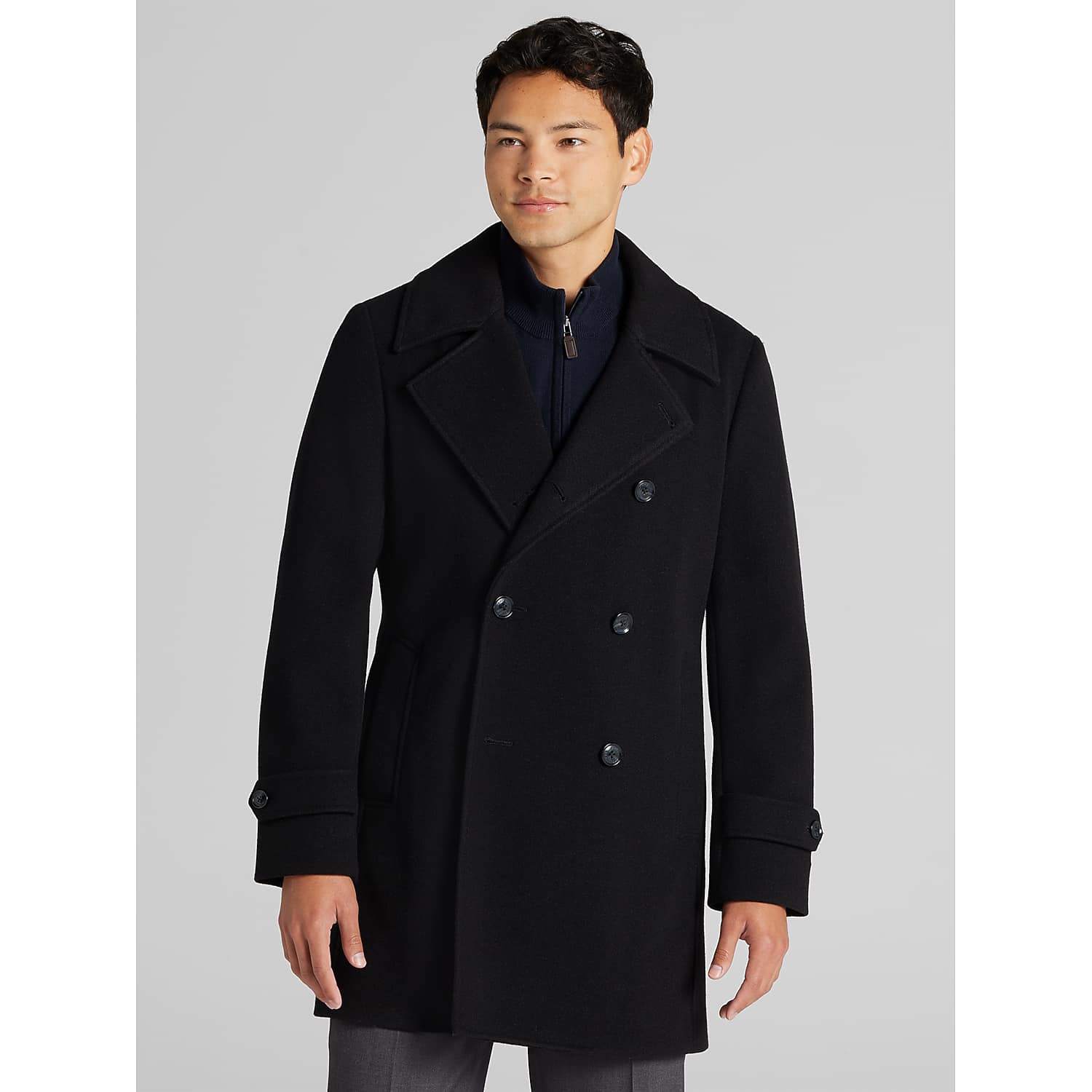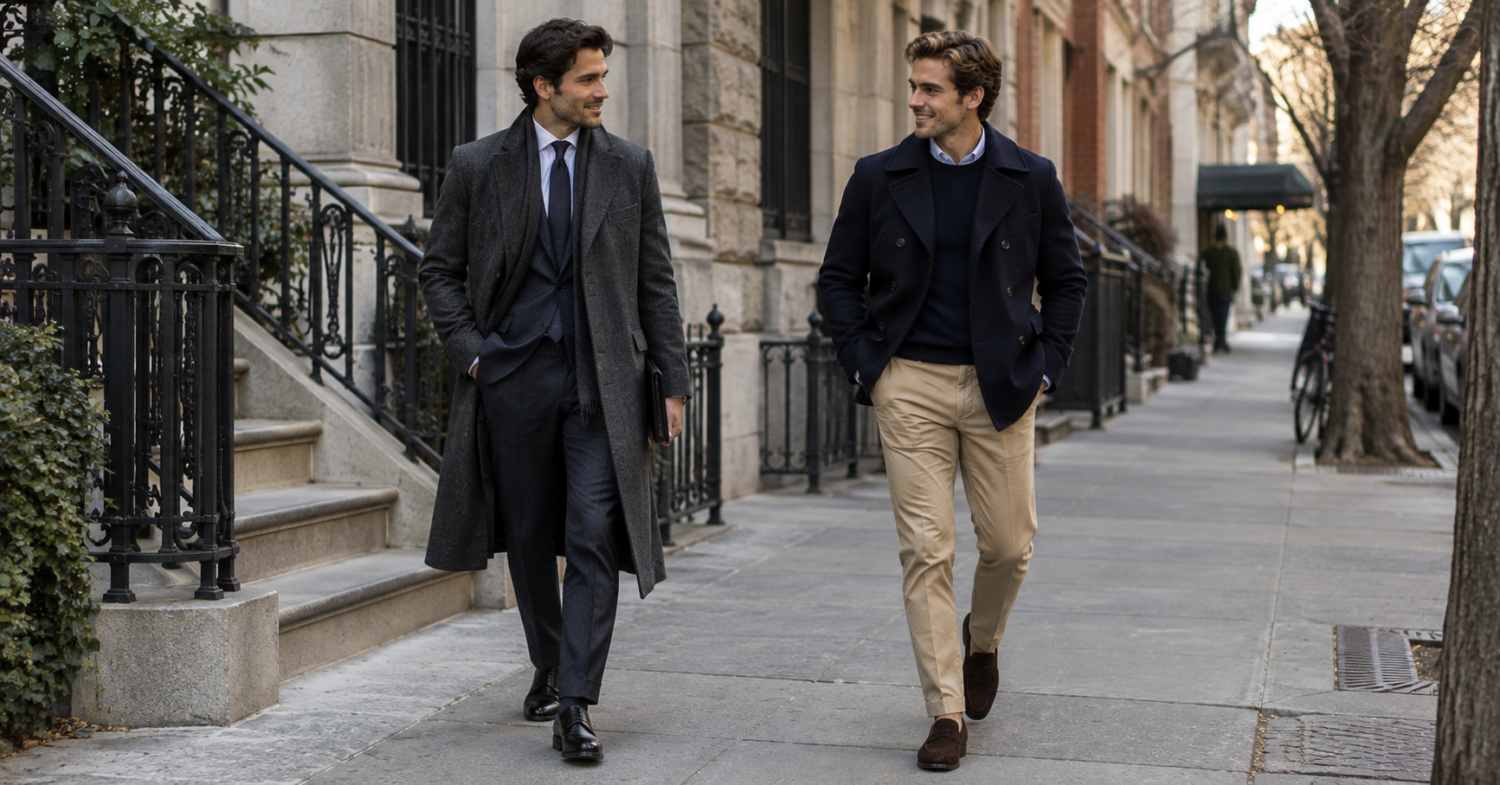

If you’re trying to decide between an overcoat versus peacoat, start with the basics — the way each coat looks and fits. An overcoat is typically longer and dressier, while a peacoat is shorter and leans more casual. From there, you can figure out what you can comfortably wear underneath and which coat makes more sense with your wardrobe and the occasion’s dress code.
In this guide, explore the difference between these popular outerwear choices and ways to work them into your regular rotation.
The Main Differences Between Overcoats and Peacoats
The biggest difference between an overcoat and peacoat is length. An overcoat is designed to cover the tailored clothing underneath, so it often reaches somewhere around the knee, but the exact length varies by style. A peacoat, on the other hand, is cut shorter, ending around the hip or upper thigh.
The shorter length of the peacoat makes it easier to wear with everyday clothing — it won’t feel out of place when driving, walking around downtown, or heading to dinner. Conversely, an overcoat’s length creates a long, clean silhouette. While it isn’t quite as relaxed and flexible, it complements formal, tailored outfits.
An overcoat is designed to accommodate a suit jacket underneath, so you’ll usually notice more room around the chest and shoulders when trying one on. A peacoat is usually slimmer, making it the ideal choice over a casual shirt or sweater that doesn’t crease easily.
Both coats fasten differently. Traditional peacoats are always double-breasted, with two columns of buttons. Overcoats can be single or double-breasted, and some use a fly front to conceal the buttons altogether.
Overcoat vs. Peacoat: Which Is More Formal?
You’ll find an overcoat is the more formal choice between the two. Much of the distinction comes down to length. A longer coat helps to create a clean vertical line that works naturally alongside the silhouette of a tailored suit. The two layers look like they belong together, and the overcoat’s protection safeguards delicate suit and tuxedo fabrics.
But that doesn’t mean a peacoat is strictly casual. A dark wool peacoat can work with business-casual outfits, dinner attire, and a relaxed office wardrobe.
The best pick depends on how dressed up the rest of your outfit is. A peacoat can work for a casual sweater outfit or a more relaxed suit look. But if you’re wearing a sleek tuxedo or dark formal suit, opt for an elegant overcoat.
Can You Wear a Peacoat With a Suit?
You can wear a peacoat with a suit with a few caveats. First, check the coat’s length. Your average suit jacket extends farther down the body than a peacoat. If the suit jacket hangs below, you’ll end up with a strip of suit underneath the outer coat. It’s not a deal-breaker, but it does interrupt the consistent silhouette you generally want from a suit.
Next, consider the shoulders and chest. A peacoat is usually cut close to the body. Add a structured suit jacket underneath, and you may feel tightness across your core that becomes uncomfortable the longer you wear the outfit.
If you want to wear a peacoat with tailoring, try it with something more relaxed, like an unstructured sport coat. Test this out at the store, trying on the different jacket styles beneath an outer layer to see what feels most comfortable. Button the peacoat, move your arms, and sit down a few times. If the shoulders pull taut or the jacket extends noticeably past the coat, try a different size or style.
How To Wear an Overcoat
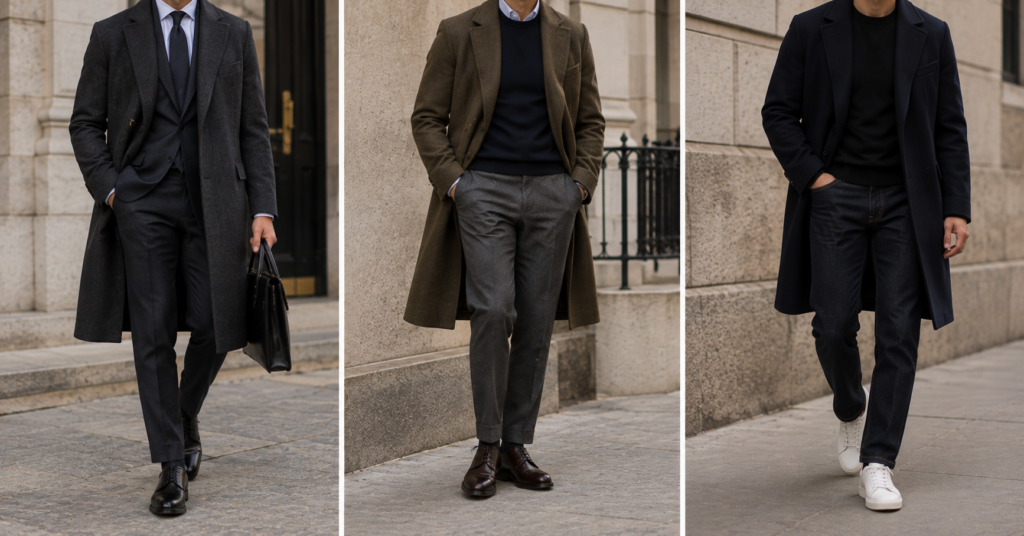
With just one overcoat in your wardrobe, you can match the dress code in the office, a nice evening meal, or a casual weekend outing. Here are a few ideas.
Overcoat With a Suit
Start with a light blue dress shirt, and add a navy, black, or charcoal suit. If the occasion calls for one, wear a tie. Opt for an overcoat in a dark shade similar to your suit to bring the look together.
Your overcoat should cover the suit jacket, including the hem and sleeves. When you’re picking out an overcoat, try it on over your suit jacket, not a T-shirt or polo.
An overcoat with a suit looks best for business settings, cold-weather weddings, and commuting in tailored clothing.
Overcoat With Business Casual
Swap the suit jacket for a dress shirt and fine-gauge sweater, then add tailored trousers and loafers. Even though you’re wearing the same overcoat, the outfit feels considerably more relaxed.
Keep in mind you don’t want a chunky winter sweater. Look for a thin sweater that allows the overcoat to retain its shape without adding bulk.
This look is ideal for professional events that lean comfortable yet dressy. Try it for office days and networking events.
Overcoat With Jeans
An overcoat can work with jeans. A navy or charcoal overcoat with a crew-neck sweater, dark denim jeans, and minimalist leather shoes looks stylish and deliberate.
It’s the same logic behind wearing a blazer with jeans. The jeans soften the formality of the coat, letting you add a touch of sophistication to your look without feeling overdressed.
This elegant yet laid-back look is perfect for casual dinners and weekend outings.
How To Wear a Peacoat
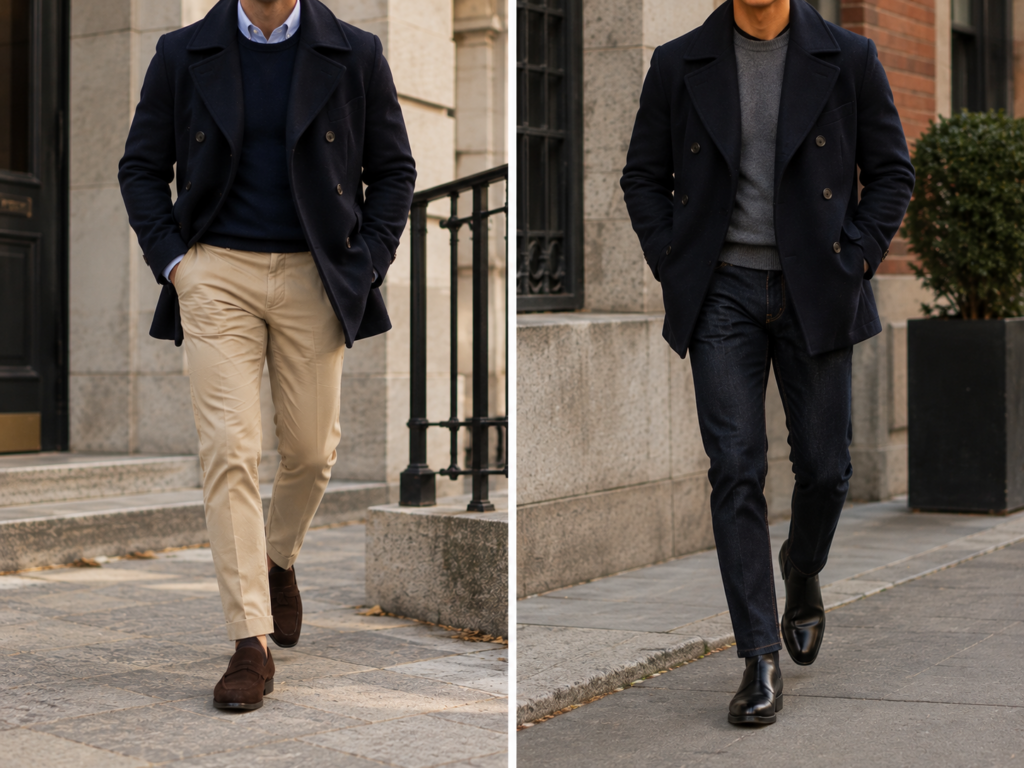
A peacoat naturally works with casual and smart-casual clothing. Because the peacoat already has some appealing structure, the rest of the outfit can stay simple. This layer is an easy way to maintain an aesthetic that balances refined and relaxed.
Peacoat With Chinos
Pair a dark peacoat with an Oxford shirt or sweater, then add tan or gray chinos. Finish with leather boots or loafers. The chinos offer a sophisticated middle ground: Jeans skew casual, and trousers feel dressier.
This outfit works well for business-casual workdays or weekend events.
Peacoat With Jeans
A peacoat with jeans is an easy everyday combination. For a typical afternoon, wear a navy or charcoal peacoat with a crewneck or turtleneck sweater. Complete the look off with dark jeans and Chelsea boots.
This combination is ideal for daily errands and friendly outings, but the denim can quickly make the outfit feel too casual if they’re distressed or the fit is loose. A slim or straight-leg pair creates a more streamlined look.
Peacoat With Tailored Trousers
Like with an overcoat, a peacoat isn’t locked into its typical niche. You can dress up a peacoat by pairing a dark-colored coat with a fine-gauge sweater or dress shirt, tailored trousers, and leather boots.
The trousers add a sharp crease that’s commonly associated with more formal clothing, while the short peacoat keeps the entire look more laid-back. It works when a tailored suit feels like too much, but jeans won’t quite do the job.
Which Should You Buy: An Overcoat or Peacoat?
If you’re choosing between an overcoat and peacoat, look at what you already own and love to wear to help you decide.
Choose an overcoat if:
- You wear tailored suits regularly: An overcoat is designed to fit over a suit jacket comfortably.
- You need business or formal outerwear: This coat stays warm while working naturally with tailored clothing.
- You want a single coat for work and outings: An overcoat works for professional outfits and smart casual attire without looking out of place.
Choose a peacoat if:
- You dress casual or business casual: The short silhouette of a peacoat fits casual outfits more naturally.
- You often wear jeans and chinos: Both match well with a peacoat.
- You want simple everyday layering: A shirt or sweater is often enough for underneath a peacoat, making it easier to properly layer your look.
The Best Winter Coat Works With What You Already Wear
When picking a winter coat, look beyond the piece itself. Solid outerwear should fit your personal style and existing wardrobe. An overcoat is the natural pick for tailored suits, while a peacoat offers casual structure to sweaters and jeans.
At Men’s Wearhouse, you can compare overcoats and peacoats and get help finding a fit that works. Browse our selection of outerwear, and ask our expert stylists what suits you. We’ll help you find a coat you can pair with your favorite outfits, whether you’re attending an annual party or commuting for another day at the office.
Visit your local Men’s Wearhouse store or shop online to discover your next cold-weather layer.
FAQ
What’s a Peacoat vs. Overcoat vs. Trench Coat?
A peacoat is a short, double-breasted coat that leans smart casual. Overcoats are longer and more formal, fitting comfortably over a tailored suit. Trench coats are about as long but usually water resistant and intended for rainy weather.
Don’t confuse a trench coat for a greatcoat — while they have a similar look, greatcoats are thicker, warmer, and made for harsh weather conditions.
What’s the Difference Between a Men’s Overcoat and Topcoat?
An overcoat is long and best for winter months. A topcoat, on the other hand, is thinner, ends before the knee, and is typically intended for shoulder seasons. While this short style is also found in peacoats, topcoats are often more lightweight and airy.
Shop Related Products