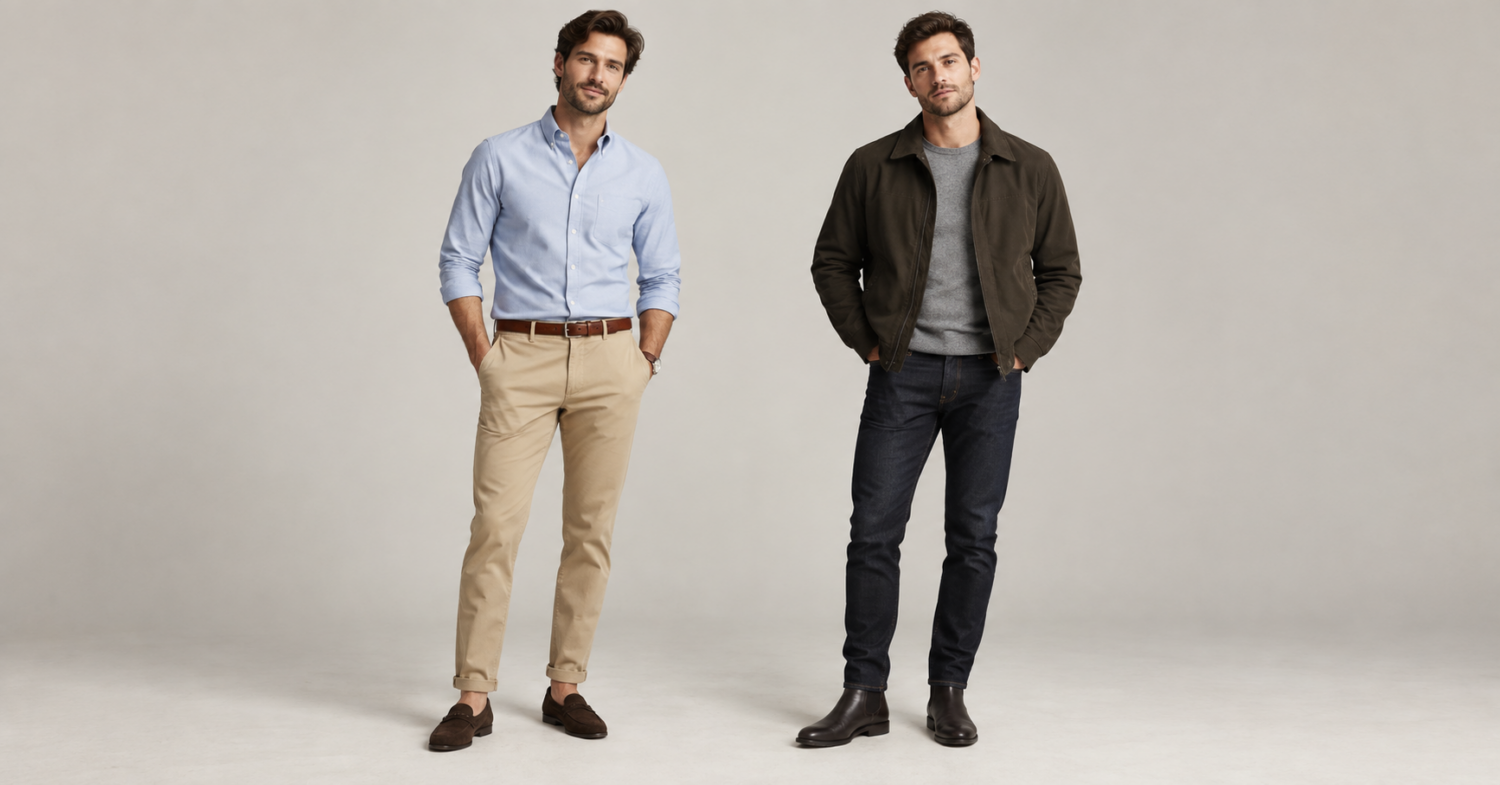

Deciding between chinos versus jeans for an event can feel like a toss-up. Neither is automatically better, they just fit different settings, weather, and the overall outfit you have in mind.
Chinos move comfortably between casual and dressed-up affairs. Jeans bring a sturdier, more relaxed look that works for laid-back events. Once you know how their fabrics, construction, and formality differ, choosing the right pair of pants becomes much easier.
Read on for a clear breakdown of chinos versus jeans and easy outfit ideas.
Chinos vs. Jeans: The Main Difference
The clearest distinction between chinos and jeans is their fabrics. Traditionally, chinos are made of cotton twill, a smooth diagonal weave that feels lighter and allows for structure and comfort. Jeans use denim fabric, a more durable, cotton twill textile. The dense weave makes jeans feel heavier, although many modern denims include some stretch fiber for easier movement.
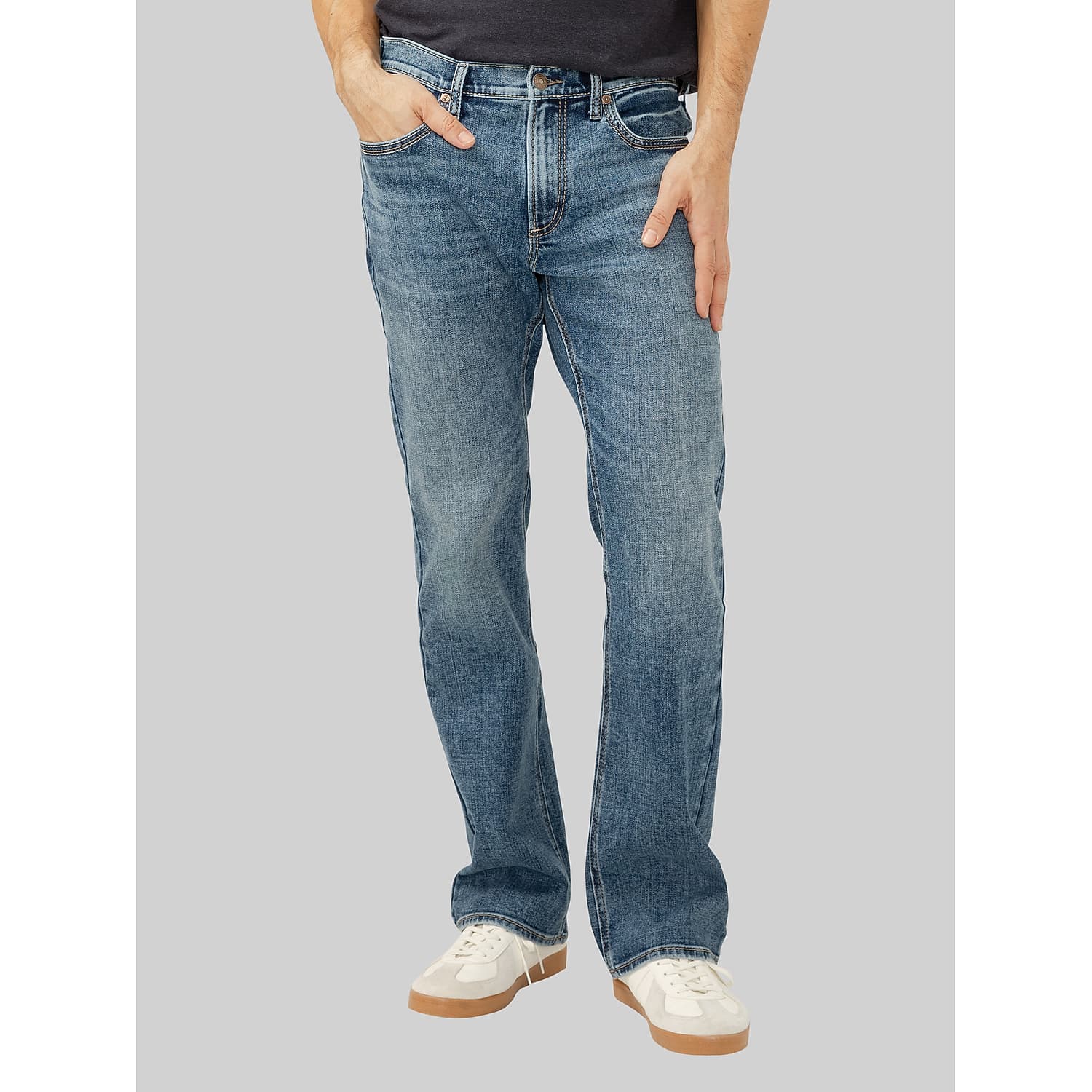
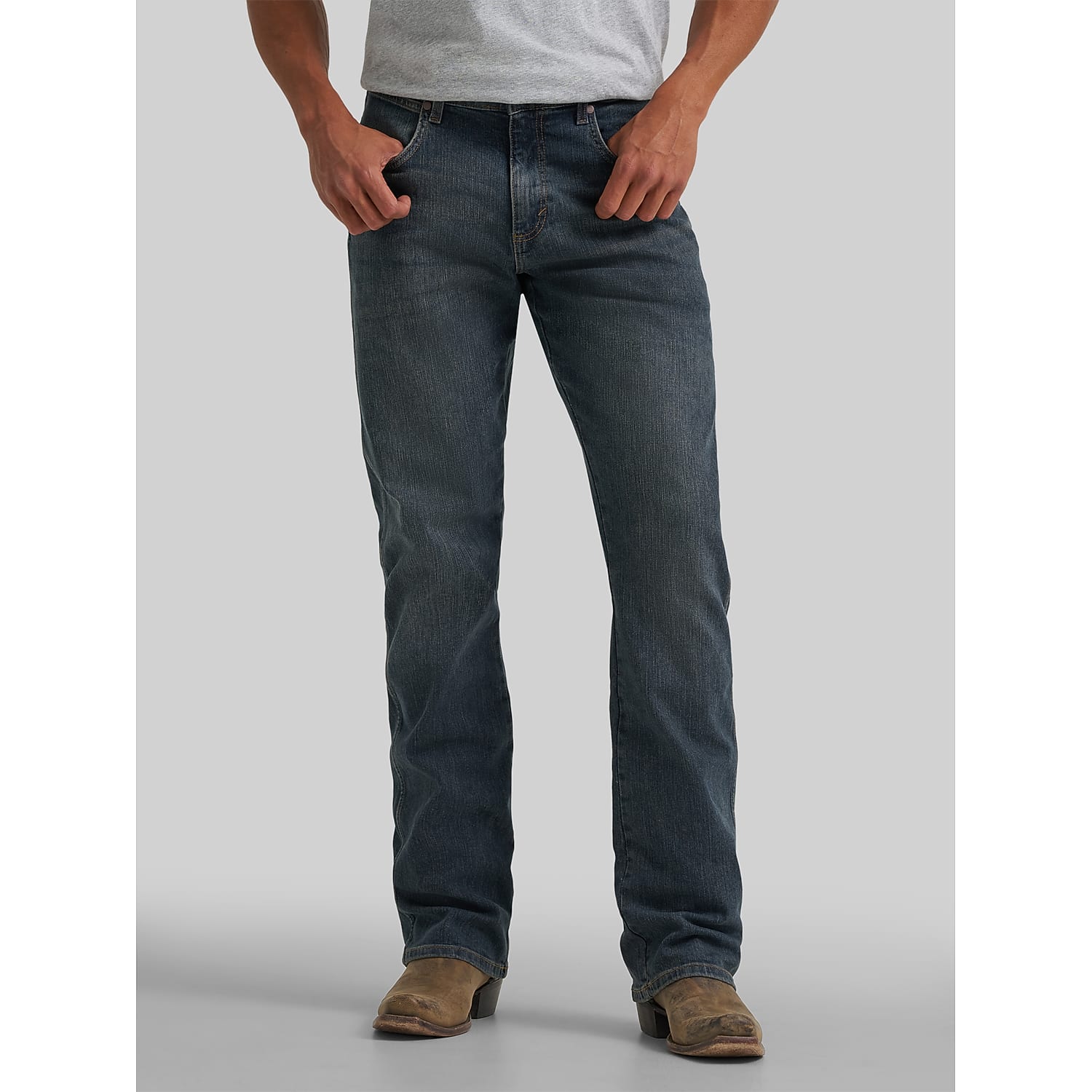
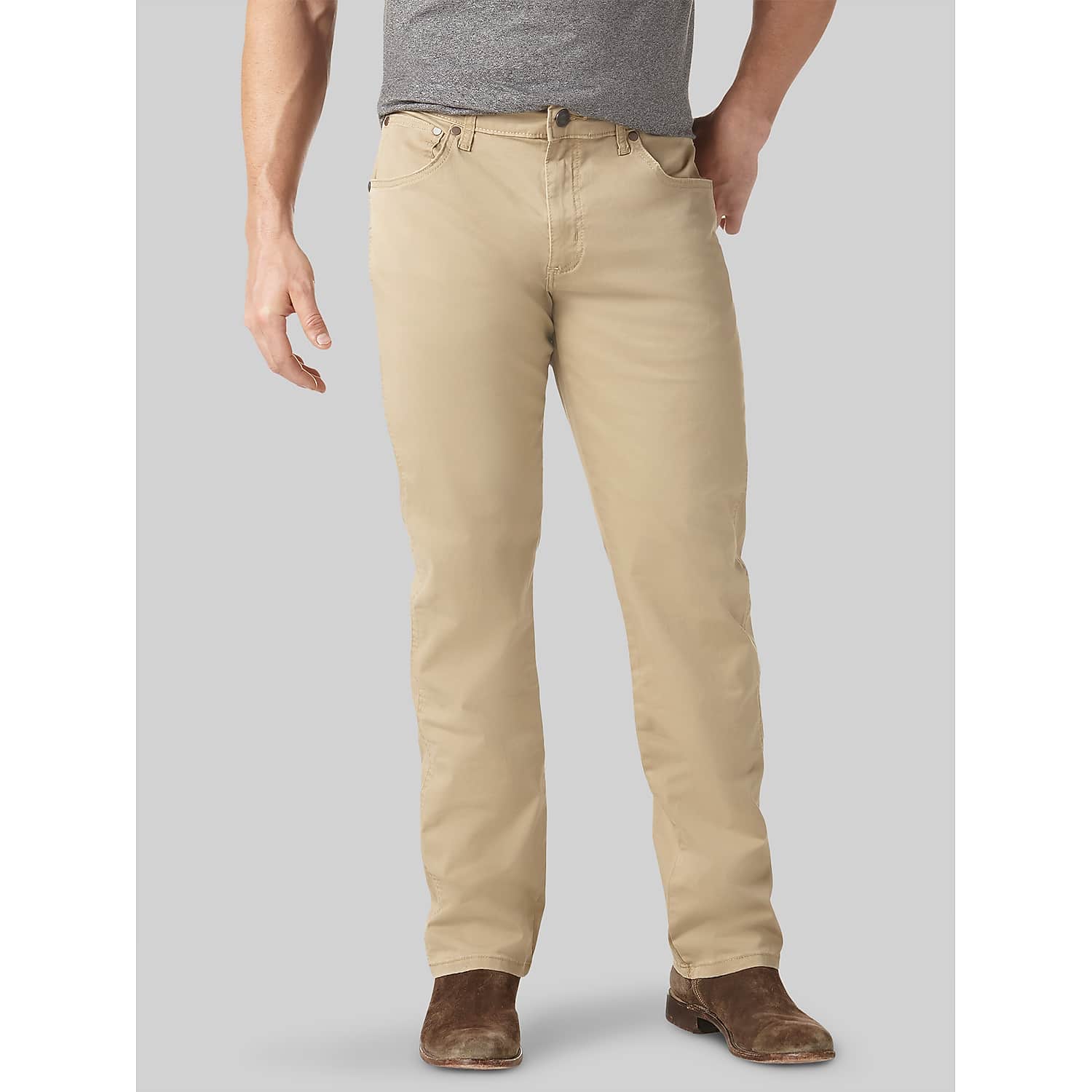
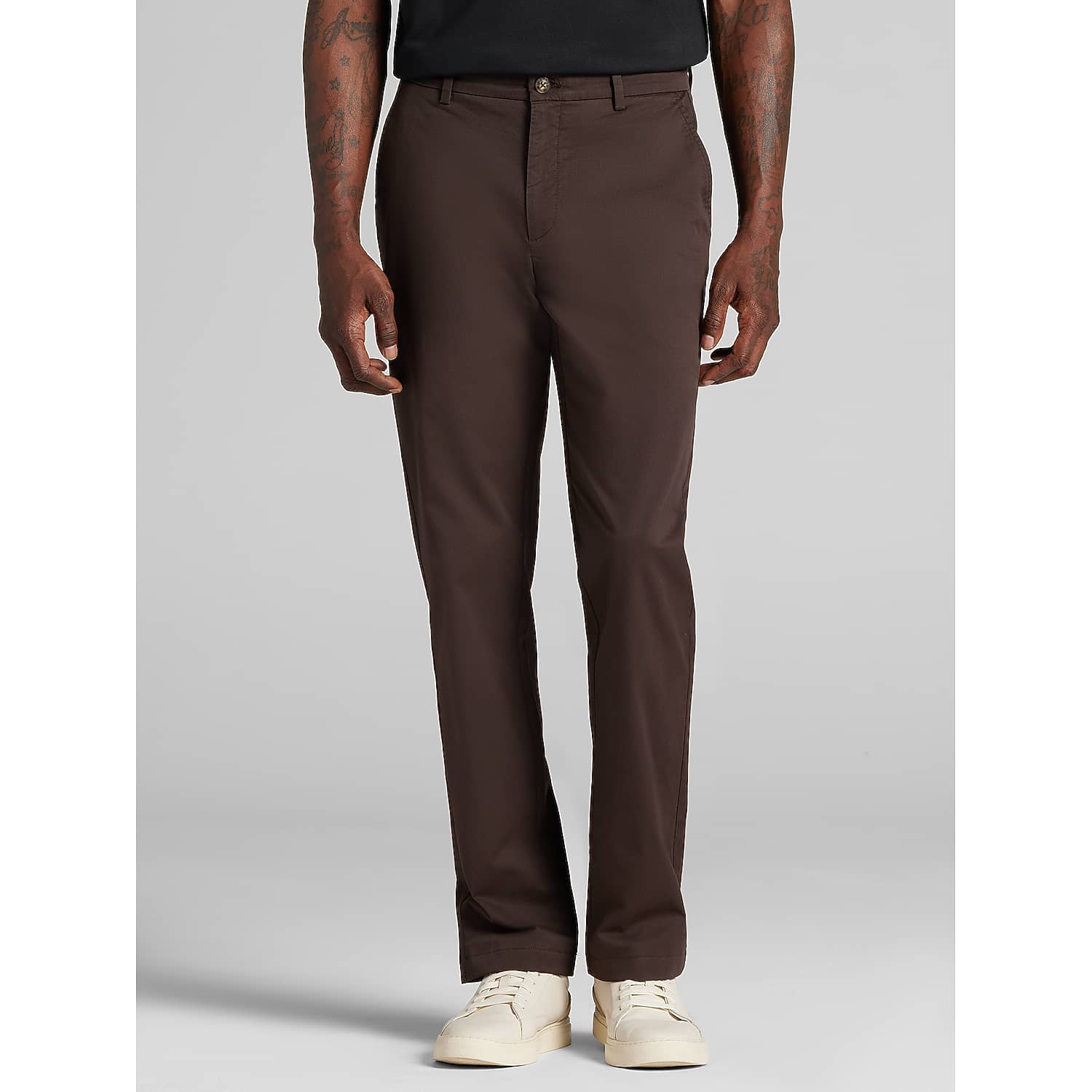
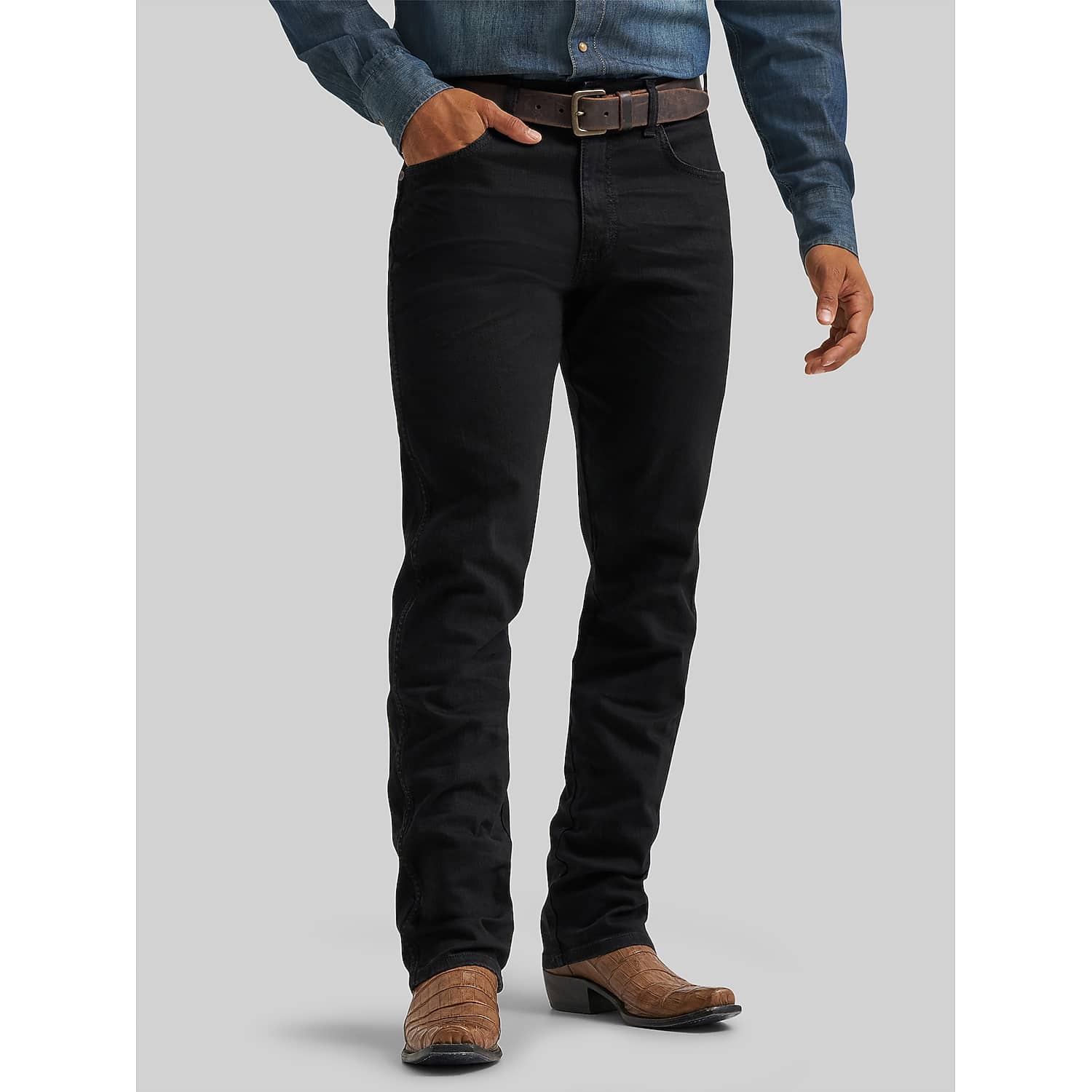
Chinos commonly have angled side pockets and welt pockets at the back for a four pocket design. They also feature discreet stitching, a smooth front, and no metal studs. Most jeans for men have a five-pocket design with curved front pockets, a small coin pocket, visible seams, and rivets at the stress points.
Which Looks More Dressy?
Chinos are usually dressier. Their smooth, flat fabric, restrained stitching, and trouser-like pockets create a cleaner line from the waist to the shoe. Neutral colors work well with other, less casual separates like button-down shirts, sweaters, loafers, and blazers.
Even the most expensive jeans have a more casual and relaxed vibe. They were first created as durable workwear, and most people still associate them with the outdoors. Many pairs of jeans have stylistic elements like fading, contrast stitching, whiskering, distressing, and metal hardware that make them look even more casual. Medium and light washes can work for most weekend outfits, but ripped or heavily faded denim belongs in especially laid-back settings.
Dark-wash jeans are the exception that proves how much finish matters. A clean indigo, black, or charcoal pair of jeans with minimal fading can look sharp enough for dinner, a casual date, and even some offices.
Reach for chinos when the invitation, venue, or setting suggests a step above casual dress code. Choose jeans when comfort and an easygoing tone matter more. If you are worried about being underdressed, chinos are always the safer choice.
Which Works for Business Casual?
Generally, chinos are business casual because they sit between dress pants and jeans. This makes them a dependable option for an office that doesn’t require suits. They look professional without feeling rigid and pair well with many wardrobe staples like polos, crewneck sweaters or quarter-zip pullovers.
For a simple but polished work outfit, pair navy, khaki, or gray chinos with a button-down shirt and leather loafers or Derbies. A polo and clean leather sneakers can work in a more relaxed workplace. It’s easy to add an unstructured blazer when you have a presentation, client lunch, or after-work event. Any of these combinations are acceptable business casual outfits for men.
As a rule, jeans aren’t business casual — but there are exceptions. Modern companies and casual offices may allow clean denim, while many conservative industries do not. If denim is allowed, choose a dark wash with no tears, fading, or frayed hems and pair it with a collared shirt or casual blazer and leather shoes. Avoid combining jeans with a graphic tee or distressed sneakers for the office. Wearing several casual garments at once can look out of place at work. Pay attention to style as well: Straight or gently tapered fits look more professional than baggy or skinny cuts.
Durability, Weather, and Comfort
Fabric differences determine how chinos and jeans hold up over time. Here’s a quick comparison of how they stack up side by side.
| Feature | Chinos | Jeans |
| Durability | Reliable for office and everyday use, but lighter colored fabric may show wear sooner — especially at the knees, pockets, and hems. | Handles friction, frequent wear, and rougher use well. |
| Best weather | Lightweight and breathable for warm weather. | Comfortable in fall and winter, although lightweight denim can work year-round. |
| Comfort | Soft, flexible, and less bulky; stretch blends add mobility. | Sturdier and more rigid (especially when new) but softens with wear. |
For a pair that can handle everyday wear and tear, reach for jeans. For summertime business casual events, chinos are the better choice. Each pair of pants is built for different jobs, which is exactly why most guys end up with both in their closet.
How To Style Each One
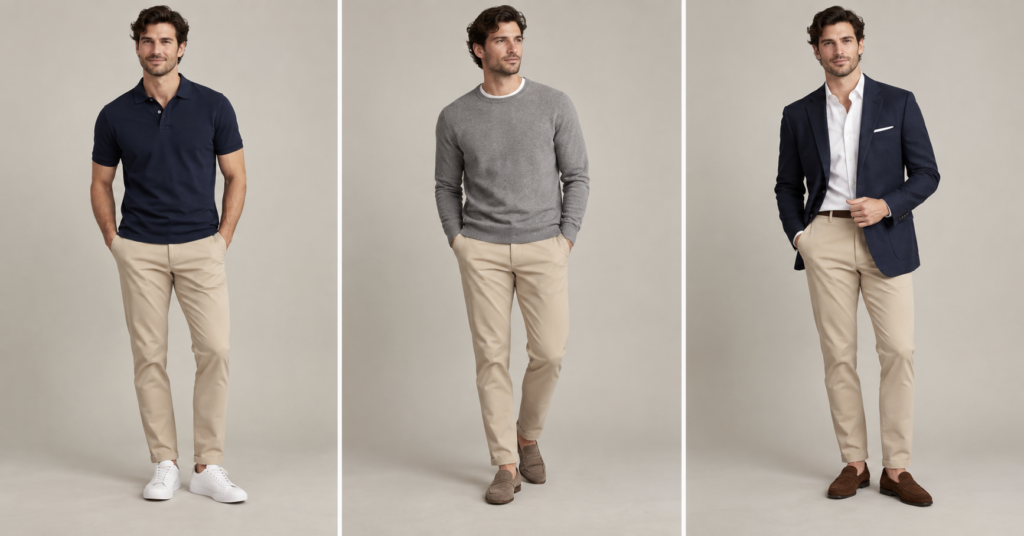
Use chinos to bridge casual and polished pieces, and grab jeans for laid-back looks.
Styling Chinos
Knowing how to style chinos starts with understanding how colors work together:
- Khaki goes with navy, white, burgundy, and forest green.
- Navy pairs well with light blue, gray, cream, and patterned shirts.
- Olive is a grounded neutral with a bit more personality
- Gray creates a clean base for black, white, and bolder colors.
Try these combinations when styling your outfit with chinos:
Casual: Khaki chinos, a navy polo, clean white sneakers, and a woven belt
Smart casual: Olive chinos, a fitted crewneck sweater, a collared shirt, and suede loafers
Semi-formal: Navy chinos, a white button-down, brown loafers, and an unstructured blazer
Cool weather: Gray chinos, a quarter-zip pullover, Chelsea boots, and a lightweight coat
Make sure your pants fit comfortably through the rear and thigh. The hem should meet the top of the shoe with little bunching. Rolling the cuff once or twice can be a nice preppy option for the country club or vineyard, but leave it unrolled for work.
Styling Jeans
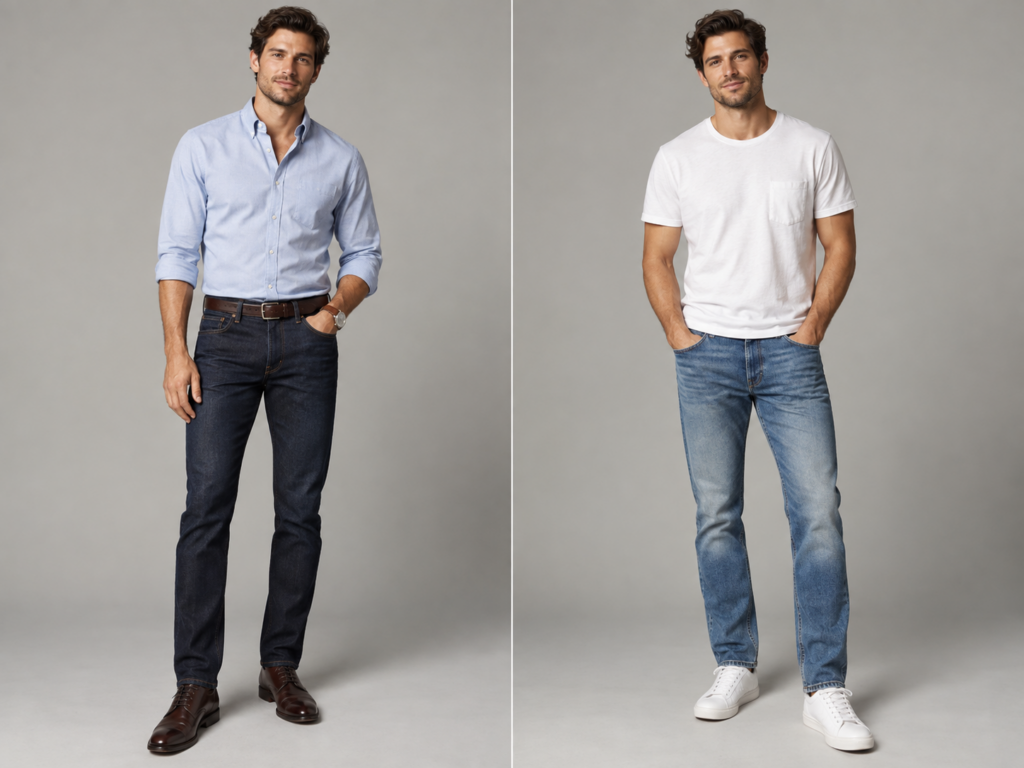
The key to knowing how to wear jeans is in the wash:
- Medium blue is the everyday standard and works with tees, polos, overshirts, and casual sweaters.
- Light wash feels relaxed and works best in warmer weather.
- Black, charcoal, and dark indigo create a sharper base for evenings and smart-casual settings.
Try these combination when styling your outfit with jeans:
Casual: Medium-wash jeans, a solid tee, sneakers, and an overshirt
Weekend: Light-wash jeans, a polo or henley, and suede boots
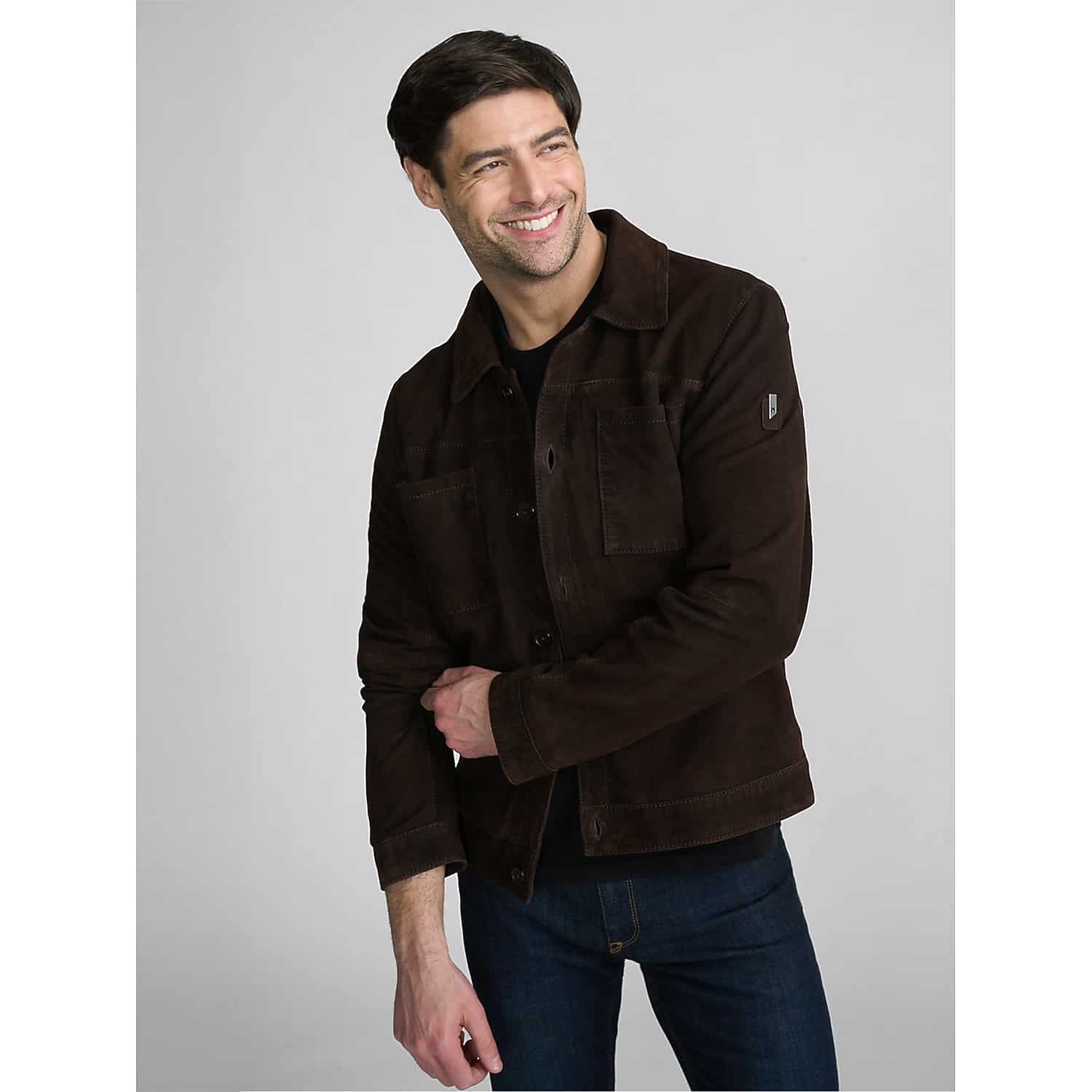
Dinner: Dark indigo jeans, a button-down shirt, leather shoes, and a casual jacket
Monochrome: Black jeans, a charcoal knit, black boots, and a textured black coat
When styling jeans, avoid stacking too many rugged details like distressed denim, heavy work boots, or a faded tee. A crisp shirt or shoe balances denim’s rugged texture and makes the outfit easier to wear in more settings.
The Right Pair Is the One That Fits You Right
Jeans and chinos work for different parts of your week, and the smartest wardrobe has room for both. Instead of trying to make one pair do everything, build a rotation — a couple of chinos for the office and dressier outings, and a couple of jeans for everything more relaxed.
Men’s Wearhouse carries jeans and chinos in many fits, so you can find the pair that works for your body. Shop online or check out a store near you.
FAQ
Are Chinos the Same as Khakis?
Not exactly. Chinos describe a style of lightweight cotton twill pants, while khakis have a specific shade of tan. Many khaki pants are chinos, but chinos also come in various other shades.
Can You Wear Chinos Year-Round?
Yes. While they are commonly lightweight with breathability that works well in spring and summer, they can carry into fall and mild winter weather. In colder conditions, pair them with thicker socks, boots, and warm layers.
Should Chinos and Jeans Fit the Same Way?
Both jeans and chinos should fit comfortably at the waist and drape smoothly over your leg, but chinos usually look best with a slimmer silhouette. Jeans can be relaxed or even baggy, depending on the wash and occasion.
Shop Related Products