
Most off-the-rack suits are designed for men over 5’8” tall. If you’re below that height, you’ve probably been frustrated by years of baggy jackets and pants that bunch up at your ankles. Tailoring can help, but how do you know what to ask for?
This guide covers the best suits for short men, including what to look for when you buy suits, how the jacket and pants fit should feel, and which alterations make the biggest impact on your look.
What Short Men Should Look for in a Suit
Men of all heights and builds should understand how design principles like lines and scale work in personal styling. When someone looks at you, their eye naturally scans down and across your body. When the eye moves side to side in a horizontal line, it perceives width. When it looks up and down in a vertical line, it perceives length. You can use the horizontal and vertical lines in your clothing to influence where people see length and width in your body.
The goal isn’t to make yourself look like a different person. But you can use your clothing to emphasize your favorite attributes and minimize what you don’t want people to notice.
Here are the design and styling elements short men should look for when trying on suits.
Proper Proportions
You ideally want to emphasize the width in the top third of your body, in your chest and shoulders. The remaining two-thirds of your torso and legs should form one long vertical line.
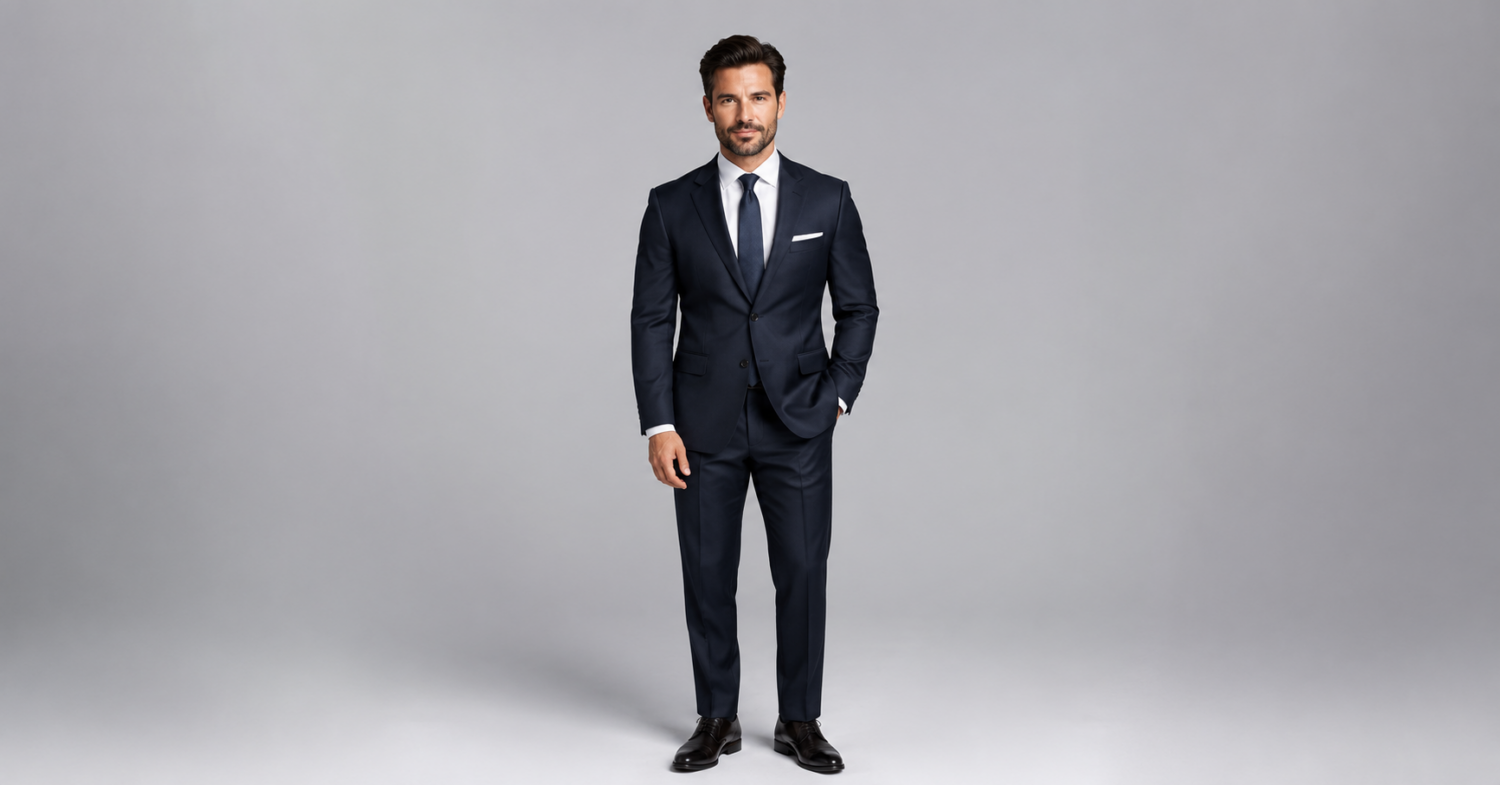
In a suit, that means the shoulder seam of your jacket should begin where your shoulder bone meets your arm. The jacket should gradually get smaller, or taper, in toward your natural waist, just above your belly button. Your trousers should also sit on your natural waist and fall in one line toward the top of your shoes with no bunching or pulling. Belts can disrupt the visual flow of your look, so opt for suspenders when possible. These “clean” lines nudge an observer’s eye to look straight up and down, which makes you look taller.
Slim vs. Skinny Fit
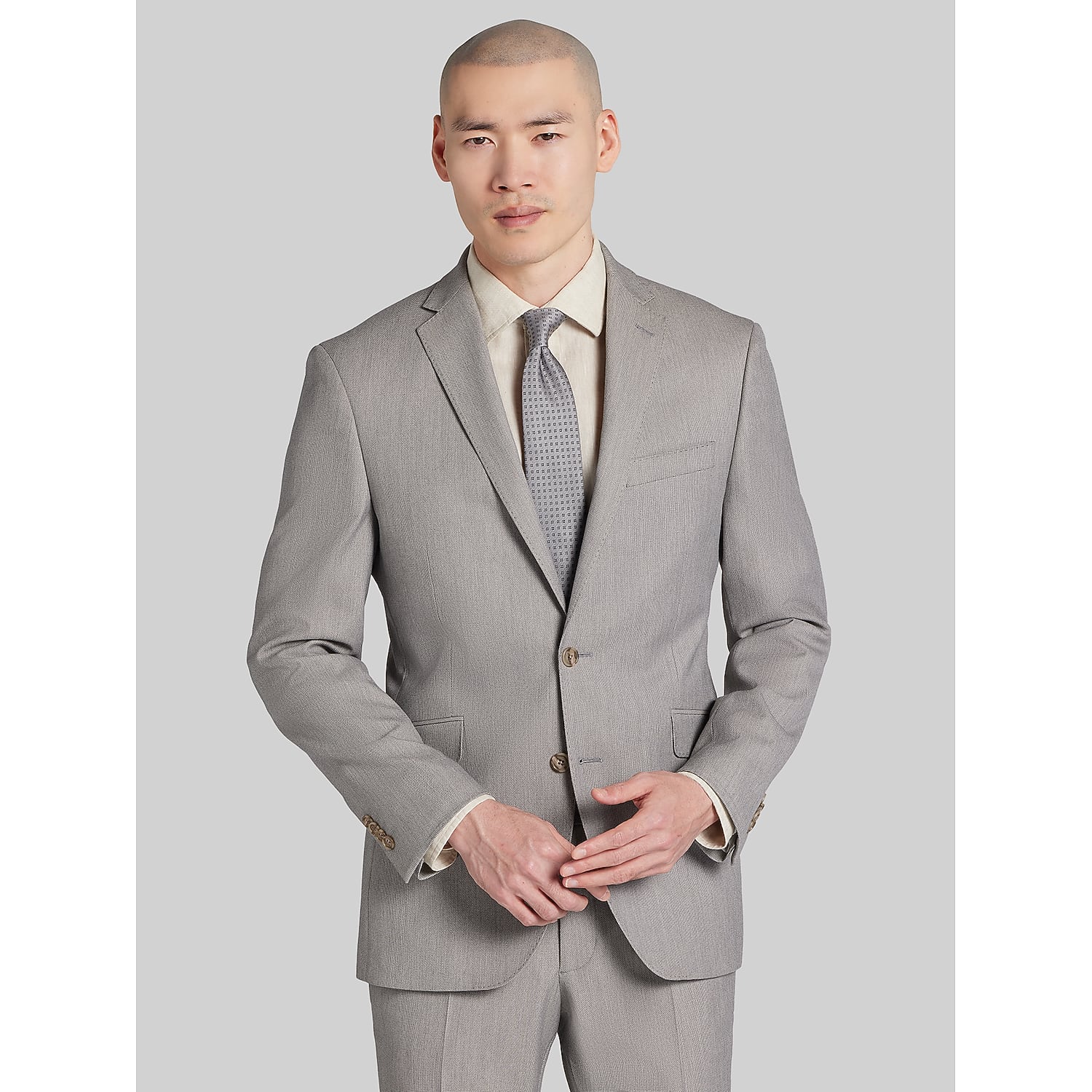
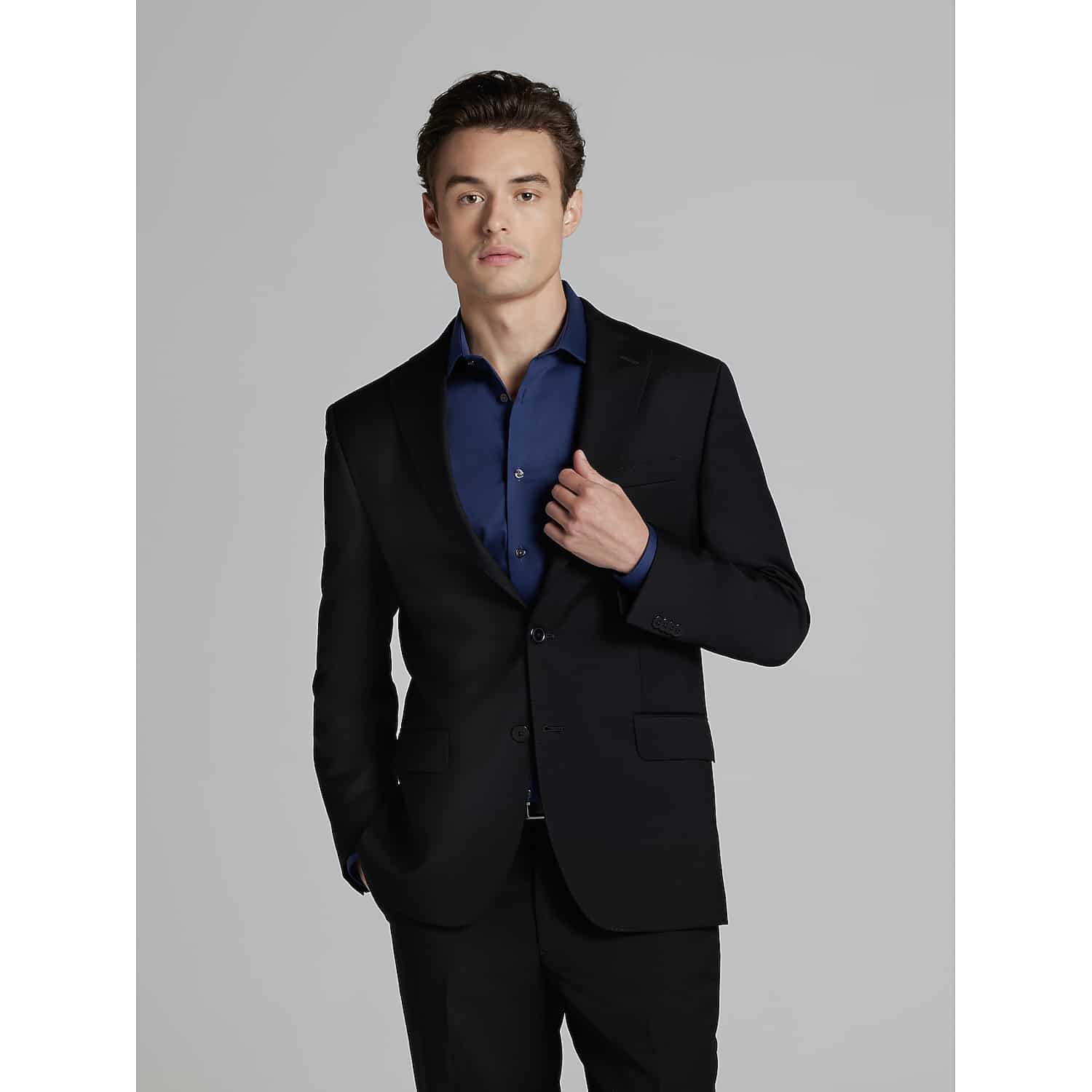
A classic suit is fairly wide and roomy, which may not work well on shorter guys who want to show off their build. A slim-fit suit, in comparison, sits closer to the body and better balances your shoulders, chest, and legs. It’s a structured cut that should feel snug but never tight.
Whereas classic suits can overwhelm your frame, skinny fits can overemphasize it. The tighter a piece of fabric sits on you, the more attention it brings to that part of your body. That can be tricky for shorter men, especially when it comes to pants. Drawing that much attention toward your legs can make them look smaller and shorter than they really are.
Whatever cut or style of suit you choose, make sure it fits well. Baggy suits with excess fabric can look cheap and cartoonish. But tight suits that create pulls and wrinkles in the fabric look just as odd, and they can feel restrictive. How your clothing makes you feel is as important as how it makes you look.
How a Suit Should Fit a Short Man
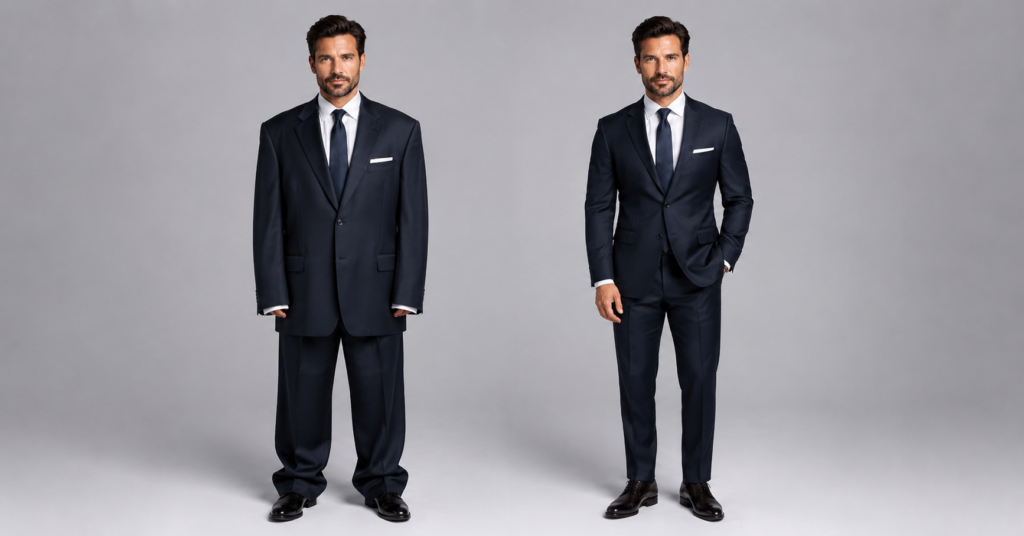
A great suit should fit well from the shoulders to your shoes. Once you understand how all the different garment elements work together, you’ll know what to check in the mirror.
Shoulders and Chest
The shoulders are the most important part of a jacket to pay attention to when trying on suits because they’re the most expensive, complex area to alter. The seam should sit right where your shoulder begins to slope into your arm. If it hangs past that point, the jacket can look boxy. If it sits too far inward, the fabric will pull across your upper body.
Be careful with extra shoulder padding, too. A little structure can help the suit fit better, but too much shoulder padding adds unnecessary width across the upper body.
The chest should lie smoothly when the jacket is buttoned. The fabric shouldn’t pull into a tight “X” around the button or strain across the belly. The jacket should feel snug without making it difficult to stand, sit, or move comfortably.
Jacket Length
If you’re comparing suit sizes, pay attention to the letter after the number: L for long, R for regular, and S for short. A 38S and a 38L in the same style can look like totally different jackets because of the sizing and fit. But don’t assume you can grab an S cut and call it a day — you might have a medium or long torso relative to your overall height. What matters is where it sits on your body. A suit jacket for short men should land around the middle to lower part of the seat. It shouldn’t look cropped, but it also shouldn’t cover so much of your thigh that it looks oversized.
Sleeve Length
When you try on a jacket or blazer, let your arms hang naturally at your side. Sleeves should end near the wrist bone and show about a quarter to a half inch of your dress shirt cuff. That small flash of cuff emphasizes your wrist, which helps an observer’s eye understand the shape and length of your arm. This is why a watch can be such an impactful accessory for men.
Pants With a Clean Break and Taper
Suit pants should fall smoothly from your waistband down. The fold or crease that forms where the hem meets the tops of your shoes is called a break. It can come in many sizes, but shorter men typically do best with a slight break, with one small fold at the front of the shoe, or no break at all. Medium or full breaks tend to make your legs look shorter.
The pant leg should skim your thigh and taper toward the ankle so the leg opening is close to your body. Avoid pants that pool at the shoes or flare wider than the rest of the suit. Baggy or oversized fabric tends to diminish small or medium frames.
Pay Attention to the Rise
Rise is the distance between the waistband and the crotch seam. A mid-rise or slightly higher-rise pant starts the trouser line closer to your natural waist, making your legs look longer. The waistband itself should sit securely without digging in, and the crotch area shouldn’t sag or pull. When the rise is right, your pants will look seamless from the back to the front and connect naturally with the waist of your jacket.
What a Tailor Can Fix To Create a Fitted Suit
Even the best off-the-rack suits can benefit from a few tailoring adjustments. The smallest changes can make your suit fit perfectly.
What Tailoring Can Improve
A skilled tailor can fix the areas that affect how a suit sits on your frame. The most common alterations include:
- Hemming pants: Find the proper length.
- Shortening sleeves: Show just the right amount of cuff.
- Waist suppression: Give shape to your torso.
- Tapering trousers: Create a seamless line from your waist to your shoes.
What To Ask a Tailor
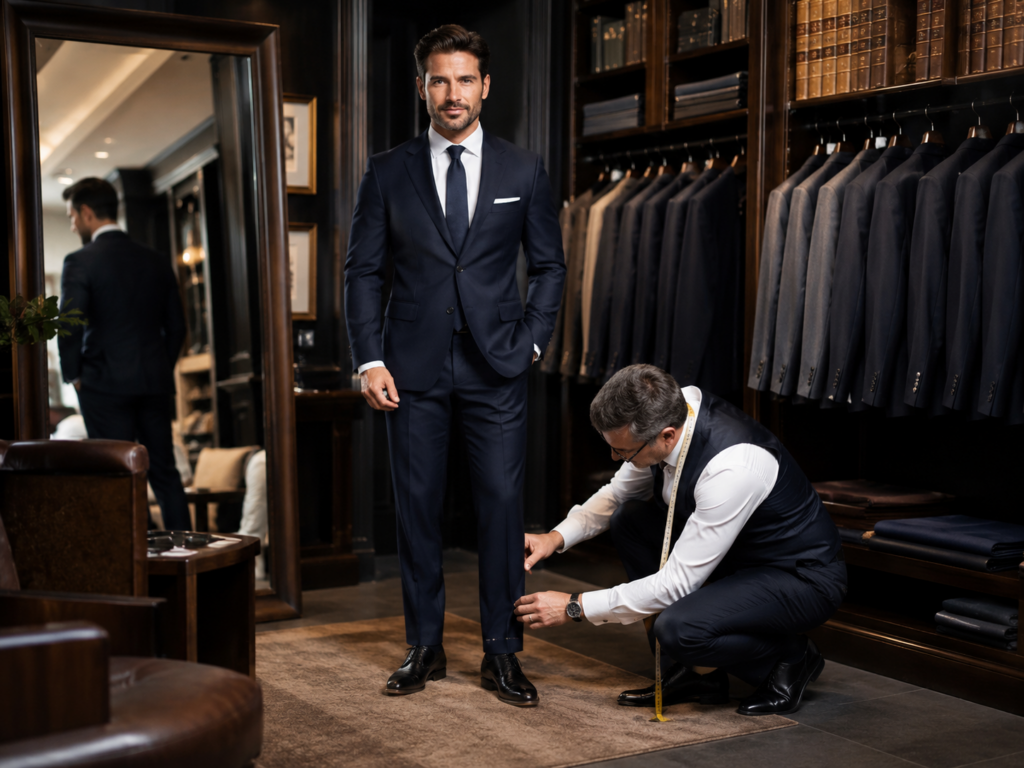
You don’t need to know everything in the tailoring handbook before going to the store for a fitting. A few simple questions can help you understand what a tailor can do, including:
- Can you taper these pants?
- Can you hem my pants so they have little to no break?
- Can you adjust the jacket waist?
- Can you adjust the sleeves to show a little shirt cuff?
- Can you shorten the coat length without changing the jacket’s overall balance, so that it stays proportionate with my body shape?
These questions help your tailor understand the effect you want to create. And if your tailor says they can’t make the alterations you want, or if they are prohibitively expensive, that’s your cue to try on a different suit.
Common Suit Mistakes Short Men Should Avoid
These common fit and styling choices can throw off your appearance, but they’re easy to avoid once you know what to look out for:
- Oversized jackets: A jacket that’s too long or too wide can overwhelm your frame and make the suit look borrowed instead of tailored. It should sit clearly through the shoulders, follow your torso, and end around the middle to lower seat.
- Baggy trousers: Extra fabric through the legs will make your lower body look heavier than the top half. Look for trousers with enough room to move and a smooth taper from the thigh to your ankle.
- Low rise pants: Low rise pants make the torso look longer and the legs shorter because the waistband sits lower on the hips. Choose mid-rise or slightly higher-rise pants instead.
- Chunky shoes: Heavy soles or overly bulky dress shoes draw attention to your lower half, which can make you appear shorter. Instead, go for oxfords, loafers, or sleek derbies.
- Oversized accessories: Large ties, bulky belts, oversized watches, and wide lapel pins pull attention away from a suit’s sleek lines and proportions. Keep accessories simple to let the suit shine.
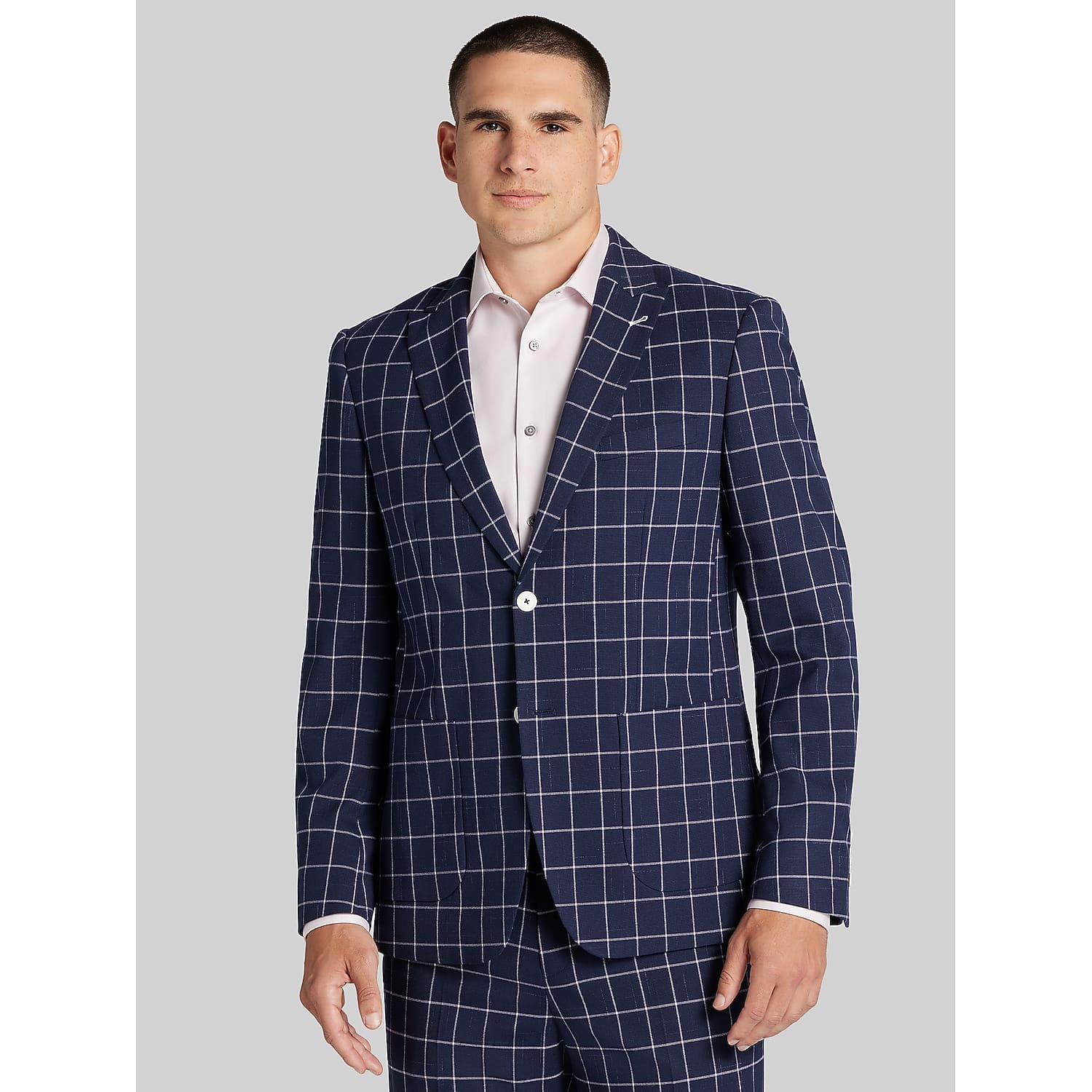
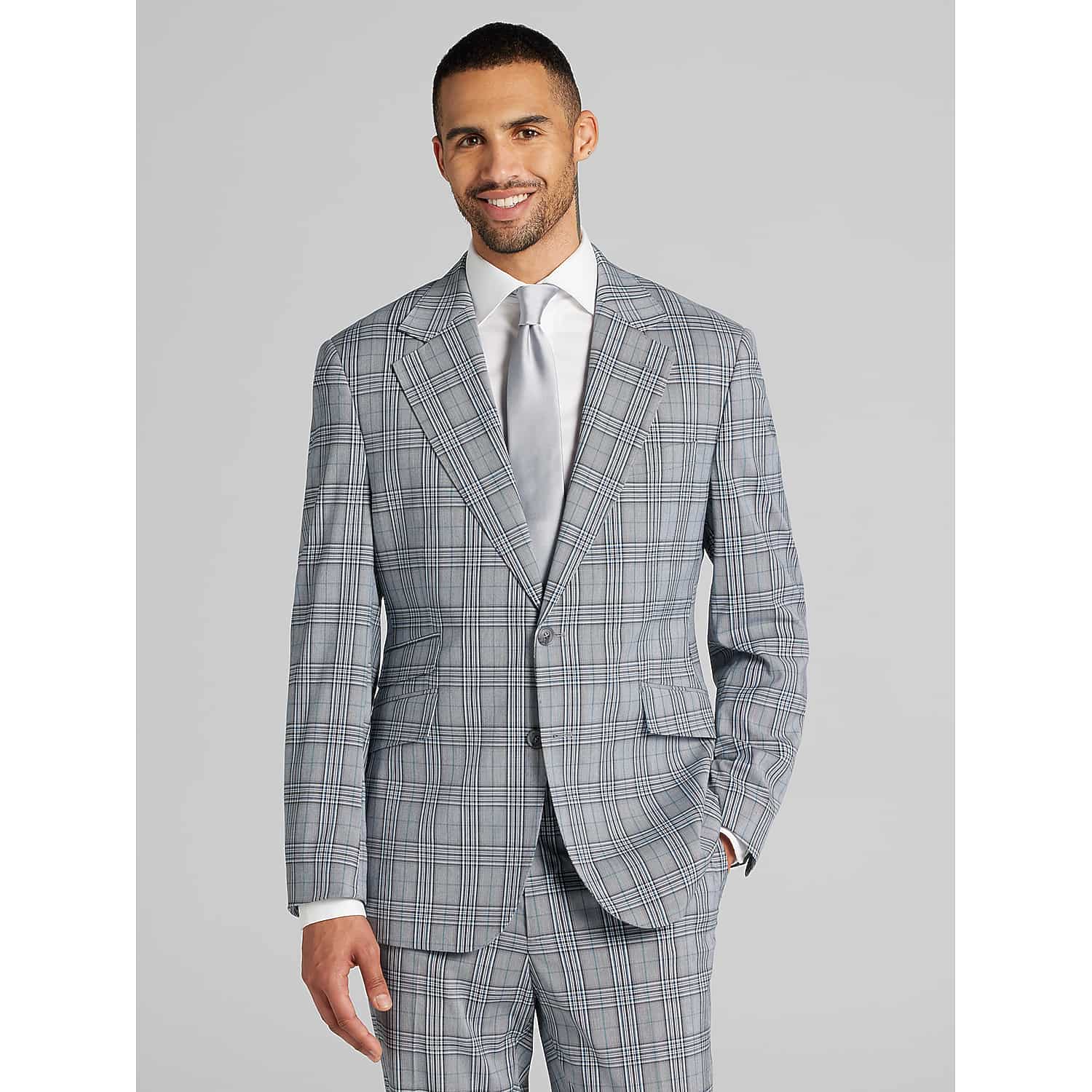
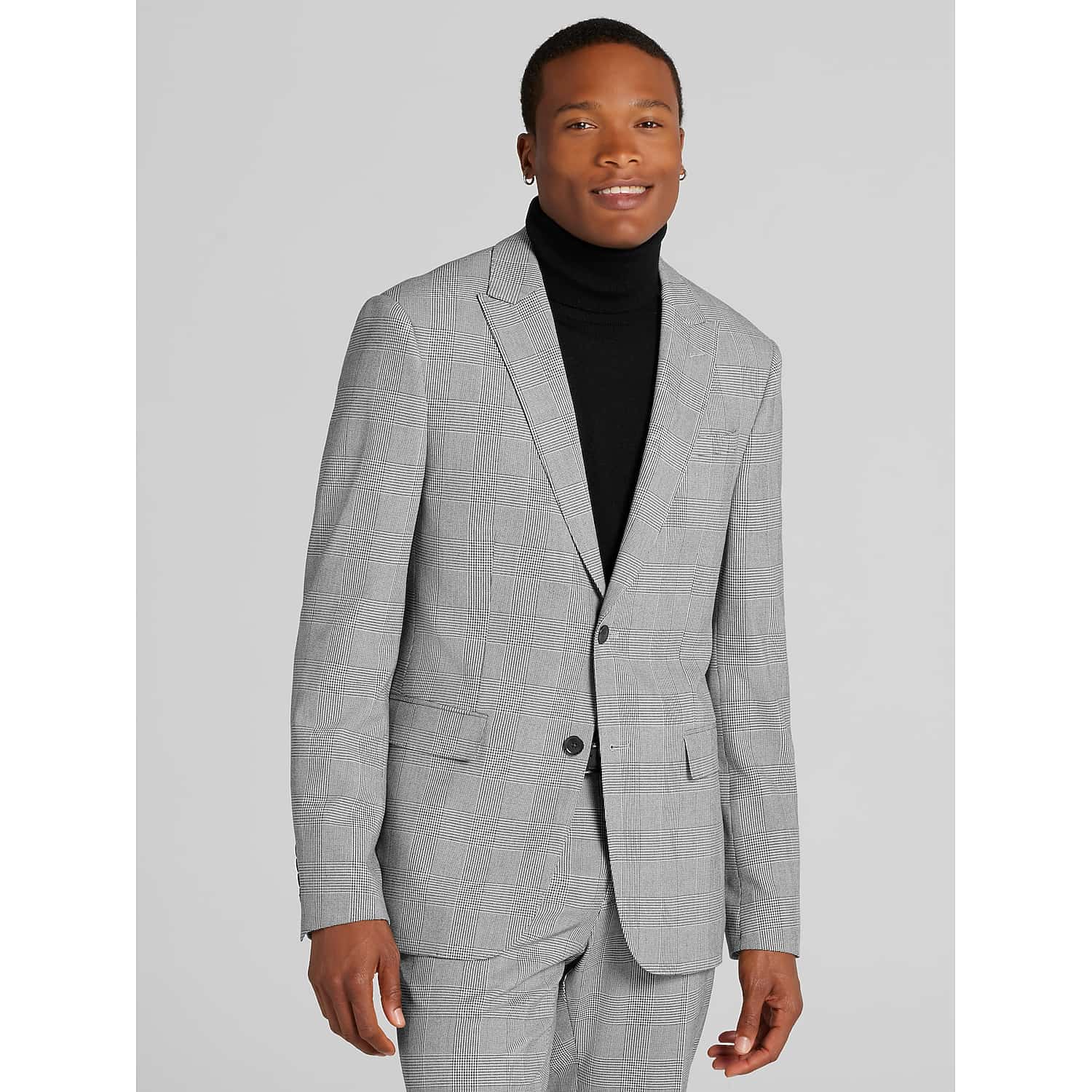
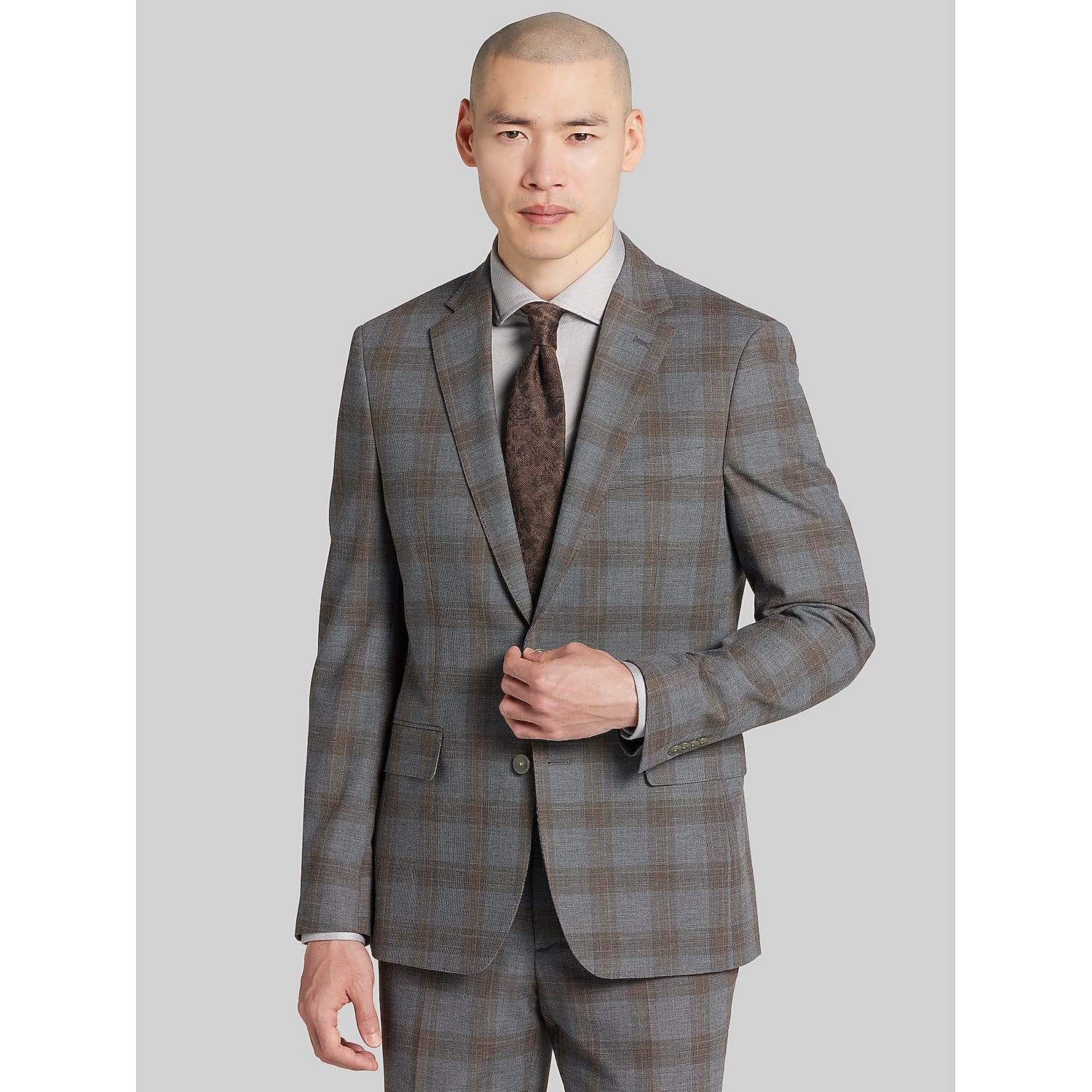
- Large or high-contrast patterns: Bold prints and color blocking draw attention that might emphasize parts of your silhouette that you want to minimize. They may also be inappropriate for certain dress codes, so stick to classic, neutral colors.
Find a Suit That Fits Your Frame at Men’s Wearhouse
A great suit should make you look your best. Finding one starts with trying on different cuts and styles, then using smart alterations to refine the details.
At Men’s Wearhouse, in-store fittings and tailored support can help you find the perfect fit. Whether you need tapered trousers or jacket adjustments, our tailors will take your chosen suit off the rack and make it feel like it was made just for you.
Shop Related Products