
The 1950s changed the way men dressed, as sharp tailoring met a relaxed sense of style. Clean-cut suits were a big part of everyday fashion, but casual pieces like white T-shirts and cuffed jeans were becoming just as popular.
Part of what makes 1950s men’s fashion so memorable is how much of it works now. Modern menswear borrows from the era’s structured silhouettes and effortless cool factor. From tailored jackets to timeless denim looks, many of the styles people wear today can be traced back to this influential period. It’s one of the reasons the ’50s hold such a lasting place in fashion history.
What defined 1950s men’s fashion?
After World War II, men had more confidence and spending power than ever — and they took a bigger interest in their personal style. They paid close attention to fit and presentation and leaned into structured pieces like tailored suits and slim trousers.
This time period also turned blue jeans and fitted tees into a rebellious fashion statement, thanks in large part to Hollywood stars who pushed this greaser style into the mainstream (and gave young people a way to break from their parents’ generation).
It was this sophistication and self-expression that defined fashion in the ’50s. While men suited up for the office and nights on the town, casual clothes became the new go-to. People loved the comfort, and society finally gave them the green light to dress down.
Popular 1950s outfits for men
Here are examples of 1950s male fashion that still show up today.
Tailored suits
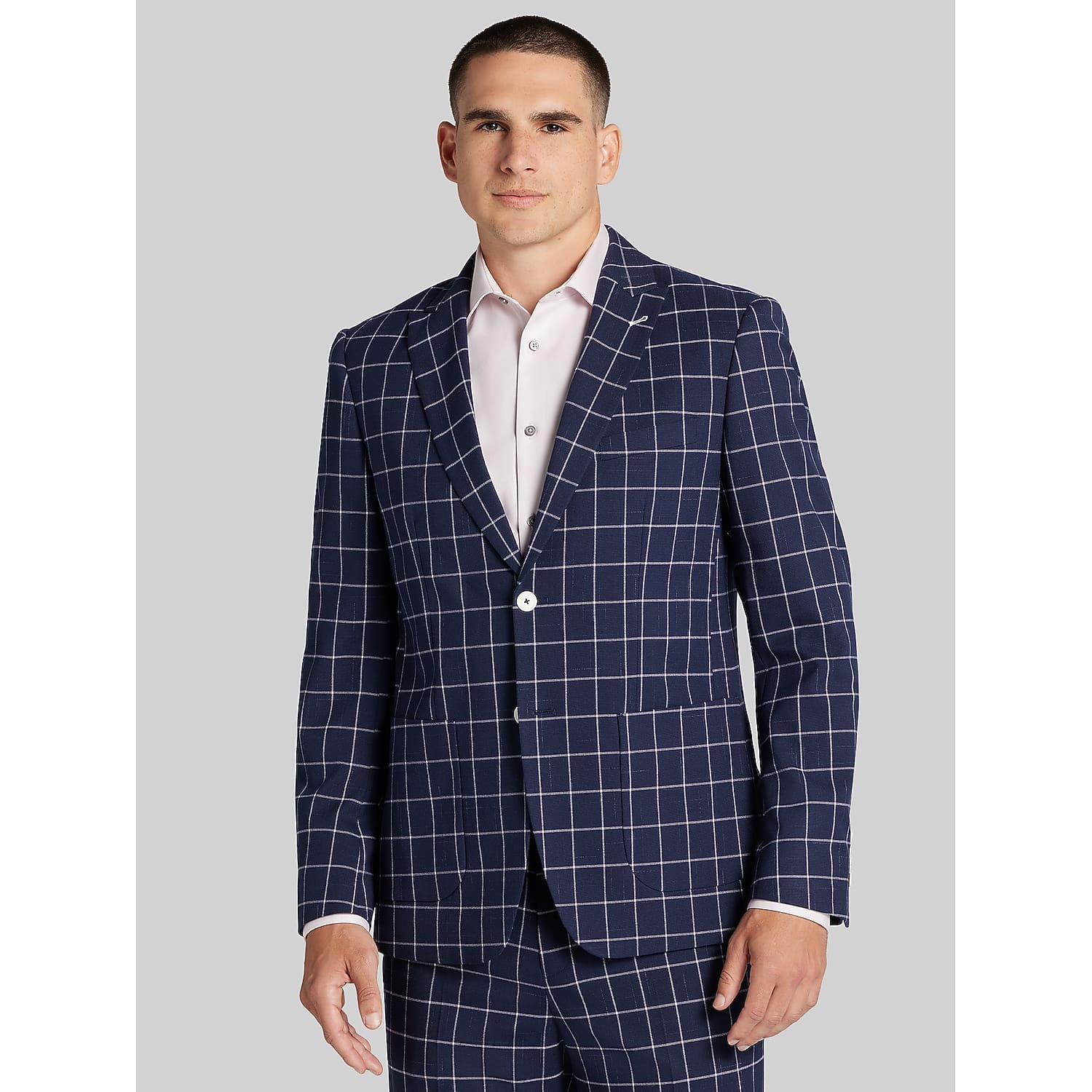
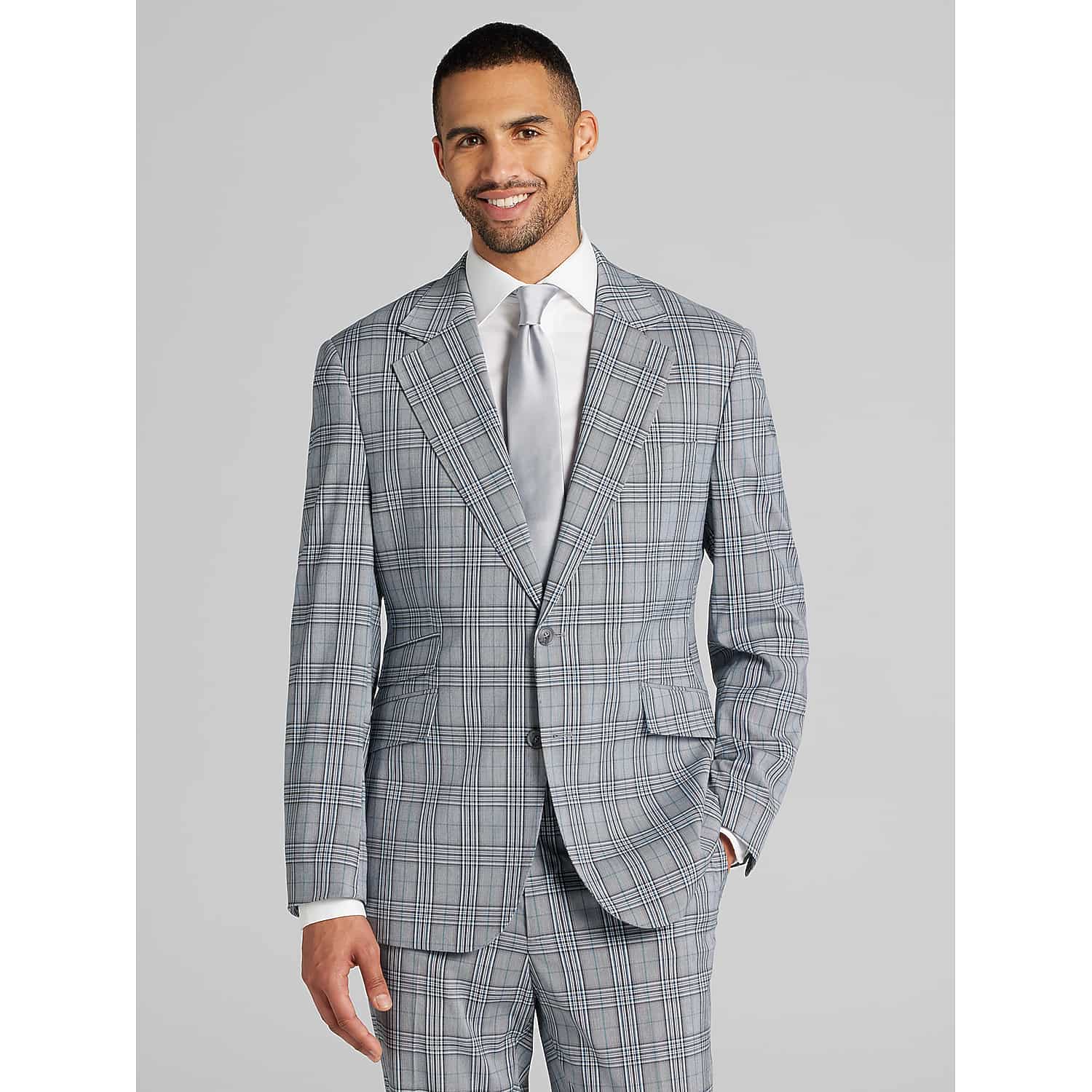
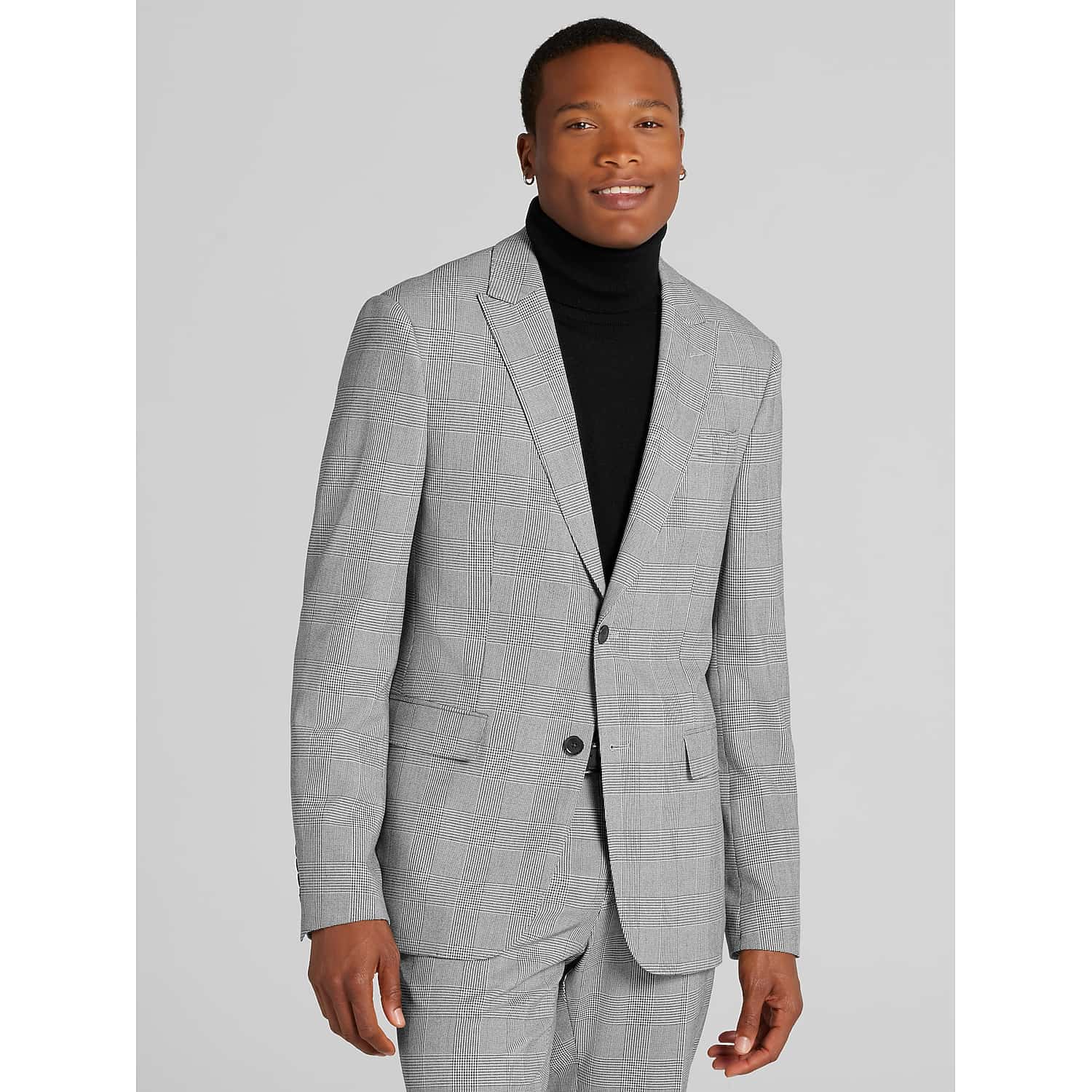
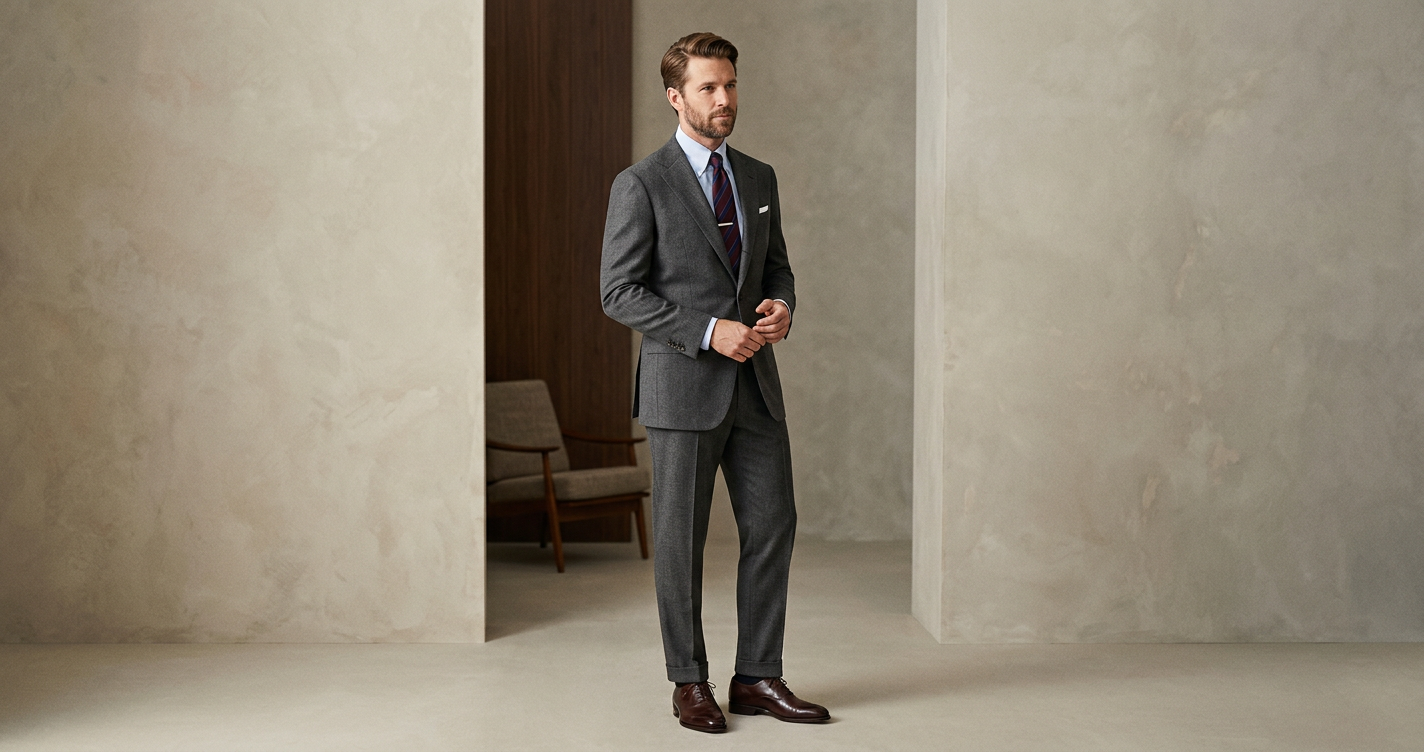
Mid-century suiting featured structured shoulders and high-waisted trousers, creating a fuller, more masculine silhouette. These suits were usually paired with dress shirts and ties in neutral shades like gray, navy, and brown, which looked sharp in the workplace and worked just as well for dinners and social occasions.
Vintage-inspired suiting, like double-breasted jackets and pleated trousers, has made a comeback in recent years and solidified the appeal of ’50s-era fashion.
Greaser style
Greaser style had a rebellious energy that became synonymous with the 1950s. It was inspired by youth culture, motorcycles, and film, and swapped structure for something a little more rugged. Leather jackets were paired with fitted white T-shirts, rolled blue jeans, and sturdy boots, while slicked-back hair gave the look an unmistakably cool edge.
Ivy League
Ivy League style comes straight from old-school East Coast college campuses. The whole look was built on staples like Oxford button-downs, tailored blazers, and knit sweaters, especially when layered with a collared shirt underneath. Almost all classic menswear traces back to the preppy outfits of the ’50s, making those same button-downs and varsity-inspired pieces wardrobe must-haves.
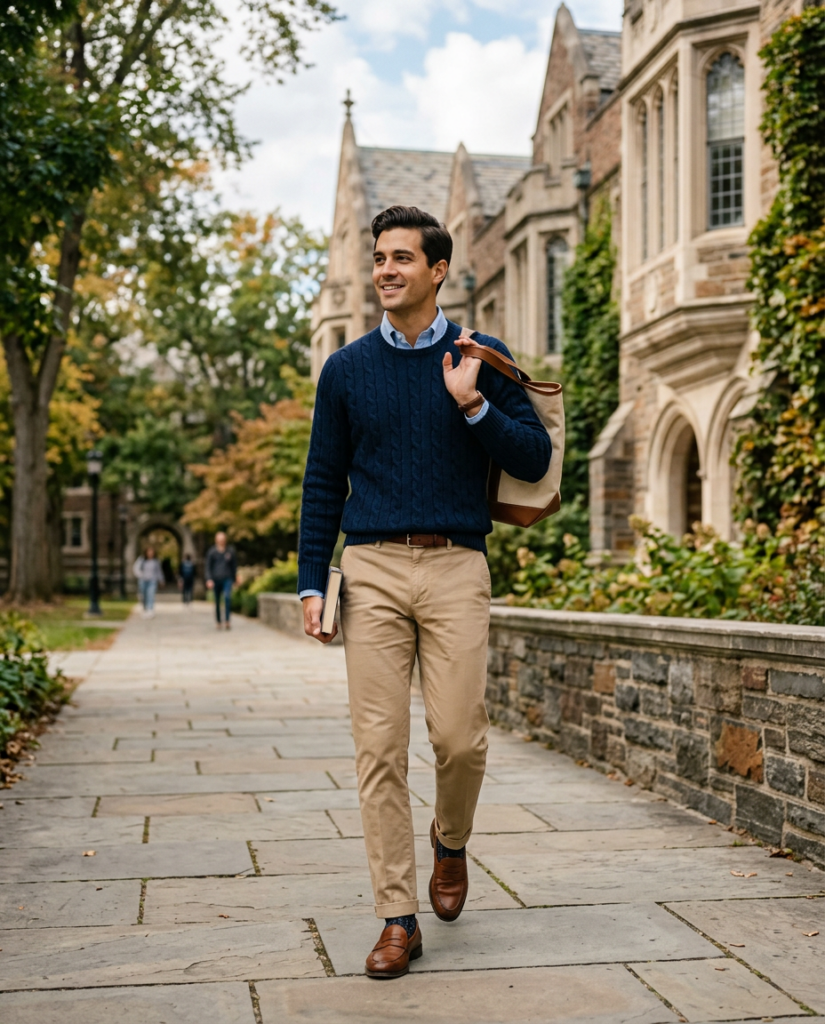
Key pieces in a 1950s man’s wardrobe
Fashion in the ’50s centered on versatile basics. Here are pieces that shaped the decade’s signature style and appeared in nearly every man’s wardrobe:
- Suits: Men wore suits to work and social events during the ’50s. They featured strong shoulders and wide lapels. The pants went with a high-waisted and roomier cut through the legs rather than the tapered look that became popular later on.
- Dress shirts: Crisp white was the gold standard, though soft pastels and subtle patterns added personality to an outfit. They paired well with the tailored suits of the time.
- T-shirts: The plain white tee transformed from an undergarment into a youth-culture icon. Worn with denim, it was the ultimate symbol of trading convention for comfort.
- Leather jackets: Popularized by greaser culture, leather jackets added a rugged and somewhat rebellious look to any casual outfit worn during the 1950s.
- Trousers: High-waisted, pleated trousers were a favorite throughout the ’50s. Their versatility meant men wore them with everything from sport coats to knit sweaters.
- Loafers and dress shoes: From the casual cool of penny loafers to the polish of leather dress shoes, footwear bridged the gap between formal and everyday wear.
1950s men’s fashion trends that influence today
One of the reasons male fashion in the 1950s still matters is because so much of it looks current. You don’t need a fully vintage wardrobe to embrace this aesthetic, since modern menswear already borrows from that decade, just in an updated way.
The 1950s favored structured tailoring and clean lines, while today’s fashion has moved to slightly slimmer, more body-conscious fits. If you prefer to channel the past, you can opt for well-fitted trousers, a tailored jacket, and a dress shirt that follows your natural shape.
This period also set the tone for minimalist styling. Outfits were simple and intentional, without unnecessary layering or heavy detailing. The same approach shows up now in easy, go-to combinations like a white T-shirt and jeans or crisp button-down under a blazer.
Another lasting influence is using versatile staples to create a capsule wardrobe. Pieces like leather jackets and straight-leg denim looked as good in the ’50s as they do now, and make it easy to build outfits that feel timeless and polished.
Finally, you’ll see the decade’s impact in its neutral color palette. Navy, gray, and brown were everywhere then, and they’re just as popular today for their endless possibilities to mix and match. These colors will never go out of style and take the guesswork out of getting dressed.
Final thoughts: Why 1950s style still works
Men’s fashion from the 1950s stands the test of time because it balanced formal and casual styles — an idea that shapes menswear even now. That’s why so many of these looks feel as relevant as they did over 70 years ago.
But the real strength of ’50s style is its versatility. A well-fitted jacket, a good pair of leather shoes, and dark wash jeans can work in all kinds of situations without much effort. Meaning, you can dress them up or down and end up with an outfit that feels totally put together.
If you want to bring 1950s flair into your own wardrobe, you don’t need to hunt down a bunch of vintage pieces. Retailers like Men’s Wearhouse can help you find updated versions of these styles that capture the enduring aesthetic of the Golden Era.
Shop Related Products