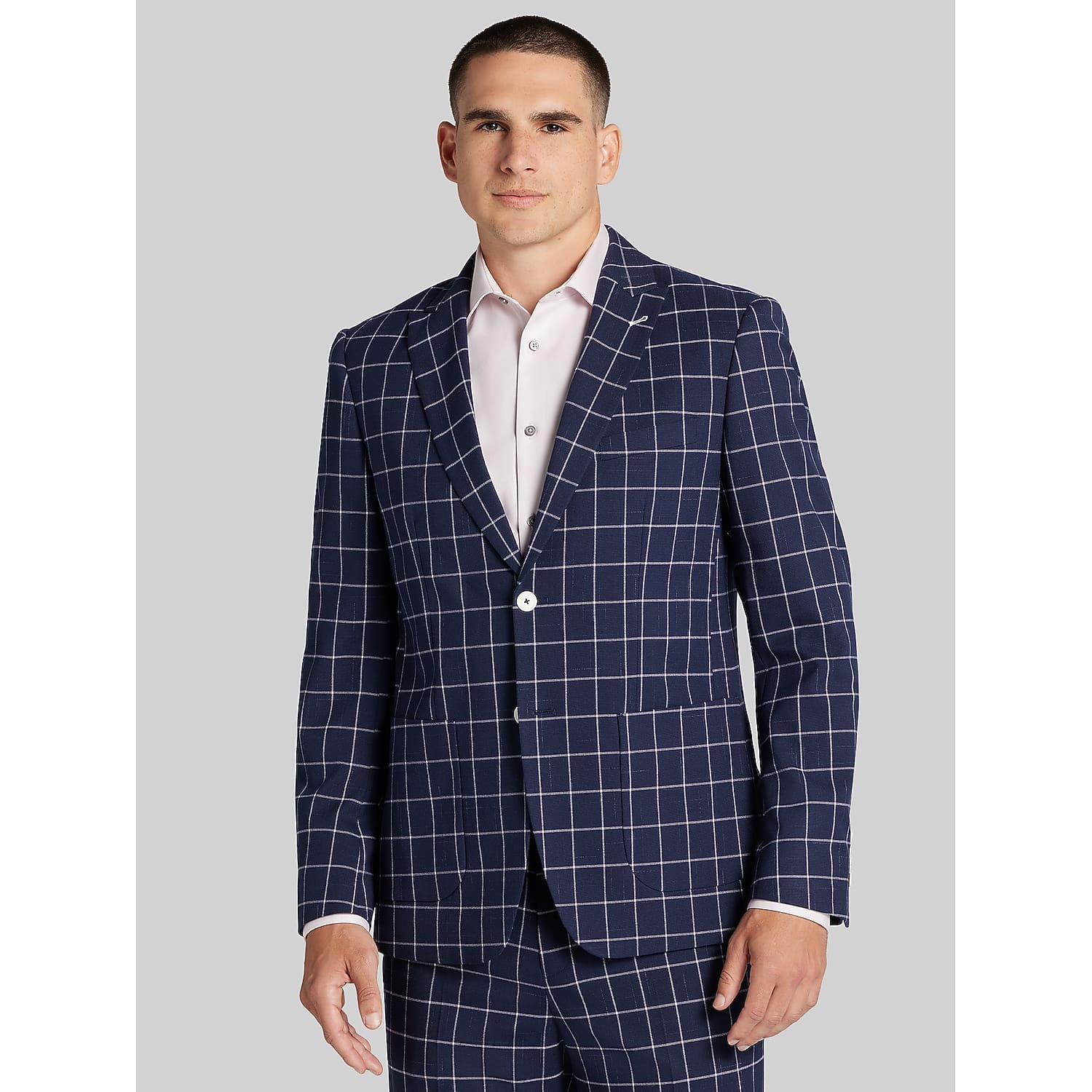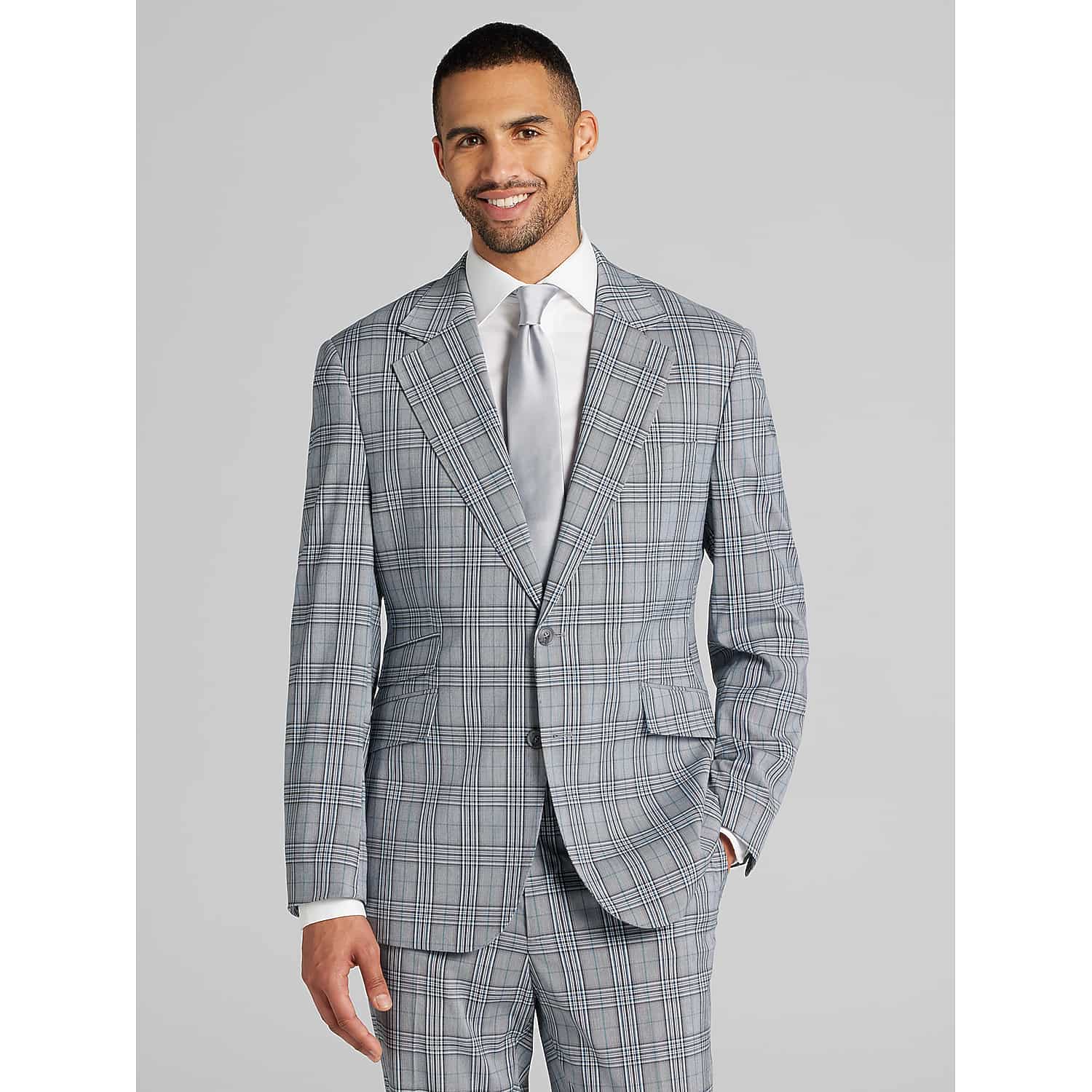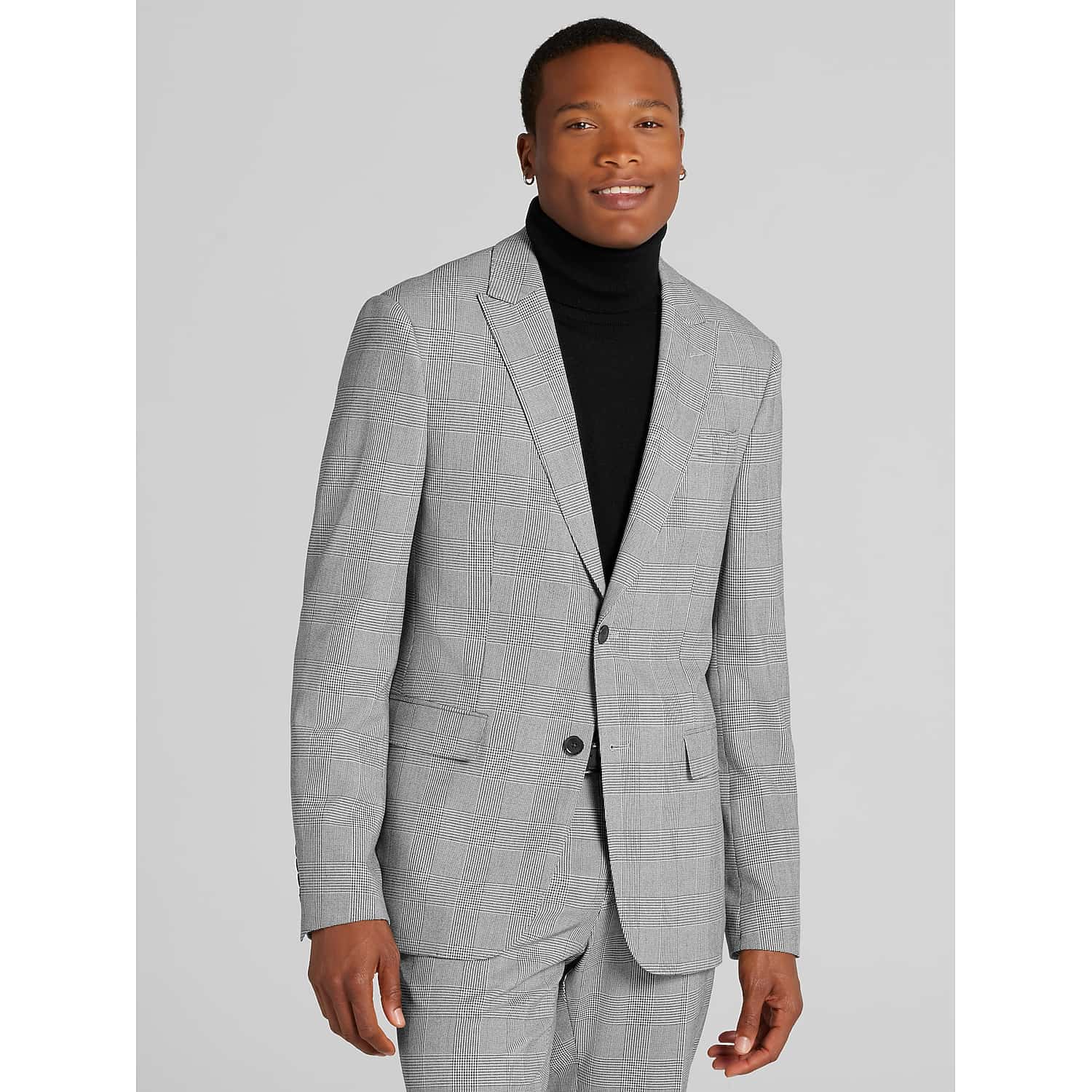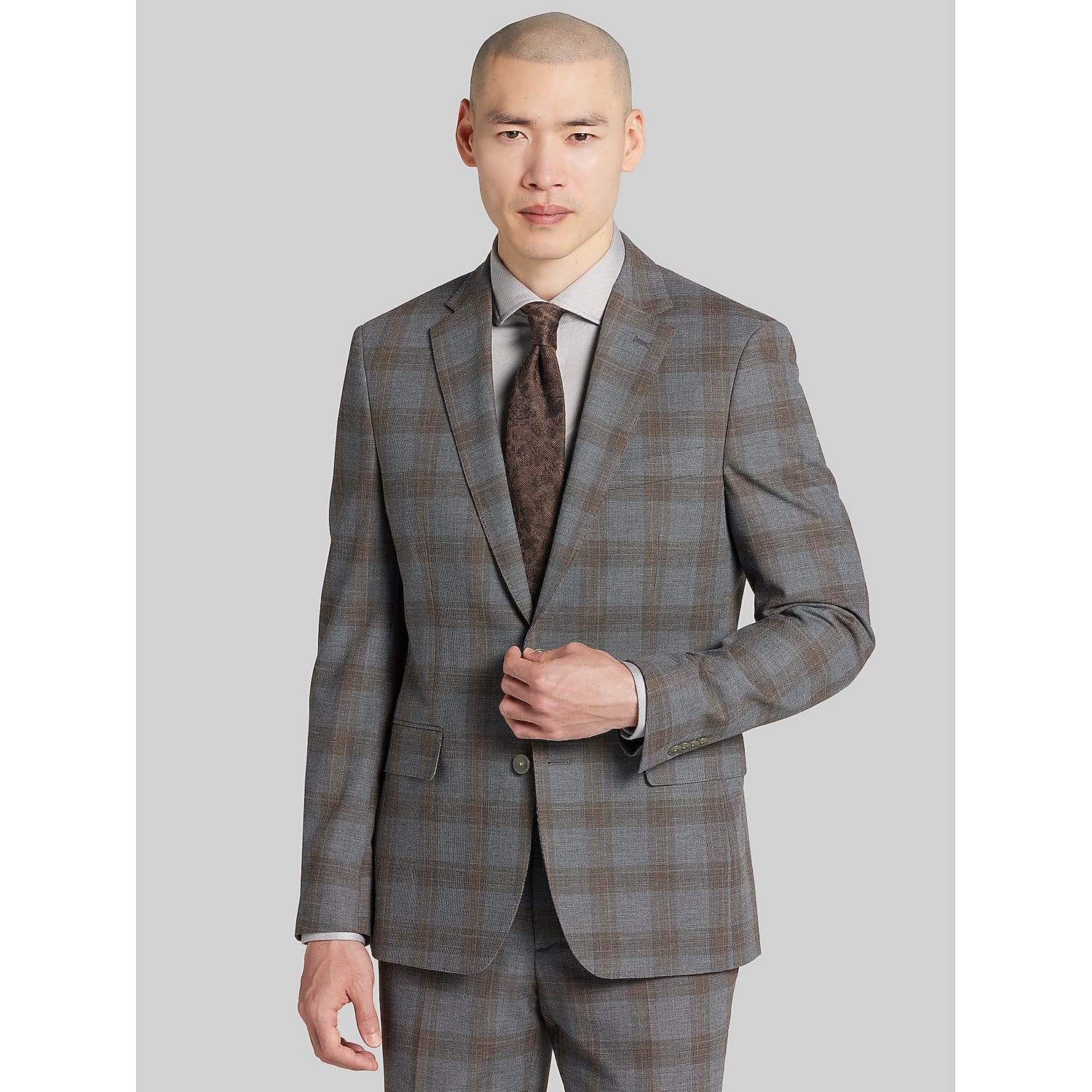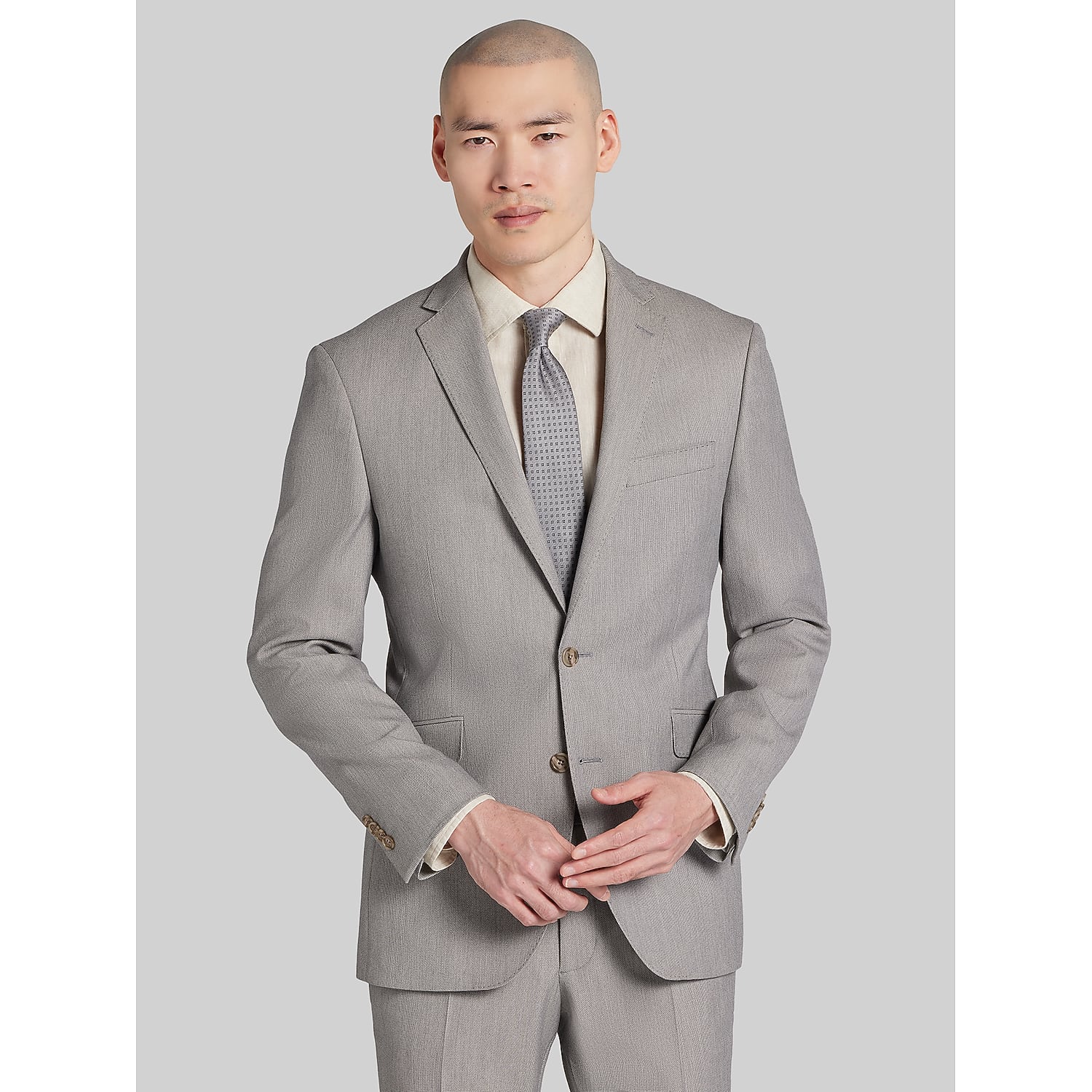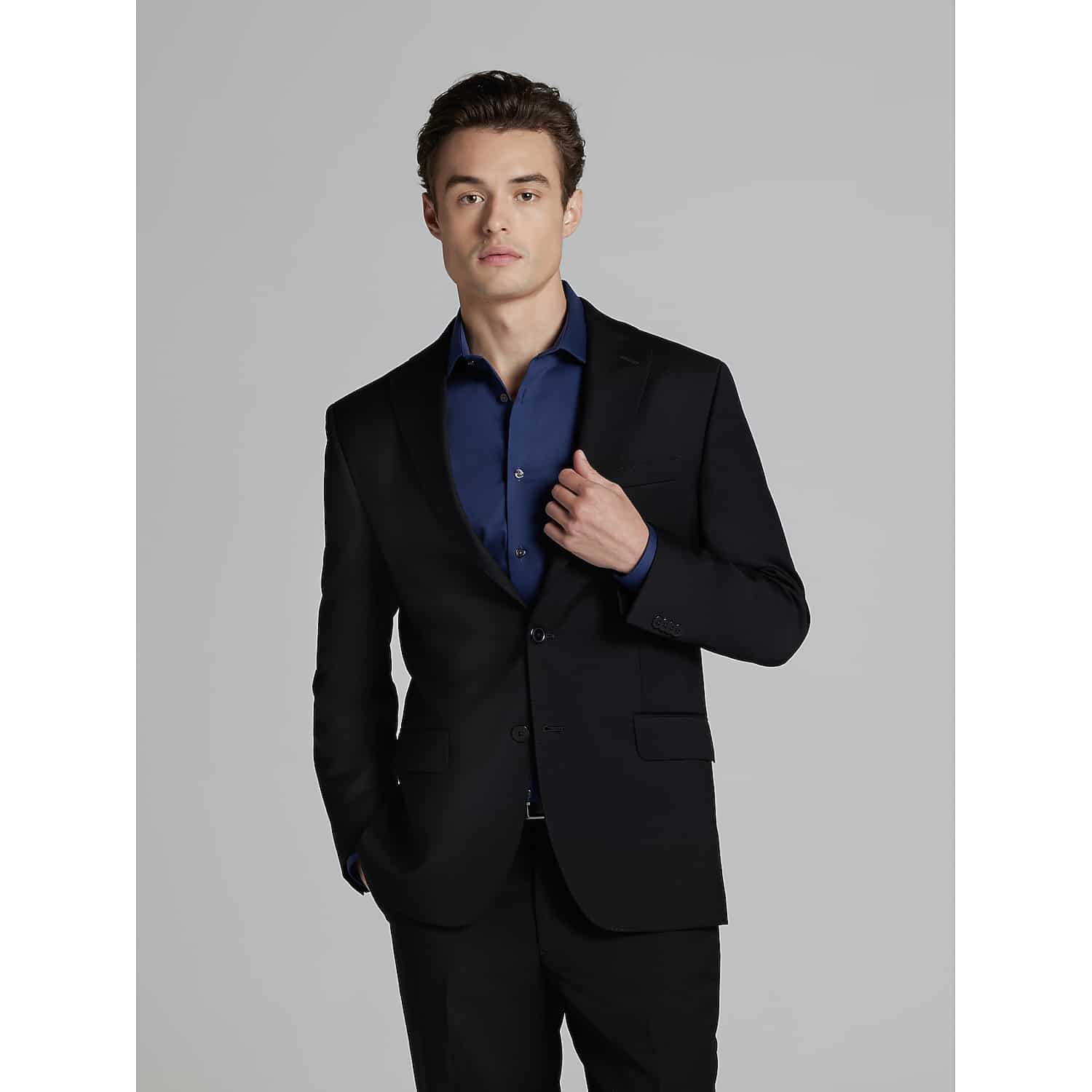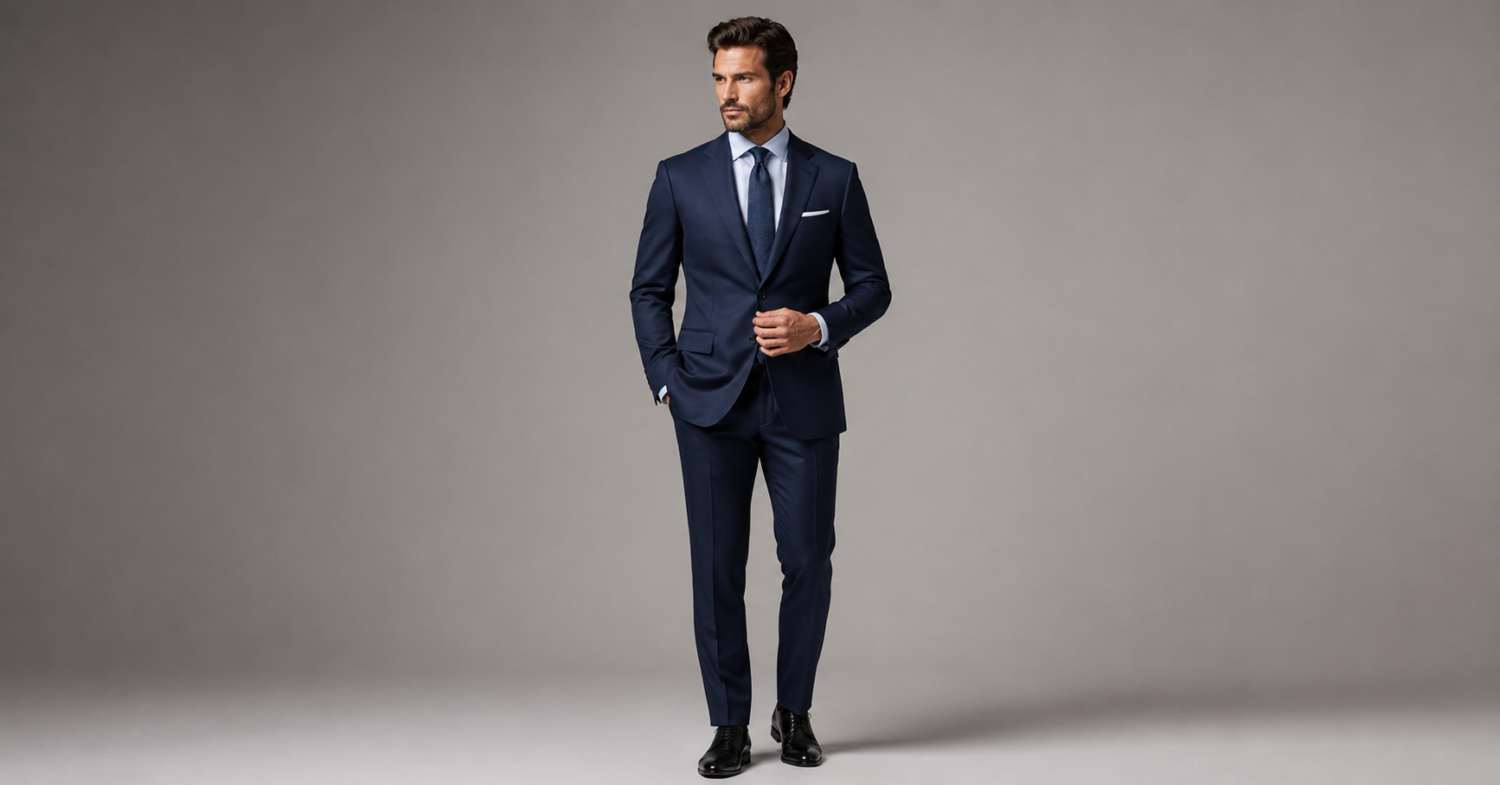

A well-fitted suit is the best way to make an unforgettable impression. Even the finest apparel with the fanciest label can look cheap if it doesn’t fit properly. A skilled tailor can help you find the perfect suit fit and complete your look. This suit fit guide for men will help you understand every detail you need to know so you can stand out at your next job interview or formal event.
Quick Suit Fit Checklist
Here’s a quick overview of how a suit should fit:
- Shoulders should lie flat without divots, wrinkles, or overhangs.
- The jacket should close comfortably and show no signs of pulling.
- The jacket waist should naturally taper your body.
- Your shirt cuff should land about one-quarter to half an inch beyond the jacket sleeve.
- Trousers should drape cleanly with no excess fabric and hit the top of your shoe.
If your suit ticks these boxes, you’re on the right track to looking sharp.
How Should a Suit Jacket Fit the Shoulders?
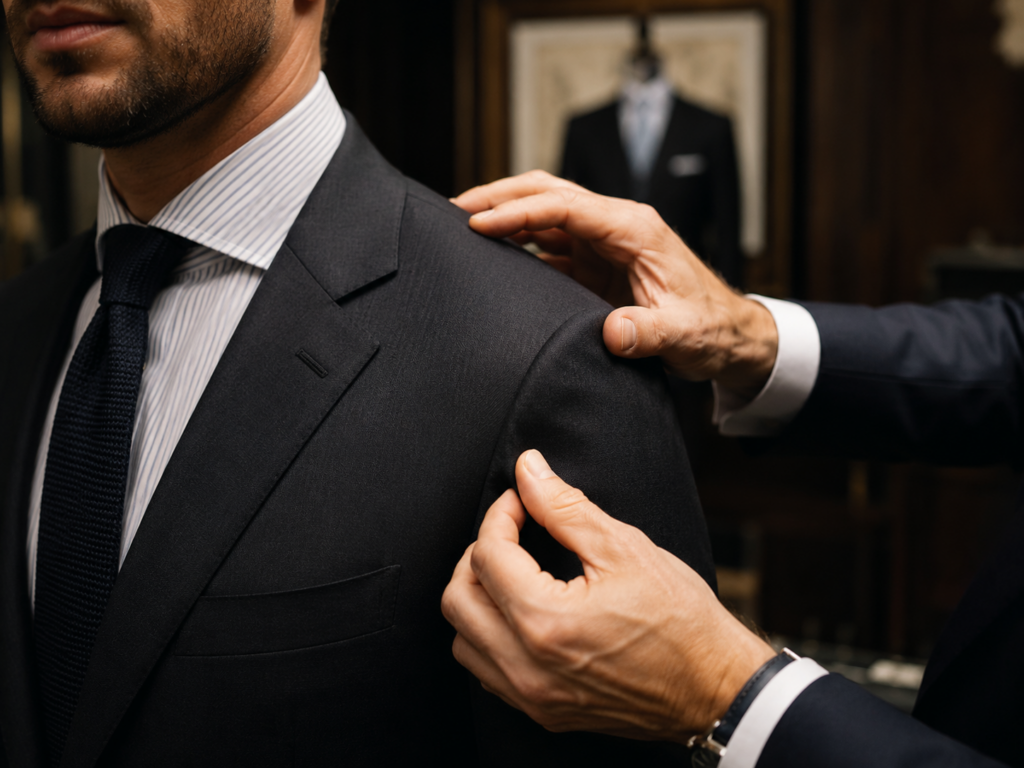
If the shoulders don’t fit properly, the rest of your suit will look wrong. They’re the most crucial part of your suit, and they’re also one of the most difficult and expensive areas to alter.
The seam of a well-fitted jacket should end where your shoulder ends so that the garment drapes naturally from the collar over your frame. Look out for these signs of a poor shoulder fit:
- Divots or dents near the sleeve head
- Wrinkling across the upper shoulder
- Shoulder padding outside your natural shoulder
- Fabric pulling across the back, creating extra creases and lines
Tailors can usually improve minor issues in a jacket, such as padding or sleeve attachment. However, major reconstruction requires extensive work and gets costly fast. It’s rare to find a jacket that fits perfectly off the rack, so if you have to choose between one that fits best in the shoulders and one that fits best in the waist, pick the one that fits your shoulders. It’s almost always easier and cheaper to alter different parts of the jacket.
Pro tip: It’s easier for a tailor to take in a suit that’s too big than to let out a suit that’s too small.
How Long Should Suit Sleeves Be?
Suit sleeves should end just above the wrist bone, allowing one-quarter to a half an inch of shirt cuff to show beneath the jacket sleeve. This small amount of cuff exposure adds interesting contrast and frames the wrist so the jacket looks intentionally tailored.
If your sleeves completely cover your shirt cuffs, the jacket is too large. If over half an inch of cuff shows, the jacket is too small. Thankfully, changing sleeve length is one of the easier alterations a tailor can make — within reason. Most jackets have around an inch of spare material that the tailor can use to extend the sleeve. They can also shorten sleeves, depending on the jacket’s button construction: Decorative buttons are easy to adjust, but functioning buttonholes require more complex alterations.
How Long Should a Suit Jacket Be?
A common guideline for suit jacket length is the “knuckle rule.” When standing with your arms at your sides, the bottom of the jacket should reach your knuckles and cover your seat. Modern suits have slightly shorter jacket lengths, while classic styles provide more coverage. Select the cut or fit that you prefer.
As you test out suit jackets, pay attention to how they fit when you’re seated and standing. If the jacket rides up when seated or looks cropped when standing, you might want to buy a different size or fit.
How Should a Suit Fit in the Waist?
Your suit jacket should button comfortably at the waist so the fabric doesn’t strain across the stomach or chest. When closed, the front should lie flat with clean lines through the midsection and no excess fabric billowing around the sides. The goal is a natural taper that follows your body shape but isn’t tight or restrictive.
If a suit jacket feels or looks boxy, a tailor can improve the fit with waist suppression. This adjustment removes extra fabric and creates a defined waistline.
How Should Suit Pants Fit?
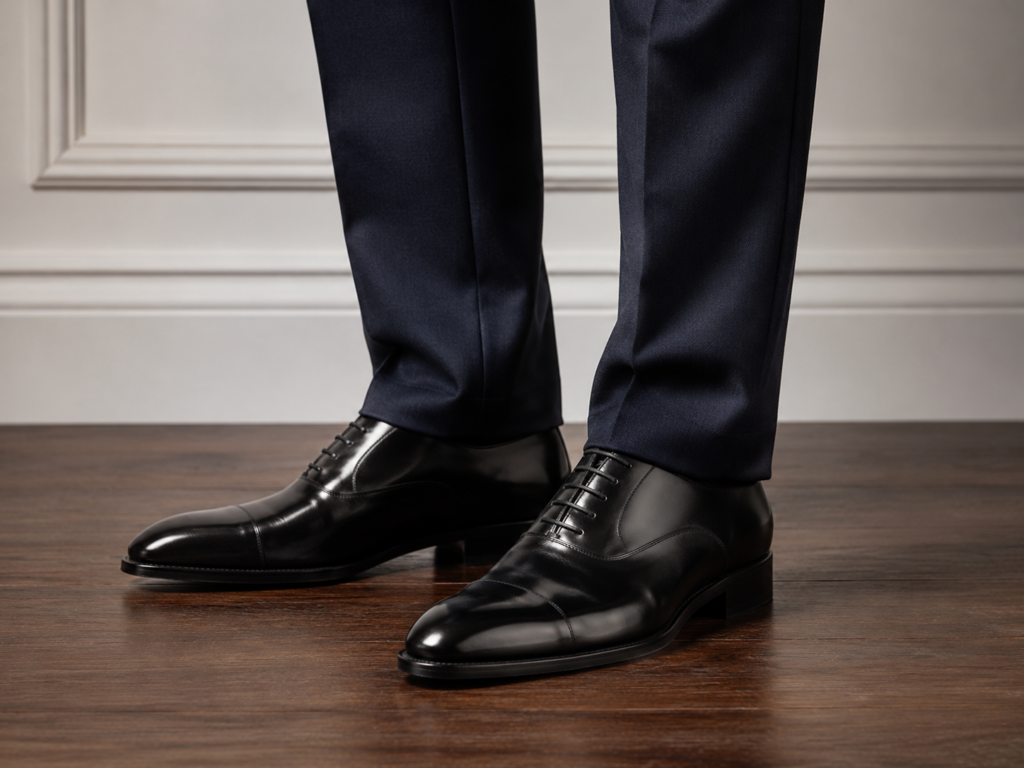
Trousers should be the right length and fit through your waist, seat, and leg line to balance your silhouette.
Waist
You want the waistband to sit comfortably and securely without relying on a belt to hold it in place. Although a belt can add style and minor support, the waistband itself should do most of the work. If your pants consistently slide down or require tightening, the waist probably needs an adjustment from the tailor.
Seat
Excess fabric in the seat of your pants can cause a sagging appearance, while too little room can create horizontal wrinkles across the back. A tailor can adjust the seat by taking in or letting out the center back seam so it follows the natural shape of your body.
Leg line
The pants’ fabric should skim your legs and thighs without clinging too tightly. Overly baggy pants can look dated, but super slim fits can restrict movement. Aim for a smooth, streamlined silhouette to elongate the appearance of your leg and make you look taller.
Length
Suit pants traditionally have a slight “break,” where the front of the pant leg gently touches the top of your shoe, creating a small crease. Some modern styles crop the trouser leg above the ankle, usually to show off an interesting pair of shoes. That can work in fashion-forward environments, but a traditional pant break is more versatile. It’s a subtle but sophisticated detail that works well for weddings, formal events, and everyday professional wear.
How a Tailor Can Fix Your Suit
It’s rare to buy a suit that fits perfectly off the rack. Professional tailors can make a few adjustments to take your ensemble from good to great.
Regular Suite Alterations
Many alterations are fairly routine. Tailors can hem pants to the correct length, take the waistband in (or let it out), and shorten sleeves so the right amount of shirt cuff shows. They can also taper pant legs or suppress the jacket waist for a more defined shape. These modifications help your suit look custom-made but don’t require a lot of reconstruction.
Complex and Costly Suit Alterations
Unfortunately, not every fit issue is easy to fix. Changes to the shoulders or jacket length involve substantial work, making them some of the most expensive tailoring jobs.
Because of the cost and complexity, these alterations aren’t always practical. When shopping for a suit, try to get the shoulders and length as close to perfect as possible since they’re the hardest areas to alter successfully.
What To Ask a Tailor
If you’re thinking about alterations, don’t hesitate to ask questions during your fitting. Check whether a tailor can taper the trousers, adjust the waist, or shorten the sleeves. Or, ask which tweaks would look the best. An experienced tailor can spot the most effective adjustments and help you decide which alterations are worth making. And they can make basic alterations faster than you expect — you may be able to get your pants hemmed and returned on the same day.
Additional Considerations: Fabric, Color, and Style
Even though fit should come first, a few factors can influence how your suit looks and performs:
- Fabric: Wool is the most versatile suit fabric because it works well in every season. Linen offers plenty of breathability, but it looks casual and wrinkles easily.
- Color: Darker colors like navy and charcoal appear more formal and can create a slimming effect, but lighter shades work well for spring and summer events.
- Style: A single-breasted suit is a classic style that’s appropriate for formal occasions like proms or weddings, making it a staple item in your wardrobe.
Why Fit Changes How You Look and Feel in Your Suit
A good suit enhances your overall appearance. When clothing fits properly, you stand straighter and carry yourself with confidence. It also improves your mobility — a well-tailored suit allows you to walk, sit, and move comfortably throughout the day.
The right fit helps you make a great first impression. Whether you’re attending a wedding or going for a job interview, a tailored suit helps you look polished from head to toe. Even better, tailoring can extend the life of your wardrobe. If garments fit the way they should, you’re more likely to rewear them and get greater value from your investment.
Men’s Wearhouse Helps You Get the Right Fit
Once you know how to wear a suit, Men’s Wearhouse can take your style to the next level with expert fittings and in-store tailoring. Whether you’re shopping for your first suit or updating your closet, our team of more than 600 tailors and alteration specialists can help you find the fit that works best for you. Let us help you walk into your next big event with confidence.
Shop Related Products