

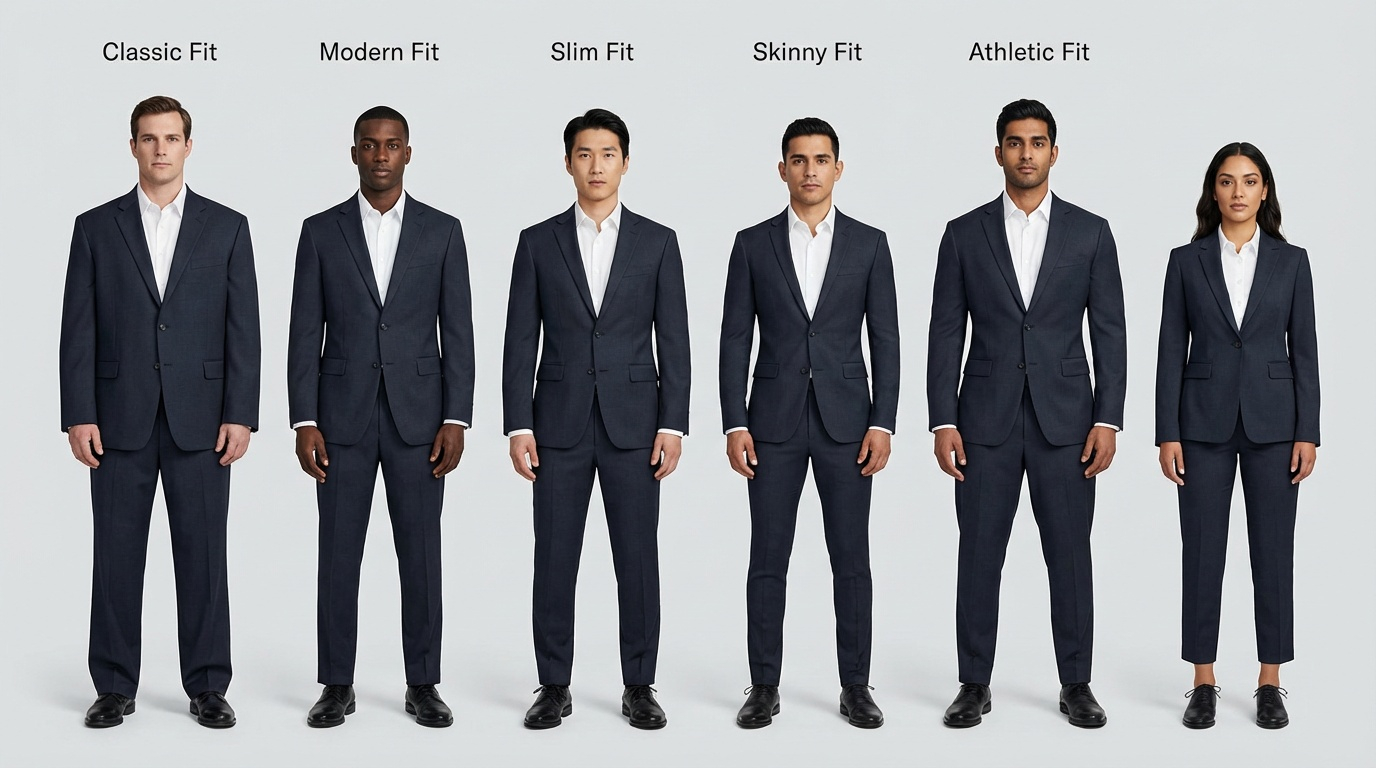

Fit definitions: The five fit labels you’ll see
Classic fit: The roomiest option with a fuller cut through the chest, waist, and seat for comfort and traditional silhouette.
Modern fit: A middle ground between classic and slim, with a slightly tapered waist but more room than slim fit.
Slim fit: A close-to-body cut with higher armholes, narrower lapels, and a defined waist suppression.
Skinny fit: The most extreme taper, fitted tightly through chest, sleeves, and legs with minimal ease.
Athletic fit: Designed for broader shoulders and chest with extra room in the upper body while maintaining a tapered waist. Not all retailers carry this designation, and fit varies widely.
If you don’t know your baseline measurements (chest, waist, seat, inseam), start with The Fundamentals of Men’s Suit Sizing and Fit. It’ll make everything below land faster.
Quick answer: classic, modern, slim, and skinny fits
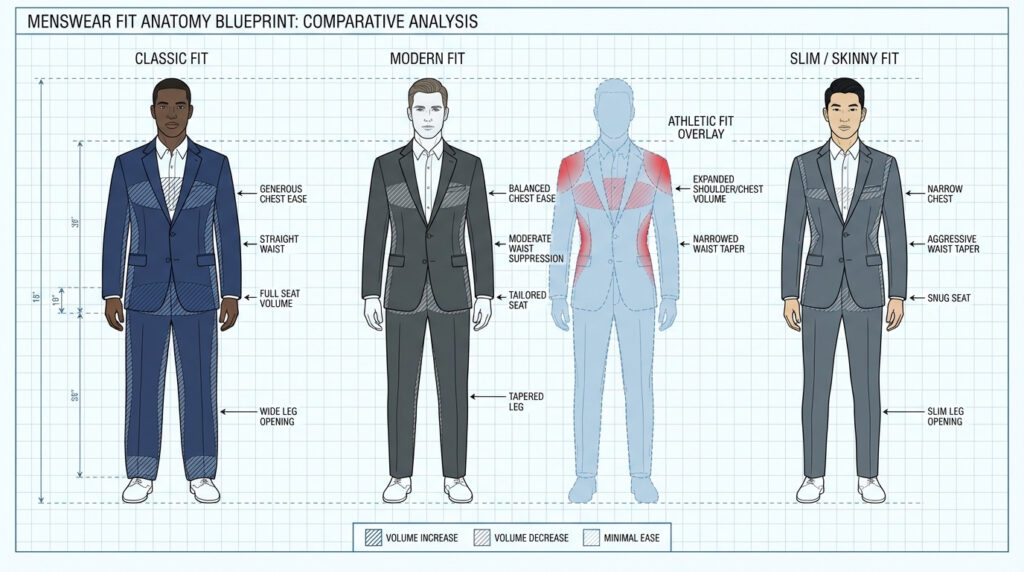
Classic fit gives you the most room through your chest and waist with minimal taper, perfect if you prioritize comfort or have a fuller build. Modern fit offers a gentle taper from chest to waist while keeping armholes comfortable, making it the most versatile choice for different body types. Slim fit creates a defined waist suppression with higher armholes and narrower trouser legs, ideal if you have a lean to athletic build and prefer contemporary styling. Skinny fit takes the taper to the extreme with tight measurements throughout, working best only for very lean builds who want maximum fashion-forward impact.
When you’re between fits or unsure, modern fit splits the difference and rarely disappoints. See our full suit fit hub
What does “modern fit” mean in men’s suits?
Modern fit refers to a suit cut that sits between classic and slim fit, offering a contemporary silhouette without the snug feel of slim styles. It’s designed to look current while accommodating more body types comfortably.
Modern fit in one sentence
Modern fit is a slightly tapered cut that’s roomier than slim fit but more shaped than classic fit, making it the most versatile option for different builds and style preferences.
What modern fit changes (shoulders, waist, trousers)
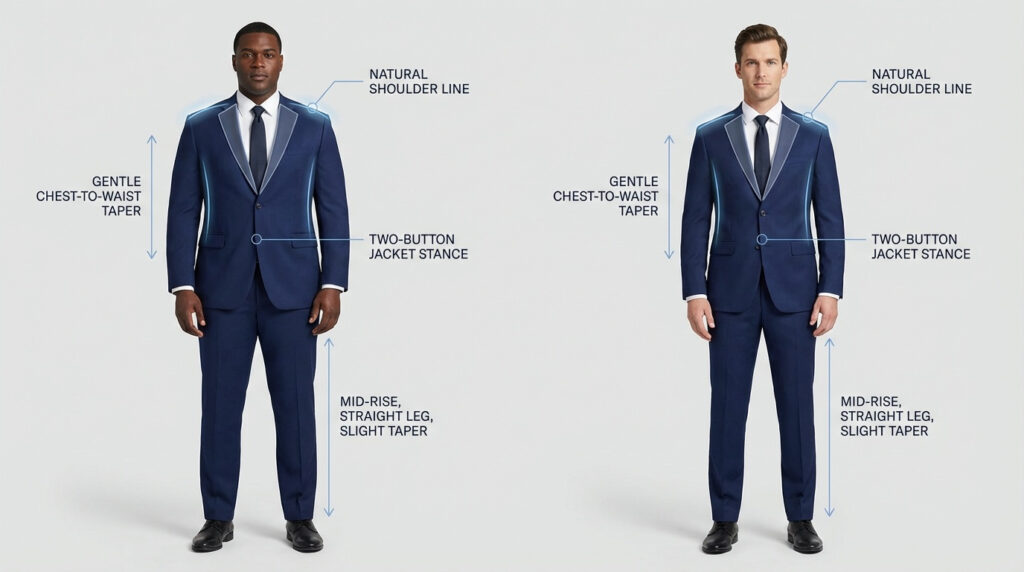
The jacket shoulders sit naturally without excess padding or width. You’ll notice a gentle taper from chest to waist rather than a straight drop or aggressive suppression. The armholes are positioned lower than slim fit, giving your arms more freedom without looking boxy.
Modern fit jackets typically feature a two-button closure and medium-width lapels that won’t look dated in five years. The length hits right at your knuckles when arms are relaxed at your sides.
Trousers in modern fit have a straight leg with a slight taper toward the ankle. There’s enough room in the seat and thighs to sit comfortably without pulling, but you won’t see excess fabric bunching. The rise (crotch-to-waistband measurement) sits at a mid-point, neither too high nor fashionably low.
If you’re shopping across retailers, you might see modern fit labeled as “contemporary fit,” “updated fit,” or simply “tailored.” The exact measurements vary, which is why trying on or checking size charts matters more than trusting the name alone.
Modern fit for job interviews
Modern fit is your safest bet for job interviews because it strikes the perfect balance between polished and comfortable. You’ll look current without appearing too fashion-forward, and you can sit, shake hands, and move naturally without fabric pulling or bunching. Quick fit checkpoints: shoulders should align with your natural shoulder line, jacket length should hit at your knuckles, show about a half-inch of shirt cuff, and trousers should have a slight break at your shoes.
Stick with charcoal or navy for maximum versatility, pair with a crisp white or light blue dress shirt, and choose a conservative tie in a solid color or subtle pattern. Complete the look with black or brown leather dress shoes that match your belt. Remember, even the best off-the-rack fit benefits from professional adjustments. What a tailor can and can’t fix can make the difference between looking good and looking great when it matters most.
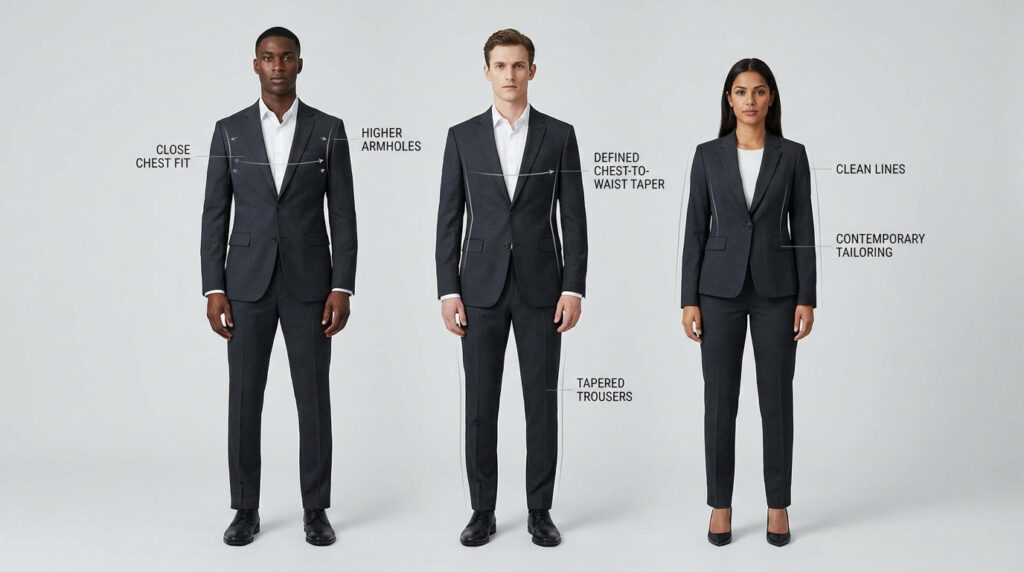
What is a slim fit suit?
A slim fit suit is designed to follow your body’s natural lines more closely than traditional cuts, creating a contemporary, tailored silhouette. In the jacket, this means 2 to 3 inches of chest ease (compared to 4-5 inches in classic fit), defined waist suppression that tapers from chest to hem, and higher armholes that sit closer to your shoulder. Trousers feature a tapered leg that narrows from knee to ankle, creating a streamlined look from top to bottom.
The fit is right when the jacket follows your torso without pulling. Important Note on Armholes: While slim fit armholes are higher and feel tighter in the armpit, this actually improves mobility. Because the pivot point is closer to your actual shoulder joint, the jacket body won’t lift up when you raise your arm, unlike lower-cut classic armholes. Warning signs it’s too tight: horizontal pulling across the back when you stand naturally, the jacket button creates an X-shape when fastened, you can’t slide your hands into trouser pockets while seated, or vertical pull lines appear along the button placket.
Slim fit works best for lean to athletic builds who want a modern, fashion-forward look. If you have broader shoulders or carry weight in your midsection, modern fit offers a better balance of contemporary styling with comfortable room, while athletic fit provides targeted room in the chest with similar waist definition. Explore our complete suit fit guide for personalized recommendations.
Slim fit vs classic fit suits: Which should you get?
Choose slim fit if you prefer a modern, fitted silhouette and have an average to lean build. Choose classic fit if you prioritize comfort and movement or carry more weight in your midsection. When in doubt, modern fit splits the difference.
The 20-second rule (choose this if…)
- Choose classic fit if: You need full range of motion, prefer traditional styling, or find slim cuts restrictive across shoulders or chest
- Choose modern fit if: You want contemporary styling without feeling squeezed, you’re between sizes, or this is your first tailored suit
- Choose slim fit if: You have a lean or athletic build, prefer fashion-forward looks, and don’t mind a closer fit through arms and torso
- Choose athletic fit if: You have broad shoulders relative to your waist (more than 7-inch drop from chest to waist measurement)
Comparison table (classic vs modern vs slim vs skinny)
| Feature | Classic Fit | Modern Fit | Slim Fit | Skinny Fit |
|---|---|---|---|---|
| Chest ease | 4-5 inches | 3-4 inches | 2-3 inches | 1-2 inches |
| Waist suppression | Minimal to none | Slight taper | Defined taper | Aggressive taper |
| Shoulder style | Natural or padded | Soft construction | Narrow, high | Very narrow |
| Armhole height | Low, roomy | Mid-level | High, close | Very high |
| Trouser leg | Straight or fuller | Straight with taper | Tapered | Very tapered |
| Jacket length | Traditional (covers seat) | Slightly shorter | Shorter | Cropped look |
| Best for body type | All builds, comfort priority | Most body types | Lean to athletic | Very lean only |
Skinny fit (boundary case: Slim but more extreme)
Skinny fit takes the slim silhouette further with tighter measurements throughout. The jacket hugs your torso with minimal ease, high armholes restrict arm movement, and trousers taper dramatically to a narrow ankle opening.
This cut works best for very lean builds and fashion-forward occasions. The tradeoff: you’ll sacrifice comfort and movement. Sitting, reaching, or wearing the suit for extended periods becomes challenging.
If you see pulling at the button when you fasten the jacket or horizontal wrinkles across the back, the skinny fit is too tight. Unlike slim fit, which can work for many builds when sized correctly, skinny fit has a narrow sweet spot. Most people shopping for professional or formal events will find slim fit offers a better balance of style and wearability.
Regular vs slim fit sizing: What’s the difference?
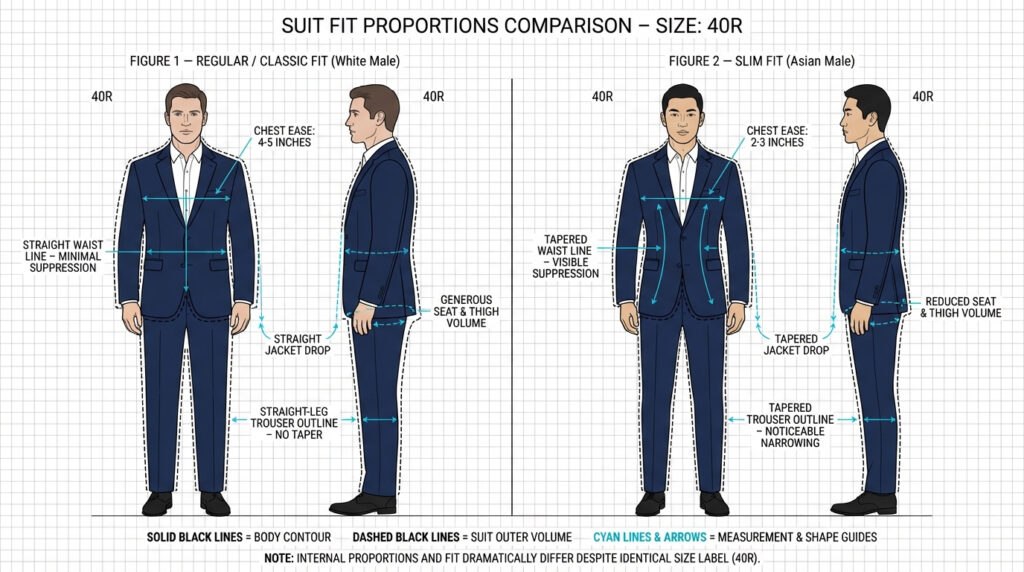
Regular fit (often called classic fit) and slim fit differ in four key measurements: chest ease, waist suppression, armhole placement, and trouser taper. These create dramatically different silhouettes from the same base size.
Regular vs slim (technical specs that matter)
Chest ease: Regular fit adds 4 to 5 inches of ease beyond your actual chest measurement. A 40-inch chest gets a 44 to 45-inch jacket interior. Slim fit reduces this to 2 to 3 inches of ease, meaning that same 40-inch chest gets a 42 to 43-inch jacket.
Waist suppression: This is where fit differences become visible. Regular fit jackets maintain a relatively straight line from chest to hem with minimal shaping. Slim fit creates a defined taper, typically suppressing the waist by 2 to 3 inches more than regular fit.
Armhole height: Slim fit positions armholes higher on your torso, creating a closer fit through the shoulder and chest. Technically, this higher pivot point allows for better arm movement without distorting the jacket shape, though it feels snugger in the armpit. Regular fit armholes sit lower, which feels roomier but causes the whole jacket to lift when you raise your arms.
Trouser taper: Regular fit trousers maintain consistent width from hip to ankle or taper slightly. Slim fit trousers narrow noticeably from knee to ankle, creating a streamlined leg line. The difference at the ankle opening can be 2 to 3 inches between fits.
Mirror tells (how to know you picked wrong)
You picked too slim if you see:
- Horizontal wrinkles pulling across your upper back when standing naturally
- The jacket button pulls or creates an X-shape when fastened
- You can’t comfortably slide your hands into trouser pockets while seated
- The jacket rides up significantly when you raise your arms forward
- Vertical pull lines appear along the button placket
You picked too full if you notice:
- Excess fabric bunching at the small of your back
- The jacket shoulders extend past your natural shoulder line
- You can pinch more than 2 inches of fabric at your sides with the jacket buttoned
- Trouser fabric pools or breaks excessively at your shoes
- The overall silhouette looks dated or unflattering
Modern fit vs slim fit: the key differences
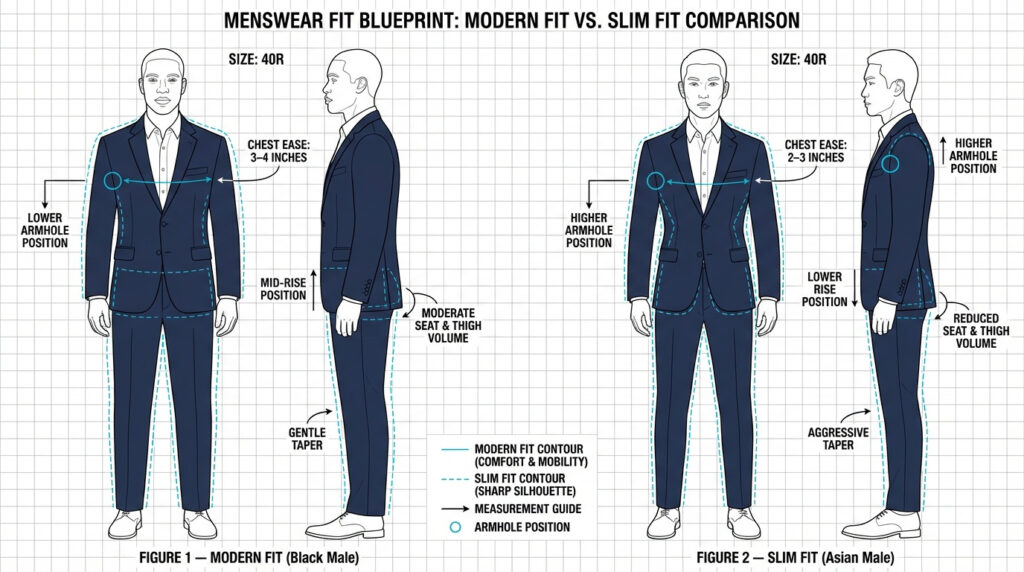
Modern fit and slim fit differ most noticeably in how they feel and move with you throughout the day. Modern fit offers 3-4 inches of chest ease compared to slim fit’s 2-3 inches, creating a more relaxed silhouette without looking loose. The armholes sit lower in modern fit, giving your arms freedom to reach and gesture comfortably, while slim fit’s higher armholes create that sharp, tailored look but restrict movement more.
In trousers, modern fit provides extra room through the seat and thighs with a gentle taper from knee to ankle. Slim fit tapers more aggressively throughout, creating a streamlined leg line but potentially feeling snug when sitting for long periods. The rise in modern fit sits at a comfortable mid-point, while slim fit often features a lower rise that looks contemporary but may feel restrictive.
Choose modern fit if: you want contemporary styling with all-day comfort, you’re new to tailored clothing, or you need to move freely for work or events. Choose slim fit if: you have a lean build, prefer fashion-forward looks, and prioritize sharp silhouette over maximum comfort. Modern fit works better for 12-hour days, while slim fit excels for shorter, more formal occasions where appearance takes priority over mobility.
Regular vs slim vs athletic fit: Decoding retailer terminology
Athletic fit addresses a specific build challenge: men with broad shoulders and chest relative to their waist. While regular fit offers room everywhere and slim fit tailors everything close, athletic fit provides targeted room in the upper body with a tapered waist.
What “athletic fit” usually means (and when it doesn’t)
Most athletic fit suits feature extra room through the chest and shoulders (similar to regular fit) combined with waist suppression (similar to slim fit). This accommodates a V-shaped torso without requiring extensive alterations.
The challenge: athletic fit isn’t standardized across retailers. Some brands simply add chest room to a slim fit base. Others modify the shoulder construction and armhole placement. A few use stretch fabrics to provide flexibility rather than changing the cut itself.
What you’ll typically find in athletic fit:
- Drop 7 or drop 8 sizing (7 to 8-inch difference between chest and waist measurements)
- Fuller chest and shoulder area than modern or slim fit
- Higher armholes than classic fit but lower than slim fit
- Tapered waist that’s more defined than regular fit
- Trousers with extra room in seat and thighs
The term “athletic fit” appears less consistently than classic, modern, or slim. If you don’t see it labeled, look for suits with drop 7 or drop 8 sizing, or consider buying a larger jacket size and having the waist taken in.
V-taper diagnostic (if you have X… choose Y…)
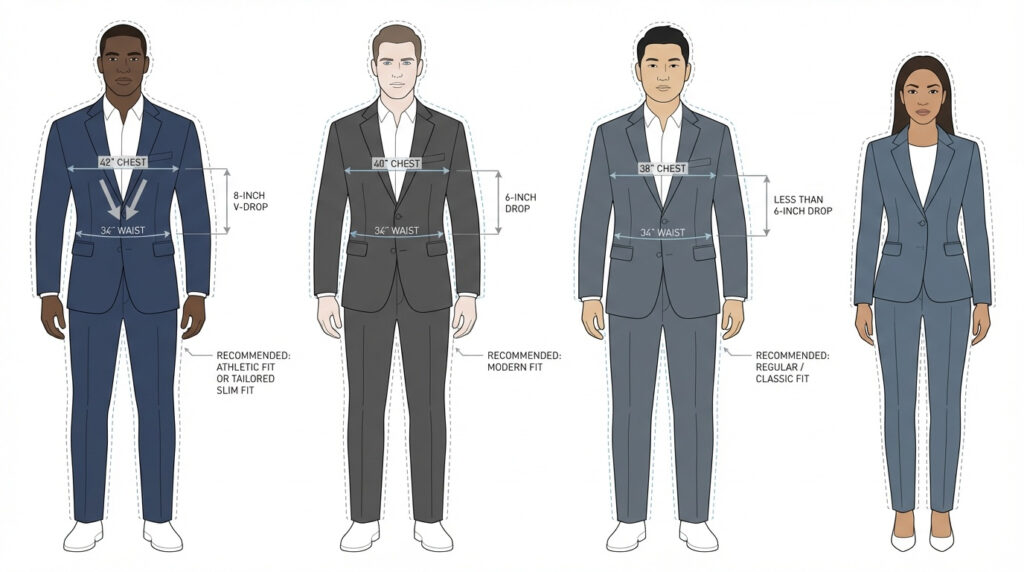
If your chest measures 42 inches and your waist measures 34 inches (8-inch drop), standard slim fit will be tight in the chest while regular fit will be loose at the waist. Choose athletic fit or size up in slim fit and tailor the waist.
If you have broad shoulders but a proportional waist (6-inch drop or less), modern fit typically provides enough room without looking boxy. Athletic fit may actually be too tapered for your build.
If you carry weight in your midsection (less than 6-inch drop), regular fit or classic fit will be more comfortable than athletic fit, which is designed for the opposite proportion.
If your thighs are muscular relative to your waist, pay special attention to trouser fit in athletic lines. Some retailers increase seat and thigh room, while others only modify the jacket.
Retailer translation box (fit labels and what they usually mean)
Different retailers use different terminology for similar fits. Here’s how common labels typically translate, though you should always verify measurements.
Translation table (regular, modern, tailored, slim, skinny, athletic)
- Regular fit / Traditional fit / Classic fit: Roomiest option with minimal waist suppression and lower armholes
- Modern fit / Contemporary fit / Updated fit: Middle ground between regular and slim with slight taper
- Tailored fit / Trim fit / Fitted: Usually equivalent to slim fit, sometimes between modern and slim
- Slim fit / Narrow fit: Close-to-body cut with defined waist suppression and higher armholes
- Skinny fit / Super slim / Extra slim: Most extreme taper with minimal ease throughout
- Athletic fit / Tapered fit: Extra room in chest and shoulders with tapered waist (not universally available)
Some retailers use numbered fits (Fit 1, Fit 2, Fit 3) rather than descriptive names. In these systems, the lowest number typically indicates the slimmest fit, but this isn’t universal. Always check the brand’s specific size guide.
The rule: Measurements beat labels
Fit names are guidelines, not standards. A slim fit from one retailer might fit like a modern fit from another. Brand vanity sizing compounds the confusion, as some labels adjust their measurements to make customers feel they fit into smaller sizes.
What to do instead:
- Check the brand’s size chart for actual measurements (chest, waist, sleeve length)
- Compare those measurements to your own, taken correctly
- Read the product description for details like “roomier through the chest” or “tapered leg”
- Look for customer reviews mentioning fit (runs large, runs small, true to size)
- When possible, try on multiple fits from the same brand to feel the differences
Your actual body measurements remain constant. Retailer labels and sizing change. Prioritizing measurements over terminology prevents fit disappointments and returns.
Why suit jacket sizes vary between brands (and what to do about it)
You might be a 40R in one brand and need a 42R in another for the same fit. This happens because suit sizing lacks universal standardization, and brands use different base patterns and vanity sizing strategies.
Why it happens (3 reasons max)
Reason 1: Different base blocks. Each brand starts with a base pattern (called a block) developed for their target customer. A brand targeting athletic builds uses a different base than one targeting traditional customers, even when both offer the same labeled size.
Reason 2: Vanity sizing. Some brands adjust their sizing so customers fit into smaller numbers. A jacket labeled 40R might actually have a 43-inch chest in one brand and a 44-inch chest in another. This makes customers feel better about their size while creating confusion across brands.
Reason 3: International sizing conversions. Brands manufactured overseas often convert from metric measurements to US sizes. Rounding errors and different conversion standards mean a European 50 doesn’t always equal a US 40 consistently.
What to do instead (checklist: shoulders first, then measurements)
- Start with shoulder fit: The shoulder seam should end at your natural shoulder line, not before or after. This is the hardest alteration to fix, so get it right from the start
- Check the chest next: Button the jacket and ensure you can slide your hand between your chest and the fabric without pulling
- Assess the length: The jacket should cover your seat with the hem hitting around your knuckles when arms hang naturally
- Verify the waist: With the jacket buttoned, you should be able to slide a flat hand between the fabric and your body but not pinch more than 2 inches of excess
- Test the armholes: Raise your arms forward and to the sides. The jacket should move with you without riding up excessively
- Examine sleeve length: Sleeves should end at your wrist bone, showing about a half-inch of shirt cuff (this is easily altered)
If you’re between sizes, size up. Taking a jacket in at the sides and waist costs less and looks better than trying to let out a too-small jacket (which often isn’t possible).
Tailoring reality: What can and can’t be fixed
Professional alterations turn a good fit into a great one, but they can’t fix fundamental sizing mistakes. Understanding what tailors can easily adjust versus what’s difficult or impossible helps you buy the right base size.
Easy alterations (worth doing)
- Sleeve length: Shortening or lengthening (if fabric allows) is straightforward and inexpensive
- Trouser hem: Adjusting length and break is standard tailoring
- Side seams: Taking in the jacket sides and waist creates a better taper when there’s excess fabric
- Trouser waist: Taking in or letting out (if fabric is available) improves fit
- Trouser taper: Slimming the leg from knee to ankle modernizes the silhouette
- Sleeve buttons: Moving buttons or creating functional buttonholes is decorative but doable
Hard or limited alterations (avoid buying the wrong base fit)
- Shoulders: Restructuring shoulder width or slope requires taking the jacket apart and rarely looks right
- Chest: Letting out the chest is only possible if excess fabric exists in the seams (usually half an inch maximum)
- Jacket length: Shortening changes pocket placement and proportions. Lengthening is impossible without fabric
- Armholes: Raising or lowering armholes affects the entire jacket structure and isn’t practical
- Lapel width: Changing lapel size requires remaking the front of the jacket
- Trouser rise: Altering the distance from crotch to waistband changes how trousers sit and rarely works well
Tailor rule: Shoulders are not negotiable
If the shoulders don’t fit correctly off the rack, don’t buy that jacket. The shoulder seam should align with your natural shoulder line where your arm meets your torso. If it extends past this point, the jacket is too big. If it stops short, the jacket is too small.
Divots, pulling, or excess fabric at the shoulder indicate poor fit that alterations can’t fix. The cost of restructuring shoulders (when even possible) often exceeds the cost of the suit itself.
Start with correct shoulders, then have everything else adjusted. This approach ensures your suit looks custom-tailored rather than obviously altered.
Pick your fit in 20 seconds (decision tool)
If this is your first suit or you’re unsure: Choose modern fit. It’s versatile, flattering on most builds, and won’t look dated quickly.
If you have broad shoulders and a narrow waist: Try athletic fit first, or buy slim fit one size up and have the waist tailored.
If you prioritize comfort and traditional styling: Classic fit provides the most room and movement without looking oversized when properly fitted.
If you have a lean build and prefer contemporary style: Slim fit will look sharp without being restrictive.
If you’re between sizes: Size up and tailor down. It’s easier and less expensive than trying to make a small jacket work.
If mobility matters for your job or event: Avoid skinny fit and opt for modern or classic fit with lower armholes.
If you carry weight in your midsection: Regular or classic fit will be more comfortable than tapered cuts, and proper tailoring at the sides prevents a boxy look.
If you’re shopping online: Read size charts and customer reviews about fit, and have a backup plan for returns or local alterations.
FAQ
Choose slim fit if you have a lean to average build and prefer modern styling with a defined waist. Choose classic fit if you prioritize comfort and freedom of movement or if you carry more weight in your midsection. Classic fit offers 2 to 3 inches more ease through the chest and waist compared to slim fit. Modern fit splits the difference and works for most body types.
Regular fit provides 4 to 5 inches of chest ease and minimal waist suppression, creating a straight, comfortable silhouette. Slim fit offers 2 to 3 inches of chest ease and defined waist taper, creating a closer, more modern fit. The armholes sit higher in slim fit, and trousers taper more dramatically from knee to ankle compared to regular fit’s straighter leg.
Athletic fit combines the roomy chest and shoulders of regular fit with the waist taper of slim fit, designed for men with broad upper bodies and narrower waists. Regular fit has minimal taper throughout, while slim fit tapers both the upper and lower body. Athletic fit typically uses drop 7 or drop 8 sizing (7 to 8-inch difference between chest and waist measurements).
Brands use different base patterns, vanity sizing strategies, and international conversion standards, making a 40R fit differently across retailers. Some brands size generously so customers fit smaller numbers, while others maintain traditional measurements. Always check each brand’s size chart for actual chest, waist, and sleeve measurements rather than relying solely on the labeled size to ensure proper fit.
Modern fit is a contemporary cut that sits between classic and slim fit, offering a slightly tapered silhouette with more room than slim styles. It features moderate waist suppression, mid-level armholes, and straight-leg trousers with slight taper. Modern fit accommodates more body types comfortably while maintaining current styling, making it the most versatile option for first-time suit buyers.
Yes, professional alterations transform an adequate fit into a polished, custom look. Even perfectly sized off-the-rack suits benefit from sleeve adjustments, trouser hemming, and waist refinement. Expect to spend time and budget on tailoring when buying ready-made suits. The investment ensures your suit fits your specific proportions rather than generic sizing standards, dramatically improving your overall appearance.
It depends on what’s too big. Tailors can easily take in the waist, shorten sleeves, and hem trousers. However, if the shoulders are too wide or the chest is excessively large, alterations become expensive and often look unnatural. Shoulders are nearly impossible to fix properly. Size down or choose a different fit rather than buying a too-large suit expecting alterations to solve fundamental sizing problems