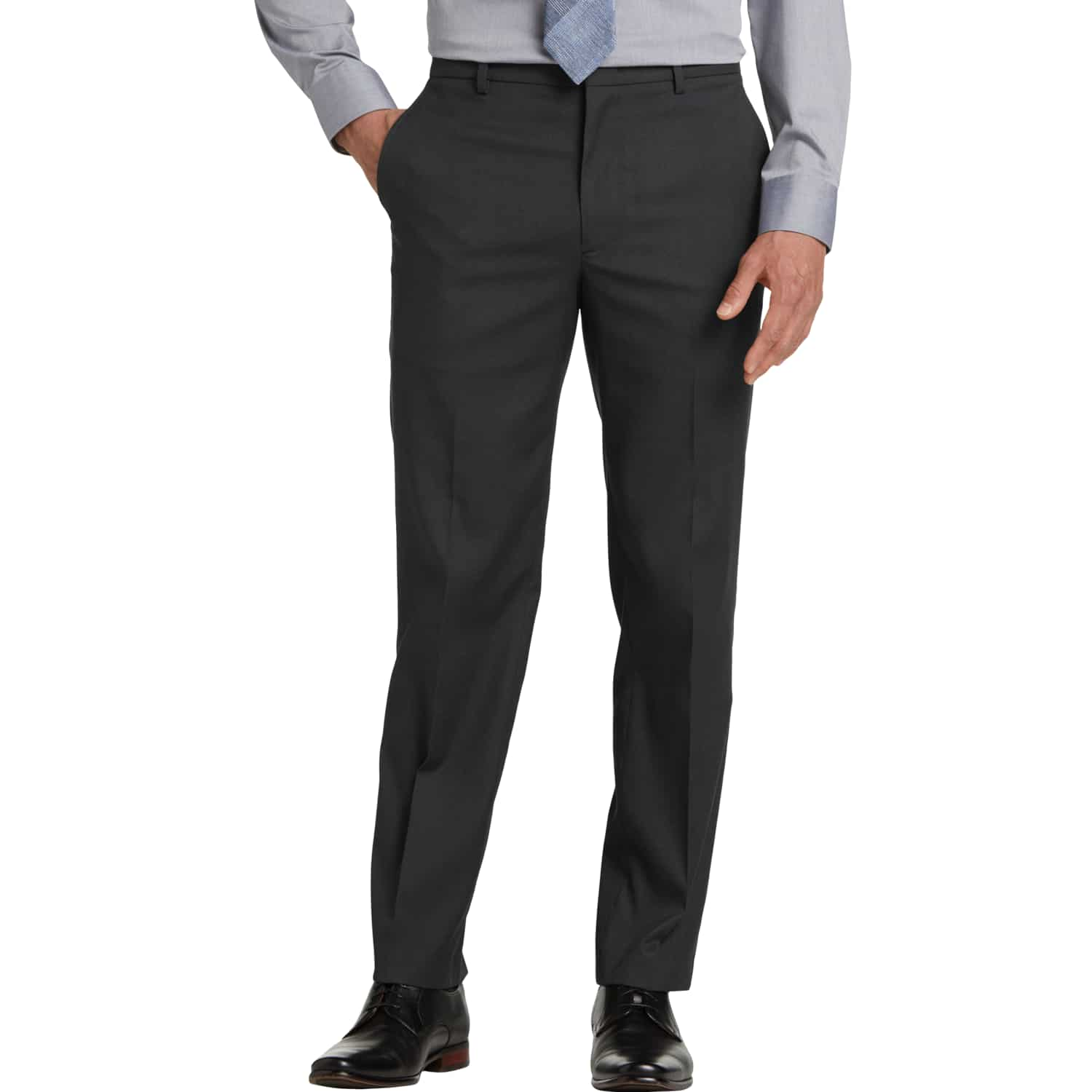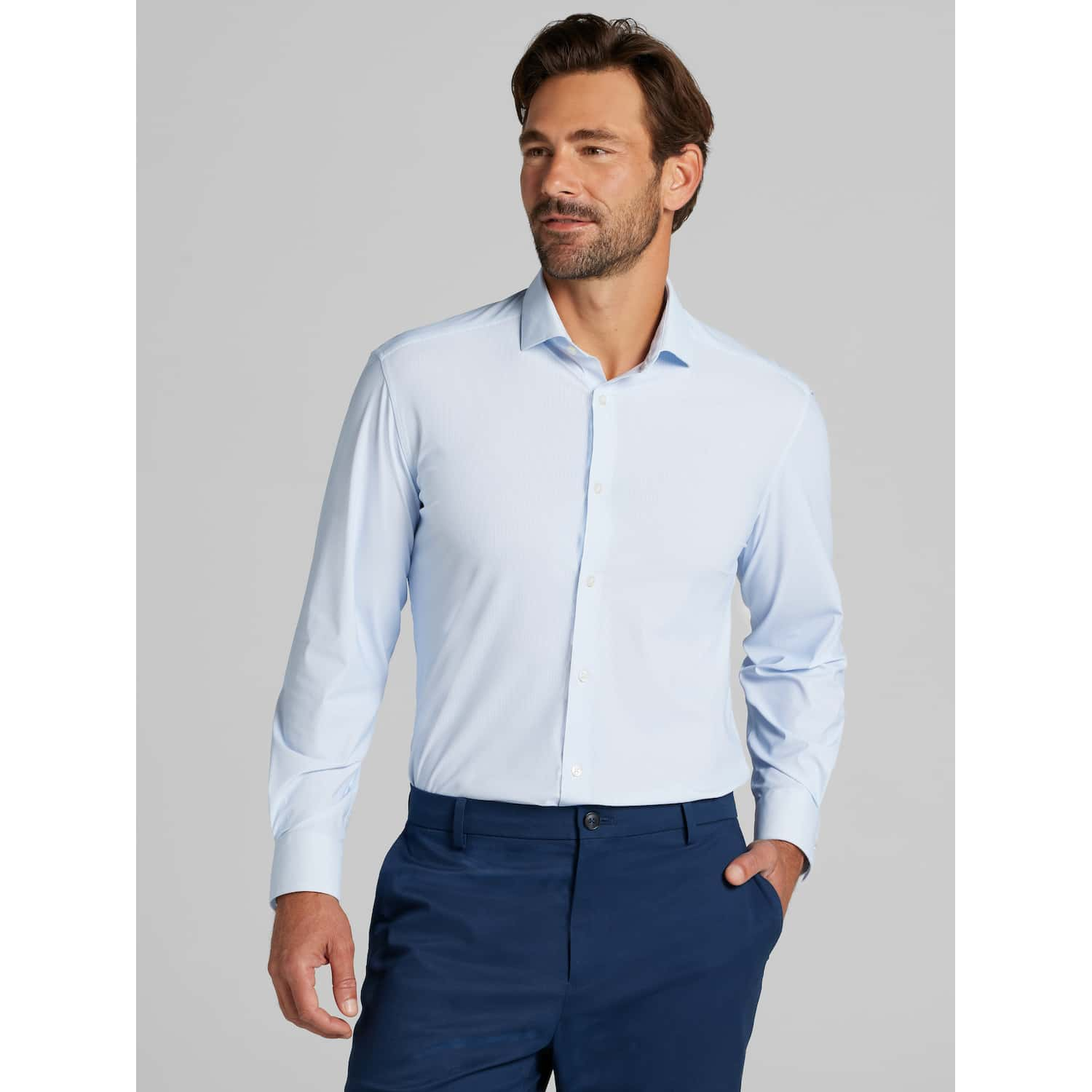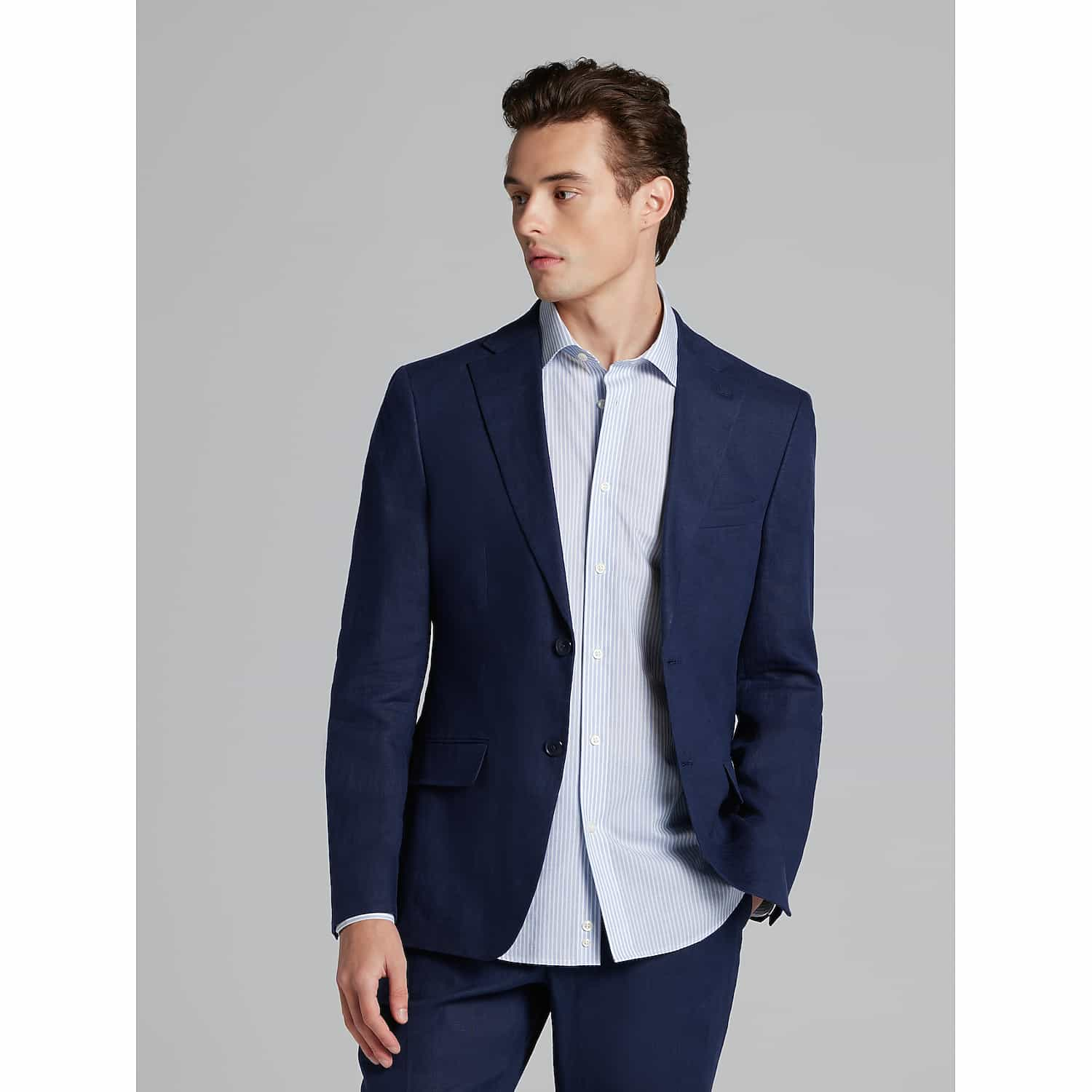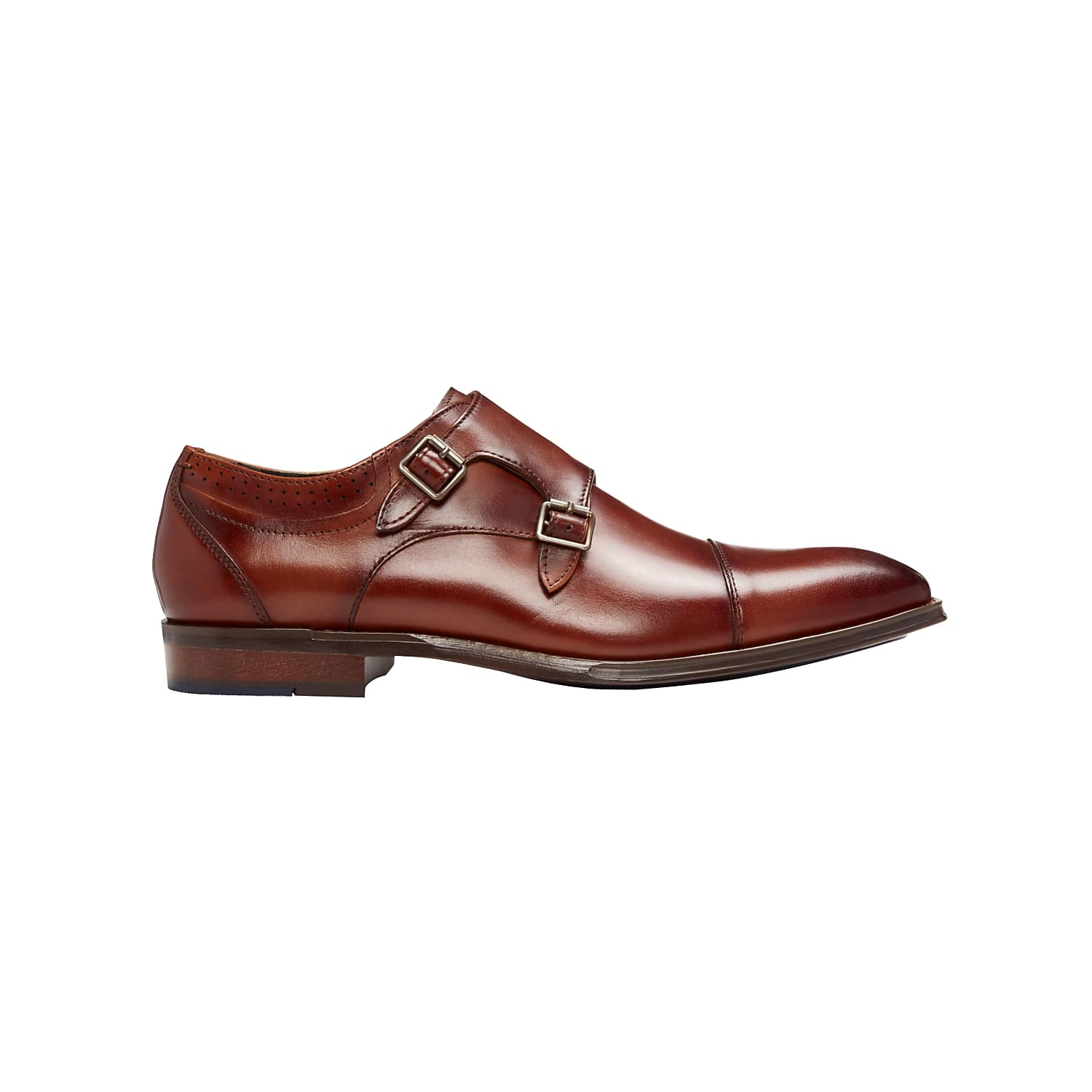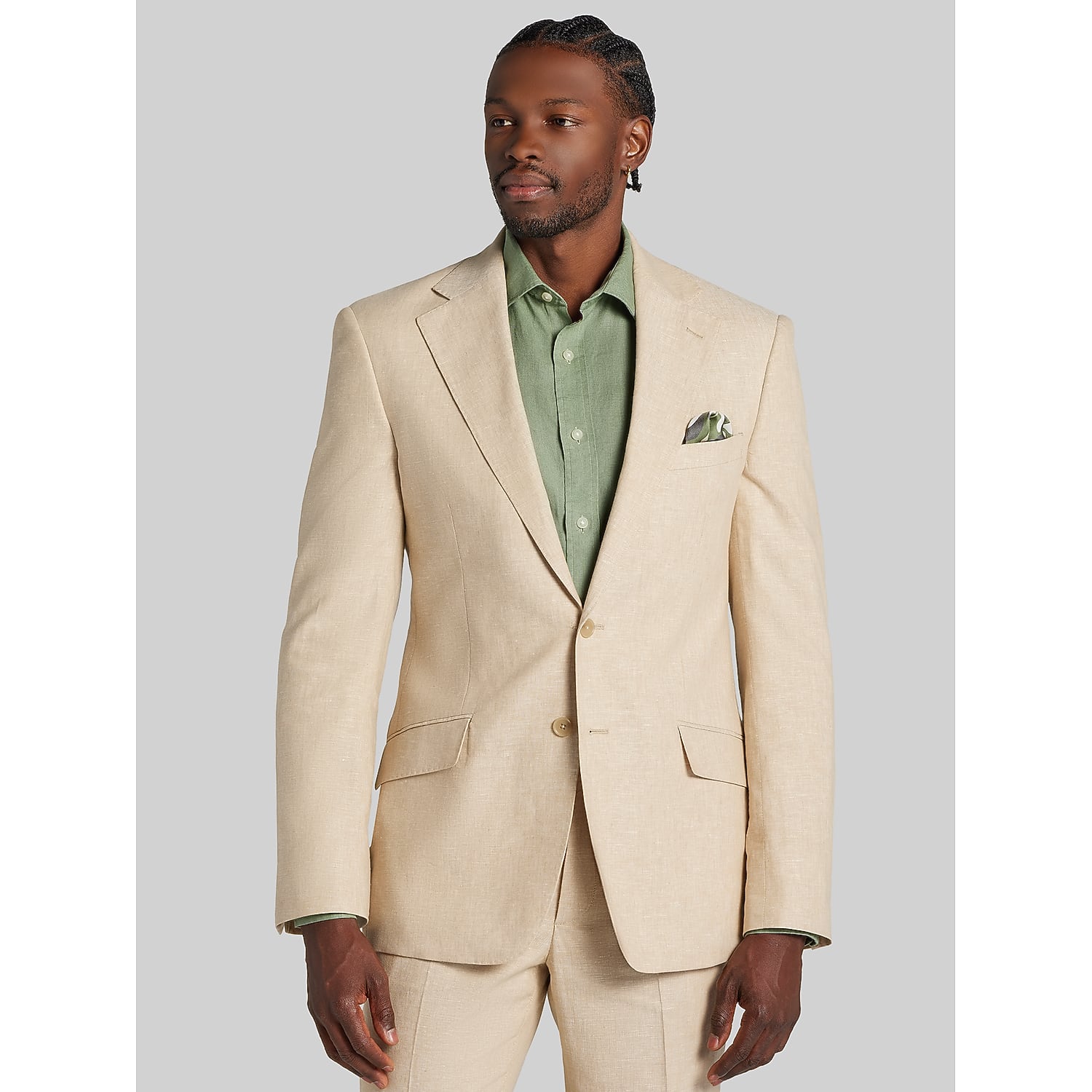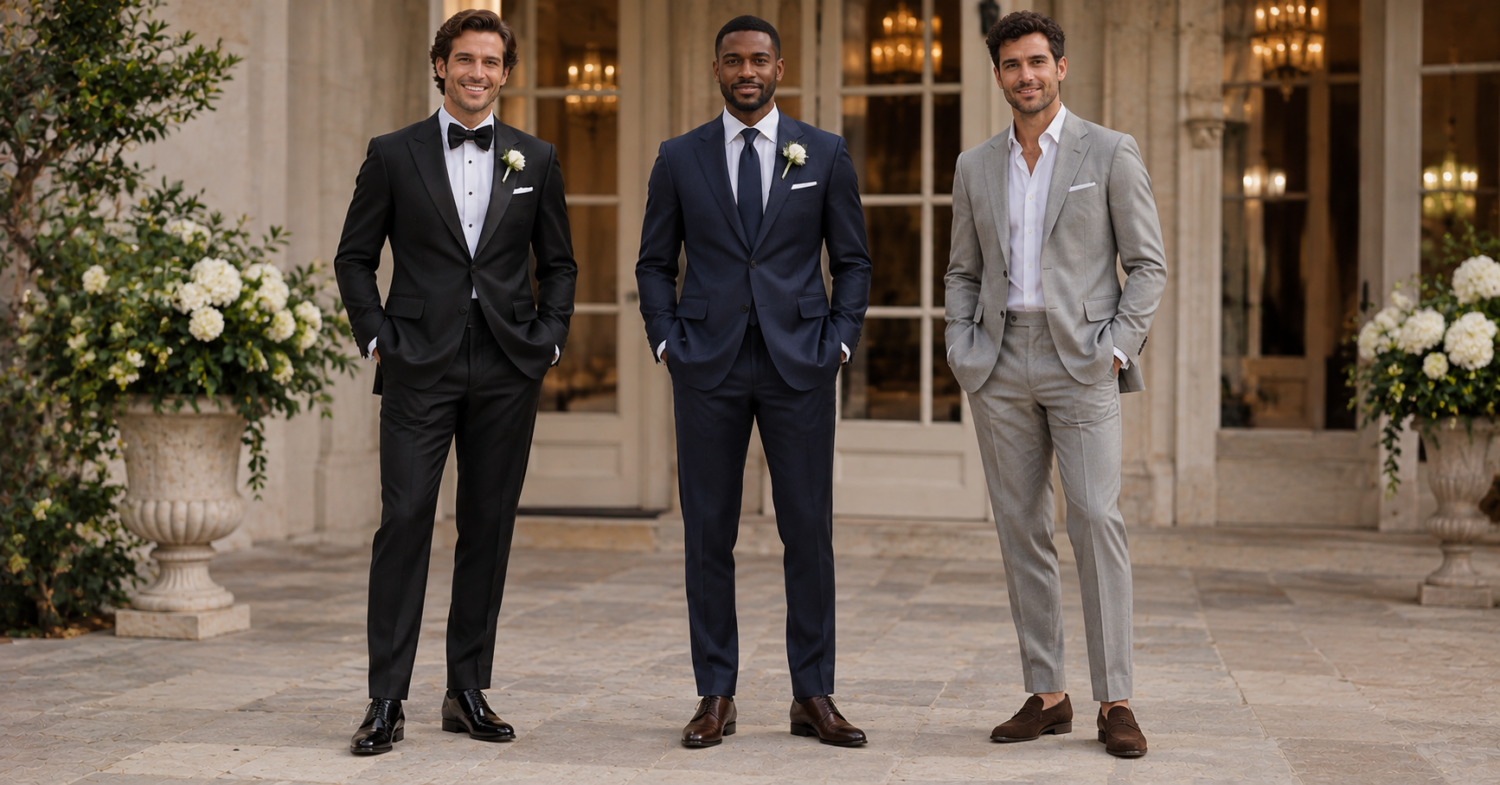

A wedding used to mean one outfit. Now it often means four or five. Every event has its own dress expectations, and they shift depending on whether you’re the groom, a groomsman, or a guest.
The easy move is wearing one safe suit all weekend. The better move is planning a look for each event that fits the setting and steps up or down in formality as the celebration goes on.
This guide covers wedding outfits for men from the first event to the last, plus how to plan and pack for all of it.
Wedding Week Planning Timeline
Lock in the ceremony look first since it sets the tone for everything else, then work backward from the date.
When To Buy vs. Rent
The ceremony usually makes the strongest case for renting. If you won’t wear the tux again, a rental keeps things simple. Pieces for the less formal events, like a navy blazer or chinos, are worth buying and rewearing.
When To Book Fittings and Alterations
For rentals, we recommend booking wedding groups at least four months ahead so everyone has time to get measured.
For anything you’re buying, start alterations six to eight weeks before the wedding. Tailoring usually takes a week or two, and using one in-store tailor for the whole weekend keeps the fit consistent.
How To Coordinate a Wedding Party
Book early in busy seasons, and schedule group fittings to catch fit problems early.
Groomsmen in different cities don’t have to fly in to get measured together. The groom can set up a wedding group with Men’s Wearhouse, and each person can get measured at a store near them.
What To Do in the Final Weeks
Rental looks typically arrive three to four days before the event. Try on every piece right away so there’s time for a swap, and confirm your return date before the weekend starts.
Welcome Party Outfits
The welcome party is usually the most relaxed event of the weekend. Think polished casual, not ceremony-level formalwear.
For the Groom
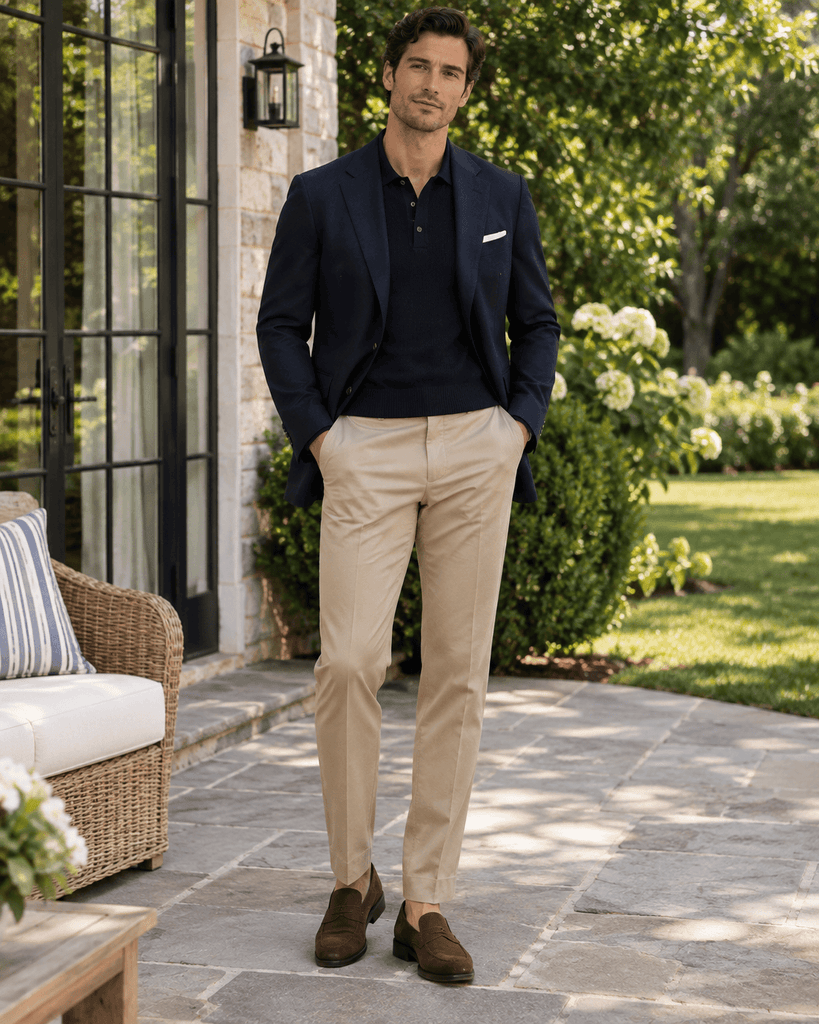
Aim for elevated but approachable. A sport coat over a knit polo or open-collar shirt with tailored trousers works for most venues. Drop the jacket at a backyard or beach spot.
For the Groomsmen
Groomsmen don’t need to match yet. Stay in the groom’s formality range and save the coordinated look for the ceremony.
For Guests
- Casual or no dress code: Chinos, a knit polo or short-sleeve button-down, and loafers.
- Semi-formal: Dress trousers, a button-down, and a blazer or sport coat. That puts you in semi-formal territory without going full suit.
What Works and What Doesn’t
Casual doesn’t mean jeans, shorts, or the sneakers you wear to run errands. Tuck in your shirt, wear loafers, and keep accessories to a watch and a good belt.
Rehearsal Dinner Outfits
The rehearsal dinner is a step up from the welcome party and a step down from the ceremony. The venue, time of day, and any dress code wording on the invite tell you which way to lean.
For the Groom
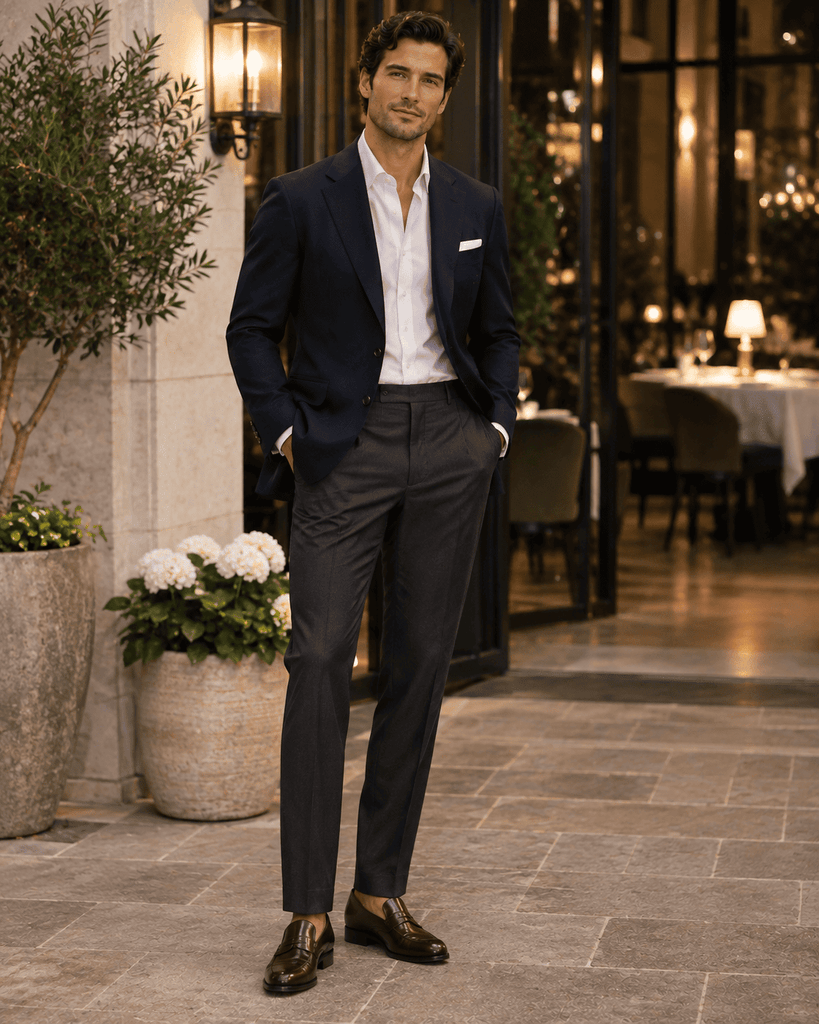
Pick a look that feels clearly different from tomorrow’s ceremony outfit. A blazer with dress trousers works, or a suit worn a little more casually with an open collar. For an outdoor or early evening dinner, you can skip the tie or go lighter in color and fabric.
For the Groomsmen
Groomsmen should match the groom’s formality without looking like a preview of the ceremony lineup. Coordinated blazers and dress pants beat identical suits here.
For Guests
Start with dress pants, a button-down, and a blazer, then adjust:
- Semi-formal or cocktail: Add a tie for an evening dinner, or trade the blazer and pants for a full suit. Our guide to cocktail attire breaks down the details.
- Casual: Skip the tie. Dark jeans can work at a truly casual dinner, as long as they’re clean and paired with a blazer and polished shoes.
Daytime dinners allow lighter colors, evening ones darker tones.
How To Read the Setting
The venue changes the details. A restaurant dinner calls for dress shoes and a complete look. Backyard and outdoor dinners allow lighter fabrics and loafers, and a beach dinner works best in breathable linen or cotton. In warm weather, a navy or light gray suit with loafers is a safe bet, as long as it doesn’t look like office wear.
Ceremony and Reception Outfits
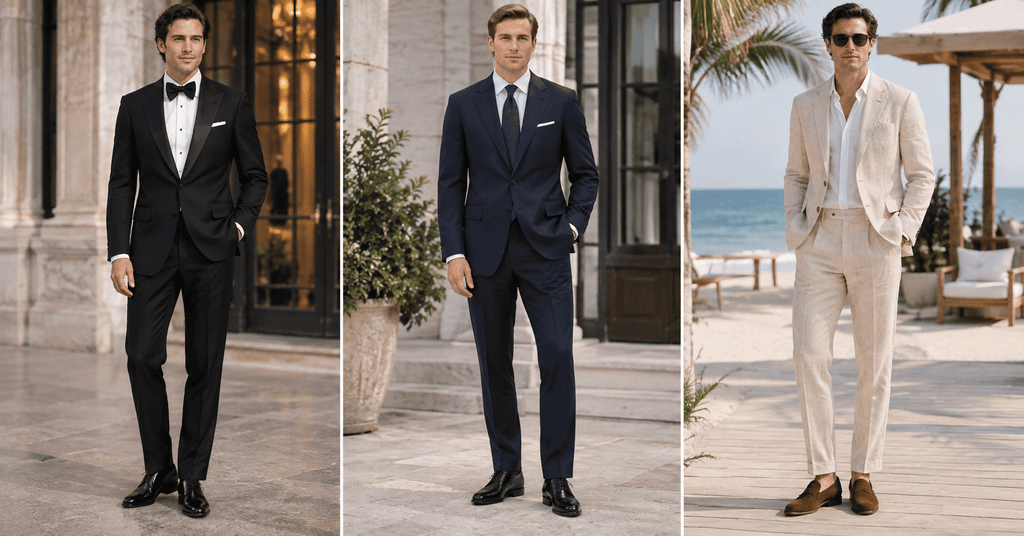
For most summer weddings, a lightweight suit, breathable dress shirt, and loafers or oxfords make a reliable guest formula. Add a tie unless the dress code is casual. That covers men’s wedding guest attire for summer in most settings.
By Dress Code
- White tie: A tailcoat, white vest, and white bow tie.
- Black tie: A tuxedo, formal white shirt, black bow tie, and polished dress shoes.
- Black tie optional: A tuxedo or a dark suit with a tie.
- Cocktail: A suit and dress shirt, with or without a tie.
- Semi-formal: A suit and tie. Lighter colors work for daytime ceremonies, darker tones for evening.
- Casual: Dress pants or chinos with a button-down, plus a blazer if the venue feels dressier.
At every level, skip shorts, flip-flops, loud resort shirts, and anything you’d wear to a regular day at the office.
By Role
The groom should be the most polished person there, in a tux or suit that fits the venue and season. Groomsmen follow the groom’s formality and color direction, with small differences like a tie or boutonniere so they don’t outshine him.
Guests can lean on simple formulas by venue:
- Indoor: A navy or charcoal suit, white shirt, tie, and oxfords.
- Outdoor or garden: A light gray or tan suit, light blue shirt, and loafers.
- Beach: A linen or cotton suit, or a blazer with trousers, an open collar if the dress code allows, and loafers.
Summer Fabric, Color, and Finishing Choices
The best way to stay cool without looking underdressed is choosing the right fabric, not removing layers. Linen, cotton, and lightweight wool breathe better, especially in jackets with less lining.
Navy, gray, light gray, and tan are dependable summer colors, and muted seasonal tones work well for daytime events. Finish with loafers for outdoor or daytime ceremonies and polished oxfords for indoor or evening ones. A pocket square adds personality without much effort.
Keep your tie on through the ceremony unless the dress code is casual. Once the dancing starts, it’s usually fine to loosen it or take off your jacket. Dressing for a different time of year? Check out our guides to spring wedding attire and winter wedding attire.
After-Party and Brunch Outfits
Both events should feel like a clear step down from the ceremony. Aim for relaxed but photo-ready.
For the After-Party
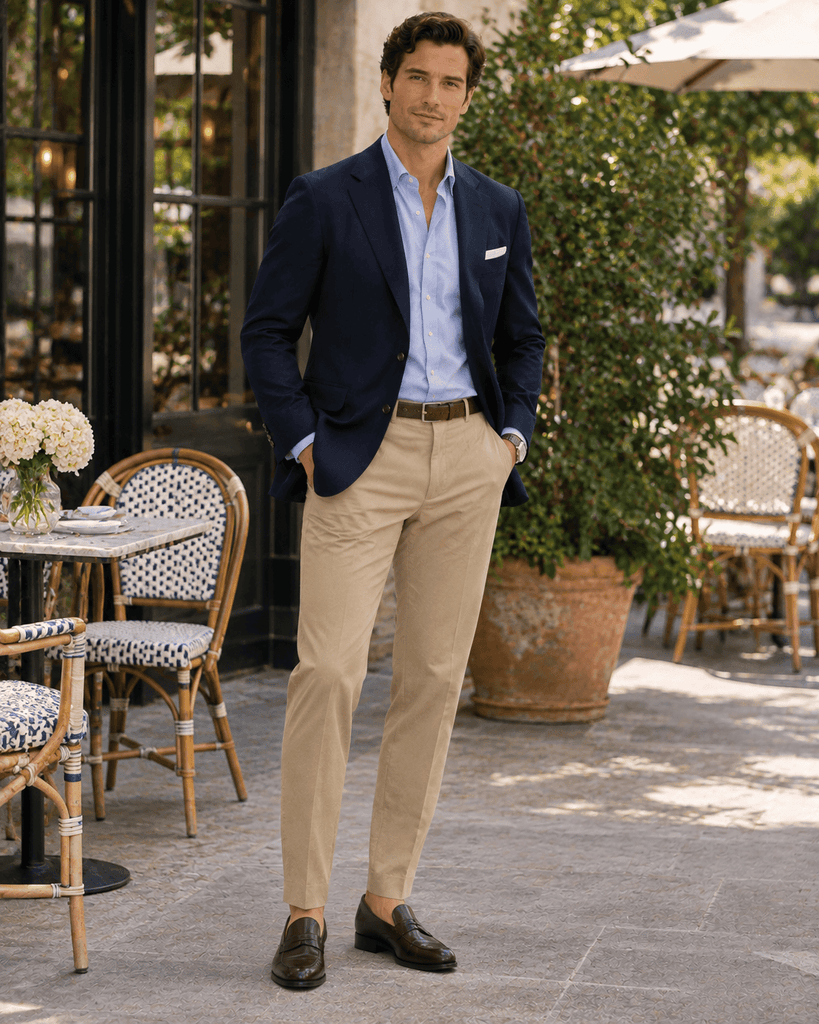
The groom and groomsmen can loosen the ceremony look by dropping the tie, opening the collar, or switching to separates. Guests can skip the blazer at a casual or semi-formal after-party and wear tailored trousers or chinos with a polished shirt. A tasteful print shirt works at festive parties.
For the Farewell Brunch
Build brunch around a blazer with chinos or dress pants instead of a full suit, a crisp light-colored shirt, and loafers or clean leather sneakers. At an outdoor brunch, you can roll your sleeves and leave the jacket behind. At a hotel or clubhouse, keep the blazer on.
How To Avoid Repeating the Same Look
Rework a few key pieces by changing the jacket, shirt, shoes, and tie. For example, a navy suit can go to the rehearsal dinner with no tie, the trousers can come back at the after-party with a different shirt, and the jacket can top chinos at brunch. Each event should look a little looser than the one before it.
What To Avoid
Skip gym sneakers, worn denim, and graphic tees, even at casual events. Shorts only make sense when the couple or the dress code clearly invites them, like at a destination wedding.
Wedding Week Packing Checklist
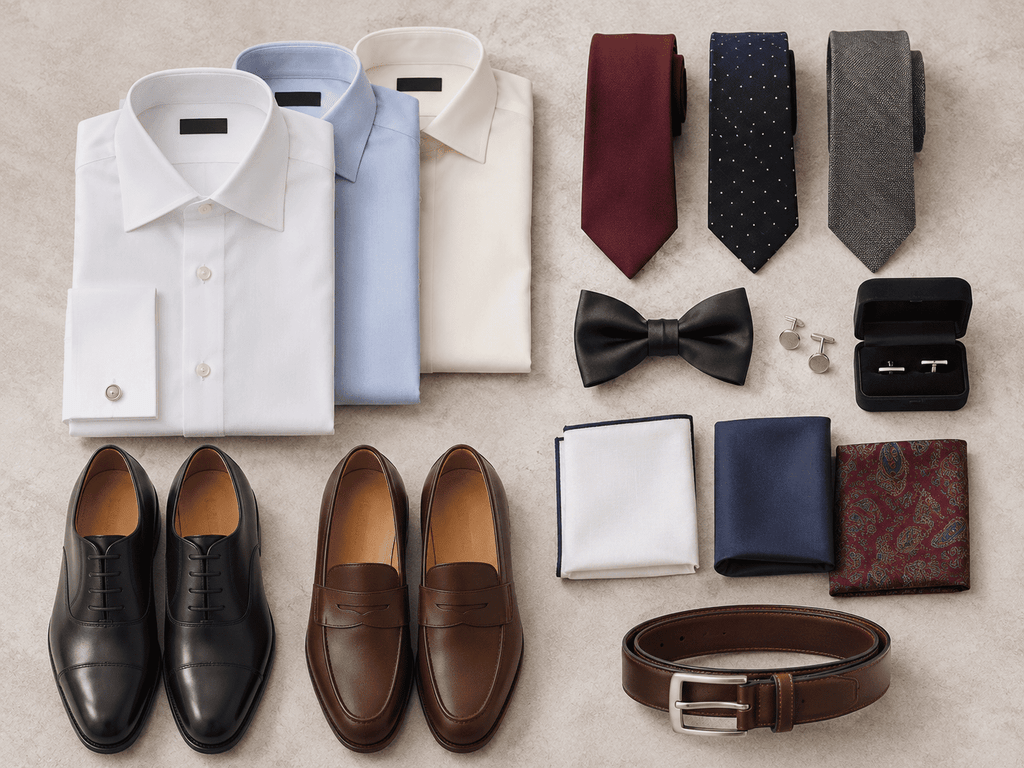
Pack by event so every look is complete before you leave home. Start with the core pieces:
- Jackets or suits for each event
- Trousers and chinos
- Dress shirts, plus one spare
- Dress shoes and loafers
- Belts that match your shoes
- Ties or a bow tie
Then add the small extras that are easy to forget:
- Cufflinks
- Dress socks
- Pocket squares
- Grooming products
Plan Your Wedding Week Wardrobe at Men’s Wearhouse
The right wedding week wardrobe starts with the invitation. From there, adjust each look to the event, the setting, and your role.
For event-by-event outfit ideas in one spot, browse our Week of the Wedding collection. A clear plan means less second-guessing at every outfit change. For more inspiration, explore our wedding style guides.
FAQ
How Do You Figure Out the Wedding Dress Code From the Invitation?
Start with any dress code wording, like black tie, cocktail, or casual. If there isn’t any, look at the venue, the time of day, and the type of event.
Is It Better To Rent or Buy Your Wedding Weekend Outfit?
Renting usually makes the most sense for a tuxedo or a ceremony look you won’t wear again. Buying is the smarter choice for versatile pieces like a navy blazer or lightweight suit that you’ll wear long after the wedding.
Shop Related Products