

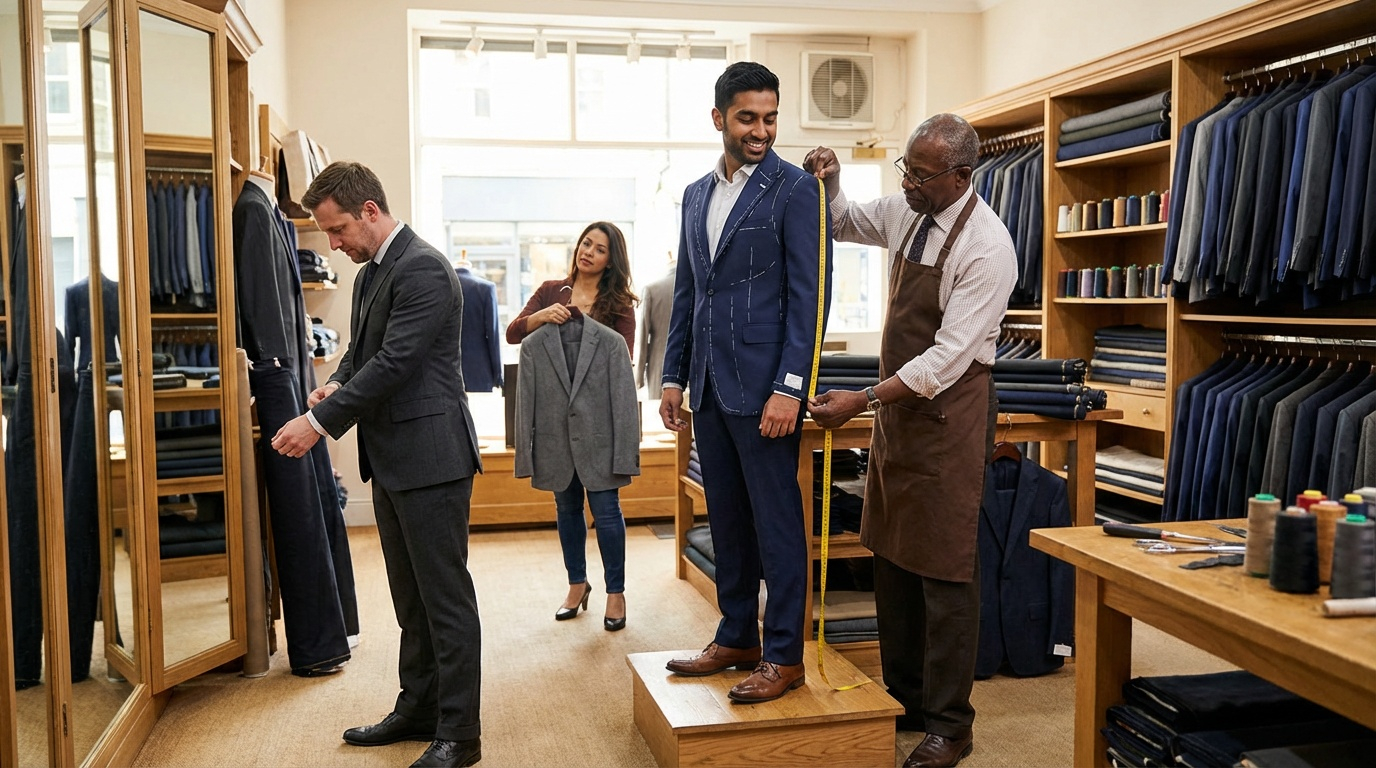

You’re standing in front of the mirror, and something just feels off. The suit jacket sleeves are hiding your hands. The pants are pooling around your shoes. Or maybe the shoulders look like you’re wearing your dad’s old blazer. If you’ve ever wondered how long should suit pants be or questioned whether you’re wearing the right size, you’re not alone.
Here’s the truth: a well-fitted suit transforms how you look and, more importantly, how you feel. The difference between an okay suit and a great one often comes down to fit, not price. Whether you’re suiting up for your first big interview, a wedding, or simply upgrading your professional wardrobe, understanding men’s suit measurements is your foundation for looking sharp.
This suit sizing guide will walk you through everything you need to know about how should a men’s suit fit, from measuring your body to understanding what those numbers on the label actually mean. We’ll cover suit jacket measurements, trouser length, shoulder fit, and those subtle details that separate a suit you’re wearing from a suit that fits like it was made for you. No confusing jargon, no outdated rules, just practical advice you can use the next time you’re shopping for a suit.

The three golden rules (the unalterables)
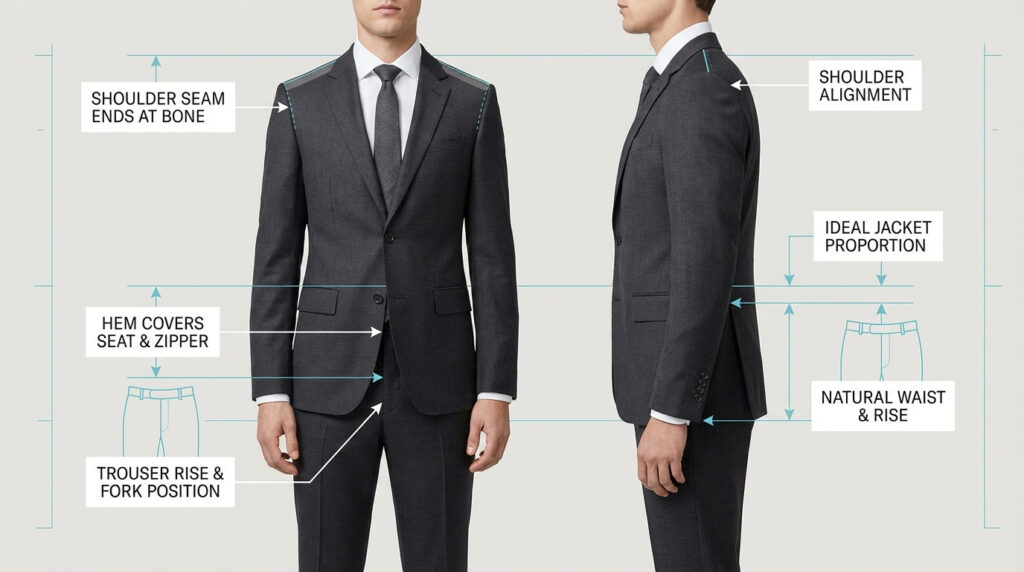
Before you worry about sleeve buttons or hem widths, focus on the “Triangle of Fit“, the unalterables. These are the structural elements that even the best tailor usually can’t rebuild without costing you more than a new suit. Get these three mechanics of fit right, and everything else is just fine-tuning.
- Shoulders define the silhouette. The seam must end precisely at your shoulder bone. If it creates a divot or droops down your arm, try a different size. This is the most critical aspect of suit shoulder fit because it creates the frame for your entire look.
- Jacket length balances your proportions. Your jacket should cover your seat and the zipper of your trousers. If it’s too short, it throws off your body’s visual balance; too long, and it overwhelms you.
- Trouser rise determines comfort. The waistband should sit comfortably at your natural waist or slightly below, not low on your hips. Suit rise explained simply: it dictates where the pants fork. If it’s too tight or sagging, there’s no easy fix.
Before you head to the register, do a quick mirror pass. Stand tall and relaxed. Does the shoulder seam sit flat? Does the jacket hem cover your pockets? If yes, you’ve got a solid foundation. If not, swap sizes before you think about alterations.
Understanding How Men’s Suits Are Sized
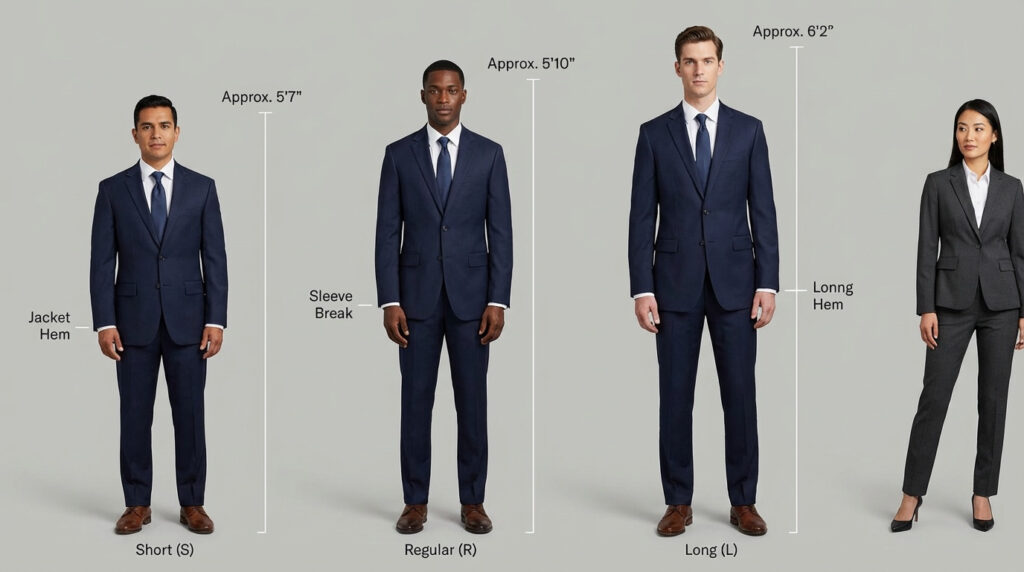
Men’s suit sizes aren’t as mysterious as they seem. Most suits use a two-number system: chest size and sleeve length. You’ll see labels like “40R” or “42L”, the first number represents your chest measurement in inches, while the letter indicates your height category.
Here’s how the letters break down. “S” (short) fits men 5’8″ and under. “R” (regular) works for heights between 5’9″ and 6’0″. “L” (long) is designed for men 6’1″ to 6’3″. Some brands also offer “XL” (extra long) for taller guys. These designations affect jacket length and sleeve length, ensuring the proportions work with your frame.
Suit pants typically use waist and inseam measurements. A size 34×32 means a 34-inch waist and a 32-inch inseam. When you buy a suit, the jacket and pants are often sized separately to accommodate different body proportions. That’s actually good news – it means you’re more likely to find a combination that fits your specific build.
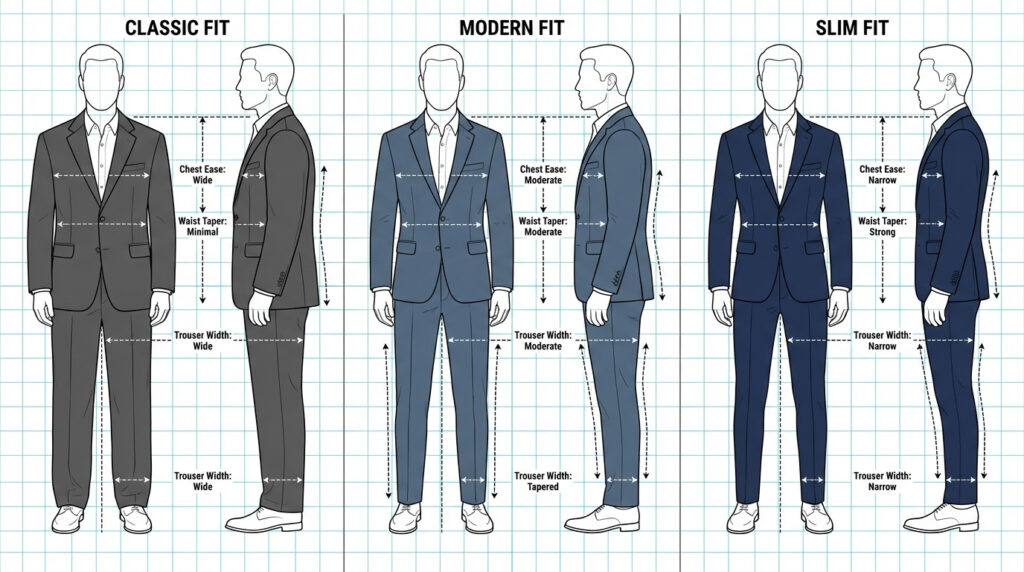
Modern fit styles add another layer to suit sizes explained. You’ll encounter terms like “slim fit,” “modern fit,” and “classic fit.” These describe how the suit drapes on your body. (Not sure which one is right for you? Read our breakdown of Which Suit Fit Should You Get: Slim vs. Modern vs. Classic or Athletic. Classic fit provides more room through the chest and midsection. Your body type and comfort preference will guide which fit works best for you.
Men’s suit size chart
Finding your starting size doesn’t require a degree in tailoring. Once you have your suit sizes explained, the logic is simple: the number refers to your chest measurement in inches, while the letter corresponds to your height. This combination ensures the jacket length and sleeve proportions land exactly where they should on your frame. Use this quick reference to find your likely match.
| Length | Height Range | Fit Profile |
|---|---|---|
| S (Short) | 5’5″ – 5’8″ | Shorter sleeves and torso length |
| R (Regular) | 5’9″ – 6’0″ | Standard body and sleeve proportions |
| L (Long) | 6’1″ – 6’3″ | Longer sleeves and body length |
| XL (Extra Long) | 6’4″ + | Extended length for tall frames |
For trousers, many suits follow a standard “drop 6” rule, meaning a size 40 jacket typically pairs with size 34 pants. However, measuring your waist and inseam separately gives you the freedom to buy separates, which is essential if you need Big & Tall sizing or have an athletic build. Since cuts vary by designer, always cross-reference your men’s suit measurements with the specific brand chart when shopping Men’s Wearhouse to confirm you’re getting the right cut for your build.
How to Measure for a Suit: Body Measurements for Suit Sizing
Getting accurate body measurements for suit sizing is easier than you think. You’ll need a soft measuring tape and, ideally, someone to help you. Wear the dress shirt and shoes you plan to wear with the suit, this ensures your measurements reflect reality.
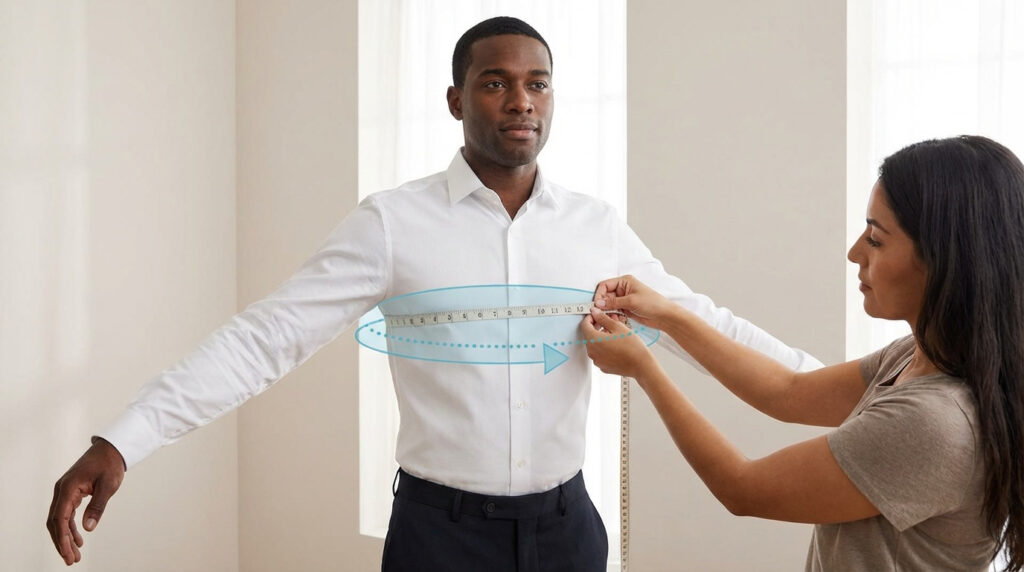
Chest measurement
Stand naturally and wrap the tape measure around the fullest part of your chest, typically right under your armpits. Keep the tape parallel to the floor and snug but not tight. You should be able to breathe comfortably. This number determines your jacket size. If you measure 42 inches around your chest, you’re likely a size 42 jacket.
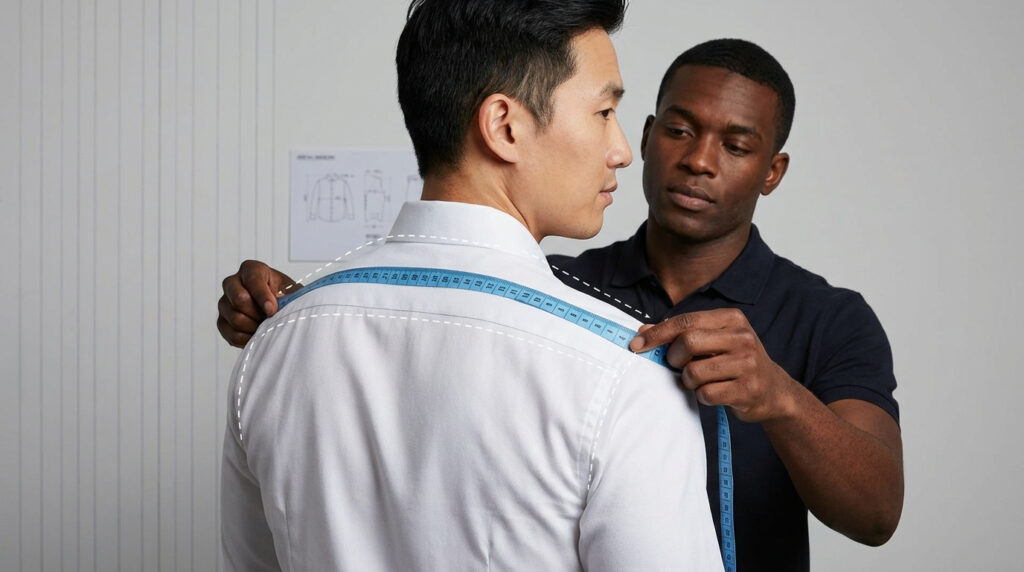
Shoulder measurement suit
Measure from the edge of one shoulder to the edge of the other, across your back. The tape should follow the natural slope of your shoulders. This measurement helps determine if a jacket’s shoulder seams will sit where they should – right at the edge of your shoulders, not drooping down your arms or pulling tight.
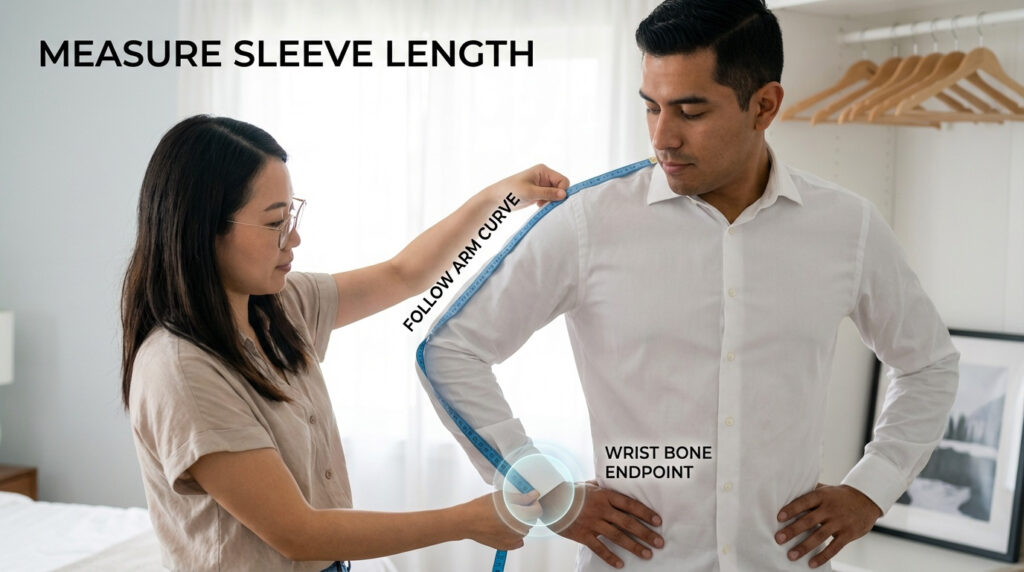
How to measure sleeve length for suit
Bend your arm slightly and place your hand on your hip. Measure from the center back of your neck, across your shoulder, down your arm to your wrist bone. This gives you the sleeve length you need. Alternatively, measure from your shoulder seam to where you want the sleeve to end, typically where your wrist meets your hand.
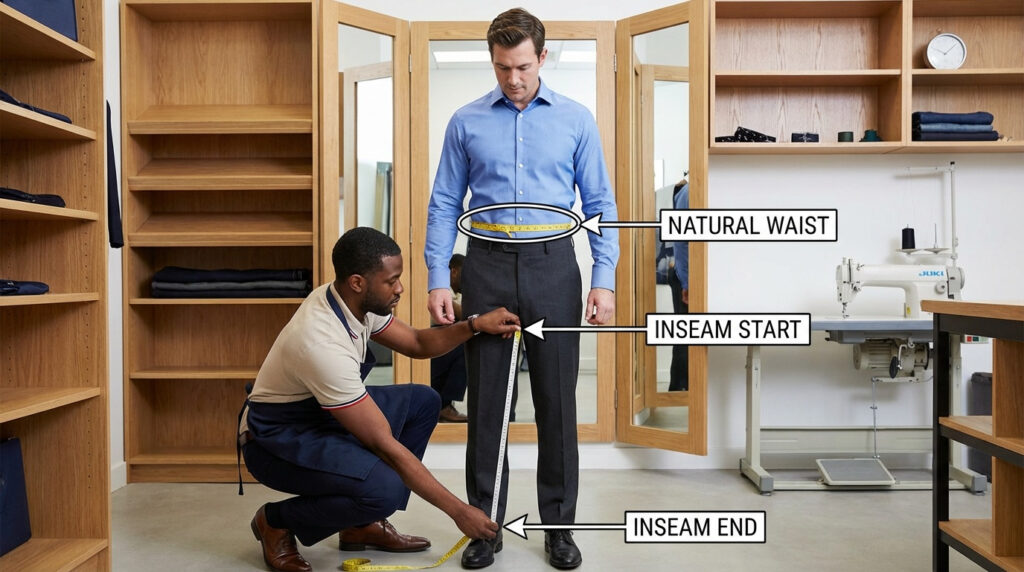
Waist and inseam
For your waist, measure around your natural waistline, which is usually just above your belly button. Don’t suck in, measure where your pants will actually sit. For inseam, measure from your crotch to where you want your pants to end. We’ll get into the specifics of how long should suit pants be in the next section.
Jacket length
While tailors will handle the final jacket length, knowing how to measure helps you start with the right base size. Measure from the base of your neck at the back, down to where you want the jacket to end. A general rule: your jacket should cover your seat but not extend far beyond it.
Once you have these measurements, reference a men’s suit size chart from your preferred brand. Different manufacturers size slightly differently, so when shopping online, always check the specific suit measurement chart provided. These measurements give you a starting point, but remember, the real test is how the suit looks and feels when you try it on.
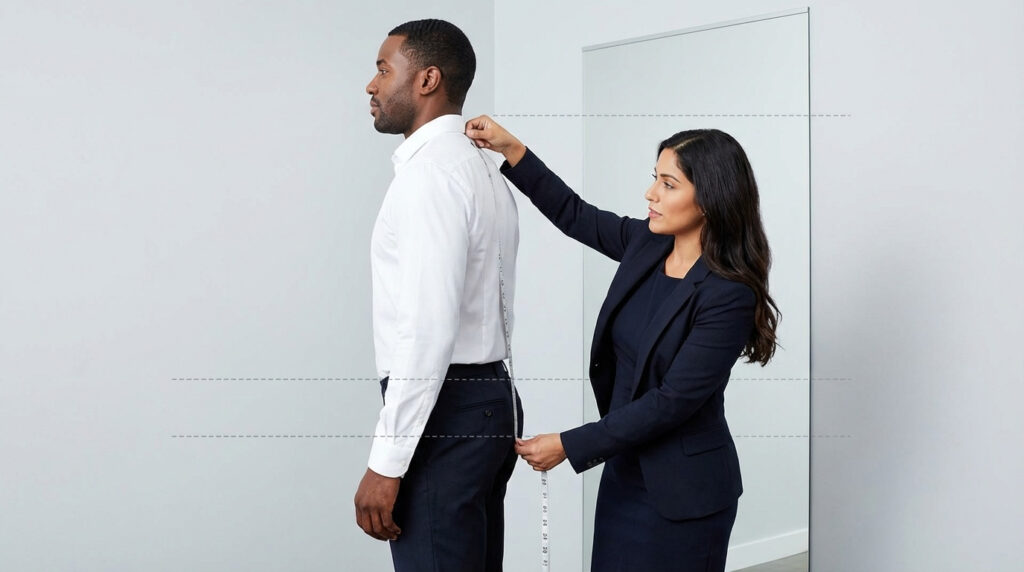
Size guide for suit jackets
Navigating a suit sizing guide starts by combining your chest measurement with your height category to find your base number. For example, a 40-inch chest on a man of average height typically translates to a 40R. However, the specific cut you choose dramatically alters the feel. A slim fit hugs the body for an on-trend, sharp profile, while a modern fit offers a refined silhouette with just enough breathing room. If you prefer a generous feel through the torso, a classic fit provides a comfortable, traditional drape.
Before diving into complex tailoring rules on how to size a suit jacket, use these rapid visual checks to confirm you have the right starting size:
- Button stance: Fasten the top button. The fabric should sit smoothly across your waist without pulling into an “X” shape.
- Clean chest: Your lapels must lie flat against your shirt, avoiding any buckling or gaping away from the body.
- No shoulder divots: The shoulder seam should end precisely at your natural shoulder line, no drooping and no pinching.
Step-by-step guide: how to measure for a suit accurately
Grab a soft tape measure and a friend to ensure accuracy. Wear a fitted dress shirt and stand tall but relaxed, don’t hold your breath. This ensures your measurements reflect your true fit rather than an uncomfortable squeeze.
- Chest: Wrap the tape under your armpits around the fullest part of your chest, keeping it parallel to the floor.
- Shoulders: Measure across your back from one shoulder point to the other, following your natural curve.
- Sleeves: Place your hand on your hip. Measure from the center back of your neck, over the shoulder, to your wrist bone.
- Waist: Measure your natural waistline (navel level), keeping the tape loose enough to slide a finger behind it.
- Inseam: Measure from the crotch seam to your preferred length, keeping in mind how long suit pants should be with your shoes.
Always measure twice to confirm your numbers. When consulting a men’s suit sizing guide, round up if you fall between sizes, tailors can easily take in excess fabric, but they can’t create more room.
How Should a Suit Jacket Fit Properly
A properly fitted jacket makes everything else work. Start with the shoulders, this is non-negotiable. The shoulder seam of your jacket should end right where your shoulder ends and your arm begins. If the seam extends down your arm, the jacket’s too big. If it stops before your natural shoulder, creating pulling or dimpling, it’s too small. Shoulder alterations are expensive and difficult, so getting this right from the start matters.
Suit jacket length guide
How long should a suit jacket be? There’s an old tailoring trick: stand naturally with your arms at your sides. Curl your fingers slightly. The bottom of your jacket should hit around the middle of your curled fingers or where your hand meets your thumb. Another way to think about it, the jacket should cover your seat without extending much beyond it. This creates a balanced silhouette that doesn’t make your legs look short or your torso look stumpy.
Suit jacket measurements across the chest and waist
Button the jacket (remember, only button the top button on a two-button jacket). You should be able to slide a flat hand between the jacket and your chest without too much resistance. The fabric shouldn’t pull across your chest or create an “X” shape where the button closes. That’s a sign you need a larger size. On the flip side, if you can grab handfuls of fabric at the sides, the jacket’s too roomy.
The jacket should follow the natural shape of your body, with a slight taper from chest to waist. Modern fit and slim fit jackets will have more pronounced tapering. If you’re broader in the midsection, a classic fit might feel more comfortable while still looking tailored.
Sleeve length details
Should suit jacket sleeves show my shirt cuffs? Yes, you want about a quarter to half inch of shirt cuff showing beyond your jacket sleeve. This small detail signals that your suit fits properly. The jacket sleeve should end at your wrist bone when your arms hang naturally at your sides. Too long, and you look like you’re drowning in the jacket. Too short, and it looks like you outgrew it.
Collar and lapels
The jacket collar should hug the back of your neck without gapping. You should see about a half inch of your shirt collar above the jacket collar. If there’s a space between your neck and the jacket collar, or if the jacket pulls the shirt collar down, something’s off, either the jacket’s too big in the neck or needs adjustment.
Your lapels should lie flat against your chest without rippling, buckling, or pulling. These subtle details separate a suit that fits from a suit that fits you.
How Long Should Suit Pants Be: Understanding Trouser Break
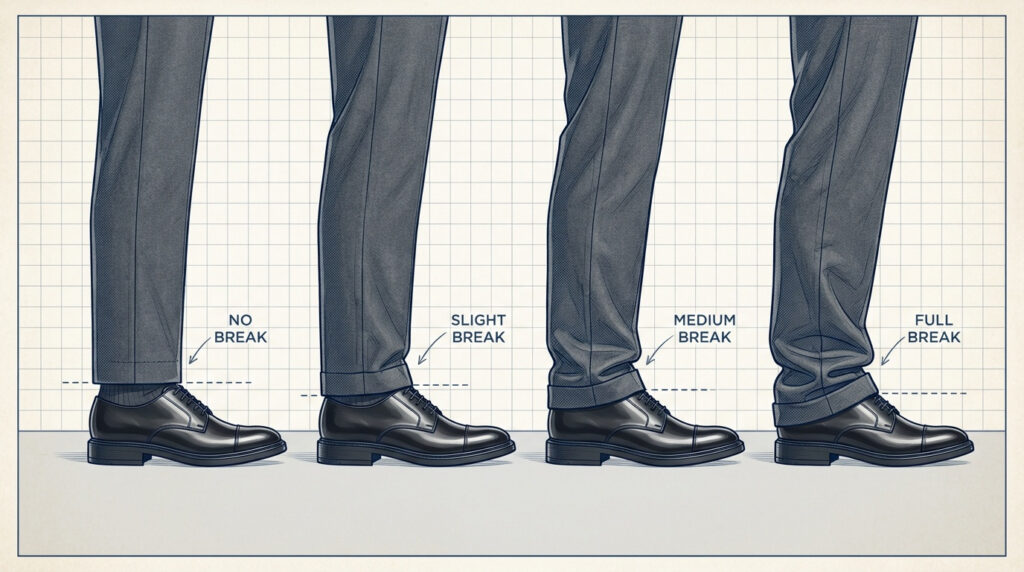
How long should suit pants be with dress shoes? This question has sparked debates in every fitting room. The answer comes down to understanding “break”, the way your pants drape over your shoes.
How should suit trousers break over shoes
No break: The pants just barely touch the top of your shoes with no fabric folding. This creates a modern, clean line that works especially well with slim fit suits. It shows more of your shoes and socks, giving a contemporary look.
Slight break (half break): The pants touch your shoes and create one small fold in the fabric. This is the most versatile option and what most guys should aim for. It looks polished without being too trendy or too traditional.
Full break: The pants create a deeper fold where they meet your shoes. This was standard for decades but now reads as more traditional. It can make you look shorter and isn’t typically recommended for modern silhouettes.
The ideal length depends on your personal style and the suit’s cut. With modern fit or slim fit suits, a slight break or no break looks more proportional. Classic fit suits can handle a bit more break. Stand naturally when being measured, weight shifts between feet can affect length.
The rise and waist
Suit pants should sit at your natural waist, not low on your hips like jeans. The “rise” (the distance from the crotch seam to the waistband) affects both comfort and appearance. You should be able to sit comfortably without the waistband digging in or the crotch pulling tight. When standing, there shouldn’t be excess fabric bunching in the crotch area.
The waistband should fit snugly enough that you don’t need a belt to keep your pants up, but comfortably enough that you can breathe and move. If you can fit more than two fingers inside the waistband, they’re too loose. If you’re leaving red marks on your skin, size up.
What Are Signs That a Suit Doesn’t Fit Correctly
Sometimes you need to see what’s wrong to understand what’s right. Here are the telltale signs that a suit needs adjustments or a different size altogether.
Shoulder divots or pulling: If you see dimpling or fabric buckling at the shoulder seams, the shoulders are too narrow. Conversely, if the shoulder seams extend down your arms, creating a droopy effect, the jacket’s too big. This is the hardest alteration to fix, so it’s often better to try a different size.
X-shaped pulling at the button: When you button the jacket, fabric shouldn’t pull in an “X” pattern across your midsection. This means the jacket’s too tight through the body. You need a larger size or different fit style.
Collar gap: Space between your neck and the jacket collar creates an unflattering slouch. This usually means the jacket’s too large or the wrong proportion for your build.
Sleeve stacking: If your jacket sleeves bunch up around your wrists, they’re too long. No shirt cuff showing means they’re too long. More than half an inch of cuff showing means they’re too short.
Pants breaking in multiple places: Too much fabric pooling on your shoes creates a sloppy appearance. Your pants are too long and need hemming.
Visible sock when standing: Unless you’re deliberately going for a fashion-forward cropped look, seeing your ankles when standing normally means your pants are too short.
The jacket rides up: If your jacket creeps up your back when you move your arms forward or sit down, it might be too small or too short in the body. Some movement is normal, but it shouldn’t migrate significantly.
These fit issues aren’t necessarily deal-breakers. An experienced tailor can adjust sleeve length, hem pants, and take in or let out the waist. But they can’t fix shoulders, and they can’t add fabric that isn’t there. Start with the right base size, and alterations will fine-tune the fit.
How to Choose a Suit That Fits Your Body Type
Everyone’s build is different, and understanding your body type helps you choose suits that work with your proportions rather than against them.
If you’re athletic with broad shoulders and a tapered waist, modern fit or slim fit suits will complement your build. These styles are cut to follow your natural V-shape. Just make sure the chest and shoulders have enough room, you don’t want pulling across your back when you move.
For guys with a stockier or more rectangular build, classic fit suits offer more room through the middle without looking boxy. A good tailor can add shaping at the waist to create more definition while keeping you comfortable. Look for suits with structured shoulders to create more shape.
Tall and slim? You’ll want to avoid jackets that are too boxy, which can make you look thinner. Modern fit works well, providing enough structure without excess fabric. Pay attention to sleeve length and jacket length, you might need long or extra-long sizes to get the proportions right.
Shorter stature? Proportion is key. Avoid jackets that are too long, which can make your legs look shorter. A slight break or no break on your pants creates a longer leg line. Modern fit suits with a higher button stance can help create the illusion of height.
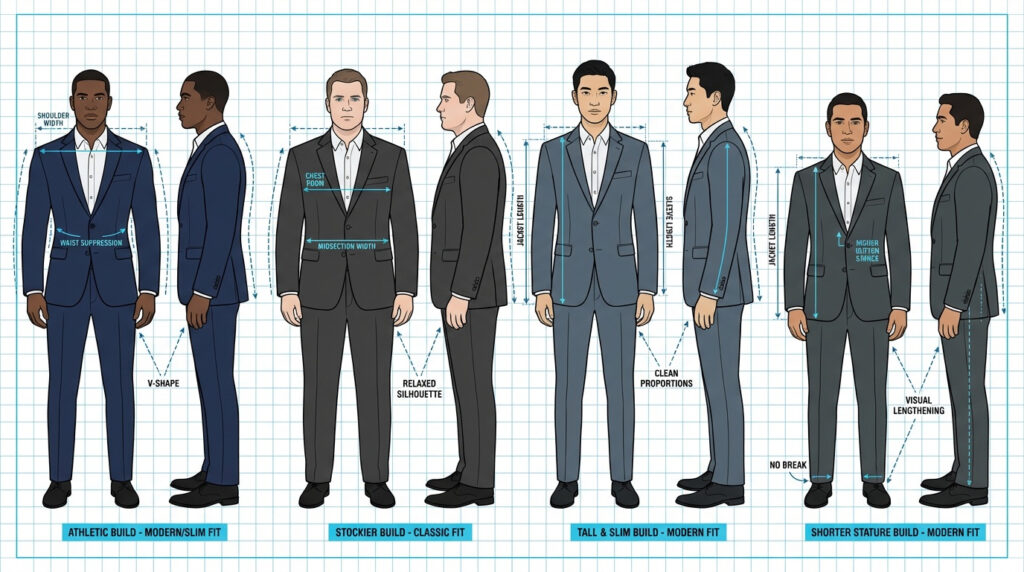
Should I size up or down in suit jackets if I’m between sizes
If you’re between sizes, consider what can be altered. If the smaller size fits perfectly in the shoulders but feels snug in the chest or waist, a tailor can potentially let it out slightly if there’s enough fabric. If the larger size fits well everywhere except the sleeves and length, those are easy alterations.
Generally, if the shoulders fit on the smaller size, go with that one, shoulders are the hardest thing to fix. If both sizes have shoulder issues, size up and find a skilled tailor. It’s easier to take fabric in than add it.
What Services Help Identify the Ideal Men’s Suit Style and Fit
Shopping for your first serious suit or upgrading your wardrobe doesn’t mean going it alone. Professional fitting services take the guesswork out of finding the right size and style for your body type.
In-store fit experts can assess your body proportions, measure you accurately, and guide you toward suits that will work with your build. They understand the nuances of different fit styles and how various fabrics drape. They’ll tell you honestly whether something needs alterations or if you should try a different size entirely.
Many retailers offer complimentary fitting services where trained professionals take your measurements and recommend appropriate sizes and styles. These experts understand that a size 42 in one brand might fit differently than a 42 in another. They can show you how different fits, slim, modern, or classic – look on your specific frame.
Professional tailoring services can transform an off-the-rack suit into something that looks custom-made. Whether you need sleeves shortened, pants hemmed, or the jacket waist suppressed, a skilled tailor makes the difference between wearing a suit and owning a suit that fits perfectly.
When choosing where to get fitted, look for companies that offer detailed advice on jacket shoulder fit, sleeve length, trouser break, and overall proportions. The best services don’t just measure you, they educate you about what to look for and why certain adjustments matter. This knowledge stays with you every time you shop for suits in the future.
FAQ: suit jacket sizing and fit
If you’re between sizes, always size up. It’s far easier for a tailor to take in the waist or chest than to let out a jacket that’s too tight. The most critical check is the shoulders; if the larger size fits your shoulders perfectly, that’s your best match.
For sleeves, aim for the wrist bone so about half an inch of shirt cuff shows. For jacket length, the hem should cover your seat and land near your thumb knuckle when your arms are at your sides. These proportions are key to a sharp, modern look.
You should be able to slide a flat hand between the jacket and your shirt. If the fabric pulls into an “X” shape when buttoned, you need a larger size. The fit should be snug enough to look tailored but loose enough to move comfortably.
A tailor can perfect the sleeve length, trouser hem, and waist suppression. However, they generally can’t rebuild the shoulders or lengthen the jacket body. Rely on accurate men’s suit measurements for the structural elements, then let a pro handle the details.
Understanding how to measure for a suit and knowing how should a men’s suit fit transforms your entire shopping experience. You’ll walk into any store or browse online with confidence, knowing exactly what measurements you need and what to look for when trying on jackets and trousers.
Don’t settle for a suit that’s “close enough.” Take the time to get your measurements right, understand what different fit styles offer, and work with fitting professionals who can guide you toward suits that complement your specific build. When your suit fits properly, you’re not thinking about adjusting your sleeves or whether your jacket looks too big. You’re focused on what matters being present, making an impression, and loving the way you look.